
Articles liés à The Fall of Rome: And the End of Civilization
Synopsis
Why did Rome fall?
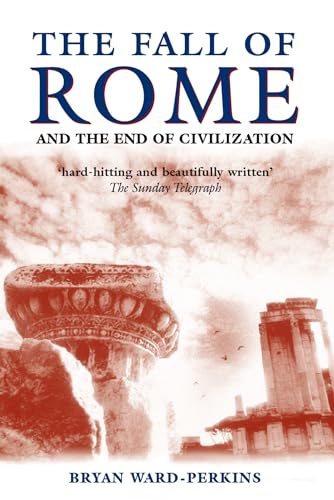
Vicious barbarian invasions during the fifth century resulted in the cataclysmic end of the world's most powerful civilization, and a 'dark age' for its conquered peoples. Or did it? The dominant view of this period today is that the 'fall of Rome' was a largely peaceful transition to Germanic rule, and the start of a positive cultural transformation.
Bryan Ward-Perkins encourages every reader to think again by reclaiming the drama and violence of the last days of the Roman world, and reminding us of the very real horrors of barbarian occupation. Attacking new sources with relish and making use of a range of contemporary archaeological evidence, he looks at both the wider explanations for the disintegration of the Roman world and also the consequences for the lives of everyday Romans, in a world of economic collapse, marauding barbarians, and the rise of a new religious orthodoxy. He also looks at how and why successive generations have understood this period differently, and why the story is still so significant today.
Les informations fournies dans la section « Synopsis » peuvent faire référence à une autre édition de ce titre.
À propos de l'auteur
Bryan Ward-Perkins is a lecturer in Modern History at the University of Oxford, and Fellow and Tutor in History at Trinity College. Born and brought up in Rome, he has excavated extensively in Italy, primarily sites of the immediate post-Roman period. His principal interests are in combining historical and archaeological evidence, and in understanding the transition from Roman to post-Roman times. A joint editor of The Cambridge Ancient History, vol. XIV, his previous publications include From Classical Antiquity to the Middle Ages, also published by Oxford University Press.
Les informations fournies dans la section « A propos du livre » peuvent faire référence à une autre édition de ce titre.
Résultats de recherche pour The Fall of Rome: And the End of Civilization

Image fournie par le vendeur
The Fall of Rome: And the End of Civilization
Edité par
Oxford University Press, 2006
ISBN 10 : 0192807285
ISBN 13 : 9780192807281
Ancien ou d'occasion
Couverture souple
Vendeur : Dream Books Co., Denver, CO, Etats-Unis
Évaluation du vendeur 5 sur 5 étoiles

Etat : good. Gently used with minimal wear on the corners and cover. A few pages may contain light highlighting or writing, but the text remains fully legible. Dust jacket may be missing, and supplemental materials like CDs or codes may not be included. May be ex-library with library markings. Ships promptly! N° de réf. du vendeur DBV.0192807285.G
Acheter D'occasion
EUR 11,96
Livraison gratuite
Expédition nationale : Etats-Unis
Expédition nationale : Etats-Unis
Quantité disponible : 1 disponible(s)
Image d'archives
The Fall of Rome: And the End of Civilization
Edité par
Oxford University Press, 2006
ISBN 10 : 0192807285
ISBN 13 : 9780192807281
Ancien ou d'occasion
Paperback
Vendeur : HPB Inc., Dallas, TX, Etats-Unis
Évaluation du vendeur 5 sur 5 étoiles
Paperback. Etat : Very Good. Connecting readers with great books since 1972! Used books may not include companion materials, and may have some shelf wear or limited writing. We ship orders daily and Customer Service is our top priority! N° de réf. du vendeur S_483185348
Acheter D'occasion
EUR 9,66
Expédition à EUR 3,23
Expédition nationale : Etats-Unis
Expédition nationale : Etats-Unis
Quantité disponible : 1 disponible(s)
Image d'archives
Fall of Rome: And the End of Civilization
Edité par
Oxford University Press September 2006, 2006
ISBN 10 : 0192807285
ISBN 13 : 9780192807281
Ancien ou d'occasion
Trade Paperback
Vendeur : Inquiring Minds, Saugerties, NY, Etats-Unis
Évaluation du vendeur 4 sur 5 étoiles

Trade Paperback. Etat : Used - Very Good. N° de réf. du vendeur 582869
Acheter D'occasion
EUR 8,87
Expédition à EUR 5,17
Expédition nationale : Etats-Unis
Expédition nationale : Etats-Unis
Quantité disponible : 1 disponible(s)
Image d'archives
The Fall of Rome: And the End of Civilization
Edité par
Oxford University Press, 2006
ISBN 10 : 0192807285
ISBN 13 : 9780192807281
Ancien ou d'occasion
Paperback
Vendeur : Books From California, Simi Valley, CA, Etats-Unis
Évaluation du vendeur 4 sur 5 étoiles
Paperback. Etat : Good. Notes are present throughout. The copy is otherwise in clean condition. N° de réf. du vendeur mon0004234789
Acheter D'occasion
EUR 9,77
Expédition à EUR 4,30
Expédition nationale : Etats-Unis
Expédition nationale : Etats-Unis
Quantité disponible : 1 disponible(s)
Image d'archives
The Fall of Rome: And the End of Civilization
Edité par
Oxford University Press, United Kingdom, Oxford, 2006
ISBN 10 : 0192807285
ISBN 13 : 9780192807281
Ancien ou d'occasion
Paperback
Vendeur : WorldofBooks, Goring-By-Sea, WS, Royaume-Uni
Évaluation du vendeur 5 sur 5 étoiles
Paperback. Etat : Very Good. Why did Rome fall? Vicious barbarian invasions during the fifth century resulted in the cataclysmic end of the world's most powerful civilization, and a 'dark age' for its conquered peoples. Or did it? The dominant view of this period today is that the 'fall of Rome' was a largely peaceful transition to Germanic rule, and the start of a positive cultural transformation. Bryan Ward-Perkins encourages every reader to think again by reclaiming the drama and violence of the last days of the Roman world, and reminding us of the very real horrors of barbarian occupation. Attacking new sources with relish and making use of a range of contemporary archaeological evidence, he looks at both the wider explanations for the disintegration of the Roman world and also the consequences for the lives of everyday Romans, in a world of economic collapse, marauding barbarians, and the rise of a new religious orthodoxy. He also looks at how and why successive generations have understood this period differently, and why the story is still so significant today. The book has been read, but is in excellent condition. Pages are intact and not marred by notes or highlighting. The spine remains undamaged. N° de réf. du vendeur GOR001742583
Acheter D'occasion
EUR 7,96
Expédition à EUR 6,53
Expédition depuis Royaume-Uni vers Etats-Unis
Expédition depuis Royaume-Uni vers Etats-Unis
Quantité disponible : 3 disponible(s)
Image d'archives
The Fall of Rome: And the End of Civilization
Edité par
Oxford University Press, 2006
ISBN 10 : 0192807285
ISBN 13 : 9780192807281
Ancien ou d'occasion
Couverture souple
Vendeur : World of Books (was SecondSale), Montgomery, IL, Etats-Unis
Évaluation du vendeur 5 sur 5 étoiles
Etat : Good. Item in good condition. Textbooks may not include supplemental items i.e. CDs, access codes etc. N° de réf. du vendeur 00109761483
Acheter D'occasion
EUR 14,97
Livraison gratuite
Expédition nationale : Etats-Unis
Expédition nationale : Etats-Unis
Quantité disponible : 1 disponible(s)
Image d'archives
The Fall of Rome: And the End of Civilization
Edité par
Oxford University Press, 2006
ISBN 10 : 0192807285
ISBN 13 : 9780192807281
Ancien ou d'occasion
Paperback
Vendeur : Books From California, Simi Valley, CA, Etats-Unis
Évaluation du vendeur 4 sur 5 étoiles
Paperback. Etat : Fine. N° de réf. du vendeur mon0003777588
Acheter D'occasion
EUR 12,12
Expédition à EUR 4,30
Expédition nationale : Etats-Unis
Expédition nationale : Etats-Unis
Quantité disponible : 2 disponible(s)
Image d'archives
The Fall of Rome: And the End of Civilization
Edité par
Oxford University Press, 2006
ISBN 10 : 0192807285
ISBN 13 : 9780192807281
Ancien ou d'occasion
Paperback
Vendeur : Books From California, Simi Valley, CA, Etats-Unis
Évaluation du vendeur 4 sur 5 étoiles
Paperback. Etat : Very Good. N° de réf. du vendeur mon0004099712
Acheter D'occasion
EUR 12,12
Expédition à EUR 4,30
Expédition nationale : Etats-Unis
Expédition nationale : Etats-Unis
Quantité disponible : 2 disponible(s)
Image fournie par le vendeur
The Fall of Rome: And the End of Civilization
Edité par
Oxford University Press, 2006
ISBN 10 : 0192807285
ISBN 13 : 9780192807281
Ancien ou d'occasion
Couverture souple
Vendeur : Big River Books, Powder Springs, GA, Etats-Unis
Évaluation du vendeur 5 sur 5 étoiles
Etat : good. This book is in good condition. The cover has minor creases or bends. The binding is tight and pages are intact. Some pages may have writing or highlighting. N° de réf. du vendeur BRV.0192807285.G
Acheter D'occasion
EUR 13,31
Expédition à EUR 3,44
Expédition nationale : Etats-Unis
Expédition nationale : Etats-Unis
Quantité disponible : 1 disponible(s)
Image d'archives
The Fall of Rome: And the End of Civilization
Edité par
Oxford University Press, 2006
ISBN 10 : 0192807285
ISBN 13 : 9780192807281
Ancien ou d'occasion
Paperback
Vendeur : World of Books Inc, Montgomery, IL, Etats-Unis
Évaluation du vendeur 2 sur 5 étoiles

Paperback. Etat : Good. Why did Rome fall? Vicious barbarian invasions during the fifth century resulted in the cataclysmic end of the world's most powerful civilization, and a 'dark age' for its conquered peoples. Or did it? The dominant view of this period today is that the 'fall of Rome' was a largely peaceful transition to Germanic rule, and the start of a positive cultural transformation. Bryan Ward-Perkins encourages every reader to think again by reclaiming the drama and violence of the last days of the Roman world, and reminding us of the very real horrors of barbarian occupation. Attacking new sources with relish and making use of a range of contemporary archaeological evidence, he looks at both the wider explanations for the disintegration of the Roman world and also the consequences for the lives of everyday Romans, in a world of economic collapse, marauding barbarians, and the rise of a new religious orthodoxy. He also looks at how and why successive generations have understood this period differently, and why the story is still so significant today. N° de réf. du vendeur CIN0192807285G
Acheter D'occasion
EUR 16,75
Livraison gratuite
Expédition nationale : Etats-Unis
Expédition nationale : Etats-Unis
Quantité disponible : 1 disponible(s)