
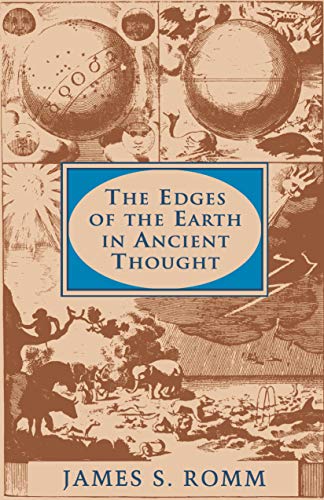
Synopsis
For the Greeks and Romans, the Earth's furthest perimeter was a realm radically different from what they perceived as central and human. The alien qualities of these "edges of the Earth" became the basis of a literary tradition that endured throughout antiquity and into the Renaissance, despite the growing challenges of emerging scientific perspectives. This survey reveals that the Greeks, and to a somewhat lesser extent the Romans, saw geography not as a branch of physical science but as an important literary genre. The tradition described by Romm emerged in Homer and Hestiod, whose imaginative geography defined the Earth by giving it boundaries - the river Ocean, the Pillars of Heracles, and other mythical forms of circumscription. Other Greek authors developed exotic literary landscapes by filling these "limits" with idealized human societies and bizarre or monstrous animal life, while the Romans adapted the concept of perimeters to goals of imperial conquest. As Hellenistic and Roman voyages of exploration failed to confirm the fancied landscapes, the tradition came to be seen as one in which invented narratives had masqueraded as truths. As a result, some of late antiquity's most daring innovations seized on geography as a theme for prose fiction, and the explorer's log became an important antecedent of the early modern novel.
Les informations fournies dans la section « Synopsis » peuvent faire référence à une autre édition de ce titre.
À propos de l?auteur
James S. Romm is Assistant Professor of Classics at Bard College.
Les informations fournies dans la section « A propos du livre » peuvent faire référence à une autre édition de ce titre.
Autres éditions populaires du même titre

Résultats de recherche pour The Edges of the Earth in Ancient Thought: Geography,...

Image d'archives
The Edges of the Earth in Ancient Thought
Edité par
Princeton University Press, 1992
ISBN 10 : 0691069336
ISBN 13 : 9780691069333
Ancien ou d'occasion
Couverture rigide
Vendeur : Books From California, Simi Valley, CA, Etats-Unis
Évaluation du vendeur 4 sur 5 étoiles

Hardcover. Etat : Good. N° de réf. du vendeur mon0004036476
Acheter D'occasion
EUR 21,23
Expédition à EUR 4,33
Expédition nationale : Etats-Unis
Expédition nationale : Etats-Unis
Quantité disponible : 1 disponible(s)
Image d'archives
The Edges of the Earth in Ancient Thought
Edité par
Princeton University Press, 1992
ISBN 10 : 0691069336
ISBN 13 : 9780691069333
Ancien ou d'occasion
Couverture rigide
Vendeur : Mispah books, Redhill, SURRE, Royaume-Uni
Évaluation du vendeur 4 sur 5 étoiles
Hardcover. Etat : Good. Good. Dust Jacket NOT present. CD WILL BE MISSING. . SHIPS FROM MULTIPLE LOCATIONS. book. N° de réf. du vendeur ERICA82906910693366
Acheter D'occasion
EUR 119,13
Expédition à EUR 28,91
Expédition depuis Royaume-Uni vers Etats-Unis
Expédition depuis Royaume-Uni vers Etats-Unis
Quantité disponible : 1 disponible(s)