Articles liés à The Maneige Royal
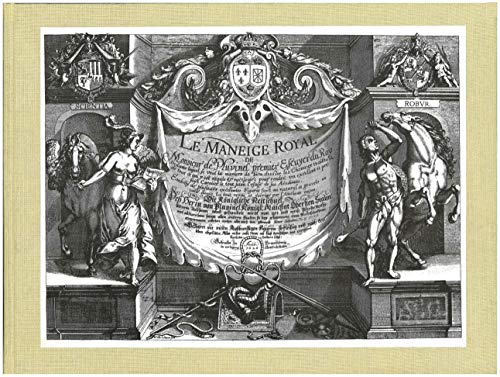
L'édition de cet ISBN n'est malheureusement plus disponible.
Afficher les exemplaires de cette édition ISBN
- ÉditeurJ.A.Allen & Co Ltd
- Date d'édition1999
- ISBN 10 085131452X
- ISBN 13 9780851314525
- ReliureRelié
- Nombre de pages196
Acheter neuf
En savoir plus sur cette édition
EUR 107,87
Frais de port :
EUR 5,95
Vers Etats-Unis
Meilleurs résultats de recherche sur AbeBooks
Image d'archives
LE MANEIGE ROYAL
Edité par
J. A. Allen
(1989)
ISBN 10 : 085131452X
ISBN 13 : 9780851314525
Neuf
Couverture rigide
Quantité disponible : 1
Vendeur :
Evaluation vendeur

Description du livre Etat : New. New. In shrink wrap. Looks like an interesting title! 3.04. N° de réf. du vendeur Q-085131452X
Acheter neuf
EUR 107,87
Autre devise
Image d'archives
Le Maneige Royal
Edité par
J. A. Allen
(1989)
ISBN 10 : 085131452X
ISBN 13 : 9780851314525
Neuf
Couverture rigide
Quantité disponible : 1
Vendeur :
Evaluation vendeur

Description du livre Hardcover. Etat : new. New. N° de réf. du vendeur Wizard085131452X
Acheter neuf
EUR 121,39
Autre devise
Image d'archives
Le Maneige Royal
Edité par
J. A. Allen
(1989)
ISBN 10 : 085131452X
ISBN 13 : 9780851314525
Neuf
Couverture rigide
Quantité disponible : 1
Vendeur :
Evaluation vendeur
Description du livre Etat : new. N° de réf. du vendeur FrontCover085131452X
Acheter neuf
EUR 120,66
Autre devise
Image d'archives
Le Maneige Royal
Edité par
J. A. Allen
(1989)
ISBN 10 : 085131452X
ISBN 13 : 9780851314525
Neuf
Couverture rigide
Quantité disponible : 1
Vendeur :
Evaluation vendeur
Description du livre Hardcover. Etat : new. New. Fast Shipping and good customer service. N° de réf. du vendeur Holz_New_085131452X
Acheter neuf
EUR 127,24
Autre devise
Image d'archives
Le Maneige Royal
Edité par
J. A. Allen
(1989)
ISBN 10 : 085131452X
ISBN 13 : 9780851314525
Neuf
Couverture rigide
Quantité disponible : 1
Vendeur :
Evaluation vendeur
Description du livre Hardcover. Etat : new. New Copy. Customer Service Guaranteed. N° de réf. du vendeur think085131452X
Acheter neuf
EUR 151,86
Autre devise
Image d'archives
The Maneige Royal Translated Into English and with an Introduction by Hilda Nelson
Edité par
J. A. Allen & Co. , Ltd., London
(1989)
ISBN 10 : 085131452X
ISBN 13 : 9780851314525
Neuf
Couverture rigide
Edition originale
Quantité disponible : 1
Vendeur :
Evaluation vendeur
Description du livre Hardcover. Etat : New. Etat de la jaquette : New. Illustrated by Grispin De Pas (illustrateur). First Edition Thus. Plain, cardboard slipcase. Very oversized. Cover is cloth with gold lettering on the spine, b/w facsimile on the front. Pages are clean and tight. This is a NEW book. Lavishly illustrated with dozens of b/w facsimile engravings by Grispin de Pas, the younger; many of them full page sized. Originally published by JA Allen, in French, in 1969. Based on the 1626 edition printed by Gottfried Muller in Braunschweig, Germany. ".although horsemanship as an art form was rediscovered in the 16th century in Italy with the creation of the Neapolitan Riding School, it was 17th century France that gave the equestrian art its particular direction and imprint, paralleling the development and hegemony of French Classicism in other fields of endeavor. This change in spirit and goals is especially evident in Antoine de Pluvinel [1555-1620], gentilhomme dauphinois, ecuyer principal, Conseiller en son Conseil d'Etat, Chambellan ordinaire, and sous-Gouverneur, to Louis XIII, as well as author of Maneige Royal [1623] and L'Instruction du Roy, En l'Exercise de Monter a cheval [1625], manuals on the training of horse and rider. While continuing in the tradition of the Neapolitan Riding School and acknowledging its contributions, Pluvinel.was able to liberate himself from many of the strictures and ideals of the Renaissance. Furthermore, his return to the gentle ways of Xenophon [written about 400 BCE] in the training of horse and rider, and in his stress of such ideals as moderation, harmony, order and biensance, Pluvinel represents the Classical Humanism of the 17th century far more than the Humanism of his own age, the Renaissance.Of what, then, does good horsemanship consist? The answer, given by Pluvinel when the King asks him what he expects of a pupil, is 'that he be a graceful horseman' and eventually, it is hoped, 'a judicious horseman', .Especially important are Pluvinel's contributions to the humane treatment of the horse and young rider with his method of 'gentling' rather than 'breaking'. Includes a glossary. One of the great classical works in riding theory, much of which still holds true today; the more things change the more they stay the same. A fabulous dressage book, for the theory discussed, as well as for the magnificent copper-plate engravings. This book holds an important place in my own dressage library. 6#. ; B&W Illustrations; 12 1/2 x 9 1/2; 170 pages. N° de réf. du vendeur 7969
Acheter neuf
EUR 468,64
Autre devise