
Articles liés à Manfred (annotated)
Synopsis
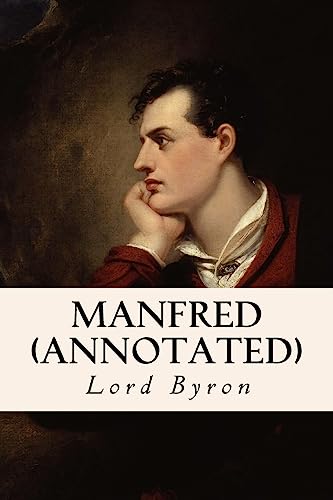
Manfred: A dramatic poem is a poem written in 1816–1817 by Lord Byron. It contains supernatural elements, in keeping with the popularity of the ghost story in England at the time. It is a typical example of a Romantic closet drama. Manfred is a Faustian noble living in the Bernese Alps. Internally tortured by some mysterious guilt, which has to do with the death of his most beloved, Astarte, he uses his mastery of language and spell-casting to summon seven spirits, from whom he seeks forgetfulness. The spirits, who rule the various components of the corporeal world, are unable to control past events and thus cannot grant Manfred's plea. For some time, fate prevents him from escaping his guilt through suicide. Byron wrote this "metaphysical drama", as he called it, after his marriage to Annabella Millbanke failed because of a scandal due to charges of sexual improprieties and an incestuous affair between Byron and his half-sister, Augusta Leigh. Attacked by the press and ostracised by London society, Byron fled England for Switzerland in 1816 and never returned. At the time, he was living at the Villa Diodati in Switzerland. Because Manfred was written immediately after this, and because it regards a main character tortured by his own sense of guilt for an unmentionable offence, some critics consider it to be autobiographical, or even confessional.[2] The unnamed but forbidden nature of Manfred's relationship to Astarte is believed to represent Byron's relationship with his half-sister Augusta. Most of Manfred was written on a tour through the Bernese Alps in September 1816. The third act was rewritten in February 1817 since Byron was not happy with its first version.
Les informations fournies dans la section « Synopsis » peuvent faire référence à une autre édition de ce titre.
Présentation de l'éditeur
Manfred: A dramatic poem is a poem written in 1816–1817 by Lord Byron. It contains supernatural elements, in keeping with the popularity of the ghost story in England at the time. It is a typical example of a Romantic closet drama. Manfred is a Faustian noble living in the Bernese Alps. Internally tortured by some mysterious guilt, which has to do with the death of his most beloved, Astarte, he uses his mastery of language and spell-casting to summon seven spirits, from whom he seeks forgetfulness. The spirits, who rule the various components of the corporeal world, are unable to control past events and thus cannot grant Manfred's plea. For some time, fate prevents him from escaping his guilt through suicide. Byron wrote this "metaphysical drama", as he called it, after his marriage to Annabella Millbanke failed because of a scandal due to charges of sexual improprieties and an incestuous affair between Byron and his half-sister, Augusta Leigh. Attacked by the press and ostracised by London society, Byron fled England for Switzerland in 1816 and never returned. At the time, he was living at the Villa Diodati in Switzerland. Because Manfred was written immediately after this, and because it regards a main character tortured by his own sense of guilt for an unmentionable offence, some critics consider it to be autobiographical, or even confessional.[2] The unnamed but forbidden nature of Manfred's relationship to Astarte is believed to represent Byron's relationship with his half-sister Augusta. Most of Manfred was written on a tour through the Bernese Alps in September 1816. The third act was rewritten in February 1817 since Byron was not happy with its first version.
Présentation de l'éditeur
Manfred: A dramatic poem is a poem written in 1816–1817 by Lord Byron. It contains supernatural elements, in keeping with the popularity of the ghost story in England at the time. It is a typical example of a Romantic closet drama.
Les informations fournies dans la section « A propos du livre » peuvent faire référence à une autre édition de ce titre.
Résultats de recherche pour Manfred (annotated)

Image d'archives
Manfred (annotated)
Edité par
Createspace Independent Publishing Platform, 2016
ISBN 10 : 1530936837
ISBN 13 : 9781530936830
Ancien ou d'occasion
Paperback
Vendeur : ThriftBooks-Atlanta, AUSTELL, GA, Etats-Unis
Évaluation du vendeur 5 sur 5 étoiles

Paperback. Etat : As New. No Jacket. Pages are clean and are not marred by notes or folds of any kind. ~ ThriftBooks: Read More, Spend Less. N° de réf. du vendeur G1530936837I2N00
Acheter D'occasion
EUR 5,76
Livraison gratuite
Expédition nationale : Etats-Unis
Expédition nationale : Etats-Unis
Quantité disponible : 1 disponible(s)
Image fournie par le vendeur
Manfred
Edité par
CreateSpace Independent Publishing Platform, 2016
ISBN 10 : 1530936837
ISBN 13 : 9781530936830
Neuf
Couverture souple
Vendeur : GreatBookPrices, Columbia, MD, Etats-Unis
Évaluation du vendeur 5 sur 5 étoiles
Etat : New. N° de réf. du vendeur 26355652-n
Acheter neuf
EUR 6,47
Expédition à EUR 2,28
Expédition nationale : Etats-Unis
Expédition nationale : Etats-Unis
Quantité disponible : Plus de 20 disponibles
Image fournie par le vendeur
Manfred (annotated)
Edité par
Createspace Independent Publishing Platform, 2016
ISBN 10 : 1530936837
ISBN 13 : 9781530936830
Neuf
Paperback
Vendeur : Rarewaves USA, HEBRON, KY, Etats-Unis
Évaluation du vendeur 5 sur 5 étoiles
Paperback. Etat : New. N° de réf. du vendeur LU-9781530936830
Acheter neuf
EUR 8,83
Livraison gratuite
Expédition nationale : Etats-Unis
Expédition nationale : Etats-Unis
Quantité disponible : Plus de 20 disponibles
Image fournie par le vendeur
Manfred
Edité par
CreateSpace Independent Publishing Platform, 2016
ISBN 10 : 1530936837
ISBN 13 : 9781530936830
Ancien ou d'occasion
Couverture souple
Vendeur : GreatBookPrices, Columbia, MD, Etats-Unis
Évaluation du vendeur 5 sur 5 étoiles
Etat : As New. Unread book in perfect condition. N° de réf. du vendeur 26355652
Acheter D'occasion
EUR 6,77
Expédition à EUR 2,28
Expédition nationale : Etats-Unis
Expédition nationale : Etats-Unis
Quantité disponible : Plus de 20 disponibles
Image fournie par le vendeur
Manfred (annotated)
Edité par
Createspace Independent Publishing Platform, 2016
ISBN 10 : 1530936837
ISBN 13 : 9781530936830
Neuf
Paperback
Vendeur : Rarewaves.com USA, London, LONDO, Royaume-Uni
Évaluation du vendeur 5 sur 5 étoiles
Paperback. Etat : New. N° de réf. du vendeur LU-9781530936830
Acheter neuf
EUR 10,86
Livraison gratuite
Expédition depuis Royaume-Uni vers Etats-Unis
Expédition depuis Royaume-Uni vers Etats-Unis
Quantité disponible : Plus de 20 disponibles
Image d'archives
Manfred (annotated)
Edité par
Createspace Independent Publishing Platform, 2016
ISBN 10 : 1530936837
ISBN 13 : 9781530936830
Neuf
Paperback / softback
Vendeur : THE SAINT BOOKSTORE, Southport, Royaume-Uni
Évaluation du vendeur 5 sur 5 étoiles
Paperback / softback. Etat : New. This item is printed on demand. New copy - Usually dispatched within 5-9 working days. N° de réf. du vendeur C9781530936830
Acheter neuf
EUR 11,84
Expédition à EUR 13,96
Expédition depuis Royaume-Uni vers Etats-Unis
Expédition depuis Royaume-Uni vers Etats-Unis
Quantité disponible : Plus de 20 disponibles
Image fournie par le vendeur
Manfred
Edité par
CreateSpace Independent Publishing Platform, 2016
ISBN 10 : 1530936837
ISBN 13 : 9781530936830
Neuf
Couverture souple
Vendeur : GreatBookPricesUK, Woodford Green, Royaume-Uni
Évaluation du vendeur 5 sur 5 étoiles
Etat : New. N° de réf. du vendeur 26355652-n
Acheter neuf
EUR 10,88
Expédition à EUR 17,49
Expédition depuis Royaume-Uni vers Etats-Unis
Expédition depuis Royaume-Uni vers Etats-Unis
Quantité disponible : Plus de 20 disponibles
Image fournie par le vendeur
Manfred
Edité par
CreateSpace Independent Publishing Platform, 2016
ISBN 10 : 1530936837
ISBN 13 : 9781530936830
Ancien ou d'occasion
Couverture souple
Vendeur : GreatBookPricesUK, Woodford Green, Royaume-Uni
Évaluation du vendeur 5 sur 5 étoiles
Etat : As New. Unread book in perfect condition. N° de réf. du vendeur 26355652
Acheter D'occasion
EUR 11,72
Expédition à EUR 17,49
Expédition depuis Royaume-Uni vers Etats-Unis
Expédition depuis Royaume-Uni vers Etats-Unis
Quantité disponible : Plus de 20 disponibles
Image fournie par le vendeur
Manfred (annotated)
Edité par
Createspace Independent Publishing Platform, 2016
ISBN 10 : 1530936837
ISBN 13 : 9781530936830
Neuf
Paperback
Vendeur : Rarewaves USA United, HEBRON, KY, Etats-Unis
Évaluation du vendeur 5 sur 5 étoiles
Paperback. Etat : New. N° de réf. du vendeur LU-9781530936830
Acheter neuf
EUR 10,87
Expédition à EUR 43,11
Expédition nationale : Etats-Unis
Expédition nationale : Etats-Unis
Quantité disponible : Plus de 20 disponibles
Image fournie par le vendeur
Manfred (annotated)
Edité par
Createspace Independent Publishing Platform, 2016
ISBN 10 : 1530936837
ISBN 13 : 9781530936830
Neuf
Paperback
Vendeur : Rarewaves.com UK, London, Royaume-Uni
Évaluation du vendeur 5 sur 5 étoiles
Paperback. Etat : New. N° de réf. du vendeur LU-9781530936830
Acheter neuf
EUR 11,29
Expédition à EUR 75,80
Expédition depuis Royaume-Uni vers Etats-Unis
Expédition depuis Royaume-Uni vers Etats-Unis
Quantité disponible : Plus de 20 disponibles