
Articles liés à English Constitution, The
Biographie de l'auteur
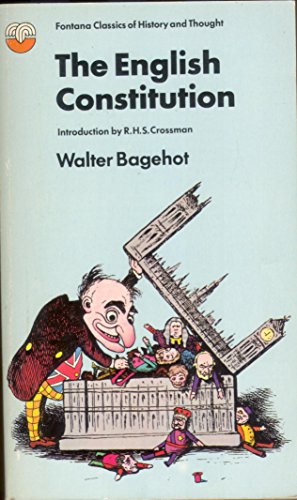
Walter Bagehot "Badgett"; 3 February 1826 – 24 March 1877) was a British businessman, essayist, Social Darwinist and journalist who wrote extensively about literature, government, and economic affairs. Bagehot was called to the bar by Lincoln's Inn, but preferred to join his father in 1852 in his family's shipping and banking business. He wrote for various periodicals, and in 1855 founded the National Review with his friend Richard Holt Hutton.[3][4] Later becoming editor-in-chief of The Economist, which had been founded by his father-in-law, James Wilson, in 1860, Bagehot expanded The Economist's reporting on the United States and on politics and is considered to have increased its influence among policymakers over the seventeen years he served as editor. In 1867, he wrote The English Constitution, a book that explored the nature of the constitution of the United Kingdom, specifically the functioning of Parliament and the British monarchy and the contrasts between British and American government. The book appeared at the same time that Parliament enacted the Reform Act of 1867, requiring Bagehot to write an extended introduction to the second edition, which appeared in 1872. The book became an instant classic, has been translated into many languages, and is still available in scholarly editions from Oxford University Press (in its "World's Classics" series) and Cambridge University Press. Bagehot also wrote Physics and Politics (1872), in which he coined the still-current expression "the cake of custom" to describe the tension between social institutions and innovations. In this book, he also expressed the fundamental ideas of the struggle school and described the historical evolution of social groups into nations. Bagehot argued that "these nations evolved principally by succeeding in conflicts with other groups". For many political scientists, sociologists, and military strategists, this strain of social Darwinism justified overseas expansion by nations (imperialism) during the 1890s. In his contributions to sociological theory within historical studies, Bagehot may be compared to his contemporary, Henry James Sumner Maine.
Présentation de l'éditeur
Walter Bagehot (3 February 1826 – 24 March 1877) was a British journalist, businessman, and essayist, who wrote extensively about government, economics, and literature. Bagehot was born in Langport, Somerset, England, on 3 February 1826. His father, Thomas Watson Bagehot, was managing director and vice-chairman of Stuckey's Banking Company. He attended University College London (UCL), where he studied mathematics, and in 1848 earned a master's degree in moral philosophy. Bagehot was called to the bar by Lincoln's Inn, but preferred to join his father in 1852 in his family's shipping and banking business. In 1867, Bagehot wrote The English Constitution, a book that explores the nature of the constitution of the United Kingdom, specifically its Parliament and monarchy. It appeared at the same time that Parliament enacted the Reform Act of 1867, requiring Bagehot to write an extended introduction to the second edition which appeared in 1872. Bagehot also wrote Physics and Politics (1872), in which he examines how civilisations sustain themselves, arguing that in their earliest phase civilisations are very much in opposition to the values of modern liberalism, insofar as they are sustained by conformism and military success, but once they are secured it is possible for them to mature into systems which allow for greater diversity and freedom. In Lombard Street: A Description of the Money Market (1873) Bagehot seeks to explain the world of finance and banking. His observations on finance are often cited by central bankers, most recently in the wake of the global financial crisis which began in 2007. Of particular importance is "Bagehot's Dictum" that in times of financial crisis central banks should lend freely to solvent depository institutions, only against good collateral and at interest rates that are high enough to dissuade those borrowers that are not genuinely in need.
Les informations fournies dans la section « A propos du livre » peuvent faire référence à une autre édition de ce titre.
Résultats de recherche pour English Constitution, The

Image d'archives
'ENGLISH CONSTITUTION, THE (FONTANA CLASSICS OF HISTORY & THOUGHT)'
Edité par
Fontan/Collins, 1977
ISBN 10 : 0006327583
ISBN 13 : 9780006327585
Ancien ou d'occasion
Paperback
Vendeur : ThriftBooks-Atlanta, AUSTELL, GA, Etats-Unis
Évaluation du vendeur 5 sur 5 étoiles

Paperback. Etat : Fair. No Jacket. Readable copy. Pages may have considerable notes/highlighting. ~ ThriftBooks: Read More, Spend Less. N° de réf. du vendeur G0006327583I5N00
Acheter D'occasion
EUR 9,52
Livraison gratuite
Expédition nationale : Etats-Unis
Expédition nationale : Etats-Unis
Quantité disponible : 1 disponible(s)
Image d'archives
The English Constitution (Fontana classics of history & thought)
Vendeur : AwesomeBooks, Wallingford, Royaume-Uni
Évaluation du vendeur 5 sur 5 étoiles
Paperback. Etat : Very Good. The English Constitution (Fontana classics of history & thought) This book is in very good condition and will be shipped within 24 hours of ordering. The cover may have some limited signs of wear but the pages are clean, intact and the spine remains undamaged. This book has clearly been well maintained and looked after thus far. Money back guarantee if you are not satisfied. See all our books here, order more than 1 book and get discounted shipping. N° de réf. du vendeur 7719-9780006327585
Acheter D'occasion
EUR 5,96
Expédition à EUR 4,80
Expédition depuis Royaume-Uni vers Etats-Unis
Expédition depuis Royaume-Uni vers Etats-Unis
Quantité disponible : 2 disponible(s)
Image d'archives
'ENGLISH CONSTITUTION, THE (FONTANA CLASSICS OF HISTORY & THOUGHT)'
Edité par
Fontan/Collins, 1977
ISBN 10 : 0006327583
ISBN 13 : 9780006327585
Ancien ou d'occasion
Couverture souple
Vendeur : Better World Books Ltd, Dunfermline, Royaume-Uni
Évaluation du vendeur 5 sur 5 étoiles
Etat : Good. Pages intact with minimal writing/highlighting. The binding may be loose and creased. Dust jackets/supplements are not included. Stock photo provided. Product includes identifying sticker. Better World Books: Buy Books. Do Good. N° de réf. du vendeur 2175103-20
Acheter D'occasion
EUR 6,39
Expédition à EUR 5,82
Expédition depuis Royaume-Uni vers Etats-Unis
Expédition depuis Royaume-Uni vers Etats-Unis
Quantité disponible : 1 disponible(s)
Image d'archives
The English Constitution (Fontana classics of history & thought)
Vendeur : Bahamut Media, Reading, Royaume-Uni
Évaluation du vendeur 5 sur 5 étoiles
Paperback. Etat : Very Good. This book is in very good condition and will be shipped within 24 hours of ordering. The cover may have some limited signs of wear but the pages are clean, intact and the spine remains undamaged. This book has clearly been well maintained and looked after thus far. Money back guarantee if you are not satisfied. See all our books here, order more than 1 book and get discounted shipping. N° de réf. du vendeur 6545-9780006327585
Acheter D'occasion
EUR 6,51
Expédition à EUR 8,12
Expédition depuis Royaume-Uni vers Etats-Unis
Expédition depuis Royaume-Uni vers Etats-Unis
Quantité disponible : 2 disponible(s)
Image d'archives
The English Constitution
Edité par
Fontana Press, 1963
ISBN 10 : 0006327583
ISBN 13 : 9780006327585
Ancien ou d'occasion
Paperback
Vendeur : Keeper of the Page, Enumclaw, WA, Etats-Unis
Évaluation du vendeur 5 sur 5 étoiles
Paperback. Etat : Very Good. Later Printing. Fontana Press 1963 Later Printing Very Good/ Walter Bagehot (author); Crossman, R. H. S. (introduction). Printed in 1975. Light wear to bright glossy cover, pos penned inside cover, tight tanned pages. Tight tanned unmarked pages. N° de réf. du vendeur 341155
Acheter D'occasion
EUR 10,64
Expédition à EUR 6,10
Expédition nationale : Etats-Unis
Expédition nationale : Etats-Unis
Quantité disponible : 1 disponible(s)
Image fournie par le vendeur
The English Constitution
Edité par
Fontana, 1978
ISBN 10 : 0006327583
ISBN 13 : 9780006327585
Ancien ou d'occasion
Soft cover
Vendeur : Neo Books, Sidcup, KENT, Royaume-Uni
Évaluation du vendeur 5 sur 5 étoiles
Soft cover. Etat : Good. No Jacket. Some light wear to covers and spine, mainly edges and corners, edges and corners a little creased and worn, bottom right corner creased, internally in good condition, pages crisp and clear but browning. N° de réf. du vendeur 056224
Acheter D'occasion
EUR 8,33
Expédition à EUR 20,98
Expédition depuis Royaume-Uni vers Etats-Unis
Expédition depuis Royaume-Uni vers Etats-Unis
Quantité disponible : 1 disponible(s)
Image d'archives
The English Constitution (Fontana classics of history & thought)
Edité par
Fontan/Collins, 1977
ISBN 10 : 0006327583
ISBN 13 : 9780006327585
Ancien ou d'occasion
paperback
Vendeur : Stephen White Books, Bradford, Royaume-Uni
Évaluation du vendeur 5 sur 5 étoiles
paperback. Etat : Acceptable. NOT an ex-library book. Well read with some wear but still very useable. Quick dispatch from UK seller. N° de réf. du vendeur mon0000583052
Acheter D'occasion
EUR 3,85
Expédition à EUR 38,70
Expédition depuis Royaume-Uni vers Etats-Unis
Expédition depuis Royaume-Uni vers Etats-Unis
Quantité disponible : 1 disponible(s)