
Articles liés à Aesop for Children
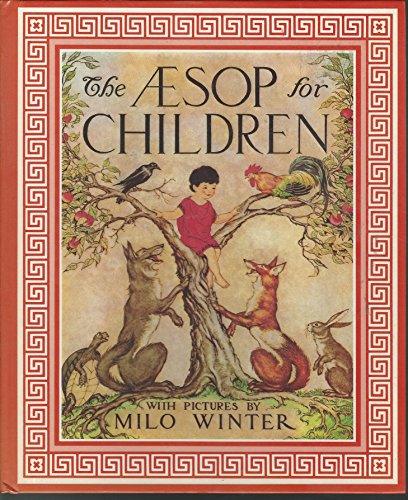
Synopsis
Book by Aesop
Les informations fournies dans la section « Synopsis » peuvent faire référence à une autre édition de ce titre.
Présentation de l'éditeur
Aesop (c620-c560), known only for the genre of fables ascribed to him, was by tradition a slave who was a contemporary of Croesus and Peisistratus in the mid-sixth century BC in ancient Greece. The various collections that go under the rubric Aesop's Fables are still taught as moral lessons and used as subjects for various entertainments, especially children's plays and cartoons. Most of what are known as Aesopic fables is a compilation of tales from various sources, many of which originated with authors who lived long before Aesop. Aesop himself is said to have composed many fables, which were passed down by oral tradition. Socrates was thought to have spent his time turning Aesop's fables into verse while he was in prison. Demetrius Phalereus, another Greek philosopher, made the first collection of these fables around 300 BC. This was later translated into Latin by Phaedrus, a slave himself, around 25 BC. The fables from these two collections were soon brought together and were eventually retranslated into Greek by Babrius around A. D. 230. Many additional fables were included, and the collection was in turn translated to Arabic and Hebrew, further enriched by additional fables from these cultures.
Biographie de l'auteur
Aesop (c. 620–564 BCE) was an Ancient Greek fabulist or story teller credited with a number of fables now collectively known as Aesop's Fables. Although his existence remains uncertain and (if they ever existed) no writings by him survive, numerous tales credited to him were gathered across the centuries and in many languages in a storytelling tradition that continues to this day.
Les informations fournies dans la section « A propos du livre » peuvent faire référence à une autre édition de ce titre.
Résultats de recherche pour Aesop for Children

Image d'archives
Aesop for Children
Edité par
Atheneum (edition ), 1984
ISBN 10 : 0026890224
ISBN 13 : 9780026890229
Ancien ou d'occasion
Couverture rigide
Vendeur : BooksRun, Philadelphia, PA, Etats-Unis
Évaluation du vendeur 5 sur 5 étoiles

Hardcover. Etat : Fair. Milo Winter (illustrateur). The item might be beaten up but readable. May contain markings or highlighting, as well as stains, bent corners, or any other major defect, but the text is not obscured in any way. N° de réf. du vendeur 0026890224-7-1
Acheter D'occasion
EUR 6,97
Livraison gratuite
Expédition nationale : Etats-Unis
Expédition nationale : Etats-Unis
Quantité disponible : 1 disponible(s)
Image d'archives
Aesop for Children
Edité par
Atheneum, 1984
ISBN 10 : 0026890224
ISBN 13 : 9780026890229
Ancien ou d'occasion
Couverture rigide
Vendeur : HPB-Movies, Dallas, TX, Etats-Unis
Évaluation du vendeur 5 sur 5 étoiles
Hardcover. Etat : Very Good. Milo Winter (illustrateur). Connecting readers with great books since 1972! Used books may not include companion materials, and may have some shelf wear or limited writing. We ship orders daily and Customer Service is our top priority! N° de réf. du vendeur S_484903765
Acheter D'occasion
EUR 5,36
Expédition à EUR 3,30
Expédition nationale : Etats-Unis
Expédition nationale : Etats-Unis
Quantité disponible : 1 disponible(s)
Image d'archives
Aesop for Children
Edité par
Atheneum, 1984
ISBN 10 : 0026890224
ISBN 13 : 9780026890229
Ancien ou d'occasion
Couverture rigide
Vendeur : HPB-Emerald, Dallas, TX, Etats-Unis
Évaluation du vendeur 5 sur 5 étoiles
Hardcover. Etat : Very Good. Milo Winter (illustrateur). Connecting readers with great books since 1972! Used books may not include companion materials, and may have some shelf wear or limited writing. We ship orders daily and Customer Service is our top priority! N° de réf. du vendeur S_484434999
Acheter D'occasion
EUR 5,36
Expédition à EUR 3,30
Expédition nationale : Etats-Unis
Expédition nationale : Etats-Unis
Quantité disponible : 1 disponible(s)
Image d'archives
Aesop for Children
Edité par
Atheneum, 1984
ISBN 10 : 0026890224
ISBN 13 : 9780026890229
Ancien ou d'occasion
Couverture rigide
Vendeur : ThriftBooks-Phoenix, Phoenix, AZ, Etats-Unis
Évaluation du vendeur 5 sur 5 étoiles
Hardcover. Etat : Fair. No Jacket. Milo Winter (illustrateur). Readable copy. Pages may have considerable notes/highlighting. ~ ThriftBooks: Read More, Spend Less. N° de réf. du vendeur G0026890224I5N00
Acheter D'occasion
EUR 8,98
Livraison gratuite
Expédition nationale : Etats-Unis
Expédition nationale : Etats-Unis
Quantité disponible : 1 disponible(s)
Image d'archives
Aesop for Children
Edité par
Atheneum, 1984
ISBN 10 : 0026890224
ISBN 13 : 9780026890229
Ancien ou d'occasion
Couverture rigide
Vendeur : ThriftBooks-Atlanta, AUSTELL, GA, Etats-Unis
Évaluation du vendeur 5 sur 5 étoiles
Hardcover. Etat : Fair. No Jacket. Milo Winter (illustrateur). Missing dust jacket; Readable copy. Pages may have considerable notes/highlighting. ~ ThriftBooks: Read More, Spend Less. N° de réf. du vendeur G0026890224I5N01
Acheter D'occasion
EUR 8,98
Livraison gratuite
Expédition nationale : Etats-Unis
Expédition nationale : Etats-Unis
Quantité disponible : 1 disponible(s)
Image d'archives
Aesop for Children
Edité par
Atheneum, 1984
ISBN 10 : 0026890224
ISBN 13 : 9780026890229
Ancien ou d'occasion
Couverture rigide
Vendeur : ThriftBooks-Atlanta, AUSTELL, GA, Etats-Unis
Évaluation du vendeur 5 sur 5 étoiles
Hardcover. Etat : Good. No Jacket. Milo Winter (illustrateur). Pages can have notes/highlighting. Spine may show signs of wear. ~ ThriftBooks: Read More, Spend Less. N° de réf. du vendeur G0026890224I3N00
Acheter D'occasion
EUR 8,98
Livraison gratuite
Expédition nationale : Etats-Unis
Expédition nationale : Etats-Unis
Quantité disponible : 1 disponible(s)
Image d'archives
Aesop for Children
Edité par
Atheneum, 1984
ISBN 10 : 0026890224
ISBN 13 : 9780026890229
Ancien ou d'occasion
Couverture rigide
Vendeur : ThriftBooks-Reno, Reno, NV, Etats-Unis
Évaluation du vendeur 5 sur 5 étoiles
Hardcover. Etat : Fair. No Jacket. Milo Winter (illustrateur). Readable copy. Pages may have considerable notes/highlighting. ~ ThriftBooks: Read More, Spend Less. N° de réf. du vendeur G0026890224I5N00
Acheter D'occasion
EUR 8,98
Livraison gratuite
Expédition nationale : Etats-Unis
Expédition nationale : Etats-Unis
Quantité disponible : 1 disponible(s)
Image d'archives
Aesop for Children
Edité par
Atheneum, 1984
ISBN 10 : 0026890224
ISBN 13 : 9780026890229
Ancien ou d'occasion
Couverture rigide
Vendeur : ThriftBooks-Dallas, Dallas, TX, Etats-Unis
Évaluation du vendeur 5 sur 5 étoiles
Hardcover. Etat : Very Good. No Jacket. Milo Winter (illustrateur). Missing dust jacket; May have limited writing in cover pages. Pages are unmarked. ~ ThriftBooks: Read More, Spend Less. N° de réf. du vendeur G0026890224I4N01
Acheter D'occasion
EUR 8,98
Livraison gratuite
Expédition nationale : Etats-Unis
Expédition nationale : Etats-Unis
Quantité disponible : 1 disponible(s)
Image d'archives
Aesop for Children
Edité par
Atheneum, 1984
ISBN 10 : 0026890224
ISBN 13 : 9780026890229
Ancien ou d'occasion
Couverture rigide
Vendeur : ThriftBooks-Reno, Reno, NV, Etats-Unis
Évaluation du vendeur 5 sur 5 étoiles
Hardcover. Etat : Very Good. No Jacket. Milo Winter (illustrateur). May have limited writing in cover pages. Pages are unmarked. ~ ThriftBooks: Read More, Spend Less. N° de réf. du vendeur G0026890224I4N00
Acheter D'occasion
EUR 8,98
Livraison gratuite
Expédition nationale : Etats-Unis
Expédition nationale : Etats-Unis
Quantité disponible : 2 disponible(s)
Image d'archives
Aesop for Children
Edité par
Atheneum, 1984
ISBN 10 : 0026890224
ISBN 13 : 9780026890229
Ancien ou d'occasion
Couverture rigide
Vendeur : ThriftBooks-Dallas, Dallas, TX, Etats-Unis
Évaluation du vendeur 5 sur 5 étoiles
Hardcover. Etat : Fair. No Jacket. Milo Winter (illustrateur). Missing dust jacket; Readable copy. Pages may have considerable notes/highlighting. ~ ThriftBooks: Read More, Spend Less. N° de réf. du vendeur G0026890224I5N01
Acheter D'occasion
EUR 8,98
Livraison gratuite
Expédition nationale : Etats-Unis
Expédition nationale : Etats-Unis
Quantité disponible : 1 disponible(s)