
Articles liés à The Wild Life of Our Bodies: Predators, Parasites,...
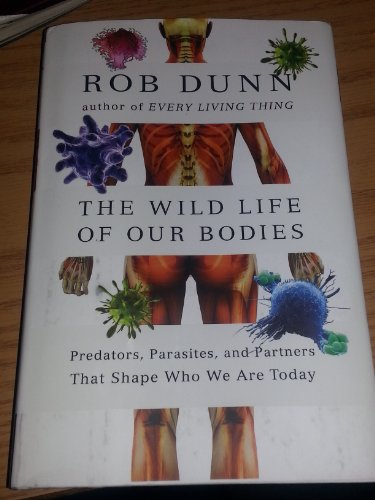
The Wild Life of Our Bodies: Predators, Parasites, and Partners That Shape Who We Are Today - Couverture rigide
Synopsis
“Anextraordinary book…. With clarity and charm [Dunn] takes the reader into theoverlap of medicine, ecology, and evolutionary biology to reveal an importantdomain of the human condition.” —EdwardO. Wilson, author of Anthill and The Future of Life
BiologistRob Dunn reveals the crucial influence that other species have upon our health,our well-being, and our world in The WildLife of Our Bodies—a fascinating tour through the hidden truths of natureand codependence. Dunn illuminates the nuanced, often imperceptible relationshipsthat exist between homo sapiens and other species, relationships that underpinhumanity’s ability to thrive and prosper in every circumstance. Readers ofMichael Pollan’s TheOmnivore’s Dilemma will be enthralled by Dunn’s powerful, lucid explorationof the role that humankind plays within the greater web of life on Earth.
Les informations fournies dans la section « Synopsis » peuvent faire référence à une autre édition de ce titre.
À propos de l'auteur
Rob Dunn is an associate professor in the Department of Biological Sciences at North Carolina State University and the author of several books, including Every Living Thing. A rising star in popular-science journalism, he writes for National Geographic, Natural History, Scientific American, BBC Wildlife, and Seed magazine. He lives in Raleigh, North Carolina, with many thousands of wild species, including at least one species of mite living on his head.
À propos de la quatrième de couverture
A biologist shows the influence of wild species on our well-being and the world and how nature still clings to us—and always will.
We evolved in a wilderness of parasites, mutualists, and pathogens, but we no longer see ourselves as being part of nature and the broader community of life. In the name of progress and clean living, we scrub much of nature off our bodies and try to remove whole kinds of life—parasites, bacteria, mutualists, and predators—to allow ourselves to live free of wild danger. Nature, in this new world, is the landscape outside, a kind of living painting that is pleasant to contemplate but nice to have escaped.
The truth, though, according to biologist Rob Dunn, is that while "clean living" has benefited us in some ways, it has also made us sicker in others. We are trapped in bodies that evolved to deal with the dependable presence of hundreds of other species. As Dunn reveals, our modern disconnect from the web of life has resulted in unprecedented effects that immunologists, evolutionary biologists, psychologists, and other scientists are only beginning to understand. Diabetes, autism, allergies, many anxiety disorders, autoimmune diseases, and even tooth, jaw, and vision problems are increasingly plaguing bodies that have been removed from the ecological context in which they existed for millennia.
In this eye-opening, thoroughly researched, and well-reasoned book, Dunn considers the crossroads at which we find ourselves. Through the stories of visionaries, Dunn argues that we can create a richer nature, one in which we choose to surround ourselves with species that benefit us, not just those that, despite us, survive.
Les informations fournies dans la section « A propos du livre » peuvent faire référence à une autre édition de ce titre.
Résultats de recherche pour The Wild Life of Our Bodies: Predators, Parasites,...

Image d'archives
The Wild Life of Our Bodies: Predators, Parasites, and Partners That Shape Who We Are Today
Edité par
HarperCollins Publishers Inc, 2011
ISBN 10 : 006180648X
ISBN 13 : 9780061806483
Ancien ou d'occasion
Couverture rigide
Vendeur : World of Books (was SecondSale), Montgomery, IL, Etats-Unis
Évaluation du vendeur 5 sur 5 étoiles

Hardback. Etat : Good. We evolved, like every other species, in a wilderness of parasites, mutualists and pathogens. But we no longer see ourselves as being part of nature and the broader community of life. This title tells the story of the known and potential consequences of our changing relationships with nature and considers the crossroads at which we find ourselves. N° de réf. du vendeur 00088572185
Acheter D'occasion
EUR 5,48
Livraison gratuite
Expédition nationale : Etats-Unis
Expédition nationale : Etats-Unis
Quantité disponible : 9 disponible(s)
Image d'archives
The Wild Life of Our Bodies: Predators, Parasites, and Partners That Shape Who We Are Today
Edité par
HarperCollins Publishers Inc, 2011
ISBN 10 : 006180648X
ISBN 13 : 9780061806483
Ancien ou d'occasion
Couverture rigide
Vendeur : World of Books (was SecondSale), Montgomery, IL, Etats-Unis
Évaluation du vendeur 5 sur 5 étoiles
Hardback. Etat : Very Good. We evolved, like every other species, in a wilderness of parasites, mutualists and pathogens. But we no longer see ourselves as being part of nature and the broader community of life. This title tells the story of the known and potential consequences of our changing relationships with nature and considers the crossroads at which we find ourselves. N° de réf. du vendeur 00105175763
Acheter D'occasion
EUR 5,48
Livraison gratuite
Expédition nationale : Etats-Unis
Expédition nationale : Etats-Unis
Quantité disponible : 3 disponible(s)
Image d'archives
The Wild Life of Our Bodies: Predators, Parasites, and Partners That Shape Who We Are Today
Edité par
HarperCollins Publishers Inc, 2011
ISBN 10 : 006180648X
ISBN 13 : 9780061806483
Ancien ou d'occasion
Couverture rigide
Vendeur : World of Books (was SecondSale), Montgomery, IL, Etats-Unis
Évaluation du vendeur 5 sur 5 étoiles
Hardback. Etat : Fair. We evolved, like every other species, in a wilderness of parasites, mutualists and pathogens. But we no longer see ourselves as being part of nature and the broader community of life. This title tells the story of the known and potential consequences of our changing relationships with nature and considers the crossroads at which we find ourselves. N° de réf. du vendeur 00107100855
Acheter D'occasion
EUR 5,48
Livraison gratuite
Expédition nationale : Etats-Unis
Expédition nationale : Etats-Unis
Quantité disponible : 2 disponible(s)
Image d'archives
The Wild Life of Our Bodies: Predators, Parasites, and Partners That Shape Who We Are Today
Edité par
Harper (edition First Edition), 2011
ISBN 10 : 006180648X
ISBN 13 : 9780061806483
Ancien ou d'occasion
Couverture rigide
Edition originale
Vendeur : BooksRun, Philadelphia, PA, Etats-Unis
Évaluation du vendeur 5 sur 5 étoiles
Hardcover. Etat : Fair. First Edition. With dust jacket. The item might be beaten up but readable. May contain markings or highlighting, as well as stains, bent corners, or any other major defect, but the text is not obscured in any way. N° de réf. du vendeur 006180648X-7-1-29
Acheter D'occasion
EUR 5,49
Livraison gratuite
Expédition nationale : Etats-Unis
Expédition nationale : Etats-Unis
Quantité disponible : 1 disponible(s)
Image d'archives
The Wild Life of Our Bodies: Predators, Parasites, and Partners That Shape Who We Are Today
Edité par
Harper, 2011
ISBN 10 : 006180648X
ISBN 13 : 9780061806483
Ancien ou d'occasion
Couverture rigide
Vendeur : ThriftBooks-Reno, Reno, NV, Etats-Unis
Évaluation du vendeur 5 sur 5 étoiles
Hardcover. Etat : Fair. No Jacket. Former library book; Readable copy. Pages may have considerable notes/highlighting. ~ ThriftBooks: Read More, Spend Less. N° de réf. du vendeur G006180648XI5N10
Acheter D'occasion
EUR 6,12
Livraison gratuite
Expédition nationale : Etats-Unis
Expédition nationale : Etats-Unis
Quantité disponible : 1 disponible(s)
Image d'archives
The Wild Life of Our Bodies: Predators, Parasites, and Partners That Shape Who We Are Today
Edité par
Harper, 2011
ISBN 10 : 006180648X
ISBN 13 : 9780061806483
Ancien ou d'occasion
Couverture rigide
Vendeur : ThriftBooks-Atlanta, AUSTELL, GA, Etats-Unis
Évaluation du vendeur 5 sur 5 étoiles
Hardcover. Etat : Good. No Jacket. Missing dust jacket; Pages can have notes/highlighting. Spine may show signs of wear. ~ ThriftBooks: Read More, Spend Less. N° de réf. du vendeur G006180648XI3N01
Acheter D'occasion
EUR 6,12
Livraison gratuite
Expédition nationale : Etats-Unis
Expédition nationale : Etats-Unis
Quantité disponible : 1 disponible(s)
Image d'archives
The Wild Life of Our Bodies: Predators, Parasites, and Partners That Shape Who We Are Today
Edité par
Harper, 2011
ISBN 10 : 006180648X
ISBN 13 : 9780061806483
Ancien ou d'occasion
Couverture rigide
Vendeur : ThriftBooks-Dallas, Dallas, TX, Etats-Unis
Évaluation du vendeur 5 sur 5 étoiles
Hardcover. Etat : Fair. No Jacket. Readable copy. Pages may have considerable notes/highlighting. ~ ThriftBooks: Read More, Spend Less. N° de réf. du vendeur G006180648XI5N00
Acheter D'occasion
EUR 6,12
Livraison gratuite
Expédition nationale : Etats-Unis
Expédition nationale : Etats-Unis
Quantité disponible : 1 disponible(s)
Image d'archives
The Wild Life of Our Bodies: Predators, Parasites, and Partners That Shape Who We Are Today
Edité par
Harper, 2011
ISBN 10 : 006180648X
ISBN 13 : 9780061806483
Ancien ou d'occasion
Couverture rigide
Vendeur : ThriftBooks-Dallas, Dallas, TX, Etats-Unis
Évaluation du vendeur 5 sur 5 étoiles
Hardcover. Etat : Good. No Jacket. Pages can have notes/highlighting. Spine may show signs of wear. ~ ThriftBooks: Read More, Spend Less. N° de réf. du vendeur G006180648XI3N00
Acheter D'occasion
EUR 6,12
Livraison gratuite
Expédition nationale : Etats-Unis
Expédition nationale : Etats-Unis
Quantité disponible : 1 disponible(s)
Image d'archives
The Wild Life of Our Bodies: Predators, Parasites, and Partners That Shape Who We Are Today
Edité par
Harper, 2011
ISBN 10 : 006180648X
ISBN 13 : 9780061806483
Ancien ou d'occasion
Couverture rigide
Vendeur : ThriftBooks-Dallas, Dallas, TX, Etats-Unis
Évaluation du vendeur 5 sur 5 étoiles
Hardcover. Etat : Very Good. No Jacket. Former library book; May have limited writing in cover pages. Pages are unmarked. ~ ThriftBooks: Read More, Spend Less. N° de réf. du vendeur G006180648XI4N10
Acheter D'occasion
EUR 6,12
Livraison gratuite
Expédition nationale : Etats-Unis
Expédition nationale : Etats-Unis
Quantité disponible : 1 disponible(s)
Image d'archives
The Wild Life of Our Bodies: Predators, Parasites, and Partners That Shape Who We Are Today
Edité par
Harper, 2011
ISBN 10 : 006180648X
ISBN 13 : 9780061806483
Ancien ou d'occasion
Couverture rigide
Vendeur : ThriftBooks-Atlanta, AUSTELL, GA, Etats-Unis
Évaluation du vendeur 5 sur 5 étoiles
Hardcover. Etat : Good. No Jacket. Pages can have notes/highlighting. Spine may show signs of wear. ~ ThriftBooks: Read More, Spend Less. N° de réf. du vendeur G006180648XI3N00
Acheter D'occasion
EUR 6,12
Livraison gratuite
Expédition nationale : Etats-Unis
Expédition nationale : Etats-Unis
Quantité disponible : 1 disponible(s)