
Articles liés à Stability of Structures: Principles and Applications
Synopsis
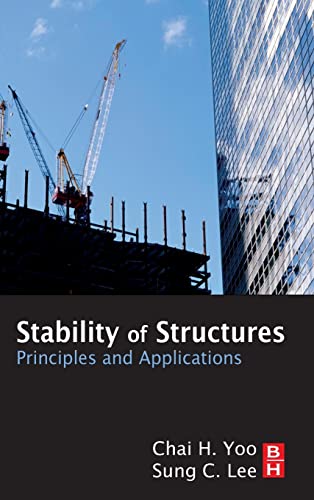
The current trend of building more streamlined structures has made stability analysis a subject of extreme importance. It is mostly a safety issue because Stability loss could result in an unimaginable catastrophe. Written by two authors with a combined 80 years of professional and academic experience, the objective of Stability of Structures: Principles and Applications is to provide engineers and architects with a firm grasp of the fundamentals and principles that are essential to performing effective stability analysts.
Concise and readable, this guide presents stability analysis within the context of elementary nonlinear flexural analysis, providing a strong foundation for incorporating theory into everyday practice. The first chapter introduces the buckling of columns. It begins with the linear elastic theory and proceeds to include the effects of large deformations and inelastic behavior. In Chapter 2 various approximate methods are illustrated along with the fundamentals of energy methods. The chapter concludes by introducing several special topics, some advanced, that are useful in understanding the physical resistance mechanisms and consistent and rigorous mathematical analysis. Chapters 3 and 4 cover buckling of beam-columns. Chapter 5 presents torsion in structures in some detail, which is one of the least well understood subjects in the entire spectrum of structural mechanics. Strictly speaking, torsion itself does not belong to a topic in structural stability, but needs to be covered to some extent for a better understanding of buckling accompanied with torsional behavior. Chapters 6 and 7 consider stability of framed structures in conjunction with torsional behavior of structures. Chapters 8 to 10 consider buckling of plate elements, cylindrical shells, and general shells. Although the book is primarily devoted to analysis, rudimentary design aspects are discussed.
Les informations fournies dans la section « Synopsis » peuvent faire référence à une autre édition de ce titre.
Présentation de l'éditeur
The current trend of building more streamlined structures has made stability analysis a subject of extreme importance. It is mostly a safety issue because Stability loss could result in an unimaginable catastrophe. Written by two authors with a combined 80 years of professional and academic experience, the objective of Stability of Structures: Principles and Applications is to provide engineers and architects with a firm grasp of the fundamentals and principles that are essential to performing effective stability analysts.
Concise and readable, this guide presents stability analysis within the context of elementary nonlinear flexural analysis, providing a strong foundation for incorporating theory into everyday practice. The first chapter introduces the buckling of columns. It begins with the linear elastic theory and proceeds to include the effects of large deformations and inelastic behavior. In Chapter 2 various approximate methods are illustrated along with the fundamentals of energy methods. The chapter concludes by introducing several special topics, some advanced, that are useful in understanding the physical resistance mechanisms and consistent and rigorous mathematical analysis. Chapters 3 and 4 cover buckling of beam-columns. Chapter 5 presents torsion in structures in some detail, which is one of the least well understood subjects in the entire spectrum of structural mechanics. Strictly speaking, torsion itself does not belong to a topic in structural stability, but needs to be covered to some extent for a better understanding of buckling accompanied with torsional behavior. Chapters 6 and 7 consider stability of framed structures in conjunction with torsional behavior of structures. Chapters 8 to 10 consider buckling of plate elements, cylindrical shells, and general shells. Although the book is primarily devoted to analysis, rudimentary design aspects are discussed.
The accompanying website will include additional formulas and problems based on the author’s on software which is currently being used in corporations. The website will also include equations and examples based on there personal experiences. In addition, the website will include a solutions manual for those who wish to use the book as a text book for a two-semester course. Engineers, Architects, designers, and researcher will find this print/website combination a valuable guide both in terms of its applications of verification of design of structures.
- Balanced presentation for both theory and practice
- Well-blended contents covering elementary to advanced topics
- Detailed presentation of the development
- Computer programs will be made available through the senior author's web page
Les informations fournies dans la section « A propos du livre » peuvent faire référence à une autre édition de ce titre.
Résultats de recherche pour Stability of Structures: Principles and Applications

Image d'archives
Stability of Structures: Principles and Applications
Edité par
Butterworth-Heinemann (edition 1), 2011
ISBN 10 : 012385122X
ISBN 13 : 9780123851222
Ancien ou d'occasion
Couverture rigide
Vendeur : BooksRun, Philadelphia, PA, Etats-Unis
Évaluation du vendeur 5 sur 5 étoiles

Hardcover. Etat : Very Good. 1. It's a well-cared-for item that has seen limited use. The item may show minor signs of wear. All the text is legible, with all pages included. It may have slight markings and/or highlighting. N° de réf. du vendeur 012385122X-11-1
Acheter D'occasion
EUR 56,97
Livraison gratuite
Expédition nationale : Etats-Unis
Expédition nationale : Etats-Unis
Quantité disponible : 1 disponible(s)
Image d'archives
STABILITY OF STRUCTURES, PRINCIPLES AND APPLICATIONS, HB "N E W"
Edité par
Butterworth-Heinemann, 2011
ISBN 10 : 012385122X
ISBN 13 : 9780123851222
Neuf
Couverture rigide
Vendeur : Basi6 International, Irving, TX, Etats-Unis
Évaluation du vendeur 5 sur 5 étoiles
Etat : Brand New. New. US edition. Expediting shipping for all USA and Europe orders excluding PO Box. Excellent Customer Service. N° de réf. du vendeur ABEOCT25-280180
Acheter neuf
EUR 98,11
Livraison gratuite
Expédition nationale : Etats-Unis
Expédition nationale : Etats-Unis
Quantité disponible : 1 disponible(s)
Image d'archives
Stability of Structures: Principles and Applications
Edité par
Butterworth-Heinemann 2011-05-12, 2011
ISBN 10 : 012385122X
ISBN 13 : 9780123851222
Neuf
Couverture rigide
Vendeur : Chiron Media, Wallingford, Royaume-Uni
Évaluation du vendeur 5 sur 5 étoiles
Hardcover. Etat : New. Brand new book, sourced directly from publisher. Dispatch time is 9-10 days from our warehouse. Book will be sent in robust, secure packaging to ensure it reaches you securely. N° de réf. du vendeur 6666-ELS-9780123851222
Acheter neuf
EUR 92,01
Expédition à EUR 7,74
Expédition depuis Royaume-Uni vers Etats-Unis
Expédition depuis Royaume-Uni vers Etats-Unis
Quantité disponible : 1 disponible(s)
Image d'archives
Stability of Structures: Principles and Applications
Edité par
Butterworth-Heinemann, 2011
ISBN 10 : 012385122X
ISBN 13 : 9780123851222
Ancien ou d'occasion
Couverture rigide
Vendeur : Phatpocket Limited, Waltham Abbey, HERTS, Royaume-Uni
Évaluation du vendeur 5 sur 5 étoiles
Etat : Good. Your purchase helps support Sri Lankan Children's Charity 'The Rainbow Centre'. Ex-library, so some stamps and wear, but in good overall condition. Our donations to The Rainbow Centre have helped provide an education and a safe haven to hundreds of children who live in appalling conditions. N° de réf. du vendeur Z1-U-002-01581
Acheter D'occasion
EUR 90,77
Expédition à EUR 12,69
Expédition depuis Royaume-Uni vers Etats-Unis
Expédition depuis Royaume-Uni vers Etats-Unis
Quantité disponible : 1 disponible(s)
Image fournie par le vendeur
Stability of Structures
Edité par
Elsevier Inc Jun 2011, 2011
ISBN 10 : 012385122X
ISBN 13 : 9780123851222
Neuf
Couverture rigide
Vendeur : BuchWeltWeit Ludwig Meier e.K., Bergisch Gladbach, Allemagne
Évaluation du vendeur 5 sur 5 étoiles
Buch. Etat : Neu. This item is printed on demand - it takes 3-4 days longer - Neuware -The current trend of building more streamlined structures has made stability analysis a subject of extreme importance. It is mostly a safety issue because Stability loss could result in an unimaginable catastrophe. Written by two authors with a combined 80 years of professional and academic experience, the objective of Stability of Structures: Principles and Applications is to provide engineers and architects with a firm grasp of the fundamentals and principles that are essential to performing effective stability analysts. Concise and readable, this guide presents stability analysis within the context of elementary nonlinear flexural analysis, providing a strong foundation for incorporating theory into everyday practice. The first chapter introduces the buckling of columns. It begins with the linear elastic theory and proceeds to include the effects of large deformations and inelastic behavior. In Chapter 2 various approximate methods are illustrated along with the fundamentals of energy methods. The chapter concludes by introducing several special topics, some advanced, that are useful in understanding the physical resistance mechanisms and consistent and rigorous mathematical analysis. Chapters 3 and 4 cover buckling of beam-columns. Chapter 5 presents torsion in structures in some detail, which is one of the least well understood subjects in the entire spectrum of structural mechanics. Strictly speaking, torsion itself does not belong to a topic in structural stability, but needs to be covered to some extent for a better understanding of buckling accompanied with torsional behavior. Chapters 6 and 7 consider stability of framed structures in conjunction with torsional behavior of structures. Chapters 8 to 10 consider buckling of plate elements, cylindrical shells, and general shells. Although the book is primarily devoted to analysis, rudimentary design aspects are discussed. 538 pp. Englisch. N° de réf. du vendeur 9780123851222
Acheter neuf
EUR 95,95
Expédition à EUR 23
Expédition depuis Allemagne vers Etats-Unis
Expédition depuis Allemagne vers Etats-Unis
Quantité disponible : 2 disponible(s)
Image fournie par le vendeur
Stability of Structures : Principles and Applications
Edité par
Butterworth-Heinemann, 2011
ISBN 10 : 012385122X
ISBN 13 : 9780123851222
Neuf
Couverture rigide
Vendeur : GreatBookPrices, Columbia, MD, Etats-Unis
Évaluation du vendeur 5 sur 5 étoiles
Etat : New. N° de réf. du vendeur 12041047-n
Acheter neuf
EUR 123,06
Expédition à EUR 2,35
Expédition nationale : Etats-Unis
Expédition nationale : Etats-Unis
Quantité disponible : Plus de 20 disponibles
Image d'archives
Stability of Structures: Principles and Applications
Edité par
Elsevier, 2011
ISBN 10 : 012385122X
ISBN 13 : 9780123851222
Ancien ou d'occasion
Couverture rigide
Vendeur : Anybook.com, Lincoln, Royaume-Uni
Évaluation du vendeur 5 sur 5 étoiles
Etat : Fair. This is an ex-library book and may have the usual library/used-book markings inside.This book has hardback covers. In fair condition, suitable as a study copy. No dust jacket. Please note the Image in this listing is a stock photo and may not match the covers of the actual item,950grams, ISBN:9780123851222. N° de réf. du vendeur 4344589
Acheter D'occasion
EUR 91,61
Expédition à EUR 38,13
Expédition depuis Royaume-Uni vers Etats-Unis
Expédition depuis Royaume-Uni vers Etats-Unis
Quantité disponible : 1 disponible(s)
Image fournie par le vendeur
Stability of Structures : Principles and Applications
Edité par
Butterworth-Heinemann, 2011
ISBN 10 : 012385122X
ISBN 13 : 9780123851222
Ancien ou d'occasion
Couverture rigide
Vendeur : GreatBookPrices, Columbia, MD, Etats-Unis
Évaluation du vendeur 5 sur 5 étoiles
Etat : As New. Unread book in perfect condition. N° de réf. du vendeur 12041047
Acheter D'occasion
EUR 143,55
Expédition à EUR 2,35
Expédition nationale : Etats-Unis
Expédition nationale : Etats-Unis
Quantité disponible : Plus de 20 disponibles
Image fournie par le vendeur
Stability of Structures : Principles and Applications
impression à la demandeVendeur : AHA-BUCH GmbH, Einbeck, Allemagne
Évaluation du vendeur 5 sur 5 étoiles
Buch. Etat : Neu. nach der Bestellung gedruckt Neuware - Printed after ordering - The current trend of building more streamlined structures has made stability analysis a subject of extreme importance. It is mostly a safety issue because Stability loss could result in an unimaginable catastrophe. Written by two authors with a combined 80 years of professional and academic experience, the objective of Stability of Structures: Principles and Applications is to provide engineers and architects with a firm grasp of the fundamentals and principles that are essential to performing effective stability analysts. Concise and readable, this guide presents stability analysis within the context of elementary nonlinear flexural analysis, providing a strong foundation for incorporating theory into everyday practice. The first chapter introduces the buckling of columns. It begins with the linear elastic theory and proceeds to include the effects of large deformations and inelastic behavior. In Chapter 2 various approximate methods are illustrated along with the fundamentals of energy methods. The chapter concludes by introducing several special topics, some advanced, that are useful in understanding the physical resistance mechanisms and consistent and rigorous mathematical analysis. Chapters 3 and 4 cover buckling of beam-columns. Chapter 5 presents torsion in structures in some detail, which is one of the least well understood subjects in the entire spectrum of structural mechanics. Strictly speaking, torsion itself does not belong to a topic in structural stability, but needs to be covered to some extent for a better understanding of buckling accompanied with torsional behavior. Chapters 6 and 7 consider stability of framed structures in conjunction with torsional behavior of structures. Chapters 8 to 10 consider buckling of plate elements, cylindrical shells, and general shells. Although the book is primarily devoted to analysis, rudimentary design aspects are discussed. N° de réf. du vendeur 9780123851222
Acheter neuf
EUR 111,42
Expédition à EUR 35
Expédition depuis Allemagne vers Etats-Unis
Expédition depuis Allemagne vers Etats-Unis
Quantité disponible : 2 disponible(s)
Image fournie par le vendeur
Stability of Structures : Principles and Applications
Edité par
Butterworth-Heinemann, 2011
ISBN 10 : 012385122X
ISBN 13 : 9780123851222
Neuf
Couverture rigide
Vendeur : GreatBookPricesUK, Woodford Green, Royaume-Uni
Évaluation du vendeur 5 sur 5 étoiles
Etat : New. N° de réf. du vendeur 12041047-n
Acheter neuf
EUR 134,77
Expédition à EUR 17,88
Expédition depuis Royaume-Uni vers Etats-Unis
Expédition depuis Royaume-Uni vers Etats-Unis
Quantité disponible : Plus de 20 disponibles