
Articles liés à Complement Regulatory Proteins
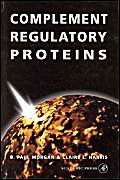
Synopsis
From small beginnings in the early 1970s, the study of complement regulatory proteins has grown in the last decade to the point where it dominates the complement field. This growth has been fueled by the discovery of new regulators, the cloning of old and new regulators, the discovery that many of the regulators are structurally and evolutionarily related to each other and the development of recombinant forms for use in therapy. There are now more proteins known to be involved in controlling the complement system than there are components of the system and the list continues to grow. The time is ripe for a comprehensive review of our current knowledge of these intriguing proteins. This book does just that. The first few chapters discuss the "nuts-and-bolts" of the complement regulators, describing their structures, functional roles and modes of action. The roles of the complement regulators in vivo are then described, focusing on the consequences of deficiency, roles in the reproductive system, interactions with pathogens and exploitation for therapy. The interesting developments in defining the complement regulators expressed in other species are also discussed. The book is written as a monograph, albeit by two people. The text is as readable as possible without compromising on scientific accuracy and completeness. The conversational style very evident in some sections is deliberate! Placing all references in a single bibliography at the end of the text further improves readability. The reader will go to the book to discover a specific fact but be persuaded to read more and derive pleasure from the process. The authors' enthusiasm for the subject comes over strongly in the text, and this enthusiasm proves infectious.
Les informations fournies dans la section « Synopsis » peuvent faire référence à une autre édition de ce titre.
À propos de l'auteur
Dr. Harris is in the Complement Biology Group, Department of Medical Biochemistry, University of Wales College of Medicine. Her Ph.D. degree was in Professor Peter Lachmann's unit in Cambridge where, under the supervision of Dr. Richard Harrison, she undertook studies of the biochemistry of C3. She completed her Ph.D. in 1993. She retains a strong interest in the biochemical aspects of the complement system and in the regulators which control complement at the level of C3.
Les informations fournies dans la section « A propos du livre » peuvent faire référence à une autre édition de ce titre.
Résultats de recherche pour Complement Regulatory Proteins

Image d'archives
Complement Regulatory Proteins
Vendeur : Basi6 International, Irving, TX, Etats-Unis
Évaluation du vendeur 5 sur 5 étoiles

Etat : Brand New. New. US edition. Expediting shipping for all USA and Europe orders excluding PO Box. Excellent Customer Service. N° de réf. du vendeur ABEOCT25-398451
Acheter neuf
EUR 36,75
Livraison gratuite
Expédition nationale : Etats-Unis
Expédition nationale : Etats-Unis
Quantité disponible : 1 disponible(s)
Image d'archives
Complement Regulatory Proteins
Edité par
Academic Press, 1999
ISBN 10 : 0125069650
ISBN 13 : 9780125069656
Ancien ou d'occasion
Couverture rigide
Vendeur : Anybook.com, Lincoln, Royaume-Uni
Évaluation du vendeur 5 sur 5 étoiles
Etat : Good. This is an ex-library book and may have the usual library/used-book markings inside.This book has hardback covers. Clean from markings. In good all round condition. Please note the Image in this listing is a stock photo and may not match the covers of the actual item,850grams, ISBN:9780125069656. N° de réf. du vendeur 8975231
Acheter D'occasion
EUR 34,59
Expédition à EUR 15,21
Expédition depuis Royaume-Uni vers Etats-Unis
Expédition depuis Royaume-Uni vers Etats-Unis
Quantité disponible : 1 disponible(s)
Image d'archives
Complement Regulatory Proteins
Edité par
Academic Press, 1999
ISBN 10 : 0125069650
ISBN 13 : 9780125069656
Ancien ou d'occasion
Couverture rigide
Vendeur : Anybook.com, Lincoln, Royaume-Uni
Évaluation du vendeur 5 sur 5 étoiles
Etat : Fair. This is an ex-library book and may have the usual library/used-book markings inside.This book has hardback covers. In fair condition, suitable as a study copy. Please note the Image in this listing is a stock photo and may not match the covers of the actual item,850grams, ISBN:9780125069656. N° de réf. du vendeur 3966613
Acheter D'occasion
EUR 65,82
Expédition à EUR 15,21
Expédition depuis Royaume-Uni vers Etats-Unis
Expédition depuis Royaume-Uni vers Etats-Unis
Quantité disponible : 1 disponible(s)
Image fournie par le vendeur
Complement Regulatory Proteins
Edité par
Elsevier Science Mär 1999, 1999
ISBN 10 : 0125069650
ISBN 13 : 9780125069656
Neuf
Couverture rigide
Vendeur : BuchWeltWeit Ludwig Meier e.K., Bergisch Gladbach, Allemagne
Évaluation du vendeur 5 sur 5 étoiles
Buch. Etat : Neu. This item is printed on demand - it takes 3-4 days longer - Neuware -From small beginnings in the early 1970s, the study of complement regulatory proteins has grown in the last decade to the point where it dominates the complement field. This growth has been fueled by the discovery of new regulators, the cloning of old and new regulators, the discovery that many of the regulators are structurally and evolutionarily related to each other and the development of recombinant forms for use in therapy. There are now more proteins known to be involved in controlling the complement system than there are components of the system and the list continues to grow. The time is ripe for a comprehensive review of our current knowledge of these intriguing proteins. This book does just that. The first few chapters discuss the 'nuts-and-bolts' of the complement regulators, describing their structures, functional roles and modes of action. The roles of the complement regulators in vivo are then described, focusing on the consequences of deficiency, roles in the reproductive system, interactions with pathogens and exploitation for therapy. The interesting developments in defining the complement regulators expressed in other species are also discussed. The book is written as a monograph, albeit by two people. The text is as readable as possible without compromising on scientific accuracy and completeness. The conversational style very evident in some sections is deliberate! Placing all references in a single bibliography at the end of the text further improves readability. The reader will go to the book to discover a specific fact but be persuaded to read more and derive pleasure from the process. The authors' enthusiasm for the subject comes over strongly in the text, and this enthusiasm proves infectious. 382 pp. Englisch. N° de réf. du vendeur 9780125069656
Acheter neuf
EUR 143
Expédition à EUR 23
Expédition depuis Allemagne vers Etats-Unis
Expédition depuis Allemagne vers Etats-Unis
Quantité disponible : 2 disponible(s)
Image fournie par le vendeur
Complement Regulatory Proteins
Edité par
Elsevier Science, 1999
ISBN 10 : 0125069650
ISBN 13 : 9780125069656
Neuf
Couverture rigide
Vendeur : AHA-BUCH GmbH, Einbeck, Allemagne
Évaluation du vendeur 5 sur 5 étoiles
Buch. Etat : Neu. nach der Bestellung gedruckt Neuware - Printed after ordering - From small beginnings in the early 1970s, the study of complement regulatory proteins has grown in the last decade to the point where it dominates the complement field. This growth has been fueled by the discovery of new regulators, the cloning of old and new regulators, the discovery that many of the regulators are structurally and evolutionarily related to each other and the development of recombinant forms for use in therapy. There are now more proteins known to be involved in controlling the complement system than there are components of the system and the list continues to grow. The time is ripe for a comprehensive review of our current knowledge of these intriguing proteins. This book does just that. The first few chapters discuss the 'nuts-and-bolts' of the complement regulators, describing their structures, functional roles and modes of action. The roles of the complement regulators in vivo are then described, focusing on the consequences of deficiency, roles in the reproductive system, interactions with pathogens and exploitation for therapy. The interesting developments in defining the complement regulators expressed in other species are also discussed. The book is written as a monograph, albeit by two people. The text is as readable as possible without compromising on scientific accuracy and completeness. The conversational style very evident in some sections is deliberate! Placing all references in a single bibliography at the end of the text further improves readability. The reader will go to the book to discover a specific fact but be persuaded to read more and derive pleasure from the process. The authors' enthusiasm for the subject comes over strongly in the text, and this enthusiasm proves infectious. N° de réf. du vendeur 9780125069656
Acheter neuf
EUR 163,79
Expédition à EUR 35
Expédition depuis Allemagne vers Etats-Unis
Expédition depuis Allemagne vers Etats-Unis
Quantité disponible : 2 disponible(s)