
Articles liés à History and Film
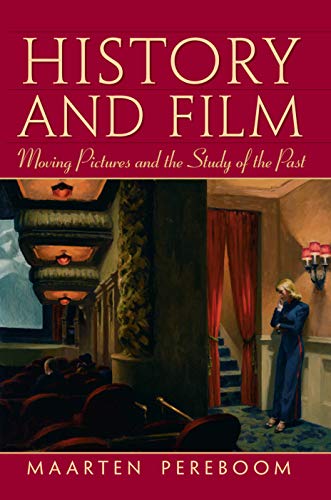
Synopsis
Moving pictures have had a great influence on human culture, and this book focuses on using moving images as historical evidence. Studying history means examining evidence from the past to understand, interpret and present what has happened in different times and places. We talk and write about what we have learned, hoping to establish credibility both for what we have determined to be the facts and for whatever meaning or significance we may attach to our reconstruction of the past. Studying history is a scientific process, involving a fairly set methodology. We tend to favor written sources, and we have tended to favor writing as a means of presenting our views of the past. But historians also use all kinds of other documents and artifacts in their work of interpreting the past, including moving pictures.
Les informations fournies dans la section « Synopsis » peuvent faire référence à une autre édition de ce titre.
À propos de l'auteur
Maarten Pereboom is professor of history and dean of the Fulton School of Liberal Arts at Salisbury Univrsity. He earned his doctorate at Yale University, and his first book, Democracies at the Turning Point: Britain, France, and the End of the Postwar Order, 1928-1933, earned Choice Magazine’s Outstanding Academic Book Award in 1996. In 1998 he won Salisbury University’s Distinguished Faculty Award. He lives in Salisbury, Maryland, with his wife and their two sons.
À propos de la quatrième de couverture
History and Film will help students to:
- Analyze film critically, particularly for historical content, using it to gather information about the past, paying attention to the kinds of material and information it uses.
- Distinguish between a film’s historical and fictional elements, and identify ways in which even the fictional elements may be a source of historical insight.
- Examine film as a historical or cultural artifact, answering questions about the production, content, reception and historical context of the film.
- Use print and electronic sources effectively in the study of history in film.
- Use film effectively as a primary and/or secondary source in the study of historical topics.
- Communicate insights effectively in writing that meets the standards of the discipline of history
Les informations fournies dans la section « A propos du livre » peuvent faire référence à une autre édition de ce titre.
Résultats de recherche pour History and Film

Image d'archives
History and Film
Edité par
Routledge, 2010
ISBN 10 : 0131938460
ISBN 13 : 9780131938465
Ancien ou d'occasion
Couverture souple
Vendeur : SustainableBooks.com, Amherst, NY, Etats-Unis
Évaluation du vendeur 5 sur 5 étoiles

Etat : Good. Book is in Used-Good condition. Pages and cover are clean and intact. Used items may not include supplementary materials such as CDs or access codes. May show signs of minor shelf wear and contain limited notes and highlighting. N° de réf. du vendeur 0131938460-2-4
Acheter D'occasion
EUR 7,91
Livraison gratuite
Expédition nationale : Etats-Unis
Expédition nationale : Etats-Unis
Quantité disponible : 1 disponible(s)
Image d'archives
History and Film: Moving Pictures and the Study of the Past
Edité par
Routledge, 2010
ISBN 10 : 0131938460
ISBN 13 : 9780131938465
Ancien ou d'occasion
Paperback
Vendeur : World of Books (was SecondSale), Montgomery, IL, Etats-Unis
Évaluation du vendeur 5 sur 5 étoiles
Paperback. Etat : Good. The ability to view recorded moving pictures has had a major impact on human culture since the development of the necessary technologies over a century ago. For most of this time people have gone to the movies to be entertained and perhaps edified, but in the meantime television, the videocassette recorder (VCR), the digital versatile disk (DVD) player, the personal computer (desktop and laptop), the internet and other technologies have made watching moving pictures possible at home, in the classroom and just about anywhere else. Today, moving images are everywhere in our culture. Every day, moving picture cameras record millions of hours of activity, human and otherwise, all over the world: your cell phone makes a little video of your friends at a party; the surveillance camera at the bank keeps on eye on customers; journalistsâ?? shoulder-carried cameras record the latest from the war zone; and across the world film artists work on all kinds of movies, from low-budget independent projects to the next big-budget Hollywood blockbuster.Moving pictures have had a great influence on human culture, and this book focuses on using moving images as historical evidence. Studying history means examining evidence from the past to understand, interpret and present what has happened in different times and places. We talk and write about what we have learned, hoping to establish credibility both for what we have determined to be the facts and for whatever meaning or significance we may attach to our reconstruction of the past. Studying history is a scientific process, involving a fairly set methodology. We tend to favor written sources, and we have tended to favor writing as a means of presenting our views of the past. But historians also use all kinds of other documents and artifacts in their work of interpreting the past, including moving pictures. N° de réf. du vendeur 00099283546
Acheter D'occasion
EUR 7,93
Livraison gratuite
Expédition nationale : Etats-Unis
Expédition nationale : Etats-Unis
Quantité disponible : 1 disponible(s)
Image d'archives
History and Film: Moving Pictures and the Study of the Past
Edité par
Routledge, 2010
ISBN 10 : 0131938460
ISBN 13 : 9780131938465
Ancien ou d'occasion
Paperback
Vendeur : World of Books Inc, Montgomery, IL, Etats-Unis
Évaluation du vendeur 4 sur 5 étoiles

Paperback. Etat : Good. The ability to view recorded moving pictures has had a major impact on human culture since the development of the necessary technologies over a century ago. For most of this time people have gone to the movies to be entertained and perhaps edified, but in the meantime television, the videocassette recorder (VCR), the digital versatile disk (DVD) player, the personal computer (desktop and laptop), the internet and other technologies have made watching moving pictures possible at home, in the classroom and just about anywhere else. Today, moving images are everywhere in our culture. Every day, moving picture cameras record millions of hours of activity, human and otherwise, all over the world: your cell phone makes a little video of your friends at a party; the surveillance camera at the bank keeps on eye on customers; journalistsâ?? shoulder-carried cameras record the latest from the war zone; and across the world film artists work on all kinds of movies, from low-budget independent projects to the next big-budget Hollywood blockbuster.Moving pictures have had a great influence on human culture, and this book focuses on using moving images as historical evidence. Studying history means examining evidence from the past to understand, interpret and present what has happened in different times and places. We talk and write about what we have learned, hoping to establish credibility both for what we have determined to be the facts and for whatever meaning or significance we may attach to our reconstruction of the past. Studying history is a scientific process, involving a fairly set methodology. We tend to favor written sources, and we have tended to favor writing as a means of presenting our views of the past. But historians also use all kinds of other documents and artifacts in their work of interpreting the past, including moving pictures. N° de réf. du vendeur CIN0131938460G
Acheter D'occasion
EUR 9,77
Livraison gratuite
Expédition nationale : Etats-Unis
Expédition nationale : Etats-Unis
Quantité disponible : 1 disponible(s)
Image fournie par le vendeur
History and Film
Edité par
Routledge, 2010
ISBN 10 : 0131938460
ISBN 13 : 9780131938465
Ancien ou d'occasion
Couverture souple
Vendeur : MERS Goodwill, Saint Louis, MO, Etats-Unis
Évaluation du vendeur 5 sur 5 étoiles
Etat : good. Used - Good: All pages and cover are intact including the dust cover, if applicable . Spine may show signs of wear. Pages may include limited notes and highlighting. May include From the library of labels. Shrink wrap, dust covers, or boxed set case may be missing. Item may be missing bundled media. Any access codes or passwords originally included with the book may be expired, used or no longer valid. Image is stock photo and cover art edition may be different than pictured. N° de réf. du vendeur MERV.0131938460.G
Acheter D'occasion
EUR 9,18
Expédition à EUR 3,57
Expédition nationale : Etats-Unis
Expédition nationale : Etats-Unis
Quantité disponible : 1 disponible(s)
Image d'archives
History and Film: Moving Pictures and the Study of the Past
Edité par
Routledge, 2010
ISBN 10 : 0131938460
ISBN 13 : 9780131938465
Ancien ou d'occasion
Paperback
Vendeur : Textbook Bookie, Little Rock, AR, Etats-Unis
Évaluation du vendeur 5 sur 5 étoiles
Paperback. Etat : Fair. Book in Fair condition. N° de réf. du vendeur 9780131938465-acceptable
Acheter D'occasion
EUR 9,19
Expédition à EUR 3,80
Expédition nationale : Etats-Unis
Expédition nationale : Etats-Unis
Quantité disponible : Plus de 20 disponibles
Image d'archives
History and Film: Moving Pictures and the Study of the Past
Edité par
Routledge, 2010
ISBN 10 : 0131938460
ISBN 13 : 9780131938465
Ancien ou d'occasion
Paperback
Vendeur : Textbook Bookie, Little Rock, AR, Etats-Unis
Évaluation du vendeur 5 sur 5 étoiles
Paperback. Etat : Good. Book in Good condition. N° de réf. du vendeur 9780131938465-good
Acheter D'occasion
EUR 9,19
Expédition à EUR 3,80
Expédition nationale : Etats-Unis
Expédition nationale : Etats-Unis
Quantité disponible : 12 disponible(s)
Image d'archives
History and Film
Edité par
Routledge, 2010
ISBN 10 : 0131938460
ISBN 13 : 9780131938465
Ancien ou d'occasion
paperback
Vendeur : Books-R-Keen, DuBois, PA, Etats-Unis
Évaluation du vendeur 5 sur 5 étoiles
paperback. Etat : Good. Used items may contain, highlighting, writing, and other previous signs of use. Used items may not contain CD's. access codes and other accompanying items when applicable. N° de réf. du vendeur 43B58991
Acheter D'occasion
EUR 9,84
Expédition à EUR 3,56
Expédition nationale : Etats-Unis
Expédition nationale : Etats-Unis
Quantité disponible : 1 disponible(s)
Image d'archives
History and Film
Edité par
Routledge, 2010
ISBN 10 : 0131938460
ISBN 13 : 9780131938465
Ancien ou d'occasion
paperback
Edition originale
Vendeur : Textbooks_Source, Columbia, MO, Etats-Unis
Évaluation du vendeur 5 sur 5 étoiles
paperback. Etat : Good. 1st Edition. Ships in a BOX from Central Missouri! May not include working access code. Will not include dust jacket. Has used sticker(s) and some writing or highlighting. UPS shipping for most packages, (Priority Mail for AK/HI/APO/PO Boxes). N° de réf. du vendeur 001001089U
Acheter D'occasion
EUR 28,75
Expédition à EUR 3,56
Expédition nationale : Etats-Unis
Expédition nationale : Etats-Unis
Quantité disponible : 10 disponible(s)
Image d'archives
History and Film
Vendeur : GoldBooks, Denver, CO, Etats-Unis
Évaluation du vendeur 5 sur 5 étoiles
Paperback. Etat : new. New Copy. Customer Service Guaranteed. N° de réf. du vendeur 85W86_69_0131938460
Acheter neuf
EUR 45,71
Expédition à EUR 4,91
Expédition nationale : Etats-Unis
Expédition nationale : Etats-Unis
Quantité disponible : 1 disponible(s)
Image fournie par le vendeur
History and Film : Moving Pictures and the Study of the Past
Edité par
Routledge, 2010
ISBN 10 : 0131938460
ISBN 13 : 9780131938465
Ancien ou d'occasion
Couverture souple
Vendeur : GreatBookPrices, Columbia, MD, Etats-Unis
Évaluation du vendeur 5 sur 5 étoiles
Etat : good. May show signs of wear, highlighting, writing, and previous use. This item may be a former library book with typical markings. No guarantee on products that contain supplements Your satisfaction is 100% guaranteed. Twenty-five year bookseller with shipments to over fifty million happy customers. N° de réf. du vendeur 5625832-5
Acheter D'occasion
EUR 62,21
Expédition à EUR 2,36
Expédition nationale : Etats-Unis
Expédition nationale : Etats-Unis
Quantité disponible : 5 disponible(s)