Used book
Les informations fournies dans la section « Synopsis » peuvent faire référence à une autre édition de ce titre.
Vendeur : Better World Books Ltd, Dunfermline, Royaume-Uni
Etat : Good. Pages intact with minimal writing/highlighting. The binding may be loose and creased. Dust jackets/supplements are not included. Stock photo provided. Product includes identifying sticker. Better World Books: Buy Books. Do Good. N° de réf. du vendeur GRP96887434
Quantité disponible : 1 disponible(s)
Vendeur : WorldofBooks, Goring-By-Sea, WS, Royaume-Uni
Paperback. Etat : Fair. A readable copy of the book which may include some defects such as highlighting and notes. Cover and pages may be creased and show discolouration. N° de réf. du vendeur GOR002455031
Quantité disponible : 1 disponible(s)
Vendeur : WorldofBooks, Goring-By-Sea, WS, Royaume-Uni
Paperback. Etat : Very Good. The book has been read, but is in excellent condition. Pages are intact and not marred by notes or highlighting. The spine remains undamaged. N° de réf. du vendeur GOR001749634
Quantité disponible : 2 disponible(s)
Vendeur : Crappy Old Books, Barry, Royaume-Uni
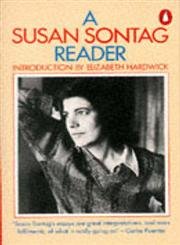
Paperback. Etat : Good. There are essay collections, and then there is A Susan Sontag Reader , which does not so much sit on a shelf as pose there, perfectly lit, silently judging everybody else?s intellectual posture. Published in this 1982 Penguin edition, it is exactly the sort of book Crappy Old Books is delighted to encounter: serious, stylish, faintly intimidating, and carrying the unmistakable aura of a writer who could make even a paragraph about photography, illness, camp, or civilisation itself feel like an elegant disciplinary measure. Susan Sontag was not in the business of being merely interesting. She was in the business of making culture feel like a matter of consequence, which is a rarer and more glamorous talent than modern life tends to produce. And what a title: A Susan Sontag Reader . Not Some Nice Pieces by Susan Sontag . Not Selected Thoughts for the Busy Modern Person . A Reader . The word carries the old academic confidence that one does not simply consume Sontag; one studies, absorbs, wrestles, and perhaps emerges a little sharper and a little more self-conscious about one?s opinions on art, politics, disease, interpretation, and the moral failings of contemporary taste. It sounds both generous and faintly threatening, which is very much on brand. Sontag herself occupies that glorious category of writer who became, somehow, both person and atmosphere. She is not merely an author but a whole climate of intelligence: black-and-white photographs, serious fringe, New York seriousness, European seriousness, seriousness about seriousness. To own a Susan Sontag book is to suggest that one may, at any moment, have views about representation. Whether one actually does is between oneself and the bookshelf. This reader, naturally, promises the concentrated experience. Instead of sending you off across multiple volumes to assemble your own Sontagian education like an anxious cultural scavenger hunt, here is a ready-made selection: the greatest hits of thought, style, provocation, and elegant severity. A sort of portable Sontag, though ?portable? is perhaps the wrong word for a mind so determined to enlarge the room. As sold by Crappy Old Books, this copy is in good condition , which suits it beautifully. A good-condition 1982 Penguin cultural reader should look as though it has been owned by at least one person who meant well intellectually, perhaps read parts of it in earnest, and then kept it because getting rid of Susan Sontag would feel a bit like admitting defeat. Good condition suggests dignity, survivability, and the continued possibility of being picked up with noble intentions. There is also something wonderfully ironic about a ?reader? of Sontag becoming a second-hand paperback object in the wild. Sontag wrote with such intensity about art, images, meaning, seriousness and the modern condition that it feels entirely fitting for her work now to circulate through ordinary domestic life, turning up beside old cookbooks, Cold War thrillers, railway histories and inexplicable Welsh pamphlets. High culture, meet the democratic afterlife of the used bookshelf. It is good for everyone. And yet a book like this remains genuinely exciting. Sontag was one of those rare essayists who could make thinking seem dramatic. She did not merely report ideas; she staged them. Even when you disagree with her, or suspect she has entered the room slightly overdressed for the occasion, there is a thrill in the exactness, the ambition, the refusal to settle for mush. She belongs to that dwindling species of public intellectual who expected readers to come up a level rather than meeting them halfway with beanbags and reassurance. For collectors, this is a cracking find: classic Penguin, early 1980s, and a concentrated dose of one of the twentieth century?s most recognisable critical voices. For readers, it is an ideal gateway or refresher ? a way into Sontag?s world without requiring a full seminar and a packet of Gauloises. For shelf appeal, it is impeccable. A copy of A Susan Sontag Reader says, ?Someone here may have opinions about photography and metaphor,? which is never a bad thing for furniture to imply. It is also one of those books that improves by association. You need not read the whole thing at once to benefit from having it around. Simply knowing that Susan Sontag is nearby, waiting to sharpen your thoughts or expose your vagueness, lends a room a certain stern glamour. Some books comfort. Some entertain. This one quietly raises standards. So here we have a good-condition 1982 Penguin paperback: stylish, brainy, culturally formidable, and gloriously uninterested in pandering. It is the kind of book that reminds you an essay collection can be more than a pile of opinions. It can be a performance of mind. A Susan Sontag Reader is exactly the sort of thing Crappy Old Books likes to rescue and rehome: clever without being cosy, literary without being limp, and full of that rare old voltage generated when a first-rate intelligence decides not merely to observe the world, but to interrogate it properly. If your shelf needs more edge, more thought, and a faint whiff of Manhattan intellectual superiority in paperback form, Susan Sontag is ready to oblige. THIS BOOK BEARS THE CRAPPY OLD BOOKS STAMP. IF THAT IS UNDESIRABLE PLEASE DO NOT BUY THIS. THE STAMP MARKS WHICH IS USUALLY TO THE FRONT AND BACK INNER PAGES SAYS SOLD BY CRAPPY OLD BOOKS WITH WEB SITE URL. IT IN NO WAY DEMINISHED FROM THE READING. IF YOU WANT A PRISTINE BOOK, PLEASE FIND ANOTHER BOOK IN BETTER CONDITION SOMEWHERE ELSE. N° de réf. du vendeur 5890
Quantité disponible : 1 disponible(s)
Vendeur : Greener Books, London, Royaume-Uni
Paperback. Etat : Used; Good. **SHIPPED FROM UK** We believe you will be completely satisfied with our quick and reliable service. All orders are dispatched as swiftly as possible! Buy with confidence! Greener Books. N° de réf. du vendeur mon0001504726
Quantité disponible : 1 disponible(s)
Vendeur : Emily Green Books, North Shields, Royaume-Uni
Soft cover. Etat : Very Good. Photos included in listing. About the book Selections from the noted writer's past books, arranged chronologically, include excerpts from her novels and short-story collection, famous essays from the 1960s, pieces from her two subsequent essay collections, and part of "On Photography". N° de réf. du vendeur 2195
Quantité disponible : 1 disponible(s)
Vendeur : Lily Books, Armidale, NSW, Australie
Soft cover. Etat : Good. Good condition overall.Some light tanning on page edges. Introduction by Elizabeth Hardwick. Susan Sontag occupies a special place in Modern American letters. She has become our most important critic, while her brilliant novels and short fiction are, at long last, getting the recognition they deserve. Sontag is above all a writer, which is only to say that, though the form may differ, there is an essential unity in all her work. The truth of this is perhaps more evident in A Susan Sontag Reader than in any of Sontag's individual books. The writer selected a sampling of her work, meaning the choice both to reflect accurately a career and also to guide the reader toward those qualities and concerns which she prizes in her own writing. A Susan Sontag Reader is arranged chronologically and draws on most of Sontag's books. There are selections from her two novels, The Benefactor and Death Kit, and from her collections of short stories. The famous essays from the 1960s--"Against Interpretation," "Notes on Camp," and "On Style"--which established Sontag's reputation and can be fairly said to have shaped the cultural views of a generation are included, as are selections from her two subsequent volumes of essays. A part of Sontag's best-selling On Photography is also included. It is astonishing to read these works when they are detached from the books they appeared in and offered instead in the order in which Sontag wrote them. The connections between various literary forms, the progression of themes, are revealed in often startling ways. Moreover, Sontag has included a long interview in which she moves more informally over the whole range of her concerns and of her work. The volume ends with "Writing Itself," a previously uncollected essay on Roland Barthes which, in the eyes of many, is one of Sontag's finest achievements. This collection is, in a sense, both a self-portrait and a key for a reader to understand the work of one of the most important writers of our time. N° de réf. du vendeur ABE-1717742907322
Quantité disponible : 1 disponible(s)
Vendeur : biblioMundo, St. Leon-Rot, Allemagne
Sep 29, 1983. Etat : Gebraucht - Gut. Gebrauchsspuren am Einband. Seiten gut erhalten. N° de réf. du vendeur 0032050
Quantité disponible : 1 disponible(s)