
Articles liés à The Economic Consequences of the Peace
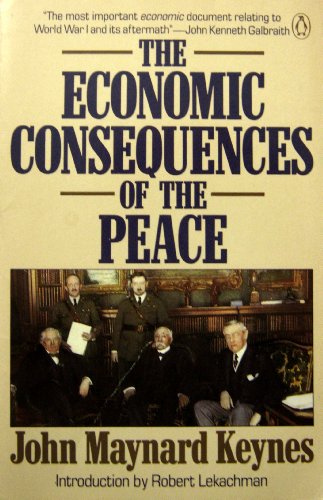
Synopsis
Book by Keynes John Maynard
Les informations fournies dans la section « Synopsis » peuvent faire référence à une autre édition de ce titre.
Biographie de l'auteur
John Maynard Keynes, (1883-1946) was a British economist whose ideas have profoundly affected modern macroeconomics and social liberalism, both in theory and practice. He advocated interventionist economic policy, by which governments would use fiscal and monetary measures to mitigate the adverse effects of business cycles, economic recessions, and depressions. His ideas are the basis for the school of thought known as Keynesian economics, and its various offshoots. In the 1930s, Keynes spearheaded a revolution in economic thinking, overturning the older ideas of neoclassical economics that held that free markets would automatically provide full employment as long as workers were flexible in their wage demands. Following the outbreak of World War II, Keynes's ideas concerning economic policy were adopted by leading Western economies. During the 1950s and 1960s, the success of Keynesian economics was so resounding that almost all capitalist governments adopted its policy recommendations. In 1999, Time magazine included Keynes in their list of the 100 most important and influential people of the 20th century, commenting that; "His radical idea that governments should spend money they don't have may have saved capitalism". Keynes is widely considered the father of modern macroeconomics, and by various commentators such as economist John Sloman, the most influential economist of the 20th century. In addition to being an economist, Keynes was also a civil servant, a patron of the arts, a director of the Bank of England, an advisor to several charitable trusts, a writer, a private investor, an art collector, and a farmer.
Présentation de l'éditeur
"The Economic Consequences of the Peace" gave economist John Maynard Keynes a huge but controversial influence on perceptions of the peace treaty signed after World War I. John Maynard Keynes was not only a brilliant economist, but a superb writer with a keen eye for the foibles of the great men of his time. "The Economic Consequences of the Peace" is a must read for anyone interested in the Versailles Peace Treaty and the aftermath of its signing. Even today, the power of Keynes' argument is evident. Though Keynes admitted that the allies might not hold Germany to all the economic terms of the treaty, he still felt strongly that many of the terms of the treaty, whether enforced or not, discouraged sound planning by German investors, companies, and its government, and unnecessarily impoverished the German people. As pointed out in his classic book, Keynes felt this was bad for not just Germany, but all of Europe.
Les informations fournies dans la section « A propos du livre » peuvent faire référence à une autre édition de ce titre.
Résultats de recherche pour The Economic Consequences of the Peace

Image d'archives
The Economic Consequences of the Peace
Edité par
Penguin Books (edition ), 1988
ISBN 10 : 0140113800
ISBN 13 : 9780140113808
Ancien ou d'occasion
Paperback
Vendeur : BooksRun, Philadelphia, PA, Etats-Unis
Évaluation du vendeur 5 sur 5 étoiles

Paperback. Etat : Fair. The item might be beaten up but readable. May contain markings or highlighting, as well as stains, bent corners, or any other major defect, but the text is not obscured in any way. N° de réf. du vendeur 0140113800-7-1
Acheter D'occasion
EUR 5,26
Livraison gratuite
Expédition nationale : Etats-Unis
Expédition nationale : Etats-Unis
Quantité disponible : 1 disponible(s)
Image d'archives
The Economic Consequences of the Peace
Edité par
Penguin Books Ltd, 1989
ISBN 10 : 0140113800
ISBN 13 : 9780140113808
Ancien ou d'occasion
Paperback
Vendeur : World of Books (was SecondSale), Montgomery, IL, Etats-Unis
Évaluation du vendeur 5 sur 5 étoiles
Paperback. Etat : Good. The Economic Consequences of the Peace was written and published by John Maynard Keynes. After World War I Keynes attended the Versailles Conference as a delegate of the British Treasury and argued for a much more generous peace. It was a best seller throughout the world and was critical in establishing a general opinion that the Versailles Treaty was a Carthaginian peace. It helped to consolidate American public opinion against the treaty and involvement in the League of Nations. The perception by much of the British public that Germany had been treated unfairly in turn was a crucial factor in public support for appeasement. The success of the book established Keynes' reputation as a leading economist. When Keynes was a key player in establishing the Bretton Woods system in 1944 he remembered the lessons from Versailles as well as the Great Depression. The Marshall Plan after Second World War is a similar system to that proposed by Keynes in The Economic Consequences of the Peace.Wilder Publications is a green publisher. All of our books are printed to order. This reduces waste and helps us keep prices low while greatly reducing our impact on the environment. N° de réf. du vendeur 00103821409
Acheter D'occasion
EUR 5,32
Livraison gratuite
Expédition nationale : Etats-Unis
Expédition nationale : Etats-Unis
Quantité disponible : 2 disponible(s)
Image d'archives
The Economic Consequences of the Peace
Edité par
Penguin Books Ltd, 1989
ISBN 10 : 0140113800
ISBN 13 : 9780140113808
Ancien ou d'occasion
Paperback
Vendeur : World of Books (was SecondSale), Montgomery, IL, Etats-Unis
Évaluation du vendeur 5 sur 5 étoiles
Paperback. Etat : Very Good. The Economic Consequences of the Peace was written and published by John Maynard Keynes. After World War I Keynes attended the Versailles Conference as a delegate of the British Treasury and argued for a much more generous peace. It was a best seller throughout the world and was critical in establishing a general opinion that the Versailles Treaty was a Carthaginian peace. It helped to consolidate American public opinion against the treaty and involvement in the League of Nations. The perception by much of the British public that Germany had been treated unfairly in turn was a crucial factor in public support for appeasement. The success of the book established Keynes' reputation as a leading economist. When Keynes was a key player in establishing the Bretton Woods system in 1944 he remembered the lessons from Versailles as well as the Great Depression. The Marshall Plan after Second World War is a similar system to that proposed by Keynes in The Economic Consequences of the Peace.Wilder Publications is a green publisher. All of our books are printed to order. This reduces waste and helps us keep prices low while greatly reducing our impact on the environment. N° de réf. du vendeur 00110882153
Acheter D'occasion
EUR 5,32
Livraison gratuite
Expédition nationale : Etats-Unis
Expédition nationale : Etats-Unis
Quantité disponible : 1 disponible(s)
Image fournie par le vendeur
The Economic Consequences of the Peace
Edité par
Penguin Books, 1988
ISBN 10 : 0140113800
ISBN 13 : 9780140113808
Ancien ou d'occasion
Couverture souple
Vendeur : Bay State Book Company, North Smithfield, RI, Etats-Unis
Évaluation du vendeur 5 sur 5 étoiles
Etat : good. The book is in good condition with all pages and cover intact, including the dust jacket if originally issued. The spine may show light wear. Pages may contain some notes or highlighting, and there might be a "From the library of" label. Boxed set packaging, shrink wrap, or included media like CDs may be missing. N° de réf. du vendeur BSM.1CQFR
Acheter D'occasion
EUR 5,65
Livraison gratuite
Expédition nationale : Etats-Unis
Expédition nationale : Etats-Unis
Quantité disponible : 1 disponible(s)
Image d'archives
The Economic Consequences of the Peace
Edité par
Penguin Books, 1988
ISBN 10 : 0140113800
ISBN 13 : 9780140113808
Ancien ou d'occasion
Couverture souple
Vendeur : Wonder Book, Frederick, MD, Etats-Unis
Évaluation du vendeur 5 sur 5 étoiles
Etat : Good. Good condition. A copy that has been read but remains intact. May contain markings such as bookplates, stamps, limited notes and highlighting, or a few light stains. N° de réf. du vendeur J08Q-01167
Acheter D'occasion
EUR 6,44
Livraison gratuite
Expédition nationale : Etats-Unis
Expédition nationale : Etats-Unis
Quantité disponible : 1 disponible(s)
Image d'archives
The Economic Consequences of the Peace
Edité par
Penguin Books Ltd, 1989
ISBN 10 : 0140113800
ISBN 13 : 9780140113808
Ancien ou d'occasion
Paperback
Vendeur : World of Books Inc, Montgomery, IL, Etats-Unis
Évaluation du vendeur 4 sur 5 étoiles

Paperback. Etat : Good. The Economic Consequences of the Peace was written and published by John Maynard Keynes. After World War I Keynes attended the Versailles Conference as a delegate of the British Treasury and argued for a much more generous peace. It was a best seller throughout the world and was critical in establishing a general opinion that the Versailles Treaty was a Carthaginian peace. It helped to consolidate American public opinion against the treaty and involvement in the League of Nations. The perception by much of the British public that Germany had been treated unfairly in turn was a crucial factor in public support for appeasement. The success of the book established Keynes' reputation as a leading economist. When Keynes was a key player in establishing the Bretton Woods system in 1944 he remembered the lessons from Versailles as well as the Great Depression. The Marshall Plan after Second World War is a similar system to that proposed by Keynes in The Economic Consequences of the Peace.Wilder Publications is a green publisher. All of our books are printed to order. This reduces waste and helps us keep prices low while greatly reducing our impact on the environment. N° de réf. du vendeur CIN0140113800G
Acheter D'occasion
EUR 7,16
Livraison gratuite
Expédition nationale : Etats-Unis
Expédition nationale : Etats-Unis
Quantité disponible : 2 disponible(s)
Image d'archives
The Economic Consequences of the Peace
Edité par
Penguin Books Ltd, 1989
ISBN 10 : 0140113800
ISBN 13 : 9780140113808
Ancien ou d'occasion
Paperback
Vendeur : World of Books Inc, Montgomery, IL, Etats-Unis
Évaluation du vendeur 4 sur 5 étoiles
Paperback. Etat : Very Good. The Economic Consequences of the Peace was written and published by John Maynard Keynes. After World War I Keynes attended the Versailles Conference as a delegate of the British Treasury and argued for a much more generous peace. It was a best seller throughout the world and was critical in establishing a general opinion that the Versailles Treaty was a Carthaginian peace. It helped to consolidate American public opinion against the treaty and involvement in the League of Nations. The perception by much of the British public that Germany had been treated unfairly in turn was a crucial factor in public support for appeasement. The success of the book established Keynes' reputation as a leading economist. When Keynes was a key player in establishing the Bretton Woods system in 1944 he remembered the lessons from Versailles as well as the Great Depression. The Marshall Plan after Second World War is a similar system to that proposed by Keynes in The Economic Consequences of the Peace.Wilder Publications is a green publisher. All of our books are printed to order. This reduces waste and helps us keep prices low while greatly reducing our impact on the environment. N° de réf. du vendeur CIN0140113800VG
Acheter D'occasion
EUR 7,16
Livraison gratuite
Expédition nationale : Etats-Unis
Expédition nationale : Etats-Unis
Quantité disponible : 1 disponible(s)
Image d'archives
The Economic Consequences of the Peace
Edité par
Penguin Books, 1988
ISBN 10 : 0140113800
ISBN 13 : 9780140113808
Ancien ou d'occasion
Paperback
Vendeur : ThriftBooks-Atlanta, AUSTELL, GA, Etats-Unis
Évaluation du vendeur 5 sur 5 étoiles
Paperback. Etat : Fair. No Jacket. Readable copy. Pages may have considerable notes/highlighting. ~ ThriftBooks: Read More, Spend Less. N° de réf. du vendeur G0140113800I5N00
Acheter D'occasion
EUR 7,29
Livraison gratuite
Expédition nationale : Etats-Unis
Expédition nationale : Etats-Unis
Quantité disponible : 1 disponible(s)
Image d'archives
The Economic Consequences of the Peace
Edité par
Penguin Books, 1988
ISBN 10 : 0140113800
ISBN 13 : 9780140113808
Ancien ou d'occasion
Paperback
Vendeur : ThriftBooks-Atlanta, AUSTELL, GA, Etats-Unis
Évaluation du vendeur 5 sur 5 étoiles
Paperback. Etat : Good. No Jacket. Pages can have notes/highlighting. Spine may show signs of wear. ~ ThriftBooks: Read More, Spend Less. N° de réf. du vendeur G0140113800I3N00
Acheter D'occasion
EUR 7,29
Livraison gratuite
Expédition nationale : Etats-Unis
Expédition nationale : Etats-Unis
Quantité disponible : 1 disponible(s)
Image d'archives
The Economic Consequences of the Peace
Edité par
Penguin Books, 1988
ISBN 10 : 0140113800
ISBN 13 : 9780140113808
Ancien ou d'occasion
Paperback
Vendeur : ThriftBooks-Dallas, Dallas, TX, Etats-Unis
Évaluation du vendeur 5 sur 5 étoiles
Paperback. Etat : Good. No Jacket. Pages can have notes/highlighting. Spine may show signs of wear. ~ ThriftBooks: Read More, Spend Less. N° de réf. du vendeur G0140113800I3N00
Acheter D'occasion
EUR 7,29
Livraison gratuite
Expédition nationale : Etats-Unis
Expédition nationale : Etats-Unis
Quantité disponible : 1 disponible(s)