
Articles liés à The Girls' Guide to Hunting and Fishing
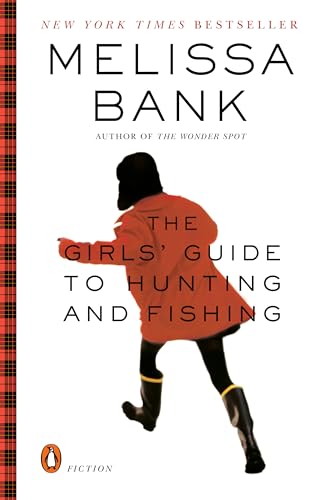
Synopsis
After following the advice from a manual called "How to Meet and Marry Mr Right", Jane learns that in love there is neither pattern nor promise. This is a funny collection of connected stories and a portrait of Jane, a woman manoeuvring her way through love, sex and relationships.
Les informations fournies dans la section « Synopsis » peuvent faire référence à une autre édition de ce titre.
À propos de l'auteur
Melissa Bank is the author of The Girls' Guide to Hunting and Fishing and The Wonder Spot. She won the 1993 Nelson Algren Award for short fiction, and holds an MFA from Cornell University. Her work has appeared in Allure, The Chicago Tribune, Cosmopolitan, Glamour, The Guardian, The North American Review, O: the Oprah Magazine, Ploughshares, The Washington Post, Zoetrope and many others. Her books have been translated into 33 languages. She divides her time between New York City and East Hampton.
Extrait. © Reproduit sur autorisation. Tous droits réservés.
My brother's first serious girlfriend was eight years older—twenty-eight to his twenty. Her name was Julia Cathcart, and Henry introduced her to us in early June. They drove from Manhattan down to our cottage in Loveladies, on the New Jersey shore. When his little convertible, his pet, pulled into the driveway, she was behind the wheel. My mother and I were watching from the kitchen window. I said, "He lets her drive his car."
My brother and his girlfriend were dressed alike, baggy white shirts tucked into jeans, except she had a black cashmere sweater over her shoulders.
She had dark eyes, high cheekbones, and beautiful skin, pale, with high coloring in her cheeks like a child with a fever. Her hair was back in a loose ponytail, tied with a piece of lace, and she wore tiny pearl earrings.
I thought maybe she'd look older than Henry, but it was Henry who looked older than Henry. Standing there, he looked like a man. He'd grown a beard, for starters, and had on new wire-rim sunglasses that made him appear more like a bon vivant than a philosophy major between colleges. His hair was longer, and, not yet lightened by the sun, it was the reddish-brown color of an Irish setter.
He gave me a kiss on the cheek, as though he always had.
Then he roughed around with our Airedale, Atlas, while his girlfriend and mother shook hands. They were clasping fingertips, ladylike, smiling as though they were already fond of each other and just waiting for details to fill in why.
Julia turned to me and said, "You must be Janie."
"Most people call me Jane now," I said, making myself sound even younger.
"Jane," she said, possibly in the manner of an adult trying to take a child seriously.
Henry unpacked the car and loaded himself up with everything they'd brought, little bags and big ones, a string tote, and a knapsack.
As he started up the driveway, his girlfriend said, "Do you have the wine, Hank?"
Whoever Hank was, he had it.
Except for bedrooms and the screened-in porch, our house was just one big all-purpose room, and Henry was giving her a jokey tour of it: "This is the living room," he said, gesturing to the sofa; he paused, gestured to it again and said, "This is the den."
Out on the porch, she stretched her legs in front of her—Audrey Hepburn relaxing after dance class. She wore navy espadrilles. I noticed that Henry had on penny Loafers without socks, and he'd inserted a subway token in the slot where the penny belonged.
Julia sipped her ice tea and asked how Loveladies got its name. We didn't know, but Henry said, "It was derived from the Indian name of the founder."
Julia smiled, and asked my mother how long we'd been coming here.
"This is our first year," my mother said.
My father was out playing tennis, and without him present, I felt free to add a subversive, "We used to go to Nantucket."
"Nantucket is lovely," Julia said.
"It is lovely," my mother conceded, but went on to cite drab points in New Jersey's favor, based on its proximity to our house in Philadelphia.
In the last of our New Jersey versus Nantucket debates, I'd argued, forcefully I'd thought, that Camden was even closer. I'd almost added that the trash dump was practically in walking distance, but my father had interrupted.
I could tell he was angry, but he kept his voice even: we could go to the shore all year round, he said, and that would help us to be a closer family.
"Not so far," I said, meaning to add levity.
But my father looked at me with his eyes narrowed, like he wasn't sure I was his daughter after all.
Les informations fournies dans la section « A propos du livre » peuvent faire référence à une autre édition de ce titre.
Résultats de recherche pour The Girls' Guide to Hunting and Fishing

Image d'archives
The Girls' Guide to Hunting and Fishing
Edité par
Penguin Random House Australia, 2000
ISBN 10 : 0140293248
ISBN 13 : 9780140293241
Ancien ou d'occasion
Paperback
Vendeur : World of Books (was SecondSale), Montgomery, IL, Etats-Unis
Évaluation du vendeur 5 sur 5 étoiles

Paperback. Etat : Good. The New York Times bestselling classic of a young woman's journey in work, love, and life "In this swinging, funny, and tender study of contemporary relationships, Bank refutes once and for all the popular notions of neurotic thirtysomething women." --Entertainment Weekly "Truly poignant." --Time Generous-hearted and wickedly insightful, The Girls' Guide to Hunting and Fishing maps the progress of Jane Rosenal as she sets out on a personal and spirited expedition through the perilous terrain of sex, love, relationships, and the treacherous waters of the workplace. Soon Jane is swept off her feet by an older man and into a Fitzgeraldesque whirl of cocktail parties, country houses, and rules that were made to be broken, but comes to realize that it's a world where the stakes are much too high for comfort. With an unforgettable comic touch, Bank skillfully teases out universal issues, puts a clever new spin on the mating dance, and captures in perfect pitch what it's like to come of age as a young woman. N° de réf. du vendeur 00056183341
Acheter D'occasion
EUR 3,91
Livraison gratuite
Expédition nationale : Etats-Unis
Expédition nationale : Etats-Unis
Quantité disponible : Plus de 20 disponibles
Image d'archives
The Girls' Guide to Hunting and Fishing
Edité par
Penguin Random House Australia, 2000
ISBN 10 : 0140293248
ISBN 13 : 9780140293241
Ancien ou d'occasion
Paperback
Vendeur : World of Books (was SecondSale), Montgomery, IL, Etats-Unis
Évaluation du vendeur 5 sur 5 étoiles
Paperback. Etat : Fair. The New York Times bestselling classic of a young woman's journey in work, love, and life "In this swinging, funny, and tender study of contemporary relationships, Bank refutes once and for all the popular notions of neurotic thirtysomething women." --Entertainment Weekly "Truly poignant." --Time Generous-hearted and wickedly insightful, The Girls' Guide to Hunting and Fishing maps the progress of Jane Rosenal as she sets out on a personal and spirited expedition through the perilous terrain of sex, love, relationships, and the treacherous waters of the workplace. Soon Jane is swept off her feet by an older man and into a Fitzgeraldesque whirl of cocktail parties, country houses, and rules that were made to be broken, but comes to realize that it's a world where the stakes are much too high for comfort. With an unforgettable comic touch, Bank skillfully teases out universal issues, puts a clever new spin on the mating dance, and captures in perfect pitch what it's like to come of age as a young woman. N° de réf. du vendeur 00061093183
Acheter D'occasion
EUR 3,91
Livraison gratuite
Expédition nationale : Etats-Unis
Expédition nationale : Etats-Unis
Quantité disponible : 3 disponible(s)
Image fournie par le vendeur
The Girls' Guide to Hunting and Fishing
Edité par
Penguin Books, 2000
ISBN 10 : 0140293248
ISBN 13 : 9780140293241
Ancien ou d'occasion
Couverture souple
Vendeur : 3Brothers Bookstore, Egg harbor township, NJ, Etats-Unis
Évaluation du vendeur 5 sur 5 étoiles
Etat : very_good. Cover may have light wear, pages in very good condition and binding is sturdy; may have other light shelf wear or creases. May have notes or highlighting. N° de réf. du vendeur EVV.0140293248.VG
Acheter D'occasion
EUR 3,92
Livraison gratuite
Expédition nationale : Etats-Unis
Expédition nationale : Etats-Unis
Quantité disponible : 2 disponible(s)
Image fournie par le vendeur
The Girls' Guide to Hunting and Fishing
Edité par
Penguin Books, 2000
ISBN 10 : 0140293248
ISBN 13 : 9780140293241
Ancien ou d'occasion
Couverture souple
Vendeur : 3Brothers Bookstore, Egg harbor township, NJ, Etats-Unis
Évaluation du vendeur 5 sur 5 étoiles
Etat : good. Books may contain some notes and highlighting. Supplements such as Access Codes, Cd's Dust Jackets, etc. are not guaranteed with used book purchases. N° de réf. du vendeur EVV.0140293248.G
Acheter D'occasion
EUR 3,92
Livraison gratuite
Expédition nationale : Etats-Unis
Expédition nationale : Etats-Unis
Quantité disponible : 3 disponible(s)
Image fournie par le vendeur
The Girls' Guide to Hunting and Fishing
Edité par
Penguin Books, 2000
ISBN 10 : 0140293248
ISBN 13 : 9780140293241
Ancien ou d'occasion
Couverture souple
Vendeur : Zoom Books East, Glendale Heights, IL, Etats-Unis
Évaluation du vendeur 5 sur 5 étoiles
Etat : good. Book is in good condition and may include underlining highlighting and minimal wear. The book can also include "From the library of" labels. May not contain miscellaneous items toys, dvds, etc. . We offer 100% money back guarantee and 24 7 customer service. N° de réf. du vendeur ZEV.0140293248.G
Acheter D'occasion
EUR 4,06
Livraison gratuite
Expédition nationale : Etats-Unis
Expédition nationale : Etats-Unis
Quantité disponible : 1 disponible(s)
Image fournie par le vendeur
The Girls' Guide to Hunting and Fishing
Edité par
Penguin Books, 2000
ISBN 10 : 0140293248
ISBN 13 : 9780140293241
Ancien ou d'occasion
Couverture souple
Vendeur : Zoom Books Company, Lynden, WA, Etats-Unis
Évaluation du vendeur 5 sur 5 étoiles
Etat : very_good. Book is in very good condition and may include minimal underlining highlighting. The book can also include "From the library of" labels. May not contain miscellaneous items toys, dvds, etc. . We offer 100% money back guarantee and 24 7 customer service. N° de réf. du vendeur ZBV.0140293248.VG
Acheter D'occasion
EUR 4,06
Livraison gratuite
Expédition nationale : Etats-Unis
Expédition nationale : Etats-Unis
Quantité disponible : 1 disponible(s)
Image d'archives
The Girls' Guide to Hunting and Fishing
Edité par
Penguin Books, 2000
ISBN 10 : 0140293248
ISBN 13 : 9780140293241
Ancien ou d'occasion
Couverture souple
Vendeur : More Than Words, Waltham, MA, Etats-Unis
Évaluation du vendeur 5 sur 5 étoiles
Etat : Good. A sound copy with only light wear. Overall a solid copy at a great price! N° de réf. du vendeur BOS-F-11e-01828
Acheter D'occasion
EUR 0,92
Expédition à EUR 3,56
Expédition nationale : Etats-Unis
Expédition nationale : Etats-Unis
Quantité disponible : 3 disponible(s)
Image fournie par le vendeur
The Girls' Guide to Hunting and Fishing
Edité par
Penguin Books, 2000
ISBN 10 : 0140293248
ISBN 13 : 9780140293241
Ancien ou d'occasion
Couverture souple
Vendeur : Reliant Bookstore, El Dorado, KS, Etats-Unis
Évaluation du vendeur 5 sur 5 étoiles
Etat : good. This book is in good condition with very minimal damage. Pages may have minimal notes or highlighting. Cover image on the book may vary from photo. Ships out quickly in a secure plastic mailer. N° de réf. du vendeur RDV.0140293248.G
Acheter D'occasion
EUR 4,51
Livraison gratuite
Expédition nationale : Etats-Unis
Expédition nationale : Etats-Unis
Quantité disponible : 1 disponible(s)
Image fournie par le vendeur
The Girls' Guide to Hunting and Fishing
Edité par
Penguin Books, 2000
ISBN 10 : 0140293248
ISBN 13 : 9780140293241
Ancien ou d'occasion
Couverture souple
Vendeur : ZBK Books, Carlstadt, NJ, Etats-Unis
Évaluation du vendeur 5 sur 5 étoiles
Etat : very_good. Fast & Free Shipping â" Very Good condition book with a firm cover and clean pages. Shows normal use and some light wear or limited notes markings. A solid, nice copy to enjoy. N° de réf. du vendeur ZWV.0140293248.VG
Acheter D'occasion
EUR 4,53
Livraison gratuite
Expédition nationale : Etats-Unis
Expédition nationale : Etats-Unis
Quantité disponible : 1 disponible(s)
Image fournie par le vendeur
The Girls' Guide to Hunting and Fishing
Edité par
Penguin Books, 2000
ISBN 10 : 0140293248
ISBN 13 : 9780140293241
Ancien ou d'occasion
Couverture souple
Vendeur : Greenworld Books, Arlington, TX, Etats-Unis
Évaluation du vendeur 5 sur 5 étoiles
Etat : good. Fast Free Shipping â" Good condition. It may show normal signs of use, such as light writing, highlighting, or library markings, but all pages are intact and the book is fully readable. A solid, complete copy that's ready to enjoy. N° de réf. du vendeur GWV.0140293248.G
Acheter D'occasion
EUR 4,53
Livraison gratuite
Expédition nationale : Etats-Unis
Expédition nationale : Etats-Unis
Quantité disponible : 13 disponible(s)