
Articles liés à An Essay Concerning Human Understanding
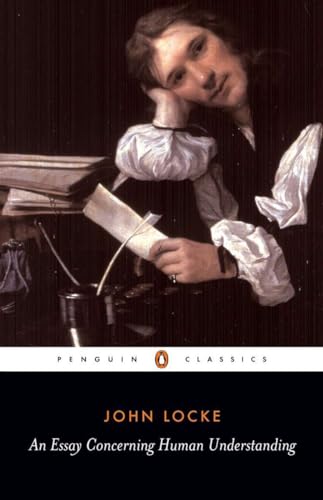
Synopsis
In An Essay Concerning Human Understanding, first published in 1690, John Locke (1632-1704) provides a complete account of how we acquire everyday, mathematical, natural scientific, religious and ethical knowledge. Rejecting the theory that some knowledge is innate in us, Locke argues that it derives from sense perceptions and experience, as analysed and developed by reason. While defending these central claims with vigorous common sense, Locke offers many incidental - and highly influential - reflections on space and time, meaning, free will and personal identity. The result is a powerful, pioneering work, which, together with Descartes's works, largely set the agenda for modern philosophy.
Les informations fournies dans la section « Synopsis » peuvent faire référence à une autre édition de ce titre.
À propos de l'auteur
John Locke (1632-1704) was educated at Christ Church, Oxford and held various academic posts at that university, lecturing on Greek and rhetoric. However, his interests lay in medicine and the new experimental sciences and in 1667 he became personal physician to the Earl of Shaftesbury. Under the influence of Shaftesbury, Locke developed his ideas on politics, property, trade, monarchy and the mind. Shaftesbury became a bitter opponent of Charles II and was involved in the plot of 1683. This forced Locke to flee in exile to Holland, but he returned after 1688 and began to publish his most famous works. He wrote also on tehology, education, and in defence of religous tolerance, while founding the analytic philosophy of the mind.
Roger Woolhouse is Professor of Philosophy at the University of York. He has also edited George Berkeley's Principles of Human Knowledge and Three Dialogues Between Hylas and Philonous for Penguin Classics.
Les informations fournies dans la section « A propos du livre » peuvent faire référence à une autre édition de ce titre.
Résultats de recherche pour An Essay Concerning Human Understanding

Image d'archives
An Essay Concerning Human Understanding
Edité par
Penguin Books Ltd, 1997
ISBN 10 : 0140434828
ISBN 13 : 9780140434828
Ancien ou d'occasion
Paperback
Vendeur : World of Books (was SecondSale), Montgomery, IL, Etats-Unis
Évaluation du vendeur 5 sur 5 étoiles

Paperback. Etat : Good. In An Essay Concerning Human Understanding, first published in 1690, John Locke (1632-1704) provides a complete account of how we acquire everyday, mathematical, natural scientific, religious and ethical knowledge. Rejecting the theory that some knowledge is innate in us, Locke argues that it derives from sense perceptions and experience, as analysed and developed by reason. While defending these central claims with vigorous common sense, Locke offers many incidental - and highly influential - reflections on space and time, meaning, free will and personal identity. The result is a powerful, pioneering work, which, together with Descartes's works, largely set the agenda for modern philosophy. N° de réf. du vendeur 00109109401
Acheter D'occasion
EUR 8,08
Livraison gratuite
Expédition nationale : Etats-Unis
Expédition nationale : Etats-Unis
Quantité disponible : 2 disponible(s)
Image d'archives
An Essay Concerning Human Understanding
Edité par
Penguin Books Ltd, 1997
ISBN 10 : 0140434828
ISBN 13 : 9780140434828
Ancien ou d'occasion
Paperback
Vendeur : World of Books (was SecondSale), Montgomery, IL, Etats-Unis
Évaluation du vendeur 5 sur 5 étoiles
Paperback. Etat : Fair. In An Essay Concerning Human Understanding, first published in 1690, John Locke (1632-1704) provides a complete account of how we acquire everyday, mathematical, natural scientific, religious and ethical knowledge. Rejecting the theory that some knowledge is innate in us, Locke argues that it derives from sense perceptions and experience, as analysed and developed by reason. While defending these central claims with vigorous common sense, Locke offers many incidental - and highly influential - reflections on space and time, meaning, free will and personal identity. The result is a powerful, pioneering work, which, together with Descartes's works, largely set the agenda for modern philosophy. N° de réf. du vendeur CIN0140434828A
Acheter D'occasion
EUR 8,08
Livraison gratuite
Expédition nationale : Etats-Unis
Expédition nationale : Etats-Unis
Quantité disponible : 2 disponible(s)
Image d'archives
An Essay Concerning Human Understanding
Edité par
Penguin Publishing Group, 1998
ISBN 10 : 0140434828
ISBN 13 : 9780140434828
Ancien ou d'occasion
Couverture souple
Vendeur : Better World Books, Mishawaka, IN, Etats-Unis
Évaluation du vendeur 5 sur 5 étoiles
Etat : Good. Former library copy. Pages intact with minimal writing/highlighting. The binding may be loose and creased. Dust jackets/supplements are not included. Includes library markings. Stock photo provided. Product includes identifying sticker. Better World Books: Buy Books. Do Good. N° de réf. du vendeur 5921281-6
Acheter D'occasion
EUR 8,53
Livraison gratuite
Expédition nationale : Etats-Unis
Expédition nationale : Etats-Unis
Quantité disponible : 1 disponible(s)
Image d'archives
An Essay Concerning Human Understanding
Edité par
Penguin Publishing Group, 1998
ISBN 10 : 0140434828
ISBN 13 : 9780140434828
Ancien ou d'occasion
Couverture souple
Vendeur : Better World Books: West, Reno, NV, Etats-Unis
Évaluation du vendeur 5 sur 5 étoiles
Etat : Good. Former library copy. Pages intact with minimal writing/highlighting. The binding may be loose and creased. Dust jackets/supplements are not included. Includes library markings. Stock photo provided. Product includes identifying sticker. Better World Books: Buy Books. Do Good. N° de réf. du vendeur 5921281-6
Acheter D'occasion
EUR 8,53
Livraison gratuite
Expédition nationale : Etats-Unis
Expédition nationale : Etats-Unis
Quantité disponible : 1 disponible(s)
Image d'archives
An Essay Concerning Human Understanding
Edité par
Penguin Books Ltd, 1997
ISBN 10 : 0140434828
ISBN 13 : 9780140434828
Ancien ou d'occasion
Paperback
Vendeur : World of Books Inc, Montgomery, IL, Etats-Unis
Évaluation du vendeur 4 sur 5 étoiles

Paperback. Etat : Good. In An Essay Concerning Human Understanding, first published in 1690, John Locke (1632-1704) provides a complete account of how we acquire everyday, mathematical, natural scientific, religious and ethical knowledge. Rejecting the theory that some knowledge is innate in us, Locke argues that it derives from sense perceptions and experience, as analysed and developed by reason. While defending these central claims with vigorous common sense, Locke offers many incidental - and highly influential - reflections on space and time, meaning, free will and personal identity. The result is a powerful, pioneering work, which, together with Descartes's works, largely set the agenda for modern philosophy. N° de réf. du vendeur CIN0140434828G
Acheter D'occasion
EUR 9,91
Livraison gratuite
Expédition nationale : Etats-Unis
Expédition nationale : Etats-Unis
Quantité disponible : 2 disponible(s)
Image d'archives
An Essay Concerning Human Understanding
Edité par
Penguin Books Ltd, 1997
ISBN 10 : 0140434828
ISBN 13 : 9780140434828
Ancien ou d'occasion
Paperback
Vendeur : World of Books Inc, Montgomery, IL, Etats-Unis
Évaluation du vendeur 4 sur 5 étoiles
Paperback. Etat : Fair. In An Essay Concerning Human Understanding, first published in 1690, John Locke (1632-1704) provides a complete account of how we acquire everyday, mathematical, natural scientific, religious and ethical knowledge. Rejecting the theory that some knowledge is innate in us, Locke argues that it derives from sense perceptions and experience, as analysed and developed by reason. While defending these central claims with vigorous common sense, Locke offers many incidental - and highly influential - reflections on space and time, meaning, free will and personal identity. The result is a powerful, pioneering work, which, together with Descartes's works, largely set the agenda for modern philosophy. N° de réf. du vendeur CIN0140434828A
Acheter D'occasion
EUR 9,91
Livraison gratuite
Expédition nationale : Etats-Unis
Expédition nationale : Etats-Unis
Quantité disponible : 2 disponible(s)
Image d'archives
An Essay Concerning Human Understanding (Penguin Classics)
Edité par
Penguin Books Ltd, United Kingdom, London, 1997
ISBN 10 : 0140434828
ISBN 13 : 9780140434828
Ancien ou d'occasion
Paperback
Vendeur : WorldofBooks, Goring-By-Sea, WS, Royaume-Uni
Évaluation du vendeur 5 sur 5 étoiles
Paperback. Etat : Very Good. In An Essay Concerning Human Understanding, first published in 1690, John Locke (1632-1704) provides a complete account of how we acquire everyday, mathematical, natural scientific, religious and ethical knowledge. Rejecting the theory that some knowledge is innate in us, Locke argues that it derives from sense perceptions and experience, as analysed and developed by reason. While defending these central claims with vigorous common sense, Locke offers many incidental - and highly influential - reflections on space and time, meaning, free will and personal identity. The result is a powerful, pioneering work, which, together with Descartes's works, largely set the agenda for modern philosophy. The book has been read, but is in excellent condition. Pages are intact and not marred by notes or highlighting. The spine remains undamaged. N° de réf. du vendeur GOR001990125
Acheter D'occasion
EUR 3,63
Expédition à EUR 6,57
Expédition depuis Royaume-Uni vers Etats-Unis
Expédition depuis Royaume-Uni vers Etats-Unis
Quantité disponible : 4 disponible(s)
Image d'archives
An Essay Concerning Human Understanding (Penguin Classics)
Edité par
Penguin Classics, 1998
ISBN 10 : 0140434828
ISBN 13 : 9780140434828
Ancien ou d'occasion
Paperback
Vendeur : WorldofBooks, Goring-By-Sea, WS, Royaume-Uni
Évaluation du vendeur 5 sur 5 étoiles
Paperback. Etat : Fair. A readable copy of the book which may include some defects such as highlighting and notes. Cover and pages may be creased and show discolouration. N° de réf. du vendeur GOR003199030
Acheter D'occasion
EUR 3,63
Expédition à EUR 6,57
Expédition depuis Royaume-Uni vers Etats-Unis
Expédition depuis Royaume-Uni vers Etats-Unis
Quantité disponible : 1 disponible(s)
Image d'archives
AN Essay Concerning Human Understanding (Penguin Classics)
Edité par
Penguin Classics, 1998
ISBN 10 : 0140434828
ISBN 13 : 9780140434828
Ancien ou d'occasion
Paperback
Vendeur : Open Books, Chicago, IL, Etats-Unis
Évaluation du vendeur 5 sur 5 étoiles
Paperback. Etat : Good. Edge wear, creases to covers. Open Books is a nonprofit social venture that provides literacy experiences for thousands of readers each year through inspiring programs and creative capitalization of books. N° de réf. du vendeur mon0000852331
Acheter D'occasion
EUR 8,10
Expédition à EUR 3,55
Expédition nationale : Etats-Unis
Expédition nationale : Etats-Unis
Quantité disponible : 1 disponible(s)
Image d'archives
Essay Concerning Human Understanding
Edité par
Penguin Classics, 1998
ISBN 10 : 0140434828
ISBN 13 : 9780140434828
Ancien ou d'occasion
Couverture souple
Vendeur : GreatBookPrices, Columbia, MD, Etats-Unis
Évaluation du vendeur 5 sur 5 étoiles
Etat : good. May show signs of wear, highlighting, writing, and previous use. This item may be a former library book with typical markings. No guarantee on products that contain supplements Your satisfaction is 100% guaranteed. Twenty-five year bookseller with shipments to over fifty million happy customers. N° de réf. du vendeur 491430-5
Acheter D'occasion
EUR 9,34
Expédition à EUR 2,35
Expédition nationale : Etats-Unis
Expédition nationale : Etats-Unis
Quantité disponible : 4 disponible(s)