
Articles liés à Middlemarch
Synopsis
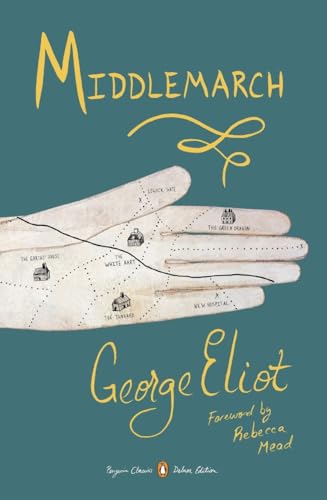
Considered one the masterpieces of realist fiction, George Eliot's novel, Middlemarch: A Study of Provincial Life, explores a fictional nineteenth-century Midlands town in the midst of modern changes. The quiet drama of ordinary lives and flawed choices are played out in the complexly portrayed central characters of the novel-the idealistic Dorothea Brooke; the ambitious Dr. Lydgate; the spendthrift Fred Vincy; and the steadfast Mary Garth. The appearance of two outsiders further disrupts the town's equilibrium-Will Ladislaw, the spirited nephew of Dorothea's husband, the Rev. Edward Casaubon, and the sinister John Raffles, who threatens to expose the hidden past of one of the town's elite.
Les informations fournies dans la section « Synopsis » peuvent faire référence à une autre édition de ce titre.
À propos de l'auteur
Mary Ann Evans (George Eliot) (1819-80) was a philosopher, journalist and translator before she became a novelist, her first stories being published in 1856. She led an unconventional life, co-editing the liberal journal Westminster Review for three years and living with the married man and philosopher George Henry Lewes. Her novels are among the greatest of the nineteenth century
Extrait. © Reproduit sur autorisation. Tous droits réservés.
WHO that cares much to know the history of man, and how the mysterious mixture behaves under the varying experiments of Time, has not dwelt, at least briefly, on the life of Saint Theresa,' has not smiled with some gentleness at the thought of the little girl walking forth one morning hand - in - hand with her still smaller brother, to go and seek martyrdom in the country of the Moors? Out they toddled from rugged Avila, wide - eyed and helpless - looking as two fawns, but with human hearts, already beating to a national idea; until domestic reality met them in the shape of uncles, and turned them back from their great resolve. That child - pilgrimage was a fit beginning. Theresa's passionate, ideal nature demanded an epic life: what were many - volumed romances of chivalry and the social conquests of a brilliant girl to her. Her flame quickly burned up that light fuel; and, fed from within, soared after some illimitable satisfaction, some object which would never justify weariness, which would reconcile self - despair with the rapturous consciousness of life beyond self. She found her epos in the reform of a religious order.
That Spanish woman who lived three hundred years ago was certainly not the last of her kind. Many Theresas have been born who found for themselves no epic life wherein there was a constant unfolding of far - resonant action; perhaps only a life of mistakes, the offspring of a certain spiritual grandeur ill - matched with the meanness of opportunity; perhaps a tragic failure which found no sacred poet and sank unwept into oblivion. With dim lights and tangled circumstance they tried to shape their thought and deed in noble agreement; but after all, to common eyes their struggles seemed mere inconsistency and formlessness; for these later - born Theresas were helped by no coherent social faith and order which could perform the function of knowledge for the ardently willing soul. Their ardour alternated between a vague ideal and the common yearning of womanhood; so that the one was disapproved as extravagance, and the other condemned as a lapse.
Some have felt that these blundering lives are due to the inconvenient indefiniteness with which the Supreme Power has fashioned the natures of women: if there were one level of feminine incompetence as strict as the ability to count three and no more, the social lot of women might be treated with scientific certitude. Meanwhile the indefiniteness remains, and the limits of variation are really much wider than any one would imagine from the sameness of women's coiffure and the favourite love - stories in prose and verse. Here and there a cygnet is reared uneasily among the ducklings in the brown pond, and never finds the living stream in fellowship with its own oary-footed kind. Here and there is born a Saint Theresa, foundress of nothing, whose loving heart -beats and sobs after an unattained goodness tremble off and are dispersed among hindrances, instead of centering in some long recognisable deed.
Les informations fournies dans la section « A propos du livre » peuvent faire référence à une autre édition de ce titre.
Résultats de recherche pour Middlemarch

Image fournie par le vendeur
Middlemarch : A Study of Provincial Life
Edité par
Penguin Classics, 2015
ISBN 10 : 0143107720
ISBN 13 : 9780143107729
Ancien ou d'occasion
Couverture souple
Vendeur : GreatBookPrices, Columbia, MD, Etats-Unis
Évaluation du vendeur 5 sur 5 étoiles

Etat : As New. Unread book in perfect condition. N° de réf. du vendeur 23172771
Acheter D'occasion
EUR 18,34
Expédition à EUR 2,32
Expédition nationale : Etats-Unis
Expédition nationale : Etats-Unis
Quantité disponible : 7 disponible(s)
Image d'archives
Middlemarch: (Penguin Classics Deluxe Edition)
Vendeur : Chiron Media, Wallingford, Royaume-Uni
Évaluation du vendeur 5 sur 5 étoiles
paperback. Etat : New. Brand new book, sourced directly from publisher. Dispatch time is 24-48 hours from our warehouse. Book will be sent in robust, secure packaging to ensure it reaches you securely. N° de réf. du vendeur 6666-GRD-9780143107729
Acheter neuf
EUR 14,02
Expédition à EUR 7,55
Expédition depuis Royaume-Uni vers Etats-Unis
Expédition depuis Royaume-Uni vers Etats-Unis
Quantité disponible : 8 disponible(s)
Image fournie par le vendeur
Middlemarch : A Study of Provincial Life
Edité par
Penguin Classics, 2015
ISBN 10 : 0143107720
ISBN 13 : 9780143107729
Neuf
Couverture souple
Vendeur : GreatBookPrices, Columbia, MD, Etats-Unis
Évaluation du vendeur 5 sur 5 étoiles
Etat : New. N° de réf. du vendeur 23172771-n
Acheter neuf
EUR 19,76
Expédition à EUR 2,32
Expédition nationale : Etats-Unis
Expédition nationale : Etats-Unis
Quantité disponible : 7 disponible(s)
Image d'archives
Middlemarch: (Penguin Classics Deluxe Edition)
Vendeur : Book Alley, Pasadena, CA, Etats-Unis
Évaluation du vendeur 4 sur 5 étoiles

paperback. Etat : New. N° de réf. du vendeur mon0000601396
Acheter neuf
EUR 18,08
Expédition à EUR 5,27
Expédition nationale : Etats-Unis
Expédition nationale : Etats-Unis
Quantité disponible : 2 disponible(s)
Image fournie par le vendeur
Middlemarch
Vendeur : Rarewaves USA, HEBRON, KY, Etats-Unis
Évaluation du vendeur 5 sur 5 étoiles
Paperback. Etat : New. Considered one the masterpieces of realist fiction, George Eliot's novel, Middlemarch: A Study of Provincial Life, explores a fictional nineteenth-century Midlands town in the midst of modern changes. The quiet drama of ordinary lives and flawed choices are played out in the complexly portrayed central characters of the novel-the idealistic Dorothea Brooke; the ambitious Dr. Lydgate; the spendthrift Fred Vincy; and the steadfast Mary Garth. The appearance of two outsiders further disrupts the town's equilibrium-Will Ladislaw, the spirited nephew of Dorothea's husband, the Rev. Edward Casaubon, and the sinister John Raffles, who threatens to expose the hidden past of one of the town's elite. N° de réf. du vendeur LU-9780143107729
Acheter neuf
EUR 24,10
Livraison gratuite
Expédition nationale : Etats-Unis
Expédition nationale : Etats-Unis
Quantité disponible : 4 disponible(s)
Image d'archives
Middlemarch
Vendeur : PBShop.store UK, Fairford, GLOS, Royaume-Uni
Évaluation du vendeur 5 sur 5 étoiles
PAP. Etat : New. New Book. Shipped from UK. Established seller since 2000. N° de réf. du vendeur GB-9780143107729
Acheter neuf
EUR 17,42
Expédition à EUR 6,83
Expédition depuis Royaume-Uni vers Etats-Unis
Expédition depuis Royaume-Uni vers Etats-Unis
Quantité disponible : 8 disponible(s)
Image d'archives
Middlemarch
Edité par
Penguin Classics, 2015
ISBN 10 : 0143107720
ISBN 13 : 9780143107729
Neuf
Couverture souple
Vendeur : Kennys Bookshop and Art Galleries Ltd., Galway, GY, Irlande
Évaluation du vendeur 5 sur 5 étoiles
Etat : New. Features Dorothea Brooke; Dr Lydgate; spendthrift Fred Vincy; and steadfast Mary Garth. This book explores a fictional nineteenth-century Midlands town in the midst of modern changes. Num Pages: 800 pages. BIC Classification: FC. Category: (G) General (US: Trade). Dimension: 222 x 147 x 36. Weight in Grams: 794. 2015. paperback. . . . . N° de réf. du vendeur 9780143107729
Acheter neuf
EUR 15,22
Expédition à EUR 9,50
Expédition depuis Irlande vers Etats-Unis
Expédition depuis Irlande vers Etats-Unis
Quantité disponible : 2 disponible(s)
Image fournie par le vendeur
Middlemarch (Paperback)
Edité par
Penguin Books Ltd, London, 2015
ISBN 10 : 0143107720
ISBN 13 : 9780143107729
Neuf
Paperback
Vendeur : Grand Eagle Retail, Bensenville, IL, Etats-Unis
Évaluation du vendeur 5 sur 5 étoiles
Paperback. Etat : new. Paperback. George Eliot's beloved masterpiece in a Penguin Classics Deluxe Edition with a foreword by Rebecca Mead, author of the bestselling memoir My Life in MiddlemarchA triumph of realist fiction, George Eliot's Middlemarch: A Study of Provincial Life explores a fictional nineteenth-century Midlands town in the midst of sweeping change. The proposed Reform Bill, the new railroads, and scientific advances are threatening upheaval on every front. Against this backdrop, the quiet drama of ordinary lives is played out by the novel's complexly portrayed characters-until the arrival of two outsiders further disrupts the town's equilibrium. Every bit as powerful and perceptive in our time as it was in the Victorian era, Middlemarchdisplays George Eliot's clear-eyed yet humane understanding of characters caught up in the mysterious unfolding of self-knowledge.In this elegant Penguin Classics Deluxe Edition, Rebecca Mead introduces the novel that shaped her life and reflects on its joys and its timeless relevance.For more than sixty-five years, Penguin has been the leading publisher of classic literature in the English-speaking world. With more than 1,500titles, Penguin Classics represents a global bookshelf of the best works throughout history and across genres and disciplines. Readers trust theseries to provide authoritative texts enhanced by introductions and notes by distinguished scholars and contemporary authors, as well as up-to-datetranslations by award-winning translators. Features Dorothea Brooke; Dr Lydgate; spendthrift Fred Vincy; and steadfast Mary Garth. This book explores a fictional nineteenth-century Midlands town in the midst of modern changes. Shipping may be from multiple locations in the US or from the UK, depending on stock availability. N° de réf. du vendeur 9780143107729
Acheter neuf
EUR 25,16
Livraison gratuite
Expédition nationale : Etats-Unis
Expédition nationale : Etats-Unis
Quantité disponible : 1 disponible(s)
Image fournie par le vendeur
Middlemarch
Vendeur : Rarewaves.com USA, London, LONDO, Royaume-Uni
Évaluation du vendeur 5 sur 5 étoiles
Paperback. Etat : New. Considered one the masterpieces of realist fiction, George Eliot's novel, Middlemarch: A Study of Provincial Life, explores a fictional nineteenth-century Midlands town in the midst of modern changes. The quiet drama of ordinary lives and flawed choices are played out in the complexly portrayed central characters of the novel-the idealistic Dorothea Brooke; the ambitious Dr. Lydgate; the spendthrift Fred Vincy; and the steadfast Mary Garth. The appearance of two outsiders further disrupts the town's equilibrium-Will Ladislaw, the spirited nephew of Dorothea's husband, the Rev. Edward Casaubon, and the sinister John Raffles, who threatens to expose the hidden past of one of the town's elite. N° de réf. du vendeur LU-9780143107729
Acheter neuf
EUR 25,27
Livraison gratuite
Expédition depuis Royaume-Uni vers Etats-Unis
Expédition depuis Royaume-Uni vers Etats-Unis
Quantité disponible : 10 disponible(s)
Image d'archives
Middlemarch
Edité par
Penguin Classics, 2015
ISBN 10 : 0143107720
ISBN 13 : 9780143107729
Neuf
Couverture souple
Vendeur : Kennys Bookstore, Olney, MD, Etats-Unis
Évaluation du vendeur 5 sur 5 étoiles
Etat : New. Features Dorothea Brooke; Dr Lydgate; spendthrift Fred Vincy; and steadfast Mary Garth. This book explores a fictional nineteenth-century Midlands town in the midst of modern changes. Num Pages: 800 pages. BIC Classification: FC. Category: (G) General (US: Trade). Dimension: 222 x 147 x 36. Weight in Grams: 794. 2015. paperback. . . . . Books ship from the US and Ireland. N° de réf. du vendeur 9780143107729
Acheter neuf
EUR 16,20
Expédition à EUR 9,22
Expédition nationale : Etats-Unis
Expédition nationale : Etats-Unis
Quantité disponible : 2 disponible(s)