
Articles liés à Cyberwar: How Russian Hackers and Trolls Helped Elect...
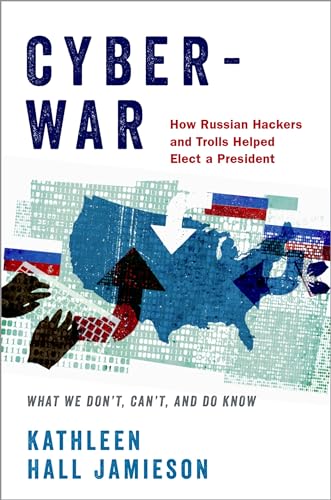
Cyberwar: How Russian Hackers and Trolls Helped Elect a President: What we don't, can't, and do know - Couverture rigide
Synopsis
The question of how Donald Trump won the 2016 election looms over his presidency. In particular, were the 78,000 voters who gave him an Electoral College victory affected by the Russian trolls and hackers? Trump has denied it. So too has Vladimir Putin. Others cast the answer as unknowable.
Drawing on path-breaking work in which she and her colleagues isolated significant communication effects in the 2000 and 2008 presidential campaigns, the eminent political communication scholar Kathleen Hall Jamieson marshals the troll posts, unique polling data, analyses of how the press used the hacked content, and a synthesis of half a century of media effects research to argue that, although not certain, it is probable that the Russians helped elect the 45th president of the United States.
In the process, Cyberwar tackles questions that include: How extensive was the troll messaging? What characteristics of the social media platforms did the Russians exploit? Why did the mainstream press rush the hacked content into the citizenrys newsfeeds? Was Clinton telling the truth when she alleged that the debate moderators distorted what she said in the leaked speeches? Did the Russian influence extend beyond social media and news to alter the behavior of FBI director James Comey?
After detailing the ways in which the Russian efforts were abetted by the press, social media platforms, the candidates, party leaders, and a polarized public, Cyberwar closes with a warning: the country is ill-prepared to prevent a sequel.
Les informations fournies dans la section « Synopsis » peuvent faire référence à une autre édition de ce titre.
À propos de l'auteur
Kathleen Hall Jamieson is the Elizabeth Ware Packard Professor of Communication at the Annenberg School for Communication of the University of Pennsylvania and Director of its Annenberg Public Policy Center. Among her award winning Oxford University Press books are Packaging the Presidency, Eloquence in an Electronic Age, Spiral of Cynicism (with Joseph Cappella), and The Obama Victory (with Kenski and Hardy).
Les informations fournies dans la section « A propos du livre » peuvent faire référence à une autre édition de ce titre.
Résultats de recherche pour Cyberwar: How Russian Hackers and Trolls Helped Elect...

Image fournie par le vendeur
Cyberwar: How Russian Hackers and Trolls Helped Elect a President: What We Don't, Can't, and Do Know
Edité par
Oxford University Press, 2018
ISBN 10 : 0190915811
ISBN 13 : 9780190915810
Ancien ou d'occasion
Couverture rigide
Vendeur : ZBK Books, Carlstadt, NJ, Etats-Unis
Évaluation du vendeur 5 sur 5 étoiles

Etat : very_good. Fast & Free Shipping â" Very Good condition book with a firm cover and clean pages. Shows normal use and some light wear or limited notes markings. A solid, nice copy to enjoy. N° de réf. du vendeur ZWV.0190915811.VG
Acheter D'occasion
EUR 4,93
Livraison gratuite
Expédition nationale : Etats-Unis
Expédition nationale : Etats-Unis
Quantité disponible : 1 disponible(s)
Image d'archives
Cyberwar: How Russian Hackers and Trolls Helped Elect a President - What We Don't, Can't, and Do Know
Edité par
Oxford University Press Inc, 2018
ISBN 10 : 0190915811
ISBN 13 : 9780190915810
Ancien ou d'occasion
Couverture rigide
Vendeur : World of Books (was SecondSale), Montgomery, IL, Etats-Unis
Évaluation du vendeur 5 sur 5 étoiles
Hardback. Etat : Good. The question of how Donald Trump won the 2016 election looms over all of the many controversies that continue to swirl around him to this day. In particular, was his victory the result of Russian meddling in our political system? Up until now, the answer to that has been equivocal at best given how difficult it is to prove. Trump has vociferously denied it, as has Vladimir Putin himself. Even the famous intelligence reports establishing that the Russians interfered hold back from saying whether the interference tipped the scales in the outcome. In Cyberwar, however, the eminent scholar Kathleen Hall Jamieson, who sifted through a vast amount of polling and voting data, is able to conclude with a reasonable degree of certainty that Russian help was crucial in elevating Trump to the Oval Office. Put simply, by changing the behavior of key players and altering the focus and content of mainstream news, Russian hackers reshaped the 2016 electoral dynamic. At the same time, Russian trolls used social media to target voting groups indispensable to a Trump victory or Clinton defeat. There are of course many arguments on offer that push against the idea that the Russians handed Trump his victory. Russia's goal was fomenting division, not electing Trump. Most of the Russian ads reportedly did not reference either the election or a candidate. Nor did they differ much from U.S.-based messaging that was already in play. Russian intervention did not surgically target Trump in key states. Finally, if WikiLeaks' releases of stolen email had truly affected the vote, Clinton's perceived honesty would have dropped in October. Jamieson, drawing from her four decades of research on the role of media in American elections, dispenses with these arguments through a forensic tracing of both Russian hackers' impact on media coverage as well as the ebbs and flows of Trump's polling support over the course of the campaign. To be sure, it is impossible to prove with absolute certainty that the Russians handed the election to Trump because there is too much that we don't know. That said, the lessons of a half century of research on the role of media framing in elections strongly suggests that many voters' opinions were altered by Russia's wide-ranging and coordinated campaign-including at least seventy eight thousand votes in three key states. Combining scholarly rigor with a bracing argument, Cyberwar shows that we can now be reasonably confident that Russian efforts helped put Trump in the White House. N° de réf. du vendeur 00108900828
Acheter D'occasion
EUR 4,95
Livraison gratuite
Expédition nationale : Etats-Unis
Expédition nationale : Etats-Unis
Quantité disponible : 4 disponible(s)
Image d'archives
Cyberwar: How Russian Hackers and Trolls Helped Elect a President - What We Don't, Can't, and Do Know
Edité par
Oxford University Press Inc, 2018
ISBN 10 : 0190915811
ISBN 13 : 9780190915810
Ancien ou d'occasion
Couverture rigide
Vendeur : World of Books (was SecondSale), Montgomery, IL, Etats-Unis
Évaluation du vendeur 5 sur 5 étoiles
Hardback. Etat : Fair. The question of how Donald Trump won the 2016 election looms over all of the many controversies that continue to swirl around him to this day. In particular, was his victory the result of Russian meddling in our political system? Up until now, the answer to that has been equivocal at best given how difficult it is to prove. Trump has vociferously denied it, as has Vladimir Putin himself. Even the famous intelligence reports establishing that the Russians interfered hold back from saying whether the interference tipped the scales in the outcome. In Cyberwar, however, the eminent scholar Kathleen Hall Jamieson, who sifted through a vast amount of polling and voting data, is able to conclude with a reasonable degree of certainty that Russian help was crucial in elevating Trump to the Oval Office. Put simply, by changing the behavior of key players and altering the focus and content of mainstream news, Russian hackers reshaped the 2016 electoral dynamic. At the same time, Russian trolls used social media to target voting groups indispensable to a Trump victory or Clinton defeat. There are of course many arguments on offer that push against the idea that the Russians handed Trump his victory. Russia's goal was fomenting division, not electing Trump. Most of the Russian ads reportedly did not reference either the election or a candidate. Nor did they differ much from U.S.-based messaging that was already in play. Russian intervention did not surgically target Trump in key states. Finally, if WikiLeaks' releases of stolen email had truly affected the vote, Clinton's perceived honesty would have dropped in October. Jamieson, drawing from her four decades of research on the role of media in American elections, dispenses with these arguments through a forensic tracing of both Russian hackers' impact on media coverage as well as the ebbs and flows of Trump's polling support over the course of the campaign. To be sure, it is impossible to prove with absolute certainty that the Russians handed the election to Trump because there is too much that we don't know. That said, the lessons of a half century of research on the role of media framing in elections strongly suggests that many voters' opinions were altered by Russia's wide-ranging and coordinated campaign-including at least seventy eight thousand votes in three key states. Combining scholarly rigor with a bracing argument, Cyberwar shows that we can now be reasonably confident that Russian efforts helped put Trump in the White House. N° de réf. du vendeur 00107783357
Acheter D'occasion
EUR 4,95
Livraison gratuite
Expédition nationale : Etats-Unis
Expédition nationale : Etats-Unis
Quantité disponible : 1 disponible(s)
Image d'archives
Cyberwar: How Russian Hackers and Trolls Helped Elect a President - What We Don't, Can't, and Do Know
Edité par
Oxford University Press Inc, 2018
ISBN 10 : 0190915811
ISBN 13 : 9780190915810
Ancien ou d'occasion
Couverture rigide
Vendeur : World of Books (was SecondSale), Montgomery, IL, Etats-Unis
Évaluation du vendeur 5 sur 5 étoiles
Hardback. Etat : Very Good. The question of how Donald Trump won the 2016 election looms over all of the many controversies that continue to swirl around him to this day. In particular, was his victory the result of Russian meddling in our political system? Up until now, the answer to that has been equivocal at best given how difficult it is to prove. Trump has vociferously denied it, as has Vladimir Putin himself. Even the famous intelligence reports establishing that the Russians interfered hold back from saying whether the interference tipped the scales in the outcome. In Cyberwar, however, the eminent scholar Kathleen Hall Jamieson, who sifted through a vast amount of polling and voting data, is able to conclude with a reasonable degree of certainty that Russian help was crucial in elevating Trump to the Oval Office. Put simply, by changing the behavior of key players and altering the focus and content of mainstream news, Russian hackers reshaped the 2016 electoral dynamic. At the same time, Russian trolls used social media to target voting groups indispensable to a Trump victory or Clinton defeat. There are of course many arguments on offer that push against the idea that the Russians handed Trump his victory. Russia's goal was fomenting division, not electing Trump. Most of the Russian ads reportedly did not reference either the election or a candidate. Nor did they differ much from U.S.-based messaging that was already in play. Russian intervention did not surgically target Trump in key states. Finally, if WikiLeaks' releases of stolen email had truly affected the vote, Clinton's perceived honesty would have dropped in October. Jamieson, drawing from her four decades of research on the role of media in American elections, dispenses with these arguments through a forensic tracing of both Russian hackers' impact on media coverage as well as the ebbs and flows of Trump's polling support over the course of the campaign. To be sure, it is impossible to prove with absolute certainty that the Russians handed the election to Trump because there is too much that we don't know. That said, the lessons of a half century of research on the role of media framing in elections strongly suggests that many voters' opinions were altered by Russia's wide-ranging and coordinated campaign-including at least seventy eight thousand votes in three key states. Combining scholarly rigor with a bracing argument, Cyberwar shows that we can now be reasonably confident that Russian efforts helped put Trump in the White House. N° de réf. du vendeur 00109055763
Acheter D'occasion
EUR 4,95
Livraison gratuite
Expédition nationale : Etats-Unis
Expédition nationale : Etats-Unis
Quantité disponible : 1 disponible(s)
Image fournie par le vendeur
Cyberwar: How Russian Hackers and Trolls Helped Elect a President: What We Don't, Can't, and Do Know
Edité par
Oxford University Press, 2018
ISBN 10 : 0190915811
ISBN 13 : 9780190915810
Ancien ou d'occasion
Couverture rigide
Vendeur : Bay State Book Company, North Smithfield, RI, Etats-Unis
Évaluation du vendeur 5 sur 5 étoiles
Etat : good. The book is in good condition with all pages and cover intact, including the dust jacket if originally issued. The spine may show light wear. Pages may contain some notes or highlighting, and there might be a "From the library of" label. Boxed set packaging, shrink wrap, or included media like CDs may be missing. N° de réf. du vendeur BSM.1APYT
Acheter D'occasion
EUR 5,49
Livraison gratuite
Expédition nationale : Etats-Unis
Expédition nationale : Etats-Unis
Quantité disponible : 1 disponible(s)
Image d'archives
Cyberwar: How Russian Hackers and Trolls Helped Elect a President: What We Don't, Can't, and Do Know
Edité par
Oxford University Press, 2018
ISBN 10 : 0190915811
ISBN 13 : 9780190915810
Ancien ou d'occasion
Couverture rigide
Vendeur : Wonder Book, Frederick, MD, Etats-Unis
Évaluation du vendeur 5 sur 5 étoiles
Etat : As New. Like New condition. Like New dust jacket. A near perfect copy that may have very minor cosmetic defects. N° de réf. du vendeur R06P-00378
Acheter D'occasion
EUR 6,61
Livraison gratuite
Expédition nationale : Etats-Unis
Expédition nationale : Etats-Unis
Quantité disponible : 2 disponible(s)
Image d'archives
Cyberwar: How Russian Hackers and Trolls Helped Elect a President: What We Don't, Can't, and Do Know
Edité par
Oxford University Press, 2018
ISBN 10 : 0190915811
ISBN 13 : 9780190915810
Ancien ou d'occasion
Couverture rigide
Vendeur : Wonder Book, Frederick, MD, Etats-Unis
Évaluation du vendeur 5 sur 5 étoiles
Etat : Good. Good condition. Good dust jacket. A copy that has been read but remains intact. May contain markings such as bookplates, stamps, limited notes and highlighting, or a few light stains. N° de réf. du vendeur I18A-07001
Acheter D'occasion
EUR 6,61
Livraison gratuite
Expédition nationale : Etats-Unis
Expédition nationale : Etats-Unis
Quantité disponible : 1 disponible(s)
Image d'archives
Cyberwar: How Russian Hackers and Trolls Helped Elect a President - What We Don't, Can't, and Do Know
Edité par
Oxford University Press Inc, 2018
ISBN 10 : 0190915811
ISBN 13 : 9780190915810
Ancien ou d'occasion
Couverture rigide
Vendeur : World of Books Inc, Montgomery, IL, Etats-Unis
Évaluation du vendeur 4 sur 5 étoiles

Hardback. Etat : Very Good. The question of how Donald Trump won the 2016 election looms over all of the many controversies that continue to swirl around him to this day. In particular, was his victory the result of Russian meddling in our political system? Up until now, the answer to that has been equivocal at best given how difficult it is to prove. Trump has vociferously denied it, as has Vladimir Putin himself. Even the famous intelligence reports establishing that the Russians interfered hold back from saying whether the interference tipped the scales in the outcome. In Cyberwar, however, the eminent scholar Kathleen Hall Jamieson, who sifted through a vast amount of polling and voting data, is able to conclude with a reasonable degree of certainty that Russian help was crucial in elevating Trump to the Oval Office. Put simply, by changing the behavior of key players and altering the focus and content of mainstream news, Russian hackers reshaped the 2016 electoral dynamic. At the same time, Russian trolls used social media to target voting groups indispensable to a Trump victory or Clinton defeat. There are of course many arguments on offer that push against the idea that the Russians handed Trump his victory. Russia's goal was fomenting division, not electing Trump. Most of the Russian ads reportedly did not reference either the election or a candidate. Nor did they differ much from U.S.-based messaging that was already in play. Russian intervention did not surgically target Trump in key states. Finally, if WikiLeaks' releases of stolen email had truly affected the vote, Clinton's perceived honesty would have dropped in October. Jamieson, drawing from her four decades of research on the role of media in American elections, dispenses with these arguments through a forensic tracing of both Russian hackers' impact on media coverage as well as the ebbs and flows of Trump's polling support over the course of the campaign. To be sure, it is impossible to prove with absolute certainty that the Russians handed the election to Trump because there is too much that we don't know. That said, the lessons of a half century of research on the role of media framing in elections strongly suggests that many voters' opinions were altered by Russia's wide-ranging and coordinated campaign-including at least seventy eight thousand votes in three key states. Combining scholarly rigor with a bracing argument, Cyberwar shows that we can now be reasonably confident that Russian efforts helped put Trump in the White House. N° de réf. du vendeur CIN0190915811VG
Acheter D'occasion
EUR 6,80
Livraison gratuite
Expédition nationale : Etats-Unis
Expédition nationale : Etats-Unis
Quantité disponible : 1 disponible(s)
Image d'archives
Cyberwar: How Russian Hackers and Trolls Helped Elect a President - What We Don't, Can't, and Do Know
Edité par
Oxford University Press Inc, 2018
ISBN 10 : 0190915811
ISBN 13 : 9780190915810
Ancien ou d'occasion
Couverture rigide
Vendeur : World of Books Inc, Montgomery, IL, Etats-Unis
Évaluation du vendeur 4 sur 5 étoiles
Hardback. Etat : Fair. The question of how Donald Trump won the 2016 election looms over all of the many controversies that continue to swirl around him to this day. In particular, was his victory the result of Russian meddling in our political system? Up until now, the answer to that has been equivocal at best given how difficult it is to prove. Trump has vociferously denied it, as has Vladimir Putin himself. Even the famous intelligence reports establishing that the Russians interfered hold back from saying whether the interference tipped the scales in the outcome. In Cyberwar, however, the eminent scholar Kathleen Hall Jamieson, who sifted through a vast amount of polling and voting data, is able to conclude with a reasonable degree of certainty that Russian help was crucial in elevating Trump to the Oval Office. Put simply, by changing the behavior of key players and altering the focus and content of mainstream news, Russian hackers reshaped the 2016 electoral dynamic. At the same time, Russian trolls used social media to target voting groups indispensable to a Trump victory or Clinton defeat. There are of course many arguments on offer that push against the idea that the Russians handed Trump his victory. Russia's goal was fomenting division, not electing Trump. Most of the Russian ads reportedly did not reference either the election or a candidate. Nor did they differ much from U.S.-based messaging that was already in play. Russian intervention did not surgically target Trump in key states. Finally, if WikiLeaks' releases of stolen email had truly affected the vote, Clinton's perceived honesty would have dropped in October. Jamieson, drawing from her four decades of research on the role of media in American elections, dispenses with these arguments through a forensic tracing of both Russian hackers' impact on media coverage as well as the ebbs and flows of Trump's polling support over the course of the campaign. To be sure, it is impossible to prove with absolute certainty that the Russians handed the election to Trump because there is too much that we don't know. That said, the lessons of a half century of research on the role of media framing in elections strongly suggests that many voters' opinions were altered by Russia's wide-ranging and coordinated campaign-including at least seventy eight thousand votes in three key states. Combining scholarly rigor with a bracing argument, Cyberwar shows that we can now be reasonably confident that Russian efforts helped put Trump in the White House. N° de réf. du vendeur CIN0190915811A
Acheter D'occasion
EUR 6,80
Livraison gratuite
Expédition nationale : Etats-Unis
Expédition nationale : Etats-Unis
Quantité disponible : 1 disponible(s)
Image d'archives
Cyberwar: How Russian Hackers and Trolls Helped Elect a President - What We Don't, Can't, and Do Know
Edité par
Oxford University Press Inc, 2018
ISBN 10 : 0190915811
ISBN 13 : 9780190915810
Ancien ou d'occasion
Couverture rigide
Vendeur : World of Books Inc, Montgomery, IL, Etats-Unis
Évaluation du vendeur 4 sur 5 étoiles
Hardback. Etat : Good. The question of how Donald Trump won the 2016 election looms over all of the many controversies that continue to swirl around him to this day. In particular, was his victory the result of Russian meddling in our political system? Up until now, the answer to that has been equivocal at best given how difficult it is to prove. Trump has vociferously denied it, as has Vladimir Putin himself. Even the famous intelligence reports establishing that the Russians interfered hold back from saying whether the interference tipped the scales in the outcome. In Cyberwar, however, the eminent scholar Kathleen Hall Jamieson, who sifted through a vast amount of polling and voting data, is able to conclude with a reasonable degree of certainty that Russian help was crucial in elevating Trump to the Oval Office. Put simply, by changing the behavior of key players and altering the focus and content of mainstream news, Russian hackers reshaped the 2016 electoral dynamic. At the same time, Russian trolls used social media to target voting groups indispensable to a Trump victory or Clinton defeat. There are of course many arguments on offer that push against the idea that the Russians handed Trump his victory. Russia's goal was fomenting division, not electing Trump. Most of the Russian ads reportedly did not reference either the election or a candidate. Nor did they differ much from U.S.-based messaging that was already in play. Russian intervention did not surgically target Trump in key states. Finally, if WikiLeaks' releases of stolen email had truly affected the vote, Clinton's perceived honesty would have dropped in October. Jamieson, drawing from her four decades of research on the role of media in American elections, dispenses with these arguments through a forensic tracing of both Russian hackers' impact on media coverage as well as the ebbs and flows of Trump's polling support over the course of the campaign. To be sure, it is impossible to prove with absolute certainty that the Russians handed the election to Trump because there is too much that we don't know. That said, the lessons of a half century of research on the role of media framing in elections strongly suggests that many voters' opinions were altered by Russia's wide-ranging and coordinated campaign-including at least seventy eight thousand votes in three key states. Combining scholarly rigor with a bracing argument, Cyberwar shows that we can now be reasonably confident that Russian efforts helped put Trump in the White House. N° de réf. du vendeur CIN0190915811G
Acheter D'occasion
EUR 6,80
Livraison gratuite
Expédition nationale : Etats-Unis
Expédition nationale : Etats-Unis
Quantité disponible : 4 disponible(s)