
Articles liés à The Oxford Book of the Sea
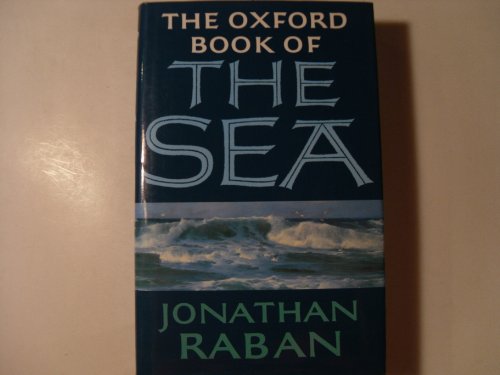
Synopsis
One of the earliest poems in the English language, "The Seafarer", is about the sea. Britain is a maritime culture and it is difficult to think of its history without bringing to mind such figures as Drake, Hawkins, Raleigh, and Nelson. The language itself is suffused with obsolete nautical terms (aloof, taken-aback, above board), and the literature of the sea in both Britain and America is especially rich. In these extracts the sea assumes a variety of guises - from the scourge of small-boat adventurers to Matthew Arnold's "Sea of Faith"; from the colonial road of 16th-century explorers to the fickle intimate of Hemingway's Old Man; from the Ancient Mariner's phantasmagoria to the wave-formations of modern oceanographers; and from the sublime spectacle viewed by Addison and the 18th-century Enlightenment to Edgar Allan Poe's maelstrom. Arranged in chronological order, the extracts form a history of preoccupations with and ideas about the sea. "The Seafarer's" theme of bleak exile gives way to the practical business of Renaissance explorers, and this in turn provides a subject and a range of metaphors for the metaphysical poets, Milton and Dryden. With the 18th-century sea travel becomes a more gentlemanly pursuit (although often a disagreeable one as Tobias Smollett discovers), but the subduable, if sometimes inconvenient sea is soon whipped up into an archetypal storm by the Romantics. The 19th-century is remarkable for the numbers of writers who turned professional sailors - Melville, Conrad and Masefield to name but three. In their fictions, and in the records of the later single-handed yachtsmen such as Joshua Slocum and Hilaire Belloc, the sea becomes a striking setting for heroism and adventure. In the late 20th-century these romances seem played out, and the fresh investigations into the mechanics and meaning of the sea have been made more by the poets and oceanographers.
Les informations fournies dans la section « Synopsis » peuvent faire référence à une autre édition de ce titre.
Présentation de l'éditeur
It is no surprise that one of the earliest works in English literature should be a poem about the sea: the sea has been a source of fascination from the earliest times, and the Anglo-Saxon poem 'The Seafarer' is only the first in a long series of writings which ponder its mystery. A powerful and restless presence in real life, the sea is one of the most ubiquitous and protean symbols in literature, changing in response to shifts in sensibility, and holding a mirror to all who confront it - Renaissance explorers and Augustan gentlemen, Romantic outcasts and Victorian travellers, small-boat sailors, naturalists and novelists, poets and oceanographers: men and women in a state of wonder before the sea. Jonathan Raban brings a special awareness and knowledge to his role as editor; in the words of Colin Thubron, 'nobody of his generation writes more subtly or imaginatively on travel'. Raban's introduction constitutes an important essay on the meaning of the sea in literature, and the pieces he has chosen display the exhilarating richness of writing in the tradition. Alongside extracts from the acknowledged marine masterpieces are many unexpected delights: Emily Dickinson's affirmative poem 'Exhalation is the Going'; a meditation on a seaside holiday by Larkin; Jane Austen's tart satirizing of Byron's Romanticized sea; Thoreau's contemplation of monsters and lost anchors off Cape Cod; Willard Bascom's brilliantly observed description of breaking waves. As richly varied and enthralling as the sea itself, this sparkling collection spans the centuries from AD 900 to the present and forms a unique and important body of writing to delight in and admire.
Biographie de l'auteur
Jonathan Raban was born in 1942, educated at Hull University, and was for a time a lecturer at UCW Aberystwyth and the University of East Anglia before becoming a full-time writer in 1969. His books include 'Soft City' (1973), 'Arabia Through the Looking Glass' (1979), 'Old Glory' (1981, Heinemann Award, RSL Thomas Cook Award), 'Foreign Land' (1985), 'Coasting' (1986), 'For Love and Money' (1987), and 'Hunting Mister Heartbreak' (1990, Thomas Cook Award). He has sailed alone round Britain and has spent much time afloat on the coastal seas of Europe. He is now living in Seattle, where he sails a Swedish ketch on the rim of the North Pacific.
Les informations fournies dans la section « A propos du livre » peuvent faire référence à une autre édition de ce titre.
Résultats de recherche pour The Oxford Book of the Sea

Image d'archives
The Oxford Book of the Sea
Edité par
Oxford University Press (edition First Edition), 1992
ISBN 10 : 019214197X
ISBN 13 : 9780192141972
Ancien ou d'occasion
Couverture rigide
Edition originale
Vendeur : BooksRun, Philadelphia, PA, Etats-Unis
Évaluation du vendeur 5 sur 5 étoiles

Hardcover. Etat : Fair. First Edition. The item might be beaten up but readable. May contain markings or highlighting, as well as stains, bent corners, or any other major defect, but the text is not obscured in any way. N° de réf. du vendeur 019214197X-7-1
Acheter D'occasion
EUR 6,30
Livraison gratuite
Expédition nationale : Etats-Unis
Expédition nationale : Etats-Unis
Quantité disponible : 1 disponible(s)
Image d'archives
The Oxford Book of the Sea
Edité par
Oxford University Press, 1992
ISBN 10 : 019214197X
ISBN 13 : 9780192141972
Ancien ou d'occasion
Couverture rigide
Vendeur : Wonder Book, Frederick, MD, Etats-Unis
Évaluation du vendeur 5 sur 5 étoiles
Etat : Good. Good condition. Very Good dust jacket. A copy that has been read but remains intact. May contain markings such as bookplates, stamps, limited notes and highlighting, or a few light stains. N° de réf. du vendeur A09A-06526
Acheter D'occasion
EUR 6,42
Livraison gratuite
Expédition nationale : Etats-Unis
Expédition nationale : Etats-Unis
Quantité disponible : 1 disponible(s)
Image d'archives
The Oxford Book of the Sea
Edité par
Oxford University Press, 1992
ISBN 10 : 019214197X
ISBN 13 : 9780192141972
Ancien ou d'occasion
Couverture rigide
Vendeur : Wonder Book, Frederick, MD, Etats-Unis
Évaluation du vendeur 5 sur 5 étoiles
Etat : Good. Good condition. Good dust jacket. A copy that has been read but remains intact. May contain markings such as bookplates, stamps, limited notes and highlighting, or a few light stains. N° de réf. du vendeur F21B-01701
Acheter D'occasion
EUR 6,42
Livraison gratuite
Expédition nationale : Etats-Unis
Expédition nationale : Etats-Unis
Quantité disponible : 1 disponible(s)
Image d'archives
The Oxford Book of the Sea
Edité par
Oxford University Press, Incorporated, 1992
ISBN 10 : 019214197X
ISBN 13 : 9780192141972
Ancien ou d'occasion
Couverture rigide
Vendeur : Better World Books, Mishawaka, IN, Etats-Unis
Évaluation du vendeur 5 sur 5 étoiles
Etat : Good. First American Edition. Pages intact with minimal writing/highlighting. The binding may be loose and creased. Dust jackets/supplements are not included. Stock photo provided. Product includes identifying sticker. Better World Books: Buy Books. Do Good. N° de réf. du vendeur GRP13954436
Acheter D'occasion
EUR 7,56
Livraison gratuite
Expédition nationale : Etats-Unis
Expédition nationale : Etats-Unis
Quantité disponible : 3 disponible(s)
Image d'archives
The Oxford Book of the Sea
Edité par
Oxford University Press, 1992
ISBN 10 : 019214197X
ISBN 13 : 9780192141972
Ancien ou d'occasion
Couverture rigide
Vendeur : ThriftBooks-Atlanta, AUSTELL, GA, Etats-Unis
Évaluation du vendeur 5 sur 5 étoiles
Hardcover. Etat : Fair. No Jacket. Former library book; Readable copy. Pages may have considerable notes/highlighting. ~ ThriftBooks: Read More, Spend Less. N° de réf. du vendeur G019214197XI5N10
Acheter D'occasion
EUR 7,87
Livraison gratuite
Expédition nationale : Etats-Unis
Expédition nationale : Etats-Unis
Quantité disponible : 1 disponible(s)
Image d'archives
The Oxford Book of the Sea
Edité par
Oxford University Press, 1992
ISBN 10 : 019214197X
ISBN 13 : 9780192141972
Ancien ou d'occasion
Couverture rigide
Vendeur : ThriftBooks-Dallas, Dallas, TX, Etats-Unis
Évaluation du vendeur 5 sur 5 étoiles
Hardcover. Etat : Fair. No Jacket. Readable copy. Pages may have considerable notes/highlighting. ~ ThriftBooks: Read More, Spend Less. N° de réf. du vendeur G019214197XI5N00
Acheter D'occasion
EUR 7,87
Livraison gratuite
Expédition nationale : Etats-Unis
Expédition nationale : Etats-Unis
Quantité disponible : 1 disponible(s)
Image d'archives
The Oxford Book of the Sea
Edité par
Oxford University Press, 1992
ISBN 10 : 019214197X
ISBN 13 : 9780192141972
Ancien ou d'occasion
Couverture rigide
Vendeur : ThriftBooks-Atlanta, AUSTELL, GA, Etats-Unis
Évaluation du vendeur 5 sur 5 étoiles
Hardcover. Etat : Good. No Jacket. Former library book; Pages can have notes/highlighting. Spine may show signs of wear. ~ ThriftBooks: Read More, Spend Less. N° de réf. du vendeur G019214197XI3N10
Acheter D'occasion
EUR 7,87
Livraison gratuite
Expédition nationale : Etats-Unis
Expédition nationale : Etats-Unis
Quantité disponible : 1 disponible(s)
Image d'archives
The Oxford Book of the Sea
Edité par
Oxford University Press, 1992
ISBN 10 : 019214197X
ISBN 13 : 9780192141972
Ancien ou d'occasion
Couverture rigide
Vendeur : World of Books (was SecondSale), Montgomery, IL, Etats-Unis
Évaluation du vendeur 5 sur 5 étoiles
Hardback. Etat : Good. One of the earliest poems in the English language, "The Seafarer", is about the sea. Britain is a maritime culture and it is difficult to think of its history without bringing to mind such figures as Drake, Hawkins, Raleigh, and Nelson. The language itself is suffused with obsolete nautical terms (aloof, taken-aback, above board), and the literature of the sea in both Britain and America is especially rich. In these extracts the sea assumes a variety of guises - from the scourge of small-boat adventurers to Matthew Arnold's "Sea of Faith"; from the colonial road of 16th-century explorers to the fickle intimate of Hemingway's Old Man; from the Ancient Mariner's phantasmagoria to the wave-formations of modern oceanographers; and from the sublime spectacle viewed by Addison and the 18th-century Enlightenment to Edgar Allan Poe's maelstrom. Arranged in chronological order, the extracts form a history of preoccupations with and ideas about the sea. "The Seafarer's" theme of bleak exile gives way to the practical business of Renaissance explorers, and this in turn provides a subject and a range of metaphors for the metaphysical poets, Milton and Dryden. With the 18th-century sea travel becomes a more gentlemanly pursuit (although often a disagreeable one as Tobias Smollett discovers), but the subduable, if sometimes inconvenient sea is soon whipped up into an archetypal storm by the Romantics. The 19th-century is remarkable for the numbers of writers who turned professional sailors - Melville, Conrad and Masefield to name but three. In their fictions, and in the records of the later single-handed yachtsmen such as Joshua Slocum and Hilaire Belloc, the sea becomes a striking setting for heroism and adventure. In the late 20th-century these romances seem played out, and the fresh investigations into the mechanics and meaning of the sea have been made more by the poets and oceanographers. N° de réf. du vendeur CIN019214197XG
Acheter D'occasion
EUR 9,37
Livraison gratuite
Expédition nationale : Etats-Unis
Expédition nationale : Etats-Unis
Quantité disponible : 1 disponible(s)
Image d'archives
The Oxford Book of the Sea
Edité par
Oxford University Press, 1992
ISBN 10 : 019214197X
ISBN 13 : 9780192141972
Ancien ou d'occasion
Couverture rigide
Vendeur : WorldofBooks, Goring-By-Sea, WS, Royaume-Uni
Évaluation du vendeur 5 sur 5 étoiles
Hardback. Etat : Very Good. The book has been read, but is in excellent condition. Pages are intact and not marred by notes or highlighting. The spine remains undamaged. N° de réf. du vendeur GOR001305631
Acheter D'occasion
EUR 3,30
Expédition à EUR 6,64
Expédition depuis Royaume-Uni vers Etats-Unis
Expédition depuis Royaume-Uni vers Etats-Unis
Quantité disponible : 3 disponible(s)
Image d'archives
The Oxford Book of the Sea
Edité par
Oxford University Press, 1992
ISBN 10 : 019214197X
ISBN 13 : 9780192141972
Ancien ou d'occasion
Couverture rigide
Vendeur : WorldofBooks, Goring-By-Sea, WS, Royaume-Uni
Évaluation du vendeur 5 sur 5 étoiles
Hardback. Etat : Fair. A readable copy of the book which may include some defects such as highlighting and notes. Cover and pages may be creased and show discolouration. N° de réf. du vendeur GOR007226006
Acheter D'occasion
EUR 3,30
Expédition à EUR 6,64
Expédition depuis Royaume-Uni vers Etats-Unis
Expédition depuis Royaume-Uni vers Etats-Unis
Quantité disponible : 1 disponible(s)