
Articles liés à The Awakening: And Other Stories
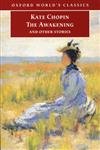
Synopsis
'She wanted to swim far out, where no woman had swum before.' Kate Chopin was one of the most individual and adventurous of nineteenth-century american writers, whose fiction explored new and often startling territory. When her most famous story, The Awakening, was first published in 1899, it stunned readers with its frank portrayal of the inner word of Edna Pontellier, and its daring criticisms of the limits of marriage and motherhood. The subtle beauty of her writing was contrasted with her unwomanly and sordid subject-matter: Edna's rejection of her domestic role, and her passionate quest for spiritual, sexual, and artistic freedom. From her first stories, Chopin was interested in independent characters who challenged convention. This selection, freshly edited form the first printing of each text, enables readers to follow her unfolding career as she experimented with a broad range of writing, from tales for children to decadent fin-de siecle sketches. The Awakening is set alongside thirty-two short stories, illustrating the spectrum of the fiction from her first published stories to her 1898 secret masterpiece, 'The Storm'.
Les informations fournies dans la section « Synopsis » peuvent faire référence à une autre édition de ce titre.
Extrait
Upon the pleasant veranda of Pere Antoine's cottage, that adjoined the church, a young girl had long been seated, awaiting his return. It was the eve of Easter Sunday, and since early afternoon the priest had been engaged in hearing the confessions of those who wished to make their Easters the following day. The girl did not seem impatient at his delay; on the contrary, it was very restful to her to lie back in the big chair she had found there, and peep through the thick curtain of vines at the people who occasionally passed along the village street.
She was slender, with a frailness that indicated lack of wholesome and plentiful nourishment. A pathetic, uneasy look was in her gray eyes, and even faintly stamped her features, which were fine and delicate. In lieu of a hat, a barege veil covered her light brown and abundant hair. She wore a coarse white cotton 'josie,' and a blue calico skirt that only half concealed her tattered shoes.
As she sat there, she held carefully in her lap a parcel of eggs securely fastened in a red bandana handkerchief.
Twice already a handsome, stalwart young man in quest of the priest had entered the yard, and penetrated to where she sat. At first they had exchanged the uncompromising 'howdy' of strangers, and nothing more. The second time, finding the priest still absent, he hesitated to go at once. Instead, he stood upon the step, and narrowing his brown eyes, gazed beyond the river, off towards the west, where a murky streak of mist was spreading across the sun.
'It look like mo' rain,' he remarked, slowly and carelessly.
'We done had 'bout 'nough,' she replied, in much the same tone.
'It's no chance to thin out the cotton,' he went on.
'An' the Bon-Dieu,' she resumed, 'it's on'y to-day you can cross him on foot.'
'You live yonda on the Bon-Dieu, donc?' he asked, looking at her for the first time since he had spoken.
'Yas, by Nid Hibout, monsieur.'
Instinctive courtesy held him from questioning her further. But he seated himself on the step, evidently determined to wait there for the priest. He said no more, but sat scanning critically the steps, the porch, and pillar beside him, from which he occasionally tore away little pieces of detached wood, where it was beginning to rot at its base.
A click at the side gate that communicated with the churchyard soon announced Pere Antoine's return. He came hurriedly across the garden-path, between the tall, lusty rosebushes that lined either side of it, which were now fragrant with blossoms. His long, flapping cassock added something of height to his undersized, middle-aged figure, as did the skullcap which rested securely back on his head. He saw only the young man at first, who rose at his approach.
'Well, Azenor,' he called cheerily in French, extending his hand. 'How is this? I expected you all the week.'
'Yes, monsieur; but I knew well what you wanted with me, and I was finishing the doors for Gros-Leon's new house' saying which, he drew back, and indicated by a motion and look that some one was present who had a prior claim upon Pere Antoine's attention.
'Ah, Lalie!' the priest exclaimed, when he had mounted to the porch, and saw her there behind the vines. 'Have you been waiting here since you confessed? Surely an hour ago!'
'Yes, monsieur.'
'You should rather have made some visits in the village, child.'
'I am not acquainted with any one in the village,' she returned.
The priest, as he spoke, had drawn a chair, and seated himself beside her, with his hands comfortably clasping his knees. He wanted to know how things were out on the bayou.
'And how is the grandmother?' he asked. 'As cross and crabbed as ever? And with that'—he added reflectively—'good for ten years yet! I said only yesterday to Butrand—you know Butrand, he works on Le Blot's Bon-Dieu place—'And that Madame Zidore: how is it with her, Butrand? I believe God has forgotten her here on earth.''It isn't that, your reverence,' said Butrand, 'but it's neither God nor the Devil that wants her!'' And Pere Antoine laughed with a jovial frankness that took all sting of ill-nature from his very pointed remarks.
Présentation de l'éditeur
First published in 1899, this beautiful, brief novel so disturbed critics and the public that it was banished for decades afterward. Now widely read and admired, The Awakening has been hailed as an early vision of woman's emancipation. This sensuous book tells of a woman's abandonment of her family, her seduction, and her awakening to desires and passions that threated to consumer her. Originally entitled "A Solitary Soul," this portrait of twenty-eight-year-old Edna Pontellier is a landmark in American fiction, rooted firmly in the romantic tradition of Herman Melville and Emily Dickinson. Here, a woman in search of self-discovery turns away from convention and society, and toward the primal, from convention and society, and toward the primal, irresistibly attracted to nature and the senses The Awakening, Kate Chopin's last novel, has been praised by Edmund Wilson as "beautifully written." And Willa Cather described its style as "exquisite," "sensitive," and "iridescent." This edition of The Awakening also includes a selection of short stories by Kate Chopin.
"This seems to me a higher order of feminism than repeating the story of woman as victim... Kate Chopin gives her female protagonist the central role, normally reserved for Man, in a meditation on identity and culture, consciousness and art." -- From the introduction by Marilynne Robinson.
Les informations fournies dans la section « A propos du livre » peuvent faire référence à une autre édition de ce titre.
Résultats de recherche pour The Awakening: And Other Stories

Image d'archives
The Awakening
Edité par
Oxford University Press, 2000
ISBN 10 : 0192823000
ISBN 13 : 9780192823007
Ancien ou d'occasion
Paperback
Vendeur : World of Books (was SecondSale), Montgomery, IL, Etats-Unis
Évaluation du vendeur 5 sur 5 étoiles

Paperback. Etat : Good. 'She wanted to swim far out, where no woman had swum before.' Kate Chopin was one of the most individual and adventurous of nineteenth-century american writers, whose fiction explored new and often startling territory. When her most famous story, The Awakening, was first published in 1899, it stunned readers with its frank portrayal of the inner word of Edna Pontellier, and its daring criticisms of the limits of marriage and motherhood. The subtle beauty of her writing was contrasted with her unwomanly and sordid subject-matter: Edna's rejection of her domestic role, and her passionate quest for spiritual, sexual, and artistic freedom. From her first stories, Chopin was interested in independent characters who challenged convention. This selection, freshly edited form the first printing of each text, enables readers to follow her unfolding career as she experimented with a broad range of writing, from tales for children to decadent fin-de siecle sketches. The Awakening is set alongside thirty-two short stories, illustrating the spectrum of the fiction from her first published stories to her 1898 secret masterpiece, 'The Storm'. N° de réf. du vendeur 00059030222
Acheter D'occasion
EUR 4,84
Livraison gratuite
Expédition nationale : Etats-Unis
Expédition nationale : Etats-Unis
Quantité disponible : 3 disponible(s)
Image d'archives
The Awakening: And Other Stories (Oxford World's Classics)
Edité par
Oxford University Press (edition ), 2000
ISBN 10 : 0192823000
ISBN 13 : 9780192823007
Ancien ou d'occasion
Paperback
Vendeur : BooksRun, Philadelphia, PA, Etats-Unis
Évaluation du vendeur 5 sur 5 étoiles
Paperback. Etat : Fair. The item might be beaten up but readable. May contain markings or highlighting, as well as stains, bent corners, or any other major defect, but the text is not obscured in any way. N° de réf. du vendeur 0192823000-7-1
Acheter D'occasion
EUR 4,85
Livraison gratuite
Expédition nationale : Etats-Unis
Expédition nationale : Etats-Unis
Quantité disponible : 1 disponible(s)
Image fournie par le vendeur
The Awakening: And Other Stories (Oxford World's Classics)
Edité par
Oxford University Press, 2000
ISBN 10 : 0192823000
ISBN 13 : 9780192823007
Ancien ou d'occasion
Couverture souple
Vendeur : Greenworld Books, Arlington, TX, Etats-Unis
Évaluation du vendeur 5 sur 5 étoiles
Etat : good. Fast Free Shipping â" Good condition. It may show normal signs of use, such as light writing, highlighting, or library markings, but all pages are intact and the book is fully readable. A solid, complete copy that's ready to enjoy. N° de réf. du vendeur GWV.0192823000.G
Acheter D'occasion
EUR 5,37
Livraison gratuite
Expédition nationale : Etats-Unis
Expédition nationale : Etats-Unis
Quantité disponible : 1 disponible(s)
Image d'archives
The Awakening : And Other Stories (Oxford World's Classics)
Edité par
Oxford University Press, 2000
ISBN 10 : 0192823000
ISBN 13 : 9780192823007
Ancien ou d'occasion
Couverture souple
Vendeur : BookHolders, Towson, MD, Etats-Unis
Évaluation du vendeur 5 sur 5 étoiles
Etat : Good. [ No Hassle 30 Day Returns ][ Ships Daily ] [ Underlining/Highlighting: NONE ] [ Writing: NONE ] [ Edition: New Ed ] Publisher: Oxford University Press, USA Pub Date: 7/27/2000 Binding: Paperback Pages: 480 New Ed. N° de réf. du vendeur 6254618
Acheter D'occasion
EUR 6,01
Livraison gratuite
Expédition nationale : Etats-Unis
Expédition nationale : Etats-Unis
Quantité disponible : 1 disponible(s)
Image d'archives
The Awakening: And Other Stories (Oxford World's Classics)
Edité par
Oxford University Press, 2000
ISBN 10 : 0192823000
ISBN 13 : 9780192823007
Ancien ou d'occasion
Paperback
Vendeur : ThriftBooks-Atlanta, AUSTELL, GA, Etats-Unis
Évaluation du vendeur 5 sur 5 étoiles
Paperback. Etat : Good. No Jacket. Pages can have notes/highlighting. Spine may show signs of wear. ~ ThriftBooks: Read More, Spend Less. N° de réf. du vendeur G0192823000I3N00
Acheter D'occasion
EUR 6,07
Livraison gratuite
Expédition nationale : Etats-Unis
Expédition nationale : Etats-Unis
Quantité disponible : 1 disponible(s)
Image d'archives
The Awakening: And Other Stories (Oxford World's Classics)
Edité par
Oxford University Press, 2000
ISBN 10 : 0192823000
ISBN 13 : 9780192823007
Ancien ou d'occasion
paperback
Vendeur : HPB-Diamond, Dallas, TX, Etats-Unis
Évaluation du vendeur 5 sur 5 étoiles
paperback. Etat : Very Good. Connecting readers with great books since 1972! Used books may not include companion materials, and may have some shelf wear or limited writing. We ship orders daily and Customer Service is our top priority! N° de réf. du vendeur S_464859164
Acheter D'occasion
EUR 2,77
Expédition à EUR 3,36
Expédition nationale : Etats-Unis
Expédition nationale : Etats-Unis
Quantité disponible : 1 disponible(s)
Image d'archives
The Awakening: And Other Stories (Oxford World's Classics)
Edité par
Oxford University Press, 2000
ISBN 10 : 0192823000
ISBN 13 : 9780192823007
Ancien ou d'occasion
Couverture souple
Vendeur : Wonder Book, Frederick, MD, Etats-Unis
Évaluation du vendeur 5 sur 5 étoiles
Etat : Good. Good condition. A copy that has been read but remains intact. May contain markings such as bookplates, stamps, limited notes and highlighting, or a few light stains. N° de réf. du vendeur L12A-02516
Acheter D'occasion
EUR 6,44
Livraison gratuite
Expédition nationale : Etats-Unis
Expédition nationale : Etats-Unis
Quantité disponible : 3 disponible(s)
Image d'archives
The Awakening: And Other Stories (Oxford World's Classics)
Edité par
Oxford University Press, 2000
ISBN 10 : 0192823000
ISBN 13 : 9780192823007
Ancien ou d'occasion
paperback
Vendeur : The Maryland Book Bank, Baltimore, MD, Etats-Unis
Évaluation du vendeur 5 sur 5 étoiles
paperback. Etat : Good. Corners are slightly bent. Used - Good. N° de réf. du vendeur 5-S-2-0311
Acheter D'occasion
EUR 2,39
Expédition à EUR 4,20
Expédition nationale : Etats-Unis
Expédition nationale : Etats-Unis
Quantité disponible : 1 disponible(s)
Image d'archives
The Awakening : And Other Stories
Edité par
Oxford University Press, Incorporated, 2000
ISBN 10 : 0192823000
ISBN 13 : 9780192823007
Ancien ou d'occasion
Couverture souple
Vendeur : Better World Books, Mishawaka, IN, Etats-Unis
Évaluation du vendeur 5 sur 5 étoiles
Etat : Good. New Ed. Pages intact with minimal writing/highlighting. The binding may be loose and creased. Dust jackets/supplements are not included. Stock photo provided. Product includes identifying sticker. Better World Books: Buy Books. Do Good. N° de réf. du vendeur 4048322-6
Acheter D'occasion
EUR 6,59
Livraison gratuite
Expédition nationale : Etats-Unis
Expédition nationale : Etats-Unis
Quantité disponible : 1 disponible(s)
Image d'archives
The Awakening : And Other Stories
Edité par
Oxford University Press, Incorporated, 2000
ISBN 10 : 0192823000
ISBN 13 : 9780192823007
Ancien ou d'occasion
Couverture souple
Vendeur : Better World Books, Mishawaka, IN, Etats-Unis
Évaluation du vendeur 5 sur 5 étoiles
Etat : Very Good. New Ed. Pages intact with possible writing/highlighting. Binding strong with minor wear. Dust jackets/supplements may not be included. Stock photo provided. Product includes identifying sticker. Better World Books: Buy Books. Do Good. N° de réf. du vendeur 12570736-6
Acheter D'occasion
EUR 6,59
Livraison gratuite
Expédition nationale : Etats-Unis
Expédition nationale : Etats-Unis
Quantité disponible : 1 disponible(s)