
Articles liés à The Texture of Industry: An Archaeological View of...
The Texture of Industry: An Archaeological View of the Industrialization of North America - Couverture rigide
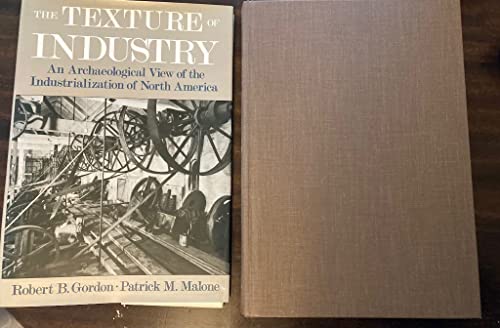
Synopsis
The industrial experience has touched deeply on the values, art and relation to the land, of the people's of North America. Yet the presentation of our industrial heritage, the authors of the proposed book argue, has been largely framed in the narrow context of inventors or in the social conflict between labour and capital - and fails to reveal much of the texture of industrial life. The Texture of Industry is an overview of the industrialization of North America using material evidence - sites, structures and artefacts - to fill out the story of our "industrial archaeology" drawing upon techniques from archeometry, field archaeology, art history and architectural recording. The book is organized around a discussion of the industrial experience. Several sites and artefacts - ones that can be visited by the public - are studied in depth. This book should have a diverse audience, appealing to industrial and architectural historians, archaeologists and geographers.
Les informations fournies dans la section « Synopsis » peuvent faire référence à une autre édition de ce titre.
Revue de presse
"An amazing book....Perhaps the finest book yet to appear on the history of technology....So groundbreaking that it almost single-handedly transports a new discipline from antiquarianism to solid professional scholarship....The first book in its field that could serve as a text, and it is superb."--American Anthropologist
"A work of particular value to architectural historians interested in the analysis of material culture, landscape formation, and the vernacular work environment....The Texture of Industry can be added to almost any syllabus on the American built environment. It should be required reading for architectural historians teaching students to see what we have really built as well as the consequences of our industrial culture."--The Society of Architectural Historians
"Gordon and Malone have preserved a part of our industrial heritage that might well have been lost without this scholarly, perceptive, and well-developed work....The Texture of Industry is truly a treasure for anyone interested in industrial history."--Preservation Advocate
"The Texture of Industry is a substantially successful work that combines the elements of archaeology and industrial technology. It presents a balanced view of the industrial revolution that purely historical works often lack. More importantly, it can serve as an effective field guide for individuals who want to explore early industrial sites. The Texture of Industry is written in clear, jargon-free language....The book is readable, logically organized, and though-provoking....This book makes a significant contribution to the practice of industrial archaeology."--Journal of Field Archaeology
"...well-researched volume....The book comes recommended for the serious scholar and anyone interested in preserving or gaining a scholarly understanding of industrial America. The volume will encourage others hopefully to follow in Gordon's and Malone's footsteps."--American Historical Review
Présentation de l'éditeur
While historians have given ample attention to stories of entrepreneurship, invention, and labor conflict, they have told us little about actual work-places and how people worked. Workers seldom wrote about their daily employment. However, they did leave behind their tools, products, shops, and factories as well as the surrounding industrial landscapes and communities. In this book, Gordon and Malone look at the industrialization of North America fro the perspective of the industrial archaeologist. Using material evidence from such varied sites as Indian steatite quarries, automobile plants, and coal mines, they examine manufacturing technology, transportation systems, and the effects of industrialization on the land. Their research greatly expands our understanding of industry and focuses attention on the contributions of anonymous artisans whose skills shaped our industrial heritage.
Les informations fournies dans la section « A propos du livre » peuvent faire référence à une autre édition de ce titre.
Résultats de recherche pour The Texture of Industry: An Archaeological View of...

Image d'archives
The Texture of Industry: An Archaeological View of the Industrialization of North America
Edité par
Oxford University Press, 1994
ISBN 10 : 0195058852
ISBN 13 : 9780195058857
Ancien ou d'occasion
Couverture rigide
Vendeur : Wonder Book, Frederick, MD, Etats-Unis
Évaluation du vendeur 5 sur 5 étoiles

Etat : Good. Good condition. Very Good dust jacket. In protective mylar cover. A copy that has been read but remains intact. May contain markings such as bookplates, stamps, limited notes and highlighting, or a few light stains. NOT AVAILABLE FOR SHIPMENT OUTSIDE OF THE UNITED STATES. N° de réf. du vendeur G13K-00007
Acheter D'occasion
EUR 20,62
Livraison gratuite
Expédition nationale : Etats-Unis
Expédition nationale : Etats-Unis
Quantité disponible : 1 disponible(s)
Image d'archives
The Texture of Industry: An Archaeological View of the Industrialization of North America
Edité par
Oxford University Press, 1994
ISBN 10 : 0195058852
ISBN 13 : 9780195058857
Ancien ou d'occasion
Couverture rigide
Vendeur : Midtown Scholar Bookstore, Harrisburg, PA, Etats-Unis
Évaluation du vendeur 5 sur 5 étoiles
hardcover. Etat : Good. Torn/worn dj. Good hardcover with some shelfwear; may have previous owner's name inside. Oversized. N° de réf. du vendeur mon0000361516
Acheter D'occasion
EUR 15,94
Expédition à EUR 5,34
Expédition nationale : Etats-Unis
Expédition nationale : Etats-Unis
Quantité disponible : 1 disponible(s)
Image d'archives
The Texture of Industry : An Archaeological View of the Industrialization of North America
Edité par
Oxford University Press, Incorporated, 1994
ISBN 10 : 0195058852
ISBN 13 : 9780195058857
Ancien ou d'occasion
Couverture rigide
Vendeur : Better World Books, Mishawaka, IN, Etats-Unis
Évaluation du vendeur 5 sur 5 étoiles
Etat : Good. Former library copy. Pages intact with minimal writing/highlighting. The binding may be loose and creased. Dust jackets/supplements are not included. Includes library markings. Stock photo provided. Product includes identifying sticker. Better World Books: Buy Books. Do Good. N° de réf. du vendeur 7545215-6
Acheter D'occasion
EUR 21,89
Livraison gratuite
Expédition nationale : Etats-Unis
Expédition nationale : Etats-Unis
Quantité disponible : 1 disponible(s)
Image d'archives
The texture of industry; an archaeological view of the industrialization of North America
Edité par
New York, Oxford University Press, 1994
ISBN 10 : 0195058852
ISBN 13 : 9780195058857
Ancien ou d'occasion
Couverture rigide
Vendeur : Hammer Mountain Book Halls, ABAA, Schenectady, NY, Etats-Unis
Évaluation du vendeur 5 sur 5 étoiles
Hardcover. Fore-edge faintly foxed; pages slightly bowed; otherwise very good condition in lightly worn dust jacket. . 442p. Illus. N° de réf. du vendeur 42532
Acheter D'occasion
EUR 24,77
Livraison gratuite
Expédition nationale : Etats-Unis
Expédition nationale : Etats-Unis
Quantité disponible : 1 disponible(s)
Image d'archives
The Texture of Industry: An Archaeological View of the Industrialization of North America
Edité par
Oxford University Press, 1994
ISBN 10 : 0195058852
ISBN 13 : 9780195058857
Ancien ou d'occasion
Couverture rigide
Vendeur : Wonder Book, Frederick, MD, Etats-Unis
Évaluation du vendeur 5 sur 5 étoiles
Etat : Very Good. Very Good condition. Very Good dust jacket. A copy that may have a few cosmetic defects. May also contain light spine creasing or a few markings such as an owner's name, short gifter's inscription or light stamp. NOT AVAILABLE FOR SHIPMENT OUTSIDE OF THE UNITED STATES. N° de réf. du vendeur H10A-04240
Acheter D'occasion
EUR 26,59
Livraison gratuite
Expédition nationale : Etats-Unis
Expédition nationale : Etats-Unis
Quantité disponible : 1 disponible(s)
Image fournie par le vendeur
The Texture of Industry: An Archaeological View of the Industrialization of North America The photos in this listing are of the item offered for sale.
Edité par
Oxford University Press 1994-01, New York, 1994
ISBN 10 : 0195058852
ISBN 13 : 9780195058857
Ancien ou d'occasion
Couverture rigide
Edition originale
Signé
Vendeur : biblioboy, North Providence, RI, Etats-Unis
Évaluation du vendeur 5 sur 5 étoiles
Hardcover. Etat : Near Fine. Etat de la jaquette : Near Fine. First Edition. New York: Oxford University Press. 1994. Hardcover. 0195058852 . First US edition. This copy has been inscribed, signed ["Pat"] and dated by co-author Patrick M. Malone on the title page. Brown cloth [about 7.25" x 10.25"] with silver gilt spine lettering, 442 pages, heavily illustrated, bibliography, place and site index, subject index. Near Fine copy copy with very light spine end bumping] in Near Fine jacket with scattered light creasing clphOE. N° de réf. du vendeur 863431
Acheter D'occasion
EUR 22,94
Expédition à EUR 6,24
Expédition nationale : Etats-Unis
Expédition nationale : Etats-Unis
Quantité disponible : 1 disponible(s)
Image d'archives
The Texture of Industry: An Archaeological View of the Industrialization of North America
Edité par
Oxford University Press, New York, 1994
ISBN 10 : 0195058852
ISBN 13 : 9780195058857
Ancien ou d'occasion
Couverture rigide
Edition originale
Vendeur : Bookplate, Chestertown, MD, Etats-Unis
Évaluation du vendeur 4 sur 5 étoiles

Hardcover. Etat : Near Fine. Etat de la jaquette : Very Good. 1st Edition. P/O name to FFEP o/w clean, unmarked, firm hinges, sharp corners and DJ in VG+ condition. BP/Engineering. N° de réf. du vendeur ABE-1643834255634
Acheter D'occasion
EUR 22,94
Expédition à EUR 7,57
Expédition nationale : Etats-Unis
Expédition nationale : Etats-Unis
Quantité disponible : 1 disponible(s)
Image fournie par le vendeur
The Texture of Industry: An Archaeological View of the Industrialization of North America
Edité par
Oxford University Press, 1994
ISBN 10 : 0195058852
ISBN 13 : 9780195058857
Ancien ou d'occasion
Couverture rigide
Edition originale
Vendeur : Materia Prima Books, New haven, CT, Etats-Unis
Évaluation du vendeur 4 sur 5 étoiles
Hardcover. Etat : Near Fine. Etat de la jaquette : Very Good. 1st Edition. First Edition. 10.25 x 7.5 inches. xi, 442 pp. b/w photographs and illustrations throughout. Brown cloth lettered in white at spine. Illustrated jacket. Jacket creased at crown of spine, two small tears along front and rear flaps. Near Fine in Very Good dust jacket. In mylar dust wrapper. N° de réf. du vendeur 4905
Acheter D'occasion
EUR 27,52
Expédition à EUR 4,01
Expédition nationale : Etats-Unis
Expédition nationale : Etats-Unis
Quantité disponible : 1 disponible(s)
Image fournie par le vendeur
The Texture of Industry: Archaeological View of the Industrialization of North America
Edité par
Oxford University Press Inc, 1994
ISBN 10 : 0195058852
ISBN 13 : 9780195058857
Ancien ou d'occasion
Couverture rigide
Vendeur : WeBuyBooks, Rossendale, LANCS, Royaume-Uni
Évaluation du vendeur 5 sur 5 étoiles
hardcover. Etat : Good. Most items will be dispatched the same or the next working day. A copy that has been read but remains in clean condition. All of the pages are intact and the cover is intact and the spine may show signs of wear. The book may have minor markings which are not specifically mentioned. Foxing to the pages. N° de réf. du vendeur rev4847443676
Acheter D'occasion
EUR 32,45
Expédition à EUR 14,15
Expédition depuis Royaume-Uni vers Etats-Unis
Expédition depuis Royaume-Uni vers Etats-Unis
Quantité disponible : 1 disponible(s)
Image fournie par le vendeur
The Texture of Industry: An Archaeological View of the Industrialization of North America
Edité par
Oxford University Press, New York, 1994
ISBN 10 : 0195058852
ISBN 13 : 9780195058857
Ancien ou d'occasion
Couverture rigide
Edition originale
Vendeur : Resource Books, LLC, East Granby, CT, Etats-Unis
Évaluation du vendeur 5 sur 5 étoiles
Hardcover. Etat : Fine. Etat de la jaquette : Near Fine. First Edition. New York: Oxford University Press, 1994. First edition, first printing, review slip laid in loosely at the front. Light brown cloth with dustjacket. The book is in fine condition, looks and feels new and unread, tight binding, clean pages, no names or other markings. The mylar protected dustjacket is near fine with some minor edgewear, no chips. First Edition. Hard Cover. Fine/Near Fine. 4to - over 9¾" - 12" tall. N° de réf. du vendeur 048146
Acheter D'occasion
EUR 48,62
Livraison gratuite
Expédition nationale : Etats-Unis
Expédition nationale : Etats-Unis
Quantité disponible : 1 disponible(s)