
Articles liés à Inventive Minds: Creativity in Technology
Synopsis
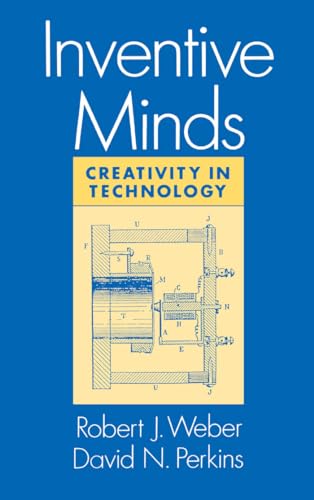
Is invention really "99 percent perspiration and one percent inspiration" as Thomas Edison assured us? Inventive Minds assembles a group of authors well equipped to address this question: contemporary inventors of important new technologies, historians of science and industry, and cognitive psychologists interested in the process of creativity. In telling their stories, the inventors describe the origins of such remarkable devices as ultrasound, the electron microscope, and artificial diamonds. The historians help us look into the minds of innovators like Thomas Edison, Alexander Graham Bell, Michael Faraday, and the Wright brothers, drawing on original notebooks and other sources to show how they made their key discoveries. Finally, cognitive psychologists explore the mental processes that figure in creative thinking.
Contributing to the authors' insight is their special focus on the "front end" of invention - where ideas come from and how they are transformed into physical prototypes. They answer three questions: How does invention happen? How does invention contrast with other commonly creative pursuits such as scientific inquiry, musical composition, or painting? And how might invention best happen - that is, what kinds of settings, conditions, and strategies appear to foster inventive activity? The book yields a wealth of information that will make absorbing reading for cognitive and social psychologists, social historians, and many working scientists and general readers who are interested in the psychology of personality and the roots of ingenuity.
Les informations fournies dans la section « Synopsis » peuvent faire référence à une autre édition de ce titre.
Présentation de l'éditeur
Is invention really "99 percent perspiration and one percent inspiration" as Thomas Edison assured us? Inventive Minds assembles a group of authors well equipped to address this question: contemporary inventors of important new technologies, historians of science and industry, and cognitive psychologists interested in the process of creativity. In telling their stories, the inventors describe the origins of such remarkable devices as ultrasound, the electron microscope, and artificial diamonds. The historians help us look into the minds of innovators like Thomas Edison, Alexander Graham Bell, Michael Faraday, and the Wright brothers, drawing on original notebooks and other sources to show how they made their key discoveries. Finally, cognitive psychologists explore the mental processes that figure in creative thinking. Contributing to the authors' insight is their special focus on the "front end" of invention - where ideas come from and how they are transformed into physical prototypes. They answer three questions: How does invention happen? How does invention contrast with other commonly creative pursuits such as scientific inquiry, musical composition, or painting? And how might invention best happen - that is, what kinds of settings, conditions, and strategies appear to foster inventive activity? The book yields a wealth of information that will make absorbing reading for cognitive and social psychologists, social historians, and many working scientists and general readers who are interested in the psychology of personality and the roots of ingenuity.
Les informations fournies dans la section « A propos du livre » peuvent faire référence à une autre édition de ce titre.
Résultats de recherche pour Inventive Minds: Creativity in Technology

Image fournie par le vendeur
Inventive Minds: Creativity in Technology
Edité par
Oxford University Press, 1992
ISBN 10 : 0195071700
ISBN 13 : 9780195071702
Ancien ou d'occasion
Couverture rigide
Vendeur : Greenworld Books, Arlington, TX, Etats-Unis
Évaluation du vendeur 5 sur 5 étoiles

Etat : good. Fast Free Shipping â" Good condition. It may show normal signs of use, such as light writing, highlighting, or library markings, but all pages are intact and the book is fully readable. A solid, complete copy that's ready to enjoy. N° de réf. du vendeur GWV.0195071700.G
Acheter D'occasion
EUR 48,66
Livraison gratuite
Expédition nationale : Etats-Unis
Expédition nationale : Etats-Unis
Quantité disponible : 1 disponible(s)
Image fournie par le vendeur
Inventive Minds: Creativity in Technology
Edité par
Oxford University Press, 1992
ISBN 10 : 0195071700
ISBN 13 : 9780195071702
Ancien ou d'occasion
Couverture rigide
Vendeur : -OnTimeBooks-, Phoenix, AZ, Etats-Unis
Évaluation du vendeur 5 sur 5 étoiles
Etat : good. A copy that has been read, remains in good condition. All pages are intact, and the cover is intact. The spine and cover show signs of wear. Pages can include notes and highlighting and show signs of wear, and the copy can include "From the library of" labels or previous owner inscriptions. 100% GUARANTEE! Shipped with delivery confirmation, if you're not satisfied with purchase please return item! Ships via media mail. N° de réf. du vendeur OTV.0195071700.G
Acheter D'occasion
EUR 81,75
Livraison gratuite
Expédition nationale : Etats-Unis
Expédition nationale : Etats-Unis
Quantité disponible : 1 disponible(s)
Image d'archives
Inventive Minds : Creativity in Technology
Edité par
Oxford University Press, Incorporated, 1992
ISBN 10 : 0195071700
ISBN 13 : 9780195071702
Ancien ou d'occasion
Couverture rigide
Edition originale
Vendeur : Better World Books, Mishawaka, IN, Etats-Unis
Évaluation du vendeur 5 sur 5 étoiles
Etat : Good. 1st Edition. Pages intact with minimal writing/highlighting. The binding may be loose and creased. Dust jackets/supplements are not included. Stock photo provided. Product includes identifying sticker. Better World Books: Buy Books. Do Good. N° de réf. du vendeur 11321154-75
Acheter D'occasion
EUR 94,46
Livraison gratuite
Expédition nationale : Etats-Unis
Expédition nationale : Etats-Unis
Quantité disponible : 1 disponible(s)
Image d'archives
Inventive Minds: Creativity in Technology (eng)
Edité par
Oxford University Press, 1992
ISBN 10 : 0195071700
ISBN 13 : 9780195071702
Neuf
Couverture rigide
Vendeur : Brook Bookstore On Demand, Napoli, NA, Italie
Évaluation du vendeur 5 sur 5 étoiles
Etat : new. Questo è un articolo print on demand. N° de réf. du vendeur 0786917dd8dd8905e39aca72f0b4cc1f
Acheter neuf
EUR 102,22
Expédition à EUR 6,80
Expédition depuis Italie vers Etats-Unis
Expédition depuis Italie vers Etats-Unis
Quantité disponible : Plus de 20 disponibles
Image fournie par le vendeur
Inventive Minds : Creativity in Technology
Edité par
Oxford University Press, 1992
ISBN 10 : 0195071700
ISBN 13 : 9780195071702
Neuf
Couverture rigide
Vendeur : GreatBookPrices, Columbia, MD, Etats-Unis
Évaluation du vendeur 5 sur 5 étoiles
Etat : New. N° de réf. du vendeur 75017-n
Acheter neuf
EUR 134,31
Expédition à EUR 2,29
Expédition nationale : Etats-Unis
Expédition nationale : Etats-Unis
Quantité disponible : Plus de 20 disponibles
Image d'archives
Inventive Minds
Edité par
Oxford University Press, 1993
ISBN 10 : 0195071700
ISBN 13 : 9780195071702
Neuf
Couverture rigide
Vendeur : PBShop.store US, Wood Dale, IL, Etats-Unis
Évaluation du vendeur 5 sur 5 étoiles
HRD. Etat : New. New Book. Shipped from UK. THIS BOOK IS PRINTED ON DEMAND. Established seller since 2000. N° de réf. du vendeur L1-9780195071702
Acheter neuf
EUR 136,68
Livraison gratuite
Expédition nationale : Etats-Unis
Expédition nationale : Etats-Unis
Quantité disponible : Plus de 20 disponibles
Image d'archives
Inventive Minds
Edité par
Oxford University Press, 1993
ISBN 10 : 0195071700
ISBN 13 : 9780195071702
Neuf
Couverture rigide
Vendeur : PBShop.store UK, Fairford, GLOS, Royaume-Uni
Évaluation du vendeur 5 sur 5 étoiles
HRD. Etat : New. New Book. Delivered from our UK warehouse in 4 to 14 business days. THIS BOOK IS PRINTED ON DEMAND. Established seller since 2000. N° de réf. du vendeur L1-9780195071702
Acheter neuf
EUR 129,84
Expédition à EUR 6,86
Expédition depuis Royaume-Uni vers Etats-Unis
Expédition depuis Royaume-Uni vers Etats-Unis
Quantité disponible : Plus de 20 disponibles
Image d'archives
Inventive Minds: Creativity in Technology
Vendeur : Kennys Bookshop and Art Galleries Ltd., Galway, GY, Irlande
Évaluation du vendeur 5 sur 5 étoiles
Etat : New. Editor(s): Weber, Robert J.; Perkins, David N. Num Pages: 368 pages. BIC Classification: PDG. Dimension: 243 x 161. Weight in Grams: 648. . 1993. New. hardcover. . . . . N° de réf. du vendeur V9780195071702
Acheter neuf
EUR 129,92
Expédition à EUR 9,50
Expédition depuis Irlande vers Etats-Unis
Expédition depuis Irlande vers Etats-Unis
Quantité disponible : Plus de 20 disponibles
Image d'archives
Inventive Minds: Creativity in Technology
Edité par
Oxford University Press, 1992
ISBN 10 : 0195071700
ISBN 13 : 9780195071702
Neuf
Couverture rigide
Vendeur : Ria Christie Collections, Uxbridge, Royaume-Uni
Évaluation du vendeur 5 sur 5 étoiles
Etat : New. In English. N° de réf. du vendeur ria9780195071702_new
Acheter neuf
EUR 127,77
Expédition à EUR 13,20
Expédition depuis Royaume-Uni vers Etats-Unis
Expédition depuis Royaume-Uni vers Etats-Unis
Quantité disponible : Plus de 20 disponibles
Image fournie par le vendeur
Inventive Minds : Creativity in Technology
Edité par
Oxford University Press, 1992
ISBN 10 : 0195071700
ISBN 13 : 9780195071702
Ancien ou d'occasion
Couverture rigide
Vendeur : GreatBookPrices, Columbia, MD, Etats-Unis
Évaluation du vendeur 5 sur 5 étoiles
Etat : As New. Unread book in perfect condition. N° de réf. du vendeur 75017
Acheter D'occasion
EUR 141,34
Expédition à EUR 2,29
Expédition nationale : Etats-Unis
Expédition nationale : Etats-Unis
Quantité disponible : Plus de 20 disponibles