
Articles liés à How Imitation Boosts Development: In Infancy and Autism...
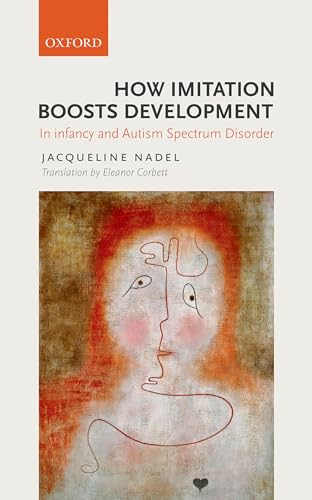
Synopsis
It was Plato who famously stated that 'imitation is dangerous because it stifles creativity, hampers the development of personal identity and disrupts the perception of other people as unique beings'. There are some who still feel this way, and perhaps this explains why imitation has received less attention within the developmental literature than other human characteristics. So why are humans able to imitate - from the very second they enter the world? Can it have positive effects? Can it help us interact with others better? Can it even make us feel better about ourselves and our ability to influence and interact with the world around us?
In this book, a leading development psychologist explores the topic of imitation - looking at why we imitate and the possible benefits it might bring - in particular to those affected by Autism Spectrum Disorders. The book offers fascinating insights into an often neglected topic.
Les informations fournies dans la section « Synopsis » peuvent faire référence à une autre édition de ce titre.
À propos de l'auteur
Jacqueline Nadel, Research Director, Centre national de la recherche scientifique, France
Les informations fournies dans la section « A propos du livre » peuvent faire référence à une autre édition de ce titre.
Résultats de recherche pour How Imitation Boosts Development: In Infancy and Autism...

Image d'archives
How Imitation Boosts Development: In Infancy and Autism Spectrum Disorder
Edité par
Oxford University Press, 2014
ISBN 10 : 0198704003
ISBN 13 : 9780198704003
Ancien ou d'occasion
paperback
Vendeur : Bellwetherbooks, McKeesport, PA, Etats-Unis
Évaluation du vendeur 4 sur 5 étoiles

paperback. Etat : Fine. LIKE NEW!!! Has a red or black remainder mark on bottom/exterior edge of pages. N° de réf. du vendeur mon0000036173
Acheter D'occasion
EUR 12,14
Expédition à EUR 3,52
Expédition nationale : Etats-Unis
Expédition nationale : Etats-Unis
Quantité disponible : 1 disponible(s)
Image d'archives
How Imitation Boosts Development: In Infancy and Autism Spectrum Disorder
Edité par
Oxford University Press, 2014
ISBN 10 : 0198704003
ISBN 13 : 9780198704003
Neuf
Paperback
Edition originale
Vendeur : Prior Books Ltd, Cheltenham, Royaume-Uni
Évaluation du vendeur 5 sur 5 étoiles

Paperback. Etat : New. First Edition. A new copy, square and tight with no creases or splits. Contents fresh and clean, not showing any pen-marks. Not from a library so no such stamps or labels. Thus a tidy book in very presentable condition. N° de réf. du vendeur 206728
Acheter neuf
EUR 11,63
Expédition à EUR 26,13
Expédition depuis Royaume-Uni vers Etats-Unis
Expédition depuis Royaume-Uni vers Etats-Unis
Quantité disponible : 1 disponible(s)
Image d'archives
How Imitation Boosts Development: In Infancy and Autism Spectrum Disorder
Edité par
Oxford University Press OUP, 2014
ISBN 10 : 0198704003
ISBN 13 : 9780198704003
Neuf
Couverture souple
Vendeur : Books Puddle, Woodside, NY, Etats-Unis
Évaluation du vendeur 4 sur 5 étoiles
Etat : New. pp. 272 Index Translation edition. N° de réf. du vendeur 26127072288
Acheter neuf
EUR 61,41
Expédition à EUR 3,55
Expédition nationale : Etats-Unis
Expédition nationale : Etats-Unis
Quantité disponible : 1 disponible(s)
Image d'archives
HOW IMITATION BOOSTS DEVELOPME
Edité par
Oxford University Press, 2014
ISBN 10 : 0198704003
ISBN 13 : 9780198704003
Neuf
Couverture souple
Vendeur : Basi6 International, Irving, TX, Etats-Unis
Évaluation du vendeur 5 sur 5 étoiles
Etat : Brand New. New. US edition. Expediting shipping for all USA and Europe orders excluding PO Box. Excellent Customer Service. N° de réf. du vendeur ABEOCT25-2314
Acheter neuf
EUR 67,42
Livraison gratuite
Expédition nationale : Etats-Unis
Expédition nationale : Etats-Unis
Quantité disponible : 1 disponible(s)
Image d'archives
How Imitation Boosts Development: In Infancy and Autism Spectrum Disorder
Edité par
Oxford University Press, 2014
ISBN 10 : 0198704003
ISBN 13 : 9780198704003
Neuf
Couverture souple
Vendeur : Majestic Books, Hounslow, Royaume-Uni
Évaluation du vendeur 4 sur 5 étoiles
Etat : New. pp. 272. N° de réf. du vendeur 132466687
Acheter neuf
EUR 59,78
Expédition à EUR 7,72
Expédition depuis Royaume-Uni vers Etats-Unis
Expédition depuis Royaume-Uni vers Etats-Unis
Quantité disponible : 1 disponible(s)
Image d'archives
How Imitation Boosts Development: In Infancy and Autism Spectrum Disorder
Edité par
Oxford University Press, 2014
ISBN 10 : 0198704003
ISBN 13 : 9780198704003
Neuf
Couverture souple
Vendeur : Biblios, Frankfurt am main, HESSE, Allemagne
Évaluation du vendeur 4 sur 5 étoiles
Etat : New. pp. 272. N° de réf. du vendeur 18127072298
Acheter neuf
EUR 60,35
Expédition à EUR 9,95
Expédition depuis Allemagne vers Etats-Unis
Expédition depuis Allemagne vers Etats-Unis
Quantité disponible : 1 disponible(s)
Image fournie par le vendeur
How Imitation Boosts Development (Paperback)
Edité par
Oxford University Press, Oxford, 2014
ISBN 10 : 0198704003
ISBN 13 : 9780198704003
Neuf
Paperback
Vendeur : Grand Eagle Retail, Bensenville, IL, Etats-Unis
Évaluation du vendeur 5 sur 5 étoiles
Paperback. Etat : new. Paperback. It was Plato who famously stated that 'imitation is dangerous because it stifles creativity, hampers the development of personal identity and disrupts the perception of other people as unique beings'. There are some who still feel this way, and perhaps this explains why imitation has received less attention within the developmental literature than other human characteristics. So why are humans able to imitate - from the very second they enter the world? Can it have positive effects? Can it help us interact with others better? Can it even make us feel better about ourselves and our ability to influence and interact with the world around us?In this book, a leading development psychologist explores the topic of imitation - looking at why we imitate and the possible benefits it might bring - in particular to those affected by Autism Spectrum Disorders. The book offers fascinating insights into an often neglected topic. Why are humans able to imitate - from the very second they enter the world? In this book, a leading development psychologist explores the topic of imitation - looking at why we imitate and the possible benefits it might bring - in particular to those affected by Autism Spectrum Disorders. The book offers fascinating insights into a neglected topic. Shipping may be from multiple locations in the US or from the UK, depending on stock availability. N° de réf. du vendeur 9780198704003
Acheter neuf
EUR 89,35
Livraison gratuite
Expédition nationale : Etats-Unis
Expédition nationale : Etats-Unis
Quantité disponible : 1 disponible(s)
Image d'archives
How Imitation boosts Development: In infants and in children with ASD
Edité par
Oxford University Press, 2014
ISBN 10 : 0198704003
ISBN 13 : 9780198704003
Neuf
Couverture souple
Vendeur : Kennys Bookshop and Art Galleries Ltd., Galway, GY, Irlande
Évaluation du vendeur 5 sur 5 étoiles
Etat : New. Why are humans able to imitate - from the very second they enter the world? In this book, a leading development psychologist explores the topic of imitation - looking at why we imitate and the possible benefits it might bring - in particular to those affected by Autism Spectrum Disorders. The book offers fascinating insights into a neglected topic. Translator(s): Corbett, Eleanor. Num Pages: 272 pages, illustrations. BIC Classification: JMC; JMR. Category: (UP) Postgraduate, Research & Scholarly. Dimension: 215 x 136 x 16. Weight in Grams: 332. . 2014. 1 Tra. Paperback. . . . . N° de réf. du vendeur V9780198704003
Acheter neuf
EUR 94,22
Expédition à EUR 9,50
Expédition depuis Irlande vers Etats-Unis
Expédition depuis Irlande vers Etats-Unis
Quantité disponible : 1 disponible(s)
Image d'archives
How Imitation Boosts Development: In Infancy and Autism Spectrum Disorder
Vendeur : Revaluation Books, Exeter, Royaume-Uni
Évaluation du vendeur 5 sur 5 étoiles
Paperback. Etat : Brand New. 1st tra edition. 237 pages. 8.50x5.50x0.75 inches. In Stock. N° de réf. du vendeur x-0198704003
Acheter neuf
EUR 108,74
Expédition à EUR 11,88
Expédition depuis Royaume-Uni vers Etats-Unis
Expédition depuis Royaume-Uni vers Etats-Unis
Quantité disponible : 1 disponible(s)
Image d'archives
How Imitation boosts Development: In infants and in children with ASD
Edité par
Oxford University Press, 2014
ISBN 10 : 0198704003
ISBN 13 : 9780198704003
Neuf
Couverture souple
Vendeur : Kennys Bookstore, Olney, MD, Etats-Unis
Évaluation du vendeur 5 sur 5 étoiles
Etat : New. Why are humans able to imitate - from the very second they enter the world? In this book, a leading development psychologist explores the topic of imitation - looking at why we imitate and the possible benefits it might bring - in particular to those affected by Autism Spectrum Disorders. The book offers fascinating insights into a neglected topic. Translator(s): Corbett, Eleanor. Num Pages: 272 pages, illustrations. BIC Classification: JMC; JMR. Category: (UP) Postgraduate, Research & Scholarly. Dimension: 215 x 136 x 16. Weight in Grams: 332. . 2014. 1 Tra. Paperback. . . . . Books ship from the US and Ireland. N° de réf. du vendeur V9780198704003
Acheter neuf
EUR 121,90
Expédition à EUR 9,35
Expédition nationale : Etats-Unis
Expédition nationale : Etats-Unis
Quantité disponible : 1 disponible(s)