
Articles liés à Constitutional Courts and Deliberative Democracy (Oxford...
Constitutional Courts and Deliberative Democracy (Oxford Constitutional Theory) - Couverture souple
Livre 13 sur 32: Oxford Constitutional Theory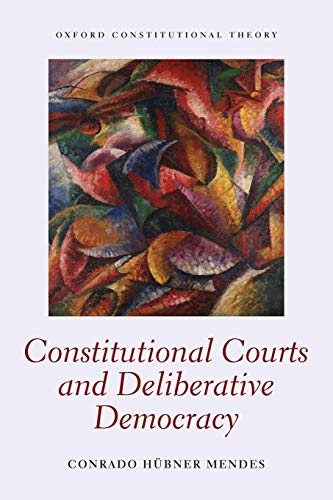
Synopsis
Contemporary democracies have granted an expansive amount of power to unelected judges that sit in constitutional or supreme courts. This power shift has never been easily squared with the institutional backbones through which democracy is popularly supposed to be structured. The best institutional translation of a 'government of the people, by the people and for the people' is usually expressed through elections and electoral representation in parliaments.
Judicial review of legislation has been challenged as bypassing that common sense conception of democratic rule. The alleged 'democratic deficit' behind what courts are legally empowered to do has been met with a variety of justifications in favour of judicial review. One common justification claims that constitutional courts are, in comparison to elected parliaments, much better suited for impartial deliberation and public reason-giving. Fundamental rights would thus be better protected by that insulated mode of decision-making. This justification has remained largely superficial and, sometimes, too easily embraced.
This book analyses the argument that the legitimacy of courts arises from their deliberative capacity. It examines the theory of political deliberation and its implications for institutional design. Against this background, it turns to constitutional review and asks whether an argument can be made in support of judicial power on the basis of deliberative theory.
Les informations fournies dans la section « Synopsis » peuvent faire référence à une autre édition de ce titre.
À propos de l'auteur
Conrado Hübner Mendes is Professor-Doctor of Constitutional Law at the University of São Paulo (USP). He holds a PhD in legal theory at the University of Edinburgh and a PhD in political science at the University of São Paulo (USP).
Les informations fournies dans la section « A propos du livre » peuvent faire référence à une autre édition de ce titre.
Résultats de recherche pour Constitutional Courts and Deliberative Democracy (Oxford...

Image d'archives
Constitutional Courts and Deliberative Democracy
Vendeur : Chiron Media, Wallingford, Royaume-Uni
Évaluation du vendeur 5 sur 5 étoiles

PF. Etat : New. N° de réf. du vendeur 6666-IUK-9780198759454
Acheter neuf
EUR 35,31
Expédition à EUR 18,07
Expédition depuis Royaume-Uni vers Etats-Unis
Expédition depuis Royaume-Uni vers Etats-Unis
Quantité disponible : 10 disponible(s)
Image fournie par le vendeur
Constitutional Courts and Deliberative Democracy (Paperback or Softback)
Edité par
Oxford University Press, USA 12/1/2015, 2015
ISBN 10 : 0198759452
ISBN 13 : 9780198759454
Neuf
Paperback or Softback
Vendeur : BargainBookStores, Grand Rapids, MI, Etats-Unis
Évaluation du vendeur 5 sur 5 étoiles
Paperback or Softback. Etat : New. Constitutional Courts and Deliberative Democracy. Book. N° de réf. du vendeur BBS-9780198759454
Acheter neuf
EUR 60,04
Livraison gratuite
Expédition nationale : Etats-Unis
Expédition nationale : Etats-Unis
Quantité disponible : 5 disponible(s)
Image d'archives
Constitutional Courts and Deliberative Democracy (eng)
Edité par
Oxford University Press, 2015
ISBN 10 : 0198759452
ISBN 13 : 9780198759454
Neuf
Couverture souple
Vendeur : Brook Bookstore On Demand, Napoli, NA, Italie
Évaluation du vendeur 5 sur 5 étoiles
Etat : new. Questo è un articolo print on demand. N° de réf. du vendeur 88eef1645987e0b88a53e10f007bfab4
Acheter neuf
EUR 57,77
Expédition à EUR 5,50
Expédition depuis Italie vers Etats-Unis
Expédition depuis Italie vers Etats-Unis
Quantité disponible : Plus de 20 disponibles
Image fournie par le vendeur
Constitutional Courts and Deliberative Democracy
Edité par
Oxford University Press, 2015
ISBN 10 : 0198759452
ISBN 13 : 9780198759454
Neuf
Couverture souple
Vendeur : GreatBookPrices, Columbia, MD, Etats-Unis
Évaluation du vendeur 5 sur 5 étoiles
Etat : New. N° de réf. du vendeur 24208336-n
Acheter neuf
EUR 64,55
Expédition à EUR 2,33
Expédition nationale : Etats-Unis
Expédition nationale : Etats-Unis
Quantité disponible : Plus de 20 disponibles
Image d'archives
Constitutional Courts and Deliberative Democracy
impression à la demandeVendeur : PBShop.store US, Wood Dale, IL, Etats-Unis
Évaluation du vendeur 5 sur 5 étoiles
PAP. Etat : New. New Book. Shipped from UK. THIS BOOK IS PRINTED ON DEMAND. Established seller since 2000. N° de réf. du vendeur L0-9780198759454
Acheter neuf
EUR 72,99
Livraison gratuite
Expédition nationale : Etats-Unis
Expédition nationale : Etats-Unis
Quantité disponible : Plus de 20 disponibles
Image fournie par le vendeur
Constitutional Courts and Deliberative Democracy
Edité par
Oxford University Press, 2015
ISBN 10 : 0198759452
ISBN 13 : 9780198759454
Ancien ou d'occasion
Couverture souple
Vendeur : GreatBookPrices, Columbia, MD, Etats-Unis
Évaluation du vendeur 5 sur 5 étoiles
Etat : As New. Unread book in perfect condition. N° de réf. du vendeur 24208336
Acheter D'occasion
EUR 71,15
Expédition à EUR 2,33
Expédition nationale : Etats-Unis
Expédition nationale : Etats-Unis
Quantité disponible : Plus de 20 disponibles
Image d'archives
Constitutional Courts and Deliberative Democracy
impression à la demandeVendeur : PBShop.store UK, Fairford, GLOS, Royaume-Uni
Évaluation du vendeur 5 sur 5 étoiles
PAP. Etat : New. New Book. Delivered from our UK warehouse in 4 to 14 business days. THIS BOOK IS PRINTED ON DEMAND. Established seller since 2000. N° de réf. du vendeur L0-9780198759454
Acheter neuf
EUR 69,29
Expédition à EUR 4,85
Expédition depuis Royaume-Uni vers Etats-Unis
Expédition depuis Royaume-Uni vers Etats-Unis
Quantité disponible : Plus de 20 disponibles
Image fournie par le vendeur
Constitutional Courts and Deliberative Democracy
Edité par
Oxford University Press, GB, 2015
ISBN 10 : 0198759452
ISBN 13 : 9780198759454
Neuf
Paperback
Vendeur : Rarewaves.com USA, London, LONDO, Royaume-Uni
Évaluation du vendeur 5 sur 5 étoiles
Paperback. Etat : New. Contemporary democracies have granted an expansive amount of power to unelected judges that sit in constitutional or supreme courts. This power shift has never been easily squared with the institutional backbones through which democracy is popularly supposed to be structured. The best institutional translation of a 'government of the people, by the people and for the people' is usually expressed through elections and electoral representation in parliaments.Judicial review of legislation has been challenged as bypassing that common sense conception of democratic rule. The alleged 'democratic deficit' behind what courts are legally empowered to do has been met with a variety of justifications in favour of judicial review. One common justification claims that constitutional courts are, in comparison to elected parliaments, much better suited for impartial deliberation and public reason-giving. Fundamental rights would thus be better protected by that insulated mode of decision-making. This justification has remained largely superficial and, sometimes, too easily embraced.This book analyses the argument that the legitimacy of courts arises from their deliberative capacity. It examines the theory of political deliberation and its implications for institutional design. Against this background, it turns to constitutional review and asks whether an argument can be made in support of judicial power on the basis of deliberative theory. N° de réf. du vendeur LU-9780198759454
Acheter neuf
EUR 75,43
Livraison gratuite
Expédition depuis Royaume-Uni vers Etats-Unis
Expédition depuis Royaume-Uni vers Etats-Unis
Quantité disponible : Plus de 20 disponibles
Image fournie par le vendeur
Constitutional Courts and Deliberative Democracy
Edité par
Oxford University Press, 2015
ISBN 10 : 0198759452
ISBN 13 : 9780198759454
Neuf
Couverture souple
Vendeur : GreatBookPricesUK, Woodford Green, Royaume-Uni
Évaluation du vendeur 5 sur 5 étoiles
Etat : New. N° de réf. du vendeur 24208336-n
Acheter neuf
EUR 64,16
Expédition à EUR 17,50
Expédition depuis Royaume-Uni vers Etats-Unis
Expédition depuis Royaume-Uni vers Etats-Unis
Quantité disponible : Plus de 20 disponibles
Image fournie par le vendeur
Constitutional Courts and Deliberative Democracy (Paperback)
Edité par
Oxford University Press, Oxford, 2015
ISBN 10 : 0198759452
ISBN 13 : 9780198759454
Neuf
Paperback
Vendeur : Grand Eagle Retail, Bensenville, IL, Etats-Unis
Évaluation du vendeur 5 sur 5 étoiles
Paperback. Etat : new. Paperback. Contemporary democracies have granted an expansive amount of power to unelected judges that sit in constitutional or supreme courts. This power shift has never been easily squared with the institutional backbones through which democracy is popularly supposed to be structured. The best institutional translation of a 'government of the people, by the people and for the people' is usually expressed through elections and electoral representation inparliaments.Judicial review of legislation has been challenged as bypassing that common sense conception of democratic rule. The alleged 'democratic deficit' behind what courts are legally empoweredto do has been met with a variety of justifications in favour of judicial review. One common justification claims that constitutional courts are, in comparison to elected parliaments, much better suited for impartial deliberation and public reason-giving. Fundamental rights would thus be better protected by that insulated mode of decision-making. This justification has remained largely superficial and, sometimes, too easily embraced.This book analyses the argument that thelegitimacy of courts arises from their deliberative capacity. It examines the theory of political deliberation and its implications for institutional design. Against this background, it turns toconstitutional review and asks whether an argument can be made in support of judicial power on the basis of deliberative theory. It is often argued that courts are better suited for impartial deliberation than partisan legislatures, and that this capacity justifies handing them substantial powers of judicial review. This book provides a thorough analysis of those claims, introducing the theory of deliberative capacity and its implications for institutional design. This item is printed on demand. Shipping may be from multiple locations in the US or from the UK, depending on stock availability. N° de réf. du vendeur 9780198759454
Acheter neuf
EUR 82,63
Livraison gratuite
Expédition nationale : Etats-Unis
Expédition nationale : Etats-Unis
Quantité disponible : 1 disponible(s)