
Articles liés à Choosing Children: Genes, Disability, And Design
Choosing Children: Genes, Disability, And Design - Couverture rigide
Livre 1 sur 4: Uehiro Series in Practical Ethics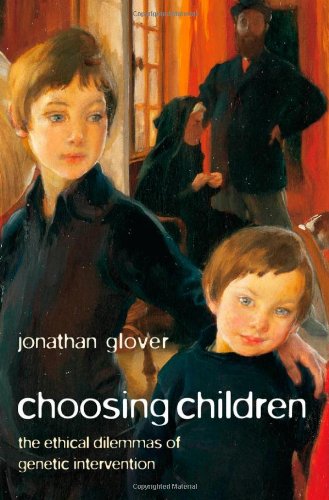
Synopsis
Progress in genetic and reproductive technology now offers us the possibility of choosing what kinds of children we do and don't have. Should we welcome this power, or should we fear its implications? There is no ethical question more urgent than this: we may be at a turning-point in the history of humanity. The renowned moral philosopher and best-selling author Jonathan Glover shows us how we might try to answer this question, and other provoking and disturbing questions to which it leads. Surely parents owe it to their children to give them the best life they can? Increasingly we are able to reduce the number of babies born with disabilities and disorders. But there is a powerful new challenge to conventional thinking about the desirability of doing so: this comes from the voices of those who have these conditions. They call into question the very definition of disability. How do we justify trying to avoid bringing people like them into being? In 2002 a deaf couple used sperm donated by a friend with hereditary deafness to have a deaf baby: they took the view that deafness is not a disability, but a difference. Starting with the issues raised by this case, Jonathan Glover examines the emotive idea of 'eugenics', and the ethics of attempting to enhance people, for non-medical reasons, by means of genetic choices. Should parents be free, not only to have children free from disabilities, but to choose, for instance, the colour of their eyes or hair? This is no longer a distant prospect, but an existing power which we cannot wish away. What impact will such interventions have, both on the individuals concerned and on society as a whole? Should we try to make general improvements to the genetic make-up of human beings? Is there a central core of human nature with which we must not interfere? This beautifully clear book is written for anyone who cares about the rights and wrongs of parents' choices for their children, anyone who is concerned about our human future. Glover handles these uncomfortable questions in a controversial but always humane and sympathetic manner.
Les informations fournies dans la section « Synopsis » peuvent faire référence à une autre édition de ce titre.
Présentation de l'éditeur
Progress in genetic and reproductive technology now offers us the possibility of choosing what kinds of children we do and don't have. Should we welcome this power, or should we fear its implications? There is no ethical question more urgent than this: we may be at a turning-point in the history of humanity. The renowned moral philosopher and best-selling author Jonathan Glover shows us how we might try to answer this question, and other provoking and disturbing questions to which it leads. Surely parents owe it to their children to give them the best life they can? Increasingly we are able to reduce the number of babies born with disabilities and disorders. But there is a powerful new challenge to conventional thinking about the desirability of doing so: this comes from the voices of those who have these conditions. They call into question the very definition of disability. How do we justify trying to avoid bringing people like them into being? In 2002 a deaf couple used sperm donated by a friend with hereditary deafness to have a deaf baby: they took the view that deafness is not a disability, but a difference. Starting with the issues raised by this case, Jonathan Glover examines the emotive idea of 'eugenics', and the ethics of attempting to enhance people, for non-medical reasons, by means of genetic choices. Should parents be free, not only to have children free from disabilities, but to choose, for instance, the colour of their eyes or hair? This is no longer a distant prospect, but an existing power which we cannot wish away. What impact will such interventions have, both on the individuals concerned and on society as a whole? Should we try to make general improvements to the genetic make-up of human beings? Is there a central core of human nature with which we must not interfere? This beautifully clear book is written for anyone who cares about the rights and wrongs of parents' choices for their children, anyone who is concerned about our human future. Glover handles these uncomfortable questions in a controversial but always humane and sympathetic manner.
Biographie de l'auteur
Jonathan Glover is Professor of Ethics at King's College, University of London, and the Director of the Center for Medical Law and Ethics. He is the author of Causing Death and Saving Lives: The Moral Problems of Abortion, Infanticide, Suicide, Euthanasia, Capital Punishment, War, and Other Life-or-Death Choices and Humanity: A Moral History of the Twentieth Century, among other books.
Les informations fournies dans la section « A propos du livre » peuvent faire référence à une autre édition de ce titre.
Résultats de recherche pour Choosing Children: Genes, Disability, And Design

Image fournie par le vendeur
Choosing Children: Genes, Disability, and Design (Uehiro Series in Practical Ethics)
Edité par
Oxford University Press, 2006
ISBN 10 : 019929092X
ISBN 13 : 9780199290925
Ancien ou d'occasion
Couverture rigide
Vendeur : Zoom Books East, Glendale Heights, IL, Etats-Unis
Évaluation du vendeur 5 sur 5 étoiles

Etat : very_good. Book is in very good condition and may include minimal underlining highlighting. The book can also include "From the library of" labels. May not contain miscellaneous items toys, dvds, etc. . We offer 100% money back guarantee and 24 7 customer service. N° de réf. du vendeur ZEV.019929092X.VG
Acheter D'occasion
EUR 4,12
Livraison gratuite
Expédition nationale : Etats-Unis
Expédition nationale : Etats-Unis
Quantité disponible : 1 disponible(s)
Image d'archives
Choosing Children: Genes, Disa
Edité par
Oxford University Press, 2006
ISBN 10 : 019929092X
ISBN 13 : 9780199290925
Ancien ou d'occasion
Couverture rigide
Vendeur : World of Books (was SecondSale), Montgomery, IL, Etats-Unis
Évaluation du vendeur 5 sur 5 étoiles
Etat : Good. Item in good condition. Textbooks may not include supplemental items i.e. CDs, access codes etc. N° de réf. du vendeur 00102702278
Acheter D'occasion
EUR 5,42
Livraison gratuite
Expédition nationale : Etats-Unis
Expédition nationale : Etats-Unis
Quantité disponible : 1 disponible(s)
Image fournie par le vendeur
Choosing Children: Genes, Disability, and Design (Uehiro Series in Practical Ethics)
Edité par
Oxford University Press, 2006
ISBN 10 : 019929092X
ISBN 13 : 9780199290925
Ancien ou d'occasion
Couverture rigide
Vendeur : Bay State Book Company, North Smithfield, RI, Etats-Unis
Évaluation du vendeur 5 sur 5 étoiles
Etat : very_good. N° de réf. du vendeur BSM.17Q6D
Acheter D'occasion
EUR 5,51
Livraison gratuite
Expédition nationale : Etats-Unis
Expédition nationale : Etats-Unis
Quantité disponible : 1 disponible(s)
Image d'archives
Choosing Children: Genes, Disability, and Design (Uehiro Series in Practical Ethics)
Edité par
Oxford University Press, 2006
ISBN 10 : 019929092X
ISBN 13 : 9780199290925
Ancien ou d'occasion
Couverture rigide
Vendeur : ThriftBooks-Dallas, Dallas, TX, Etats-Unis
Évaluation du vendeur 5 sur 5 étoiles
Hardcover. Etat : Good. No Jacket. Missing dust jacket; Pages can have notes/highlighting. Spine may show signs of wear. ~ ThriftBooks: Read More, Spend Less. N° de réf. du vendeur G019929092XI3N01
Acheter D'occasion
EUR 6,03
Livraison gratuite
Expédition nationale : Etats-Unis
Expédition nationale : Etats-Unis
Quantité disponible : 1 disponible(s)
Image d'archives
Choosing Children : Genes, Disability, and Design
Edité par
Oxford University Press, Incorporated, 2006
ISBN 10 : 019929092X
ISBN 13 : 9780199290925
Ancien ou d'occasion
Couverture rigide
Vendeur : Better World Books, Mishawaka, IN, Etats-Unis
Évaluation du vendeur 5 sur 5 étoiles
Etat : Very Good. Former library copy. Pages intact with possible writing/highlighting. Binding strong with minor wear. Dust jackets/supplements may not be included. Includes library markings. Stock photo provided. Product includes identifying sticker. Better World Books: Buy Books. Do Good. N° de réf. du vendeur 2005928-6
Acheter D'occasion
EUR 7,09
Livraison gratuite
Expédition nationale : Etats-Unis
Expédition nationale : Etats-Unis
Quantité disponible : 1 disponible(s)
Image d'archives
Choosing Children : Genes, Disability, and Design
Edité par
Oxford University Press, Incorporated, 2006
ISBN 10 : 019929092X
ISBN 13 : 9780199290925
Ancien ou d'occasion
Couverture rigide
Vendeur : Better World Books, Mishawaka, IN, Etats-Unis
Évaluation du vendeur 5 sur 5 étoiles
Etat : Good. Former library copy. Pages intact with minimal writing/highlighting. The binding may be loose and creased. Dust jackets/supplements are not included. Includes library markings. Stock photo provided. Product includes identifying sticker. Better World Books: Buy Books. Do Good. N° de réf. du vendeur 5754384-6
Acheter D'occasion
EUR 7,09
Livraison gratuite
Expédition nationale : Etats-Unis
Expédition nationale : Etats-Unis
Quantité disponible : 1 disponible(s)
Image d'archives
Choosing Children: Genes, Disability, and Design
Edité par
Oxford University Press, 2006
ISBN 10 : 019929092X
ISBN 13 : 9780199290925
Ancien ou d'occasion
Couverture rigide
Vendeur : World of Books Inc, Montgomery, IL, Etats-Unis
Évaluation du vendeur 4 sur 5 étoiles

Hardback. Etat : Good. Should parents be free to choose, for instance, the colour of their children's eyes or hair? Genetic and reproductive technology offers the possibility of choosing what kinds of children we do and don't have. This book examines the emotive idea of 'eugenics', and the ethics of attempting to enhance people genetically for non-medical reasons. N° de réf. du vendeur CIN019929092XG
Acheter D'occasion
EUR 7,22
Livraison gratuite
Expédition nationale : Etats-Unis
Expédition nationale : Etats-Unis
Quantité disponible : 1 disponible(s)
Image d'archives
Choosing Children: Genes, Disability, and Design (Uehiro Series in Practical Ethics)
Edité par
Oxford University Press, 2006
ISBN 10 : 019929092X
ISBN 13 : 9780199290925
Ancien ou d'occasion
Couverture rigide
Vendeur : WorldofBooks, Goring-By-Sea, WS, Royaume-Uni
Évaluation du vendeur 5 sur 5 étoiles
Hardback. Etat : Very Good. The book has been read, but is in excellent condition. Pages are intact and not marred by notes or highlighting. The spine remains undamaged. N° de réf. du vendeur GOR003108856
Acheter D'occasion
EUR 3,35
Expédition à EUR 6,51
Expédition depuis Royaume-Uni vers Etats-Unis
Expédition depuis Royaume-Uni vers Etats-Unis
Quantité disponible : 3 disponible(s)
Image d'archives
Choosing Children : Genes, Disability, and Design
Edité par
Oxford University Press, Incorporated, 2006
ISBN 10 : 019929092X
ISBN 13 : 9780199290925
Ancien ou d'occasion
Couverture rigide
Vendeur : Better World Books Ltd, Dunfermline, Royaume-Uni
Évaluation du vendeur 5 sur 5 étoiles
Etat : Very Good. Former library copy. Pages intact with possible writing/highlighting. Binding strong with minor wear. Dust jackets/supplements may not be included. Includes library markings. Stock photo provided. Product includes identifying sticker. Better World Books: Buy Books. Do Good. N° de réf. du vendeur 2005928-6
Acheter D'occasion
EUR 5,62
Expédition à EUR 5,81
Expédition depuis Royaume-Uni vers Etats-Unis
Expédition depuis Royaume-Uni vers Etats-Unis
Quantité disponible : 1 disponible(s)
Image d'archives
Choosing Children : Genes, Disability, and Design
Edité par
Oxford University Press, Incorporated, 2006
ISBN 10 : 019929092X
ISBN 13 : 9780199290925
Ancien ou d'occasion
Couverture rigide
Vendeur : Better World Books Ltd, Dunfermline, Royaume-Uni
Évaluation du vendeur 5 sur 5 étoiles
Etat : Good. Former library copy. Pages intact with minimal writing/highlighting. The binding may be loose and creased. Dust jackets/supplements are not included. Includes library markings. Stock photo provided. Product includes identifying sticker. Better World Books: Buy Books. Do Good. N° de réf. du vendeur 5754384-6
Acheter D'occasion
EUR 5,62
Expédition à EUR 5,81
Expédition depuis Royaume-Uni vers Etats-Unis
Expédition depuis Royaume-Uni vers Etats-Unis
Quantité disponible : 2 disponible(s)