
Articles liés à Human Rights Transformed: Positive Rights and Positive...
Synopsis
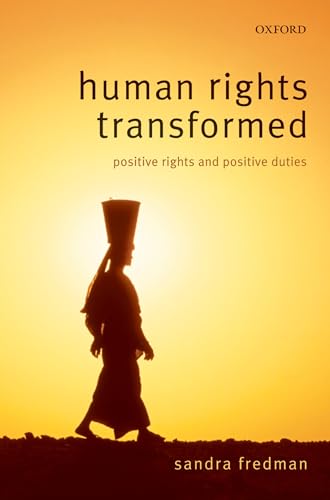
Human rights have traditionally been understood as protecting individual freedom against intrusion by the State. In this book, Sandra Fredman argues that this understanding requires radical revision. Human rights are based on a far richer view of freedom, which goes beyond being let alone, and instead pays attention to individuals' ability to exercise their rights. This view fundamentally shifts the focus of human rights. As well as restraining the State, human rights require the State to act positively to remove barriers and facilitate the exercise of freedom. This in turn breaks down traditional distinctions between civil and political rights and socio-economic rights. Instead, all rights give rise to a range of duties, both negative and positive. However, because positive duties have for so long been regarded as a question of policy or aspiration, little sustained attention has been given to their role in actualising human rights. Drawing on comparative experience from India, South Africa, the European Convention on Human Rights, the European Union, Canada and the U.K., this book aims to create a theoretical and applied framework for understanding positive human rights duties. Part I elaborates the values of freedom, equality, and solidarity underpinning a positive approach to human rights duties, and argues that the dichotomy between democracy and human rights is misplaced. Instead, positive human rights duties should strengthen rather than substitute for democracy, particularly in the face of globalization and privatization. Part II considers justiciability, fashioning a democratic role for the courts based on their potential to stimulate deliberative democracy in the wider environment. Part III applies this framework to key positive duties, particularly substantive equality and positive duties to provide, traditionally associated with the Welfare State or socioeconomic rights.
Les informations fournies dans la section « Synopsis » peuvent faire référence à une autre édition de ce titre.
À propos de l'auteur
Sandra Fredman is Professor of Law at Oxford University and Fellow of Exeter College, Oxford. In 2000, she became the first woman professor in the Oxford law faculty and she was elected a Fellow of the British Academy in 2005. She has also been active in the policy field, including acting as an expert advisor on a range of human rights, equality, and labour law issues in the EU, Northern Ireland, the UK and Canada. She is a barrister, practising as an academic consultant at Old Square Chambers.
Les informations fournies dans la section « A propos du livre » peuvent faire référence à une autre édition de ce titre.
Résultats de recherche pour Human Rights Transformed: Positive Rights and Positive...

Image d'archives
Human Rights Transformed: Positive Rights and Positive Duties
Vendeur : AwesomeBooks, Wallingford, Royaume-Uni
Évaluation du vendeur 5 sur 5 étoiles

Paperback. Etat : Very Good. Human Rights Transformed: Positive Rights and Positive Duties This book is in very good condition and will be shipped within 24 hours of ordering. The cover may have some limited signs of wear but the pages are clean, intact and the spine remains undamaged. This book has clearly been well maintained and looked after thus far. Money back guarantee if you are not satisfied. See all our books here, order more than 1 book and get discounted shipping. N° de réf. du vendeur 7719-9780199535057
Acheter D'occasion
EUR 59,13
Expédition à EUR 4,80
Expédition depuis Royaume-Uni vers Etats-Unis
Expédition depuis Royaume-Uni vers Etats-Unis
Quantité disponible : 2 disponible(s)
Image d'archives
Human Rights Transformed: Positive Rights and Positive Duties
Edité par
Oxford University Press, 2008
ISBN 10 : 0199535051
ISBN 13 : 9780199535057
Ancien ou d'occasion
Paperback
Vendeur : WorldofBooks, Goring-By-Sea, WS, Royaume-Uni
Évaluation du vendeur 5 sur 5 étoiles
Paperback. Etat : Very Good. The book has been read, but is in excellent condition. Pages are intact and not marred by notes or highlighting. The spine remains undamaged. N° de réf. du vendeur GOR004761943
Acheter D'occasion
EUR 57,41
Expédition à EUR 6,53
Expédition depuis Royaume-Uni vers Etats-Unis
Expédition depuis Royaume-Uni vers Etats-Unis
Quantité disponible : 1 disponible(s)
Image d'archives
Human Rights Transformed: Positive Rights and Positive Duties
Vendeur : Bahamut Media, Reading, Royaume-Uni
Évaluation du vendeur 4 sur 5 étoiles

Paperback. Etat : Very Good. This book is in very good condition and will be shipped within 24 hours of ordering. The cover may have some limited signs of wear but the pages are clean, intact and the spine remains undamaged. This book has clearly been well maintained and looked after thus far. Money back guarantee if you are not satisfied. See all our books here, order more than 1 book and get discounted shipping. N° de réf. du vendeur 6545-9780199535057
Acheter D'occasion
EUR 58,11
Expédition à EUR 8,14
Expédition depuis Royaume-Uni vers Etats-Unis
Expédition depuis Royaume-Uni vers Etats-Unis
Quantité disponible : 2 disponible(s)
Image d'archives
Human Rights Transformed : Positive Rights and Positive Duties
Edité par
Oxford University Press, Incorporated, 2008
ISBN 10 : 0199535051
ISBN 13 : 9780199535057
Ancien ou d'occasion
Couverture souple
Vendeur : Better World Books Ltd, Dunfermline, Royaume-Uni
Évaluation du vendeur 5 sur 5 étoiles
Etat : Good. Pages intact with minimal writing/highlighting. The binding may be loose and creased. Dust jackets/supplements are not included. Stock photo provided. Product includes identifying sticker. Better World Books: Buy Books. Do Good. N° de réf. du vendeur 57816845-20
Acheter D'occasion
EUR 60,82
Expédition à EUR 5,83
Expédition depuis Royaume-Uni vers Etats-Unis
Expédition depuis Royaume-Uni vers Etats-Unis
Quantité disponible : 2 disponible(s)
Image d'archives
Human Rights Transformed : Positive Rights and Positive Duties
Edité par
Oxford University Press, Incorporated, 2008
ISBN 10 : 0199535051
ISBN 13 : 9780199535057
Ancien ou d'occasion
Couverture souple
Vendeur : Better World Books Ltd, Dunfermline, Royaume-Uni
Évaluation du vendeur 5 sur 5 étoiles
Etat : Very Good. Former library copy. Pages intact with possible writing/highlighting. Binding strong with minor wear. Dust jackets/supplements may not be included. Includes library markings. Stock photo provided. Product includes identifying sticker. Better World Books: Buy Books. Do Good. N° de réf. du vendeur 13938300-6
Acheter D'occasion
EUR 60,82
Expédition à EUR 5,83
Expédition depuis Royaume-Uni vers Etats-Unis
Expédition depuis Royaume-Uni vers Etats-Unis
Quantité disponible : 1 disponible(s)
Image d'archives
Human Rights Transformed: Positive Rights and Positive Duties
Vendeur : Chiron Media, Wallingford, Royaume-Uni
Évaluation du vendeur 5 sur 5 étoiles
PF. Etat : New. N° de réf. du vendeur 6666-IUK-9780199535057
Acheter neuf
EUR 56,64
Expédition à EUR 18,06
Expédition depuis Royaume-Uni vers Etats-Unis
Expédition depuis Royaume-Uni vers Etats-Unis
Quantité disponible : 10 disponible(s)
Image d'archives
Human Rights Transformed : Positive Rights and Positive Duties
Edité par
Oxford University Press, 2008
ISBN 10 : 0199535051
ISBN 13 : 9780199535057
Neuf
Couverture souple
Vendeur : GreatBookPrices, Columbia, MD, Etats-Unis
Évaluation du vendeur 5 sur 5 étoiles
Etat : New. N° de réf. du vendeur 5395401-n
Acheter neuf
EUR 74,38
Expédition à EUR 2,32
Expédition nationale : Etats-Unis
Expédition nationale : Etats-Unis
Quantité disponible : Plus de 20 disponibles
Image fournie par le vendeur
Human Rights Transformed (Paperback)
Edité par
Oxford University Press, Oxford, 2008
ISBN 10 : 0199535051
ISBN 13 : 9780199535057
Neuf
Paperback
Vendeur : AussieBookSeller, Truganina, VIC, Australie
Évaluation du vendeur 5 sur 5 étoiles
Paperback. Etat : new. Paperback. Human rights have traditionally been understood as protecting individual freedom against intrusion by the State. In this book, Sandra Fredman argues that this understanding requires radical revision. Human rights are based on a far richer view of freedom, which goes beyond being let alone, and instead pays attention to individuals' ability to exercise their rights.This view fundamentally shifts the focus of human rights. As well asrestraining the State, human rights require the State to act positively to remove barriers and facilitate the exercise of freedom. This in turn breaks down traditional distinctions between civil and politicalrights and socio-economic rights. Instead, all rights give rise to a range of duties, both negative and positive. However, because positive duties have for so long been regarded as a question of policy or aspiration, little sustained attention has been given to their role in actualising human rights. Drawing on comparative experience from India, South Africa, the European Convention on Human Rights, the European Union, Canada and the UK, this book aims to create a theoretical and appliedframework for understanding positive human rights duties.Part I elaborates the values of freedom, equality, and solidarity underpinning a positive approach to human rights duties, andargues that the dichotomy between democracy and human rights is misplaced. Instead, positive human rights duties should strengthen rather than substitute for democracy, particularly in the face of globalization and privatization. Part II considers justiciability, fashioning a democratic role for the courts based on their potential to stimulate deliberative democracy in the wider environment. Part III applies this framework to key positive duties, particularly substantive equality and positiveduties to provide, traditionally associated with the Welfare State or socio-economic rights. Human rights are traditionally understood as protecting individual freedom against intrusion by the State. This book argues instead that human rights are based on a richer view of freedom, going beyond absence of coercion and focussing on the ability to exercise freedom. Instead of merely restraining the State, human rights create positive duties. This item is printed on demand. Shipping may be from our Sydney, NSW warehouse or from our UK or US warehouse, depending on stock availability. N° de réf. du vendeur 9780199535057
Acheter neuf
EUR 50,08
Expédition à EUR 32,54
Expédition depuis Australie vers Etats-Unis
Expédition depuis Australie vers Etats-Unis
Quantité disponible : 1 disponible(s)
Image fournie par le vendeur
Human Rights Transformed : Positive Rights and Positive Duties
Edité par
Oxford University Press, 2008
ISBN 10 : 0199535051
ISBN 13 : 9780199535057
Ancien ou d'occasion
Couverture souple
Vendeur : GreatBookPrices, Columbia, MD, Etats-Unis
Évaluation du vendeur 5 sur 5 étoiles
Etat : As New. Unread book in perfect condition. N° de réf. du vendeur 5395401
Acheter D'occasion
EUR 82,11
Expédition à EUR 2,32
Expédition nationale : Etats-Unis
Expédition nationale : Etats-Unis
Quantité disponible : Plus de 20 disponibles
Image d'archives
Human Rights Transformed
impression à la demandeVendeur : PBShop.store US, Wood Dale, IL, Etats-Unis
Évaluation du vendeur 5 sur 5 étoiles
PAP. Etat : New. New Book. Shipped from UK. THIS BOOK IS PRINTED ON DEMAND. Established seller since 2000. N° de réf. du vendeur L0-9780199535057
Acheter neuf
EUR 97,11
Livraison gratuite
Expédition nationale : Etats-Unis
Expédition nationale : Etats-Unis
Quantité disponible : Plus de 20 disponibles