
Articles liés à The Man of Feeling
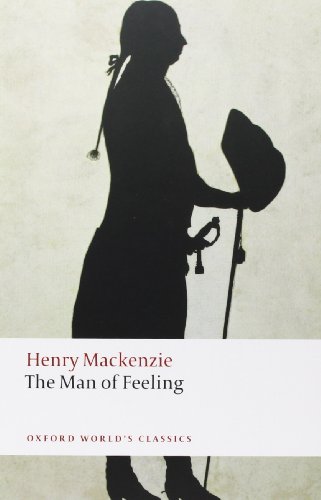
Synopsis
The Man of Feeling (1771) is the foremost novel of sentiment in which the hero, Harley demonstrates his sensiblity in a series of episodes as he is tested against an uncaring world. This edition reprints Brian Vickers's authoritative text with a new introduction and notes discussing the work in the context of the Scottish Enlightenment and European sentimentalism. Published On: 2023-04-18
Les informations fournies dans la section « Synopsis » peuvent faire référence à une autre édition de ce titre.
Présentation de l'éditeur
'a book I prize next to the Bible' Robert Burns Mackenzie's hugely popular novel of 1771 is the foremost work of the sentimental movement, in which sentiment and sensibility were allied with true virtue, and sensitivity is the mark of the man of feeling. The hero, Harley, is followed in a series of episodes demonstrating his benevolence in an uncaring world: he assists the down-trodden, loses his love, and fails to achieve worldly success. The novel asks a series of vital questions: what morality is possible in a complex commercial world? Does trying to maintain it make you a saint or a fool? Is sentiment merely a luxury for the leisured classes? This edition reprints Brian Vickers's authoritative text, with a new introduction that discusses the novel in the context of the Scottish Enlightenment and European sentimentalism. ABOUT THE SERIES: For over 100 years Oxford World's Classics has made available the widest range of literature from around the globe. Each affordable volume reflects Oxford's commitment to scholarship, providing the most accurate text plus a wealth of other valuable features, including expert introductions by leading authorities, helpful notes to clarify the text, up-to-date bibliographies for further study, and much more.
Biographie de l'auteur
Henry Mackenzie (1745-1831) was a Scottish novelist and miscellaneous writer. He was also known by the sobriquet "Addison of the North." Mackenzie was an ardent Tory, and wrote many tracts intended to counteract the doctrines of the French Revolution. Most of these remained anonymous, but he acknowledged his Review of the Principal Proceedings of the Parliament of 1784, a defence of the policy of William Pitt, written at the desire of Henry Dundas. He was rewarded (1804) by the office of comptroller of the taxes for Scotland. In 1776 Mackenzie married Penuel, daughter of Sir Ludovich Grant of Grant. They had eleven children. He was, in his later years, a notable figure in Edinburgh society. He was nicknamed the "man of feeling," but he was in reality a hard-headed man of affairs with a kindly heart. Some of his literary reminiscences were embodied in his Account of the Life and Writings of John Home, Esq. (1822). He also wrote a Life of Doctor Blacklock, prefixed to the 1793 edition of the poet's works.
Les informations fournies dans la section « A propos du livre » peuvent faire référence à une autre édition de ce titre.
Résultats de recherche pour The Man of Feeling

Image d'archives
The Man of Feeling
Edité par
Oxford University Press, Incorporated, 2009
ISBN 10 : 019953862X
ISBN 13 : 9780199538621
Ancien ou d'occasion
Couverture souple
Vendeur : Better World Books, Mishawaka, IN, Etats-Unis
Évaluation du vendeur 5 sur 5 étoiles

Etat : Good. (rev)01 Edition. Former library copy. Pages intact with minimal writing/highlighting. The binding may be loose and creased. Dust jackets/supplements are not included. Includes library markings. Stock photo provided. Product includes identifying sticker. Better World Books: Buy Books. Do Good. N° de réf. du vendeur 8790690-6
Acheter D'occasion
EUR 6,57
Livraison gratuite
Expédition nationale : Etats-Unis
Expédition nationale : Etats-Unis
Quantité disponible : 1 disponible(s)
Image d'archives
The Man of Feeling
Edité par
Oxford University Press, Incorporated, 2009
ISBN 10 : 019953862X
ISBN 13 : 9780199538621
Ancien ou d'occasion
Couverture souple
Vendeur : Better World Books, Mishawaka, IN, Etats-Unis
Évaluation du vendeur 5 sur 5 étoiles
Etat : Good. (rev)01 Edition. Pages intact with minimal writing/highlighting. The binding may be loose and creased. Dust jackets/supplements are not included. Stock photo provided. Product includes identifying sticker. Better World Books: Buy Books. Do Good. N° de réf. du vendeur 12515181-6
Acheter D'occasion
EUR 6,57
Livraison gratuite
Expédition nationale : Etats-Unis
Expédition nationale : Etats-Unis
Quantité disponible : 1 disponible(s)
Image d'archives
The Man of Feeling
Edité par
Oxford University Press, 2009
ISBN 10 : 019953862X
ISBN 13 : 9780199538621
Ancien ou d'occasion
Paperback
Vendeur : ThriftBooks-Dallas, Dallas, TX, Etats-Unis
Évaluation du vendeur 5 sur 5 étoiles
Paperback. Etat : Good. No Jacket. Pages can have notes/highlighting. Spine may show signs of wear. ~ ThriftBooks: Read More, Spend Less. N° de réf. du vendeur G019953862XI3N00
Acheter D'occasion
EUR 7,13
Livraison gratuite
Expédition nationale : Etats-Unis
Expédition nationale : Etats-Unis
Quantité disponible : 1 disponible(s)
Image d'archives
The Man of Feeling
Edité par
Oxford University Press, 2009
ISBN 10 : 019953862X
ISBN 13 : 9780199538621
Ancien ou d'occasion
Paperback
Vendeur : ThriftBooks-Dallas, Dallas, TX, Etats-Unis
Évaluation du vendeur 5 sur 5 étoiles
Paperback. Etat : Very Good. No Jacket. May have limited writing in cover pages. Pages are unmarked. ~ ThriftBooks: Read More, Spend Less. N° de réf. du vendeur G019953862XI4N00
Acheter D'occasion
EUR 7,13
Livraison gratuite
Expédition nationale : Etats-Unis
Expédition nationale : Etats-Unis
Quantité disponible : 1 disponible(s)
Image d'archives
The Man of Feeling
Edité par
Oxford University Press, 2009
ISBN 10 : 019953862X
ISBN 13 : 9780199538621
Ancien ou d'occasion
Paperback
Vendeur : ThriftBooks-Dallas, Dallas, TX, Etats-Unis
Évaluation du vendeur 5 sur 5 étoiles
Paperback. Etat : Fair. No Jacket. Readable copy. Pages may have considerable notes/highlighting. ~ ThriftBooks: Read More, Spend Less. N° de réf. du vendeur G019953862XI5N00
Acheter D'occasion
EUR 7,13
Livraison gratuite
Expédition nationale : Etats-Unis
Expédition nationale : Etats-Unis
Quantité disponible : 1 disponible(s)
Image d'archives
The Man of Feeling
Edité par
Oxford University Press, 2009
ISBN 10 : 019953862X
ISBN 13 : 9780199538621
Ancien ou d'occasion
Paperback
Vendeur : ThriftBooks-Atlanta, AUSTELL, GA, Etats-Unis
Évaluation du vendeur 5 sur 5 étoiles
Paperback. Etat : Fair. No Jacket. Readable copy. Pages may have considerable notes/highlighting. ~ ThriftBooks: Read More, Spend Less. N° de réf. du vendeur G019953862XI5N00
Acheter D'occasion
EUR 7,13
Livraison gratuite
Expédition nationale : Etats-Unis
Expédition nationale : Etats-Unis
Quantité disponible : 1 disponible(s)
Image d'archives
The Man of Feeling (Oxford World's Classics)
Edité par
Oxford University Press, 2009
ISBN 10 : 019953862X
ISBN 13 : 9780199538621
Ancien ou d'occasion
Soft cover
Vendeur : Barsoom Books, Torrance, CA, Etats-Unis
Évaluation du vendeur 4 sur 5 étoiles

Soft cover. Etat : Fine. 2nd Edition. Book is square, solid, and unread. No remainder marks. This book is so sharp it could slice even Superman's skin -- you'll shout up, up, and away with glee when it arrives at your door! N° de réf. du vendeur 038945
Acheter D'occasion
EUR 2,90
Expédition à EUR 5,31
Expédition nationale : Etats-Unis
Expédition nationale : Etats-Unis
Quantité disponible : 1 disponible(s)
Image d'archives
The Man of Feeling
Edité par
Oxford University Press, 2009
ISBN 10 : 019953862X
ISBN 13 : 9780199538621
Ancien ou d'occasion
Paperback
Vendeur : WorldofBooks, Goring-By-Sea, WS, Royaume-Uni
Évaluation du vendeur 5 sur 5 étoiles
Paperback. Etat : Very Good. The book has been read, but is in excellent condition. Pages are intact and not marred by notes or highlighting. The spine remains undamaged. N° de réf. du vendeur GOR002376341
Acheter D'occasion
EUR 2,38
Expédition à EUR 6,61
Expédition depuis Royaume-Uni vers Etats-Unis
Expédition depuis Royaume-Uni vers Etats-Unis
Quantité disponible : 20 disponible(s)
Image d'archives
The Man of Feeling (Oxford World's Classics)
Vendeur : AwesomeBooks, Wallingford, Royaume-Uni
Évaluation du vendeur 5 sur 5 étoiles
paperback. Etat : Very Good. The Man of Feeling (Oxford World's Classics) This book is in very good condition and will be shipped within 24 hours of ordering. The cover may have some limited signs of wear but the pages are clean, intact and the spine remains undamaged. This book has clearly been well maintained and looked after thus far. Money back guarantee if you are not satisfied. See all our books here, order more than 1 book and get discounted shipping. N° de réf. du vendeur 7719-9780199538621
Acheter D'occasion
EUR 5,04
Expédition à EUR 4,86
Expédition depuis Royaume-Uni vers Etats-Unis
Expédition depuis Royaume-Uni vers Etats-Unis
Quantité disponible : 2 disponible(s)
Image fournie par le vendeur
Man of Feeling
Edité par
Oxford University Press, 2009
ISBN 10 : 019953862X
ISBN 13 : 9780199538621
Ancien ou d'occasion
Couverture souple
Vendeur : GreatBookPrices, Columbia, MD, Etats-Unis
Évaluation du vendeur 5 sur 5 étoiles
Etat : As New. Unread book in perfect condition. N° de réf. du vendeur 5722057
Acheter D'occasion
EUR 8,33
Expédition à EUR 2,36
Expédition nationale : Etats-Unis
Expédition nationale : Etats-Unis
Quantité disponible : Plus de 20 disponibles