
Articles liés à Leonardo: The Last Supper
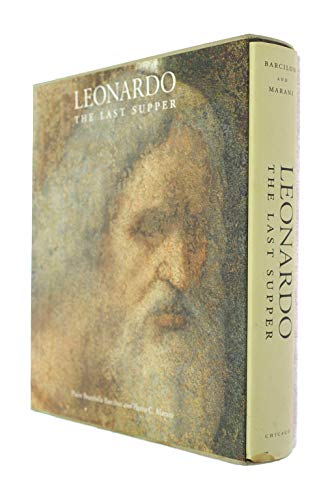
Synopsis
Leonardo's Last Supper, one of the most important works of the Renaissance if not all of Western art, was painted between 1494 and 1498 in the refectory of Santa Maria delle Grazie in Milan. From the moment that the prior at the monastery complained to Leonardo that the work was taking too long, the Last Supper has endured centuries of controversy, neglect, and difficulty. Leonardo, The Last Supper, translated from the Italian, is the definitive document of the recently completed project to reverse these centuries of decline by restoring the painting and preserving it in a manner that generations of conservators have failed to do.
The technical problems with the Last Supper began as soon as Leonardo started to paint it. He jettisoned the traditional fresco technique of applying paint to wet plaster, a method unsuited to Leonardo's slow and thorough execution, and created the work instead with an experimental technique that involved painting directly on the dry plaster. With this renegade method, Leonardo rendered one of the most enduring painting techniques volatile and unstable. Added to this initial complication have been centuries of pollution, tourists, candle smoke, and the ravages of age, not to mention food fights in the refectory staged by Napoleonic soldiers and Allied bombs in 1943. By the middle of the twentieth century, the Last Supper was in desperate need of a complete restoration. Pinin Brambilla Barcilon was chosen to head this twenty-year project, and Leonardo, The Last Supper is the official record of her remarkable effort. It first documents the cleaning and removal of the overpainting performed in the other attempts at restoration and then turns to Barcilon's meticulous additions in watercolor, which were based on Leonardo's preparatory drawings, early copies of the painting, and contemporary textual descriptions. This book presents full-scale reproductions of details from the fresco that clearly display and distinguish Leonardo's hand from that of the restorer. With nearly 400 sumptuous color reproductions, the most comprehensive technical documentation of the project by Barcilon, and an introductory essay by art historian and project codirector Pietro C. Marani that focuses on the history of the fresco, Leonardo, The Last Supper is an invaluable historic record, an extraordinarily handsome book, and an essential volume for anyone who appreciates the beauty, technical achievements, and fate of Renaissance painting.Les informations fournies dans la section « Synopsis » peuvent faire référence à une autre édition de ce titre.
À propos des auteurs
Pinin Brambilla Barcilon is one of the world's foremost authorities on the conservation of Renaissance frescoes. She has published widely on the subject and is responsible for a number of important technical advancements in the field. For the last twenty years, she has served as the chief conservator of the project to restore the Last Supper.
Pietro C. Marani is a curator and Renaissance scholar who specializes in the life and production of Leonardo da Vinci. His books include Leonardo: I Maestri, Leonardo and Venice, and Leonardo: Catalogo Completo dei Dipinti.
Harlow Tighe is a translator living in Milan.
Les informations fournies dans la section « A propos du livre » peuvent faire référence à une autre édition de ce titre.
Résultats de recherche pour Leonardo: The Last Supper

Image fournie par le vendeur
Leonardo: The Last Supper.
Edité par
University of Chicago Press, Chicago & London, 2001
ISBN 10 : 0226504271
ISBN 13 : 9780226504278
Ancien ou d'occasion
Couverture rigide
Edition originale
Vendeur : Ted Kottler, Bookseller, Redondo Beach, CA, Etats-Unis
Évaluation du vendeur 4 sur 5 étoiles

Hardcover. Etat : Near Fine. Etat de la jaquette : Near Fine. 1st Edition. Original cloth, 4to. Near Fine, in dust jacket and slipcase. Leonardo's Last Supper, one of the most important works of the Renaissance if not all of Western art, was painted between 1494 and 1498 in the refectory of Santa Maria delle Grazie in Milan. From the moment that the prior at the monastery complained to Leonardo that the work was taking too long, the Last Supper has endured centuries of controversy, neglect, and difficulty. Leonardo, The Last Supper, translated from the Italian, is the definitive document of the recently completed project to reverse these centuries of decline by restoring the painting and preserving it in a manner that generations of conservators have failed to do. The technical problems with the Last Supper began as soon as Leonardo started to paint it. He jettisoned the traditional fresco technique of applying paint to wet plaster, a method unsuited to Leonardo's slow and thorough execution, and created the work instead with an experimental technique that involved painting directly on the dry plaster. With this renegade method, Leonardo rendered one of the most enduring painting techniques volatile and unstable. Added to this initial complication have been centuries of pollution, tourists, candle smoke, and the ravages of age, not to mention food fights in the refectory staged by Napoleonic soldiers and Allied bombs in 1943. By the middle of the twentieth century, the Last Supper was in desperate need of a complete restoration. Pinin Brambilla Barcilon was chosen to head this twenty-year project, and Leonardo, The Last Supper is the official record of her remarkable effort. It first documents the cleaning and removal of the overpainting performed in the other attempts at restoration and then turns to Barcilon's meticulous additions in watercolor, which were based on Leonardo's preparatory drawings, early copies of the painting, and contemporary textual descriptions. This book presents full-scale reproductions of details from the fresco that clearly display and distinguish Leonardo's hand from that of the restorer. With nearly 400 sumptuous color reproductions, the most comprehensive technical documentation of the project by Barcilon, and an introductory essay by art historian and project codirector Pietro C. Marani that focuses on the history of the fresco, Leonardo, The Last Supper is an invaluable historic record, an extraordinarily handsome book, and an essential volume for anyone who appreciates the beauty, technical achievements, and fate of Renaissance painting. N° de réf. du vendeur 25774
Acheter D'occasion
EUR 55,16
Expédition à EUR 11,34
Expédition nationale : Etats-Unis
Expédition nationale : Etats-Unis
Quantité disponible : 1 disponible(s)
Image d'archives
Leonardo: The Last Supper
Edité par
University of Chicago Press, Chicago, Illinois, 2001
ISBN 10 : 0226504271
ISBN 13 : 9780226504278
Ancien ou d'occasion
Couverture rigide
Vendeur : Daedalus Books, Portland, OR, Etats-Unis
Évaluation du vendeur 5 sur 5 étoiles

Cloth. Etat : Fine. Etat de la jaquette : Fine. As new in slipcase.; 4to. N° de réf. du vendeur 254654
Acheter D'occasion
EUR 66,16
Expédition à EUR 5,80
Expédition nationale : Etats-Unis
Expédition nationale : Etats-Unis
Quantité disponible : 1 disponible(s)
Image d'archives
Leonardo: The Last Supper
Edité par
University of Chicago Press, Chicago, Illinois, 2001
ISBN 10 : 0226504271
ISBN 13 : 9780226504278
Ancien ou d'occasion
Couverture rigide
Vendeur : Daedalus Books, Portland, OR, Etats-Unis
Évaluation du vendeur 5 sur 5 étoiles
Cloth. Etat : Fine. Etat de la jaquette : Fine. As new in slipcase. In shrinkwrap. ; Color Plates; 4to. N° de réf. du vendeur 281069
Acheter D'occasion
EUR 66,16
Expédition à EUR 5,80
Expédition nationale : Etats-Unis
Expédition nationale : Etats-Unis
Quantité disponible : 1 disponible(s)
Image d'archives
Leonardo: The Last Supper
Edité par
University of Chicago Press, Chicago, 2001
ISBN 10 : 0226504271
ISBN 13 : 9780226504278
Ancien ou d'occasion
Couverture rigide
Vendeur : Argosy Book Store, ABAA, ILAB, New York, NY, Etats-Unis
Évaluation du vendeur 5 sur 5 étoiles
hardcover. Etat : fine. Etat de la jaquette : fine. Da Vinci (illustrateur). Reprint. Well-illustrated throughout, much in color. 440 pages.Thick square 4to, tan cloth, d.w., pictorial slipcase. Chicago: University of Chicago Press, (2001)/. Reprint. A fine copy in a fine dust wrapper and box. N° de réf. du vendeur 301310
Acheter D'occasion
EUR 68,95
Expédition à EUR 5,36
Expédition nationale : Etats-Unis
Expédition nationale : Etats-Unis
Quantité disponible : 1 disponible(s)
Image d'archives
Leonardo: The Last Supper
Edité par
The University of Chicago Press, Chicago, Illinois, 2001
ISBN 10 : 0226504271
ISBN 13 : 9780226504278
Ancien ou d'occasion
Couverture rigide
Vendeur : Mullen Books, ABAA, Marietta, PA, Etats-Unis
Évaluation du vendeur 4 sur 5 étoiles
Hardcover. Etat : VG. Slipcase covered in beige cloth with color illus. plate affixed; Color illus. dj.; Beige cloth over boards; 440 pp.; Profusely illustrated with over 400 bw and color plates and figures. An in-depth look at the enduring challenge of conserving Leonardo da Vinci's "Last Supper," a task the artist himself had to take up soon after painting the fresco; Includes technical documents and drawings from the twenty-nine year restoration project led by Pinin Brambilla; Heavy. N° de réf. du vendeur 122033
Acheter D'occasion
EUR 64,36
Expédition à EUR 11,59
Expédition nationale : Etats-Unis
Expédition nationale : Etats-Unis
Quantité disponible : 1 disponible(s)
Image fournie par le vendeur
Leonardo: The Last Supper
Edité par
? University of Chicago Press, 2001
ISBN 10 : 0226504271
ISBN 13 : 9780226504278
Neuf
Couverture rigide
Edition originale
Vendeur : HM Books, Kingston, NY, Etats-Unis
Évaluation du vendeur 4 sur 5 étoiles
Hardcover. Etat : New. Etat de la jaquette : dj. First Edition. Brand New in shrink wrap with Slipcase. N° de réf. du vendeur 14389
Acheter neuf
EUR 128,44
Expédition à EUR 6,03
Expédition nationale : Etats-Unis
Expédition nationale : Etats-Unis
Quantité disponible : 1 disponible(s)
Image d'archives
Leonardo: The Last Supper
Edité par
University of Chicago Press, 2001
ISBN 10 : 0226504271
ISBN 13 : 9780226504278
Neuf
Couverture rigide
Vendeur : Prompt Shipping/ Quality Books, Bay, AR, Etats-Unis
Évaluation du vendeur 5 sur 5 étoiles
Etat : New. BRAND NEW. N° de réf. du vendeur 811172
Acheter neuf
EUR 165,44
Expédition à EUR 3,56
Expédition nationale : Etats-Unis
Expédition nationale : Etats-Unis
Quantité disponible : 1 disponible(s)
Image d'archives
Leonardo : The Last Supper
Edité par
University of Chicago Press, 2001
ISBN 10 : 0226504271
ISBN 13 : 9780226504278
Neuf
Couverture rigide
Vendeur : GreatBookPrices, Columbia, MD, Etats-Unis
Évaluation du vendeur 5 sur 5 étoiles
Etat : New. N° de réf. du vendeur 486485-n
Acheter neuf
EUR 166,68
Expédition à EUR 2,36
Expédition nationale : Etats-Unis
Expédition nationale : Etats-Unis
Quantité disponible : 15 disponible(s)
Image fournie par le vendeur
Leonardo : The Last Supper
Edité par
University of Chicago Press, 2001
ISBN 10 : 0226504271
ISBN 13 : 9780226504278
Ancien ou d'occasion
Couverture rigide
Vendeur : GreatBookPrices, Columbia, MD, Etats-Unis
Évaluation du vendeur 5 sur 5 étoiles
Etat : As New. Unread book in perfect condition. N° de réf. du vendeur 486485
Acheter D'occasion
EUR 199,91
Expédition à EUR 2,36
Expédition nationale : Etats-Unis
Expédition nationale : Etats-Unis
Quantité disponible : 15 disponible(s)
Image d'archives
Leonardo, the "Last Supper"
Edité par
The University of Chicago Press, 2001
ISBN 10 : 0226504271
ISBN 13 : 9780226504278
Neuf
Couverture rigide
Edition originale
Vendeur : Kennys Bookshop and Art Galleries Ltd., Galway, GY, Irlande
Évaluation du vendeur 5 sur 5 étoiles
Etat : New. This is the official record of the restoration of Leonardo's painting "The Last Supper". Barcilon documents the technical aspects of the restoration, while art historian, Pietro C. Marani focuses on the history of the fresco, from conception through to restoration. Translator(s): Tighe, Harlow. Num Pages: 454 pages, 382 colour plates, 64 halftones. BIC Classification: ABC; ACND; AFC. Category: (P) Professional & Vocational; (UP) Postgraduate, Research & Scholarly; (UU) Undergraduate. Dimension: 294 x 260 x 54. Weight in Grams: 3402. . 2001. 1St Edition. Hardcover. . . . . N° de réf. du vendeur V9780226504278
Acheter neuf
EUR 203,10
Expédition à EUR 9,50
Expédition depuis Irlande vers Etats-Unis
Expédition depuis Irlande vers Etats-Unis
Quantité disponible : 15 disponible(s)