
Articles liés à Memories Are Made of This
Synopsis
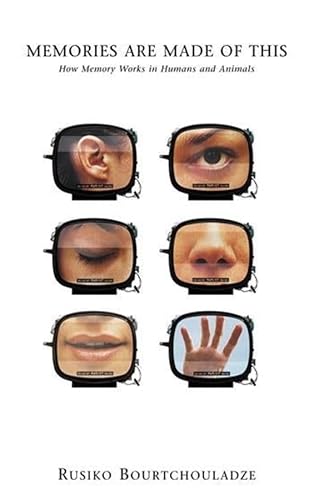
Memory enables us to make experience meaningful and to form coherent identities for ourselves and intelligible perceptions of others. Indeed, our ability to imagine, anticipate, and create the future is directly commensurate with our ability to retrieve and recollect past experiences.
But for all its vital importance in human cognition, for all that it seems so ordinary and obvious, memory remains in many ways as complex and mysterious today as it seemed to ancient philosophers. We need only to think about the "tip-of-the-tongue" experience to wonder how memories are formed, where they reside in our brains, and why some are retained, while others are forgotten. What is the difference between long- and short-term memory? Can memory be strengthened? Memories Are Made of This is an account of current memory science that offers answers to these and a host of other questions, comprehensively distilling much diverse and rigorous science. It delves into the biology of memory functions and researches into the mechanics and genetics of memory and the importance of emotions, particularly those resulting from trauma, in the memory process. Of special focus are investigations of cognition in other species. Are we the only animals who remember and forget? If not, are there commonalties in the memories of different species? The book also surveys our understanding of the effects of injury and disease on memory and concludes with an assessment of emerging pharmacological efforts to preserve and protect our memories and, in turn, ourselves.Les informations fournies dans la section « Synopsis » peuvent faire référence à une autre édition de ce titre.
À propos de l'auteur
Rusiko Bourtchouladze, a director of model systems at Helicon Therapeutics, Inc., and an adjunct associate professor at the Cold Spring Harbor Laboratory, has published many key articles and papers on memory research.
Les informations fournies dans la section « A propos du livre » peuvent faire référence à une autre édition de ce titre.
Résultats de recherche pour Memories Are Made of This

Image d'archives
Memories Are Made of This: How Memory Works in Humans and Animals (Maps of the Mind)
Edité par
Columbia University Press, 2004
ISBN 10 : 0231120214
ISBN 13 : 9780231120210
Ancien ou d'occasion
Couverture souple
Vendeur : World of Books (was SecondSale), Montgomery, IL, Etats-Unis
Évaluation du vendeur 5 sur 5 étoiles

Etat : Good. Item in good condition. Textbooks may not include supplemental items i.e. CDs, access codes etc. N° de réf. du vendeur 00081052571
Acheter D'occasion
EUR 4,36
Livraison gratuite
Expédition nationale : Etats-Unis
Expédition nationale : Etats-Unis
Quantité disponible : 1 disponible(s)
Image d'archives
Memories Are Made of This: How Memory Works in Humans and Animals (Maps of the Mind)
Edité par
Columbia University Press, 2004
ISBN 10 : 0231120214
ISBN 13 : 9780231120210
Ancien ou d'occasion
Couverture souple
Vendeur : World of Books (was SecondSale), Montgomery, IL, Etats-Unis
Évaluation du vendeur 5 sur 5 étoiles
Etat : Very Good. Item in very good condition! Textbooks may not include supplemental items i.e. CDs, access codes etc. N° de réf. du vendeur 00104466633
Acheter D'occasion
EUR 4,36
Livraison gratuite
Expédition nationale : Etats-Unis
Expédition nationale : Etats-Unis
Quantité disponible : 1 disponible(s)
Image d'archives
Memories Are Made of This: How Memory Works in Humans and Animals (Maps of the Mind)
Edité par
Columbia University Press (edition Second Edition.), 2004
ISBN 10 : 0231120214
ISBN 13 : 9780231120210
Ancien ou d'occasion
Paperback
Vendeur : BooksRun, Philadelphia, PA, Etats-Unis
Évaluation du vendeur 5 sur 5 étoiles
Paperback. Etat : Very Good. Second Edition. It's a well-cared-for item that has seen limited use. The item may show minor signs of wear. All the text is legible, with all pages included. It may have slight markings and/or highlighting. N° de réf. du vendeur 0231120214-11-1
Acheter D'occasion
EUR 5,27
Livraison gratuite
Expédition nationale : Etats-Unis
Expédition nationale : Etats-Unis
Quantité disponible : 1 disponible(s)
Image fournie par le vendeur
Memories Are Made of This: How Memory Works in Humans and Animals (Maps of the Mind)
Edité par
Columbia University Press, 2004
ISBN 10 : 0231120214
ISBN 13 : 9780231120210
Ancien ou d'occasion
Couverture souple
Vendeur : -OnTimeBooks-, Phoenix, AZ, Etats-Unis
Évaluation du vendeur 5 sur 5 étoiles
Etat : good. A copy that has been read, remains in good condition. All pages are intact, and the cover is intact. The spine and cover show signs of wear. Pages can include notes and highlighting and show signs of wear, and the copy can include "From the library of" labels or previous owner inscriptions. 100% GUARANTEE! Shipped with delivery confirmation, if you're not satisfied with purchase please return item! Ships via media mail. N° de réf. du vendeur OTV.0231120214.G
Acheter D'occasion
EUR 6,10
Livraison gratuite
Expédition nationale : Etats-Unis
Expédition nationale : Etats-Unis
Quantité disponible : 1 disponible(s)
Image d'archives
Memories Are Made of This : How Memory Works in Humans and Animals
Edité par
Columbia University Press, 2004
ISBN 10 : 0231120214
ISBN 13 : 9780231120210
Ancien ou d'occasion
Couverture souple
Vendeur : Better World Books, Mishawaka, IN, Etats-Unis
Évaluation du vendeur 5 sur 5 étoiles
Etat : Very Good. 1 Edition. Former library copy. Pages intact with possible writing/highlighting. Binding strong with minor wear. Dust jackets/supplements may not be included. Includes library markings. Stock photo provided. Product includes identifying sticker. Better World Books: Buy Books. Do Good. N° de réf. du vendeur 41632625-6
Acheter D'occasion
EUR 6,17
Livraison gratuite
Expédition nationale : Etats-Unis
Expédition nationale : Etats-Unis
Quantité disponible : 1 disponible(s)
Image d'archives
Memories Are Made of This: How Memory Works in Humans and Animals (Maps of the Mind)
Edité par
Columbia University Press, 2004
ISBN 10 : 0231120214
ISBN 13 : 9780231120210
Ancien ou d'occasion
Paperback
Vendeur : Midtown Scholar Bookstore, Harrisburg, PA, Etats-Unis
Évaluation du vendeur 5 sur 5 étoiles
Paperback. Etat : Very Good. Very Good - Crisp, clean, unread book with some shelfwear/edgewear, may have a remainder mark - NICE Standard-sized. N° de réf. du vendeur M0231120214Z2
Acheter D'occasion
EUR 2,14
Expédition à EUR 5,20
Expédition nationale : Etats-Unis
Expédition nationale : Etats-Unis
Quantité disponible : Plus de 20 disponibles
Image d'archives
Memories Are Made of This: How Memory Works in Humans and Animals (Maps of the Mind)
Edité par
Columbia University Press, 2004
ISBN 10 : 0231120214
ISBN 13 : 9780231120210
Ancien ou d'occasion
Couverture souple
Vendeur : Phatpocket Limited, Waltham Abbey, HERTS, Royaume-Uni
Évaluation du vendeur 5 sur 5 étoiles
Etat : Good. Your purchase helps support Sri Lankan Children's Charity 'The Rainbow Centre'. Ex-library, so some stamps and wear, but in good overall condition. Our donations to The Rainbow Centre have helped provide an education and a safe haven to hundreds of children who live in appalling conditions. N° de réf. du vendeur Z1-X-027-02005
Acheter D'occasion
EUR 8,86
Expédition à EUR 12,44
Expédition depuis Royaume-Uni vers Etats-Unis
Expédition depuis Royaume-Uni vers Etats-Unis
Quantité disponible : 1 disponible(s)
Image fournie par le vendeur
Memories are made of this : how memory works in humans and animals / by Rusiko Bourtchouladze
Edité par
New York : Columbia University Press, 2004
ISBN 10 : 0231120214
ISBN 13 : 9780231120210
Ancien ou d'occasion
Couverture souple
Vendeur : MW Books, New York, NY, Etats-Unis
Évaluation du vendeur 5 sur 5 étoiles
Second Edition. Memory enables us to make experience meaningful and to form coherent identities for ourselves and intelligible perceptions of others. Indeed, our ability to imagine, anticipate, and create the future is directly commensurate with our ability to retrieve and recollect past experiences. But for all its vital importance in human cognition, for all that it seems so ordinary and obvious, memory remains in many ways as complex and mysterious today as it seemed to ancient philosophers. We need only to think about the "tip-of-the-tongue" experience to wonder how memories are formed, where they reside in our brains, and why some are retained, while others are forgotten. What is the difference between long- and short-term memory? Can memory be strengthened? Memories Are Made of Thisis an account of current memory science that offers answers to these and a host of other questions, comprehensively distilling much diverse andrigorous science. It delves into the biology of memory functions and researches into themechanics and genetics of memory and the importance of emotions, particularly those resulting from trauma, in the memory process. Of special focus are investigations of cognition in other species. Are we the only animals who remember and forget? If not, are there commonalties in the memories of different species? The book also surveys our understanding of the effects of injury and disease on memory and concludes with an assessment of emerging pharmacological efforts to preserve and protect our memories and, in turn, ourselves. Fine paperback copy. Particularly and surprisingly well-preserved; tight, bright, clean and especially sharp-cornered.; 208 pages; Description: 208 p. : ill. ; 24 cm. Subjects: Psychology --Cognitive Psychology --Neuropsychology --Physiological Psychology 1 Kg. N° de réf. du vendeur 154867
Acheter D'occasion
EUR 21,79
Livraison gratuite
Expédition nationale : Etats-Unis
Expédition nationale : Etats-Unis
Quantité disponible : 1 disponible(s)
Image fournie par le vendeur
Memories are made of this : how memory works in humans and animals / by Rusiko Bourtchouladze
Edité par
New York : Columbia University Press, 2004
ISBN 10 : 0231120214
ISBN 13 : 9780231120210
Ancien ou d'occasion
Couverture souple
Vendeur : MW Books Ltd., Galway, Irlande
Évaluation du vendeur 5 sur 5 étoiles
Second Edition. Memory enables us to make experience meaningful and to form coherent identities for ourselves and intelligible perceptions of others. Indeed, our ability to imagine, anticipate, and create the future is directly commensurate with our ability to retrieve and recollect past experiences. But for all its vital importance in human cognition, for all that it seems so ordinary and obvious, memory remains in many ways as complex and mysterious today as it seemed to ancient philosophers. We need only to think about the "tip-of-the-tongue" experience to wonder how memories are formed, where they reside in our brains, and why some are retained, while others are forgotten. What is the difference between long- and short-term memory? Can memory be strengthened? Memories Are Made of Thisis an account of current memory science that offers answers to these and a host of other questions, comprehensively distilling much diverse andrigorous science. It delves into the biology of memory functions and researches into themechanics and genetics of memory and the importance of emotions, particularly those resulting from trauma, in the memory process. Of special focus are investigations of cognition in other species. Are we the only animals who remember and forget? If not, are there commonalties in the memories of different species? The book also surveys our understanding of the effects of injury and disease on memory and concludes with an assessment of emerging pharmacological efforts to preserve and protect our memories and, in turn, ourselves. Fine paperback copy. Particularly and surprisingly well-preserved; tight, bright, clean and especially sharp-cornered.; 208 pages; Description: 208 p. : ill. ; 24 cm. Subjects: Psychology --Cognitive Psychology --Neuropsychology --Physiological Psychology 1 Kg. N° de réf. du vendeur 154867
Acheter D'occasion
EUR 8,95
Expédition à EUR 13,95
Expédition depuis Irlande vers Etats-Unis
Expédition depuis Irlande vers Etats-Unis
Quantité disponible : 1 disponible(s)
Image fournie par le vendeur
Memories are made of this : how memory works in humans and animals.
Edité par
Columbia University Press, 2004
ISBN 10 : 0231120214
ISBN 13 : 9780231120210
Ancien ou d'occasion
Couverture souple
Vendeur : Kloof Booksellers & Scientia Verlag, Amsterdam, Pays-Bas
Évaluation du vendeur 4 sur 5 étoiles

Etat : very good. New York : Columbia University Press, c2002. paperback. viii, 199 p. : ill. ; 24 cm. - Memory enables us to make experience meaningful and to form coherent identities for ourselves and intelligible perceptions of others. Indeed, our ability to imagine, anticipate, and create the future is directly commensurate with our ability to retrieve and recollect past experiences. But for all its vital importance in human cognition, for all that it seems so ordinary and obvious, memory remains in many ways as complex and mysterious today as it seemed to ancient philosophers. We need only to think about the tip-of-the-tongue experience to wonder how memories are formed, where they reside in our brains, and why some are retained, while others are forgotten. What is the difference between long- and short-term memory? Can memory be strengthened? Memories Are Made of This is an account of current memory science that offers answers to these and a host of other questions, comprehensively distilling much diverse and rigorous science. It delves into the biology of memory functions and researches into the mechanics and genetics of memory and the importance of emotions, particularly those resulting from trauma, in the memory process. Of special focus are investigations of cognition in other species. Are we the only animals who remember and forget? If not, are there commonalties in the memories of different species? The book also surveys our understanding of the effects of injury and disease on memory and concludes with an assessment of emerging pharmacological efforts to preserve and protect our memories and, in turn, ourselves. Condition : very good copy. ISBN 9780231120210. Keywords : PSYCHOLOGY, memory. N° de réf. du vendeur 233985
Acheter D'occasion
EUR 16,95
Expédition à EUR 30
Expédition depuis Pays-Bas vers Etats-Unis
Expédition depuis Pays-Bas vers Etats-Unis
Quantité disponible : 1 disponible(s)