
Articles liés à Records of Dispossession: Palestinian Refugee Property...
Records of Dispossession: Palestinian Refugee Property and the Arab-Israeli Conflict - Couverture rigide
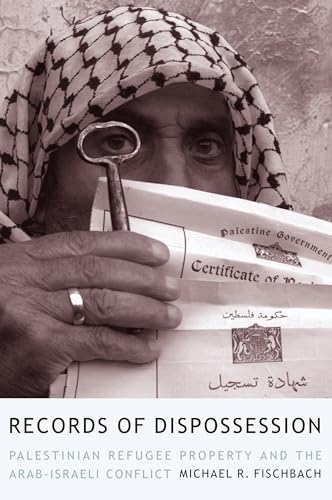
Synopsis
No issue in the Arab-Israeli conflict has proven more intractable than the status of the Palestinian refugees. This work focuses on the controversial question of the property left behind by the refugees during the first Arab-Israeli war in 1948. Beyond discussing the extent of the refugees'losses and detailing the methods by which Israel expropriated this property, the book also notes the ways that the property question has affected, and in turn been affected by, the wider Arab-Israeli conflict over the decades. It shows how the property question influenced Arab-Israeli diplomacy and discusses the implications of the fact that the question remains unresolved despite numerous diplomatic efforts.
From late 1947 through 1948, more than 726,000 Palestinians--over half the entire population--were uprooted from their homes and villages. Though some middle class refugees were able to flee with liquid capital, the majority were small-scale farmers whose worldly fortunes were the land, livestock, and crops they left behind. This book tells for the first time the full story of how much property changed hands, what it was worth, and how it was used by the fledgling state of Israel. It then traces the subsequent decades of diplomatic activity on the issue and publishes previously secret UN estimates of the scope and value of the refugee property. Michael Fischbach offers a detailed study of Israeli counterclaims for Jewish property lost in the Arab world, diplomatic schemes for resolving the conflict, secret compensation efforts, and the renewed diplomatic efforts on behalf of property claims since the onset of Arab-Israeli peace talks. Based largely on archival records, including those of the United Nations Conciliation Commission of Palestine, never before available to the public and kept under lock and key in the UN archives, Records of Dispossession is the first detailed historical examination of the Palestinian refugee property question.Les informations fournies dans la section « Synopsis » peuvent faire référence à une autre édition de ce titre.
À propos de l'auteur
Michael R. Fischbach is professor of history at Randolph-Macon College. He specializes in land issues relating to Israel, Jordan, and the Palestinians and is the author of State, Society, and Land in Jordan.
Les informations fournies dans la section « A propos du livre » peuvent faire référence à une autre édition de ce titre.
Résultats de recherche pour Records of Dispossession: Palestinian Refugee Property...

Image d'archives
Records of Dispossession: Palestinian Refugee Property and the Arab-Israeli Conflict
Edité par
Columbia University Press, 2003
ISBN 10 : 0231129785
ISBN 13 : 9780231129787
Neuf
Couverture rigide
Vendeur : Kennys Bookshop and Art Galleries Ltd., Galway, GY, Irlande
Évaluation du vendeur 5 sur 5 étoiles

Etat : New. During 1947 and 1948, almost half the population of Palestine left their villages and livelihoods. They were never to be compensated for their abandoned property, even though the UN and most other parties acknowledge their rights in this matter. This study explores this issue. Series: Institute for Palestine Studies Series. Num Pages: 520 pages, 99 figures. BIC Classification: 1FBH; 1FBP; 3JJPG; HBJF1; HBLW3; JFFD; JFSL1; JPVR; KFFR. Category: (P) Professional & Vocational. Dimension: 237 x 165 x 32. Weight in Grams: 953. . 2003. Hardcover. . . . . N° de réf. du vendeur V9780231129787
Acheter neuf
EUR 63,66
Expédition à EUR 9,50
Expédition depuis Irlande vers Etats-Unis
Expédition depuis Irlande vers Etats-Unis
Quantité disponible : 1 disponible(s)
Image d'archives
Records of Dispossession: Palestinian Refugee Property and the Arab-Israeli Conflict (Institute for Palestine Studies Series)
Edité par
Columbia University Press 2003-12-19, 2003
ISBN 10 : 0231129785
ISBN 13 : 9780231129787
Neuf
Couverture rigide
Vendeur : Chiron Media, Wallingford, Royaume-Uni
Évaluation du vendeur 5 sur 5 étoiles
Hardcover. Etat : New. Brand new book, sourced directly from publisher. Dispatch time is 3-4 days from our warehouse. Book will be sent in robust, secure packaging to ensure it reaches you securely. N° de réf. du vendeur 6666-WLY-9780231129787
Acheter neuf
EUR 70,88
Expédition à EUR 7,74
Expédition depuis Royaume-Uni vers Etats-Unis
Expédition depuis Royaume-Uni vers Etats-Unis
Quantité disponible : 1 disponible(s)
Image fournie par le vendeur
Records of Dispossession
Edité par
Columbia University Press, US, 2003
ISBN 10 : 0231129785
ISBN 13 : 9780231129787
Neuf
Couverture rigide
Vendeur : Rarewaves USA, HEBRON, KY, Etats-Unis
Évaluation du vendeur 5 sur 5 étoiles
Hardback. Etat : New. No issue in the Arab-Israeli conflict has proven more intractable than the status of the Palestinian refugees. This work focuses on the controversial question of the property left behind by the refugees during the first Arab-Israeli war in 1948. Beyond discussing the extent of the refugees'losses and detailing the methods by which Israel expropriated this property, the book also notes the ways that the property question has affected, and in turn been affected by, the wider Arab-Israeli conflict over the decades. It shows how the property question influenced Arab-Israeli diplomacy and discusses the implications of the fact that the question remains unresolved despite numerous diplomatic efforts. From late 1947 through 1948, more than 726,000 Palestinians-over half the entire population-were uprooted from their homes and villages. Though some middle class refugees were able to flee with liquid capital, the majority were small-scale farmers whose worldly fortunes were the land, livestock, and crops they left behind. This book tells for the first time the full story of how much property changed hands, what it was worth, and how it was used by the fledgling state of Israel.It then traces the subsequent decades of diplomatic activity on the issue and publishes previously secret UN estimates of the scope and value of the refugee property. Michael Fischbach offers a detailed study of Israeli counterclaims for Jewish property lost in the Arab world, diplomatic schemes for resolving the conflict, secret compensation efforts, and the renewed diplomatic efforts on behalf of property claims since the onset of Arab-Israeli peace talks. Based largely on archival records, including those of the United Nations Conciliation Commission of Palestine, never before available to the public and kept under lock and key in the UN archives, Records of Dispossession is the first detailed historical examination of the Palestinian refugee property question. N° de réf. du vendeur LU-9780231129787
Acheter neuf
EUR 85,65
Livraison gratuite
Expédition nationale : Etats-Unis
Expédition nationale : Etats-Unis
Quantité disponible : Plus de 20 disponibles
Image d'archives
Records of Dispossession: Palestinian Refugee Property and the Arab-Israeli Conflict
Edité par
Columbia University Press, 2003
ISBN 10 : 0231129785
ISBN 13 : 9780231129787
Neuf
Couverture rigide
Vendeur : Kennys Bookstore, Olney, MD, Etats-Unis
Évaluation du vendeur 5 sur 5 étoiles
Etat : New. During 1947 and 1948, almost half the population of Palestine left their villages and livelihoods. They were never to be compensated for their abandoned property, even though the UN and most other parties acknowledge their rights in this matter. This study explores this issue. Series: Institute for Palestine Studies Series. Num Pages: 520 pages, 99 figures. BIC Classification: 1FBH; 1FBP; 3JJPG; HBJF1; HBLW3; JFFD; JFSL1; JPVR; KFFR. Category: (P) Professional & Vocational. Dimension: 237 x 165 x 32. Weight in Grams: 953. . 2003. Hardcover. . . . . Books ship from the US and Ireland. N° de réf. du vendeur V9780231129787
Acheter neuf
EUR 80,52
Expédition à EUR 9,35
Expédition nationale : Etats-Unis
Expédition nationale : Etats-Unis
Quantité disponible : 1 disponible(s)
Image d'archives
Records of Dispossession Palestinian Refugee Property and the ArabIsraeli Conflict
Edité par
Columbia Univ Pr, 2003
ISBN 10 : 0231129785
ISBN 13 : 9780231129787
Neuf
Couverture rigide
Vendeur : Revaluation Books, Exeter, Royaume-Uni
Évaluation du vendeur 5 sur 5 étoiles
Hardcover. Etat : Brand New. 520 pages. 9.25x6.25x1.25 inches. In Stock. This item is printed on demand. N° de réf. du vendeur __0231129785
Acheter neuf
EUR 77,01
Expédition à EUR 14,90
Expédition depuis Royaume-Uni vers Etats-Unis
Expédition depuis Royaume-Uni vers Etats-Unis
Quantité disponible : 1 disponible(s)
Image fournie par le vendeur
RECORDS OF DISPOSSESSION; Palestinian Refugee Property and the Arab-Israeli Conflict
Edité par
Columbia University Press, New York, 2003
ISBN 10 : 0231129785
ISBN 13 : 9780231129787
Ancien ou d'occasion
Couverture rigide
Edition originale
Vendeur : Rare Book Cellar, Pomona, NY, Etats-Unis
Évaluation du vendeur 5 sur 5 étoiles
Hardcover. First Edition; First Printing. Near Fine in a Very Good+ dust jacket.; Institute For Palestine Studies Series; 8.7 X 6.9 X 1.3 inches; 520 pages. N° de réf. du vendeur 141385
Acheter D'occasion
EUR 84,31
Expédition à EUR 9,75
Expédition nationale : Etats-Unis
Expédition nationale : Etats-Unis
Quantité disponible : 1 disponible(s)
Image d'archives
Records of Dispossession: Palestinian Refugee Property and the Arab-Israeli Conflict (Institute for Palestine Studies Series)
Edité par
Columbia University Press, 2003
ISBN 10 : 0231129785
ISBN 13 : 9780231129787
Neuf
Couverture rigide
Vendeur : Ria Christie Collections, Uxbridge, Royaume-Uni
Évaluation du vendeur 5 sur 5 étoiles
Etat : New. In English. N° de réf. du vendeur ria9780231129787_new
Acheter neuf
EUR 81,53
Expédition à EUR 13,46
Expédition depuis Royaume-Uni vers Etats-Unis
Expédition depuis Royaume-Uni vers Etats-Unis
Quantité disponible : 1 disponible(s)
Image d'archives
Records of Dispossession: Palestinian Refugee Property and the Arab-Israeli Conflict
Edité par
Columbia University Press, 2003
ISBN 10 : 0231129785
ISBN 13 : 9780231129787
Neuf
Couverture rigide
Vendeur : THE SAINT BOOKSTORE, Southport, Royaume-Uni
Évaluation du vendeur 5 sur 5 étoiles
Hardback. Etat : New. New copy - Usually dispatched within 4 working days. N° de réf. du vendeur B9780231129787
Acheter neuf
EUR 90,58
Expédition à EUR 22,90
Expédition depuis Royaume-Uni vers Etats-Unis
Expédition depuis Royaume-Uni vers Etats-Unis
Quantité disponible : 1 disponible(s)
Image d'archives
Records of Dispossession: Palestinian Refugee Property and the Arab-Israeli Conflict (Institute for Palestine Studies Series)
Edité par
Columbia University Press, 2003
ISBN 10 : 0231129785
ISBN 13 : 9780231129787
Neuf
Couverture rigide
Vendeur : BennettBooksLtd, Los Angeles, CA, Etats-Unis
Évaluation du vendeur 5 sur 5 étoiles
hardcover. Etat : New. In shrink wrap. Looks like an interesting title! N° de réf. du vendeur Q-0231129785
Acheter neuf
EUR 110,03
Expédition à EUR 6,19
Expédition nationale : Etats-Unis
Expédition nationale : Etats-Unis
Quantité disponible : 1 disponible(s)
Image fournie par le vendeur
Records of Dispossession
Edité par
Columbia University Press, US, 2003
ISBN 10 : 0231129785
ISBN 13 : 9780231129787
Neuf
Couverture rigide
Vendeur : Rarewaves USA United, HEBRON, KY, Etats-Unis
Évaluation du vendeur 5 sur 5 étoiles
Hardback. Etat : New. No issue in the Arab-Israeli conflict has proven more intractable than the status of the Palestinian refugees. This work focuses on the controversial question of the property left behind by the refugees during the first Arab-Israeli war in 1948. Beyond discussing the extent of the refugees'losses and detailing the methods by which Israel expropriated this property, the book also notes the ways that the property question has affected, and in turn been affected by, the wider Arab-Israeli conflict over the decades. It shows how the property question influenced Arab-Israeli diplomacy and discusses the implications of the fact that the question remains unresolved despite numerous diplomatic efforts. From late 1947 through 1948, more than 726,000 Palestinians-over half the entire population-were uprooted from their homes and villages. Though some middle class refugees were able to flee with liquid capital, the majority were small-scale farmers whose worldly fortunes were the land, livestock, and crops they left behind. This book tells for the first time the full story of how much property changed hands, what it was worth, and how it was used by the fledgling state of Israel.It then traces the subsequent decades of diplomatic activity on the issue and publishes previously secret UN estimates of the scope and value of the refugee property. Michael Fischbach offers a detailed study of Israeli counterclaims for Jewish property lost in the Arab world, diplomatic schemes for resolving the conflict, secret compensation efforts, and the renewed diplomatic efforts on behalf of property claims since the onset of Arab-Israeli peace talks. Based largely on archival records, including those of the United Nations Conciliation Commission of Palestine, never before available to the public and kept under lock and key in the UN archives, Records of Dispossession is the first detailed historical examination of the Palestinian refugee property question. N° de réf. du vendeur LU-9780231129787
Acheter neuf
EUR 89,29
Expédition à EUR 44,51
Expédition nationale : Etats-Unis
Expédition nationale : Etats-Unis
Quantité disponible : Plus de 20 disponibles