
Articles liés à Troublesome Science: The Misuse of Genetics and Genomics...
Troublesome Science: The Misuse of Genetics and Genomics in Understanding Race - Couverture rigide
Livre 1 sur 7: Race, Inequality, and Health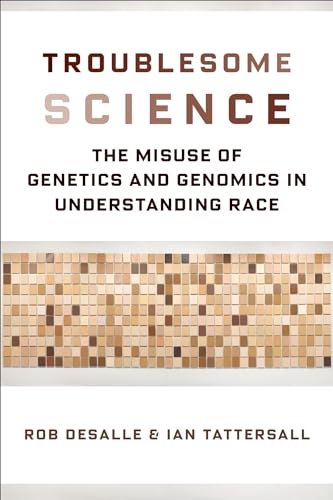
Synopsis
It is well established that all humans today, wherever they live, belong to one single species. Yet even many people who claim to abhor racism take for granted that human "races" have a biological reality. In Troublesome Science, Rob DeSalle and Ian Tattersall provide a lucid and forceful critique of how scientific tools have been misused to uphold misguided racial categorizations.
DeSalle and Tattersall argue that taxonomy, the scientific classification of organisms, provides an antidote to the myth of race's biological basis. They explain how taxonomists do their science--how to identify a species and to understand the relationships among different species and the variants within them. DeSalle and Tattersall also detail the use of genetic data to trace human origins and look at how scientists have attempted to recognize discrete populations within Homo sapiens. Troublesome Science demonstrates conclusively that modern genetic tools, when applied correctly to the study of human variety, fail to find genuine differences. While the diversity that exists within our species is a real phenomenon, it nevertheless defeats any systematic attempt to recognize discrete units within it. The stark lines that humans insist on drawing between their own groups and others are nothing but a mixture of imagination and ideology. Troublesome Science is an important call for researchers, journalists, and citizens to cast aside the belief that race has a biological meaning, for the sake of social justice and sound science alike.Les informations fournies dans la section « Synopsis » peuvent faire référence à une autre édition de ce titre.
À propos de l'auteur
Rob DeSalle is a curator in the Sackler Institute for Comparative Genomics and professor at the Richard Gilder Graduate School at the American Museum of Natural History. He is the author of The Science of Jurassic Park and the Lost World: Or How to Build a Dinosaur (with David Lindley, 1997) and the coauthor of Welcome to the Microbiome: Getting to Know the Trillions of Bacteria and Other Microbes In, On, and Around You (2015), among others.
Ian Tattersall is curator emeritus in the Division of Anthropology at the American Museum of Natural History. His many books include Masters of the Planet: The Search for Our Human Origins (2012) and The Strange Case of the Rickety Cossack and Other Cautionary Tales from Human Evolution (2015). DeSalle and Tattersall's previous books together include Human Origins: What Bones and Genomes Tell Us About Ourselves (2007); Race? Debunking a Scientific Myth (2011); and A Natural History of Wine (2015).Les informations fournies dans la section « A propos du livre » peuvent faire référence à une autre édition de ce titre.
Résultats de recherche pour Troublesome Science: The Misuse of Genetics and Genomics...

Image d'archives
Troublesome Science: The Misuse of Genetics and Genomics in Understanding Race (Race, Inequality, and Health, 2)
Edité par
Columbia University Press, 2018
ISBN 10 : 0231185723
ISBN 13 : 9780231185721
Ancien ou d'occasion
Couverture rigide
Vendeur : HPB-Red, Dallas, TX, Etats-Unis
Évaluation du vendeur 5 sur 5 étoiles

Hardcover. Etat : Good. Connecting readers with great books since 1972! Used textbooks may not include companion materials such as access codes, etc. May have some wear or writing/highlighting. We ship orders daily and Customer Service is our top priority! N° de réf. du vendeur S_391198515
Acheter D'occasion
EUR 4,49
Expédition à EUR 3,27
Expédition nationale : Etats-Unis
Expédition nationale : Etats-Unis
Quantité disponible : 1 disponible(s)
Image d'archives
Troublesome Science: The Misuse of Genetics and Genomics in Understanding Race (Race, Inequality, and Health)
Edité par
Columbia University Press, 2018
ISBN 10 : 0231185723
ISBN 13 : 9780231185721
Ancien ou d'occasion
Couverture rigide
Vendeur : Midtown Scholar Bookstore, Harrisburg, PA, Etats-Unis
Évaluation du vendeur 5 sur 5 étoiles
Hardcover. Etat : Very Good. Very Good - Crisp, clean, unread book with some shelfwear/edgewear, may have a remainder mark - NICE Standard-sized. N° de réf. du vendeur M0231185723Z2
Acheter D'occasion
EUR 3,40
Expédition à EUR 5,23
Expédition nationale : Etats-Unis
Expédition nationale : Etats-Unis
Quantité disponible : Plus de 20 disponibles
Image d'archives
Troublesome Science: The Misuse of Genetics and Genomics in Understanding Race (Race, Inequality, and Health)
Edité par
Columbia University Press, 2018
ISBN 10 : 0231185723
ISBN 13 : 9780231185721
Ancien ou d'occasion
Couverture rigide
Vendeur : Midtown Scholar Bookstore, Harrisburg, PA, Etats-Unis
Évaluation du vendeur 5 sur 5 étoiles
Hardcover. Etat : Good. HARDCOVER Good - Bumped and creased book with tears to the extremities, but not affecting the text block, may have remainder mark or previous owner's name - GOOD Standard-sized. N° de réf. du vendeur M0231185723Z3
Acheter D'occasion
EUR 3,63
Expédition à EUR 5,23
Expédition nationale : Etats-Unis
Expédition nationale : Etats-Unis
Quantité disponible : 2 disponible(s)
Image d'archives
Troublesome Science : The Misuse of Genetics and Genomics in Understanding Race
Edité par
Columbia University Press, 2018
ISBN 10 : 0231185723
ISBN 13 : 9780231185721
Neuf
Couverture rigide
Vendeur : GreatBookPrices, Columbia, MD, Etats-Unis
Évaluation du vendeur 5 sur 5 étoiles
Etat : New. N° de réf. du vendeur 30586866-n
Acheter neuf
EUR 48,04
Expédition à EUR 2,30
Expédition nationale : Etats-Unis
Expédition nationale : Etats-Unis
Quantité disponible : 3 disponible(s)
Image d'archives
Troublesome Science - The Misuse of Genetics and Genomics in Understanding Race
Edité par
Columbia University Press, 2018
ISBN 10 : 0231185723
ISBN 13 : 9780231185721
Neuf
Couverture rigide
Vendeur : PBShop.store US, Wood Dale, IL, Etats-Unis
Évaluation du vendeur 5 sur 5 étoiles
HRD. Etat : New. New Book. Shipped from UK. Established seller since 2000. N° de réf. du vendeur GB-9780231185721
Acheter neuf
EUR 50,42
Livraison gratuite
Expédition nationale : Etats-Unis
Expédition nationale : Etats-Unis
Quantité disponible : 1 disponible(s)
Image d'archives
Troublesome Science - The Misuse of Genetics and Genomics in Understanding Race
Edité par
Columbia University Press, 2018
ISBN 10 : 0231185723
ISBN 13 : 9780231185721
Neuf
Couverture rigide
Vendeur : PBShop.store UK, Fairford, GLOS, Royaume-Uni
Évaluation du vendeur 5 sur 5 étoiles
HRD. Etat : New. New Book. Shipped from UK. Established seller since 2000. N° de réf. du vendeur GB-9780231185721
Acheter neuf
EUR 47,87
Expédition à EUR 5,84
Expédition depuis Royaume-Uni vers Etats-Unis
Expédition depuis Royaume-Uni vers Etats-Unis
Quantité disponible : 1 disponible(s)
Image d'archives
Troublesome Science : The Misuse of Genetics and Genomics in Understanding Race
Edité par
Columbia University Press, 2018
ISBN 10 : 0231185723
ISBN 13 : 9780231185721
Ancien ou d'occasion
Couverture rigide
Vendeur : GreatBookPrices, Columbia, MD, Etats-Unis
Évaluation du vendeur 5 sur 5 étoiles
Etat : As New. Unread book in perfect condition. N° de réf. du vendeur 30586866
Acheter D'occasion
EUR 51,79
Expédition à EUR 2,30
Expédition nationale : Etats-Unis
Expédition nationale : Etats-Unis
Quantité disponible : 3 disponible(s)
Image fournie par le vendeur
Troublesome Science
Edité par
Columbia University Press, US, 2018
ISBN 10 : 0231185723
ISBN 13 : 9780231185721
Neuf
Couverture rigide
Vendeur : Rarewaves.com USA, London, LONDO, Royaume-Uni
Évaluation du vendeur 5 sur 5 étoiles
Hardback. Etat : New. It is well established that all humans today, wherever they live, belong to one single species. Yet even many people who claim to abhor racism take for granted that human "races" have a biological reality. In Troublesome Science, Rob DeSalle and Ian Tattersall provide a lucid and forceful critique of how scientific tools have been misused to uphold misguided racial categorizations.DeSalle and Tattersall argue that taxonomy, the scientific classification of organisms, provides an antidote to the myth of race's biological basis. They explain how taxonomists do their science-how to identify a species and to understand the relationships among different species and the variants within them. DeSalle and Tattersall also detail the use of genetic data to trace human origins and look at how scientists have attempted to recognize discrete populations within Homo sapiens. Troublesome Science demonstrates conclusively that modern genetic tools, when applied correctly to the study of human variety, fail to find genuine differences. While the diversity that exists within our species is a real phenomenon, it nevertheless defeats any systematic attempt to recognize discrete units within it. The stark lines that humans insist on drawing between their own groups and others are nothing but a mixture of imagination and ideology. Troublesome Science is an important call for researchers, journalists, and citizens to cast aside the belief that race has a biological meaning, for the sake of social justice and sound science alike. N° de réf. du vendeur LU-9780231185721
Acheter neuf
EUR 58,82
Livraison gratuite
Expédition depuis Royaume-Uni vers Etats-Unis
Expédition depuis Royaume-Uni vers Etats-Unis
Quantité disponible : 1 disponible(s)
Image fournie par le vendeur
Troublesome Science
Edité par
Columbia University Press, US, 2018
ISBN 10 : 0231185723
ISBN 13 : 9780231185721
Neuf
Couverture rigide
Vendeur : Rarewaves USA, HEBRON, KY, Etats-Unis
Évaluation du vendeur 5 sur 5 étoiles
Hardback. Etat : New. It is well established that all humans today, wherever they live, belong to one single species. Yet even many people who claim to abhor racism take for granted that human "races" have a biological reality. In Troublesome Science, Rob DeSalle and Ian Tattersall provide a lucid and forceful critique of how scientific tools have been misused to uphold misguided racial categorizations.DeSalle and Tattersall argue that taxonomy, the scientific classification of organisms, provides an antidote to the myth of race's biological basis. They explain how taxonomists do their science-how to identify a species and to understand the relationships among different species and the variants within them. DeSalle and Tattersall also detail the use of genetic data to trace human origins and look at how scientists have attempted to recognize discrete populations within Homo sapiens. Troublesome Science demonstrates conclusively that modern genetic tools, when applied correctly to the study of human variety, fail to find genuine differences. While the diversity that exists within our species is a real phenomenon, it nevertheless defeats any systematic attempt to recognize discrete units within it. The stark lines that humans insist on drawing between their own groups and others are nothing but a mixture of imagination and ideology. Troublesome Science is an important call for researchers, journalists, and citizens to cast aside the belief that race has a biological meaning, for the sake of social justice and sound science alike. N° de réf. du vendeur LU-9780231185721
Acheter neuf
EUR 63,02
Livraison gratuite
Expédition nationale : Etats-Unis
Expédition nationale : Etats-Unis
Quantité disponible : Plus de 20 disponibles
Image d'archives
Troublesome Science: The Misuse of Genetics and Genomics in Understanding Race (Race, Inequality, and Health)
Edité par
Columbia University Press 2018-07-17, 2018
ISBN 10 : 0231185723
ISBN 13 : 9780231185721
Neuf
Couverture rigide
Vendeur : Chiron Media, Wallingford, Royaume-Uni
Évaluation du vendeur 5 sur 5 étoiles
Hardcover. Etat : New. N° de réf. du vendeur 6666-GRD-9780231185721
Acheter neuf
EUR 47,11
Expédition à EUR 18,03
Expédition depuis Royaume-Uni vers Etats-Unis
Expédition depuis Royaume-Uni vers Etats-Unis
Quantité disponible : 1 disponible(s)