
Articles liés à Technological Nature: Adaptation and the Future of...
Synopsis
Why it matters that our relationship with nature is increasingly mediated and augmented by technology.
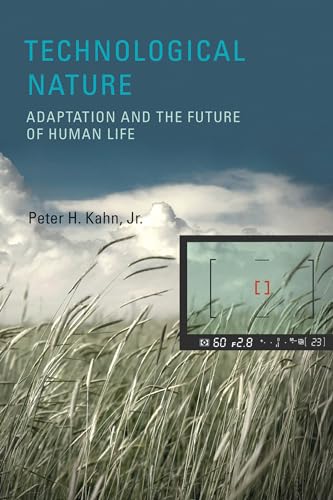
Our forebears may have had a close connection with the natural world, but increasingly we experience technological nature. Children come of age watching digital nature programs on television. They inhabit virtual lands in digital games. And they play with robotic animals, purchased at big box stores. Until a few years ago, hunters could "telehunt"—shoot and kill animals in Texas from a computer anywhere in the world via a Web interface. Does it matter that much of our experience with nature is mediated and augmented by technology? In Technological Nature, Peter Kahn argues that it does, and shows how it affects our well-being.
Kahn describes his investigations of children's and adults' experiences of cutting-edge technological nature. He and his team installed "technological nature windows" (50-inch plasma screens showing high-definition broadcasts of real-time local nature views) in inside offices on his university campus and assessed the physiological and psychological effects on viewers. He studied children's and adults' relationships with the robotic dog AIBO (including possible benefits for children with autism). And he studied online "telegardening" (a pastoral alternative to "telehunting").
Kahn's studies show that in terms of human well-being technological nature is better than no nature, but not as good as actual nature. We should develop and use technological nature as a bonus on life, not as its substitute, and re-envision what is beautiful and fulfilling and often wild in essence in our relationship with the natural world.
Les informations fournies dans la section « Synopsis » peuvent faire référence à une autre édition de ce titre.
À propos de l'auteur
Peter H. Kahn, Jr., is a Professor in the Department of Psychology and School of Environmental and Forest Sciences at the University of Washington, author of Technological Nature (MIT Press), and Editor-in-Chief of the Journal Ecopsychology. He is coauthor (Patricial H. Hasbach) of The Rediscovery of the Wild (MIT Press).
Les informations fournies dans la section « A propos du livre » peuvent faire référence à une autre édition de ce titre.
Résultats de recherche pour Technological Nature: Adaptation and the Future of...

Image fournie par le vendeur
Technological Nature: Adaptation and the Future of Human Life
Edité par
The MIT Press, 2011
ISBN 10 : 0262113228
ISBN 13 : 9780262113229
Ancien ou d'occasion
Couverture rigide
Vendeur : Zoom Books Company, Lynden, WA, Etats-Unis
Évaluation du vendeur 5 sur 5 étoiles

Etat : very_good. Book is in very good condition and may include minimal underlining highlighting. The book can also include "From the library of" labels. May not contain miscellaneous items toys, dvds, etc. . We offer 100% money back guarantee and 24 7 customer service. N° de réf. du vendeur ZBV.0262113228.VG
Acheter D'occasion
EUR 13,57
Livraison gratuite
Expédition nationale : Etats-Unis
Expédition nationale : Etats-Unis
Quantité disponible : 1 disponible(s)
Image d'archives
Technological Nature : Adaptation and the Future of Human Life
Edité par
MIT Press, 2011
ISBN 10 : 0262113228
ISBN 13 : 9780262113229
Ancien ou d'occasion
Couverture rigide
Vendeur : Better World Books: West, Reno, NV, Etats-Unis
Évaluation du vendeur 5 sur 5 étoiles
Etat : Very Good. Former library copy. Pages intact with possible writing/highlighting. Binding strong with minor wear. Dust jackets/supplements may not be included. Includes library markings. Stock photo provided. Product includes identifying sticker. Better World Books: Buy Books. Do Good. N° de réf. du vendeur 4922769-20
Acheter D'occasion
EUR 14,60
Livraison gratuite
Expédition nationale : Etats-Unis
Expédition nationale : Etats-Unis
Quantité disponible : 1 disponible(s)
Image d'archives
Technological Nature: Adaptation and the Future of Human Life
Edité par
The MIT Press, 2011
ISBN 10 : 0262113228
ISBN 13 : 9780262113229
Ancien ou d'occasion
Couverture rigide
Vendeur : HPB Inc., Dallas, TX, Etats-Unis
Évaluation du vendeur 5 sur 5 étoiles
hardcover. Etat : Very Good. Connecting readers with great books since 1972! Used books may not include companion materials, and may have some shelf wear or limited writing. We ship orders daily and Customer Service is our top priority! N° de réf. du vendeur S_454381468
Acheter D'occasion
EUR 12,08
Expédition à EUR 3,35
Expédition nationale : Etats-Unis
Expédition nationale : Etats-Unis
Quantité disponible : 1 disponible(s)
Image d'archives
Technological Nature: Adaptation and the Future of Human Life
Edité par
MIT Press, 2011
ISBN 10 : 0262113228
ISBN 13 : 9780262113229
Ancien ou d'occasion
Couverture rigide
Vendeur : Reuseabook, Gloucester, GLOS, Royaume-Uni
Évaluation du vendeur 5 sur 5 étoiles
Hardcover. Etat : Used; Good. Dispatched, from the UK, within 48 hours of ordering. This book is in good condition but will show signs of previous ownership. Please expect some creasing to the spine and/or minor damage to the cover. Ripped/damaged jacket. The dust jacket of this book is slightly damaged/ripped, however, this does not affect the internal condition. N° de réf. du vendeur CHL10807348
Acheter D'occasion
EUR 33,85
Expédition à EUR 8,27
Expédition depuis Royaume-Uni vers Etats-Unis
Expédition depuis Royaume-Uni vers Etats-Unis
Quantité disponible : 1 disponible(s)