
Synopsis
The incredible story of how human pilots and automated systems worked together to achieve the ultimate achievement in flight—the lunar landings of NASA’s Apollo program
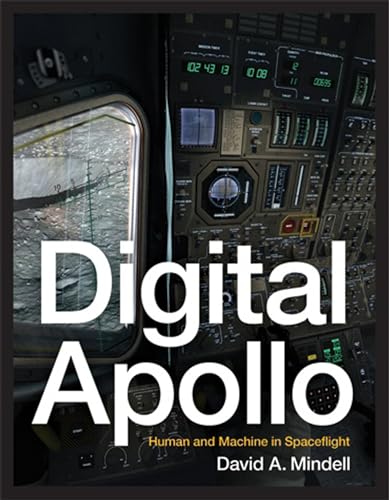
As Apollo 11’s Lunar Module descended toward the moon under automatic control, a program alarm in the guidance computer’s software nearly caused a mission abort. Neil Armstrong responded by switching off the automatic mode and taking direct control. He stopped monitoring the computer and began flying the spacecraft, relying on skill to land it and earning praise for a triumph of human over machine. In Digital Apollo, engineer-historian David Mindell takes this famous moment as a starting point for an exploration of the relationship between humans and computers in the Apollo program. In each of the six Apollo landings, the astronaut in command seized control from the computer and landed with his hand on the stick. Mindell recounts the story of astronauts’ desire to control their spacecraft in parallel with the history of the Apollo Guidance Computer. From the early days of aviation through the birth of spaceflight, test pilots and astronauts sought to be more than “spam in a can” despite the automatic controls, digital computers, and software developed by engineers.
Digital Apollo examines the design and execution of each of the six Apollo moon landings, drawing on transcripts and data telemetry from the flights, astronaut interviews, and NASA’s extensive archives. Mindell’s exploration of how human pilots and automated systems worked together to achieve the ultimate in flight—a lunar landing—traces and reframes the debate over the future of humans and automation in space. The results have implications for any venture in which human roles seem threatened by automated systems, whether it is the work at our desktops or the future of exploration.
Les informations fournies dans la section « Synopsis » peuvent faire référence à une autre édition de ce titre.
À propos de l'auteur
David A. Mindell is Dibner Professor of the History of Engineering and Manufacturing, Professor of Engineering Systems, and Director of the Program in Science, Technology, and Society at MIT. He is the author of Between Human and Machine: Feedback, Control, and Computing before Cybernetics and War, Technology, and Experience aboard the USS Monitor.
Les informations fournies dans la section « A propos du livre » peuvent faire référence à une autre édition de ce titre.
Autres éditions populaires du même titre

Résultats de recherche pour Digital Apollo: Human and Machine in Spaceflight

Image d'archives
Digital Apollo: Human and Machine in Spaceflight (MIT Press)
Edité par
The MIT Press, 2011
ISBN 10 : 0262516101
ISBN 13 : 9780262516105
Ancien ou d'occasion
Paperback
Vendeur : HPB-Emerald, Dallas, TX, Etats-Unis
Évaluation du vendeur 5 sur 5 étoiles

Paperback. Etat : Very Good. Connecting readers with great books since 1972! Used books may not include companion materials, and may have some shelf wear or limited writing. We ship orders daily and Customer Service is our top priority! N° de réf. du vendeur S_475656230
Acheter D'occasion
EUR 15,76
Expédition à EUR 3,28
Expédition nationale : Etats-Unis
Expédition nationale : Etats-Unis
Quantité disponible : 1 disponible(s)
Image d'archives
Digital Apollo: Human and Machine in Spaceflight
Edité par
MIT Press, 2011
ISBN 10 : 0262516101
ISBN 13 : 9780262516105
Ancien ou d'occasion
Paperback
Vendeur : ThriftBooks-Atlanta, AUSTELL, GA, Etats-Unis
Évaluation du vendeur 5 sur 5 étoiles
Paperback. Etat : Good. No Jacket. Former library book; Pages can have notes/highlighting. Spine may show signs of wear. ~ ThriftBooks: Read More, Spend Less. N° de réf. du vendeur G0262516101I3N10
Acheter D'occasion
EUR 20,26
Livraison gratuite
Expédition nationale : Etats-Unis
Expédition nationale : Etats-Unis
Quantité disponible : 1 disponible(s)
Image d'archives
Digital Apollo: Human and Machine in Spaceflight (Mit Press)
Edité par
The MIT Press, 2011
ISBN 10 : 0262516101
ISBN 13 : 9780262516105
Ancien ou d'occasion
Soft cover
Vendeur : Wize Books USA, Davis, CA, Etats-Unis
Évaluation du vendeur 5 sur 5 étoiles
Soft cover. Etat : Near Fine. Near Fine softcover * Once read gently Cover is in excellent condition has no flaws. * Text block: Clean and new looking. * Pages are clean and new looking. * Spine is in straight & in excellent condition but has spine creasing. * Ships NEXT DAY (M-F), We give you an honest competitive prices, ship next day, provide tracking, guarantee & exceptional customer service. If there is ever an issue we will resolve it for you so relax and smile. Be Wize. Make us your go-to bookseller. N° de réf. du vendeur U2581a Nx 2.6 41 03 29
Acheter D'occasion
EUR 19,74
Expédition à EUR 4,71
Expédition nationale : Etats-Unis
Expédition nationale : Etats-Unis
Quantité disponible : 1 disponible(s)
Image d'archives
Digital Apollo: Human and Machine in Spaceflight (The MIT Press)
Edité par
The MIT Press, 2011
ISBN 10 : 0262516101
ISBN 13 : 9780262516105
Ancien ou d'occasion
Paperback
Vendeur : Books From California, Simi Valley, CA, Etats-Unis
Évaluation du vendeur 4 sur 5 étoiles

Paperback. Etat : Fine. N° de réf. du vendeur mon0002124963
Acheter D'occasion
EUR 20,92
Expédition à EUR 4,37
Expédition nationale : Etats-Unis
Expédition nationale : Etats-Unis
Quantité disponible : 3 disponible(s)
Image d'archives
Digital Apollo - Human and Machine in Spaceflight
Edité par
MIT Press, Cambridge, MA, 2011
ISBN 10 : 0262516101
ISBN 13 : 9780262516105
Ancien ou d'occasion
Couverture souple
Vendeur : Mobilis Books, Geneva, FL, Etats-Unis
Évaluation du vendeur 5 sur 5 étoiles
Etat : As New. Softcover, pp. 376. Flyleaf sticks out a bit further than cover. Overall AS NEW condition. N° de réf. du vendeur 1377
Acheter D'occasion
EUR 22,54
Expédition à EUR 3,10
Expédition nationale : Etats-Unis
Expédition nationale : Etats-Unis
Quantité disponible : 1 disponible(s)
Image fournie par le vendeur
Digital Apollo : Human and Machine in Spaceflight
Vendeur : GreatBookPrices, Columbia, MD, Etats-Unis
Évaluation du vendeur 5 sur 5 étoiles
Etat : New. N° de réf. du vendeur 12506863-n
Acheter neuf
EUR 31,15
Expédition à EUR 2,31
Expédition nationale : Etats-Unis
Expédition nationale : Etats-Unis
Quantité disponible : 1 disponible(s)
Image d'archives
Digital Apollo (Paperback)
Edité par
MIT Press Ltd, Cambridge, Mass., 2011
ISBN 10 : 0262516101
ISBN 13 : 9780262516105
Neuf
Paperback
Vendeur : Grand Eagle Retail, Bensenville, IL, Etats-Unis
Évaluation du vendeur 5 sur 5 étoiles
Paperback. Etat : new. Paperback. The incredible story of how human pilots and automated systems worked together to achieve the ultimate achievement in flight-the lunar landings of NASA's Apollo programAs Apollo 11's Lunar Module descended toward the moon under automatic control, a program alarm in the guidance computer's software nearly caused a mission abort. Neil Armstrong responded by switching off the automatic mode and taking direct control. He stopped monitoring the computer and began flying the spacecraft, relying on skill to land it and earning praise for a triumph of human over machine. In Digital Apollo, engineer-historian David Mindell takes this famous moment as a starting point for an exploration of the relationship between humans and computers in the Apollo program. In each of the six Apollo landings, the astronaut in command seized control from the computer and landed with his hand on the stick. Mindell recounts the story of astronauts' desire to control their spacecraft in parallel with the history of the Apollo Guidance Computer. From the early days of aviation through the birth of spaceflight, test pilots and astronauts sought to be more than "spam in a can" despite the automatic controls, digital computers, and software developed by engineers.Digital Apollo examines the design and execution of each of the six Apollo moon landings, drawing on transcripts and data telemetry from the flights, astronaut interviews, and NASA's extensive archives. Mindell's exploration of how human pilots and automated systems worked together to achieve the ultimate in flight-a lunar landing-traces and reframes the debate over the future of humans and automation in space. The results have implications for any venture in which human roles seem threatened by automated systems, whether it is the work at our desktops or the future of exploration. How human pilots and automated systems worked together to achieve the ultimate in flightthe lunar landings of NASA's Apollo program. Shipping may be from multiple locations in the US or from the UK, depending on stock availability. N° de réf. du vendeur 9780262516105
Acheter neuf
EUR 33,54
Livraison gratuite
Expédition nationale : Etats-Unis
Expédition nationale : Etats-Unis
Quantité disponible : 1 disponible(s)
Image fournie par le vendeur
Digital Apollo
Vendeur : Rarewaves.com USA, London, LONDO, Royaume-Uni
Évaluation du vendeur 5 sur 5 étoiles
Paperback. Etat : New. How human pilots and automated systems worked together to achieve the ultimate in flight-the lunar landings of NASA's Apollo program.As Apollo 11's Lunar Module descended toward the moon under automatic control, a program alarm in the guidance computer's software nearly caused a mission abort. Neil Armstrong responded by switching off the automatic mode and taking direct control. He stopped monitoring the computer and began flying the spacecraft, relying on skill to land it and earning praise for a triumph of human over machine. In Digital Apollo, engineer-historian David Mindell takes this famous moment as a starting point for an exploration of the relationship between humans and computers in the Apollo program. In each of the six Apollo landings, the astronaut in command seized control from the computer and landed with his hand on the stick. Mindell recounts the story of astronauts' desire to control their spacecraft in parallel with the history of the Apollo Guidance Computer. From the early days of aviation through the birth of spaceflight, test pilots and astronauts sought to be more than "spam in a can" despite the automatic controls, digital computers, and software developed by engineers. Digital Apollo examines the design and execution of each of the six Apollo moon landings, drawing on transcripts and data telemetry from the flights, astronaut interviews, and NASA's extensive archives. Mindell's exploration of how human pilots and automated systems worked together to achieve the ultimate in flight-a lunar landing-traces and reframes the debate over the future of humans and automation in space. The results have implications for any venture in which human roles seem threatened by automated systems, whether it is the work at our desktops or the future of exploration. N° de réf. du vendeur LU-9780262516105
Acheter neuf
EUR 33,71
Livraison gratuite
Expédition depuis Royaume-Uni vers Etats-Unis
Expédition depuis Royaume-Uni vers Etats-Unis
Quantité disponible : 5 disponible(s)
Image d'archives
Digital Apollo
Vendeur : PBShop.store UK, Fairford, GLOS, Royaume-Uni
Évaluation du vendeur 5 sur 5 étoiles
PAP. Etat : New. New Book. Shipped from UK. Established seller since 2000. N° de réf. du vendeur FV-9780262516105
Acheter neuf
EUR 28,47
Expédition à EUR 5,89
Expédition depuis Royaume-Uni vers Etats-Unis
Expédition depuis Royaume-Uni vers Etats-Unis
Quantité disponible : 10 disponible(s)
Image d'archives
Digital Apollo
Edité par
The MIT Press Bookstore, 2011
ISBN 10 : 0262516101
ISBN 13 : 9780262516105
Neuf
Couverture souple
Vendeur : Books Puddle, New York, NY, Etats-Unis
Évaluation du vendeur 4 sur 5 étoiles
Etat : New. pp. 456. N° de réf. du vendeur 262414165
Acheter neuf
EUR 32,05
Expédition à EUR 3,49
Expédition nationale : Etats-Unis
Expédition nationale : Etats-Unis
Quantité disponible : 3 disponible(s)