
Synopsis
Why and how Boston was transformed by landmaking.
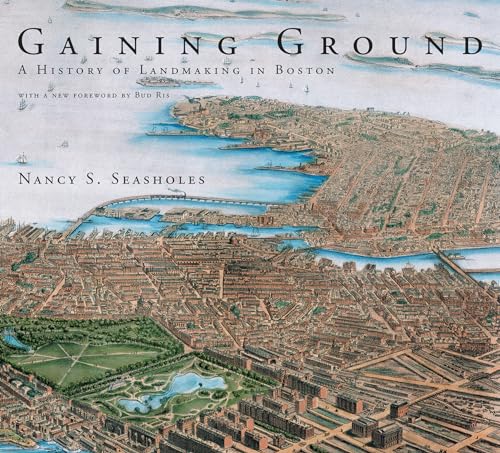
Fully one-sixth of Boston is built on made land. Although other waterfront cities also have substantial areas that are built on fill, Boston probably has more than any city in North America. In Gaining Ground historian Nancy Seasholes has given us the first complete account of when, why, and how this land was created.The story of landmaking in Boston is presented geographically; each chapter traces landmaking in a different part of the city from its first permanent settlement to the present. Seasholes introduces findings from recent archaeological investigations in Boston, and relates landmaking to the major historical developments that shaped it. At the beginning of the nineteenth century, landmaking in Boston was spurred by the rapid growth that resulted from the burgeoning China trade. The influx of Irish immigrants in the mid-nineteenth century prompted several large projects to create residential land—not for the Irish, but to keep the taxpaying Yankees from fleeing to the suburbs. Many landmaking projects were undertaken to cover tidal flats that had been polluted by raw sewage discharged directly onto them, removing the "pestilential exhalations" thought to cause illness. Land was also added for port developments, public parks, and transportation facilities, including the largest landmaking project of all, the airport.
A separate chapter discusses the technology of landmaking in Boston, explaining the basic method used to make land and the changes in its various components over time. The book is copiously illustrated with maps that show the original shoreline in relation to today's streets, details from historical maps that trace the progress of landmaking, and historical drawings and photographs.
Les informations fournies dans la section « Synopsis » peuvent faire référence à une autre édition de ce titre.
À propos de l'auteur
Nancy S. Seasholes is a historian and historical archaeologist. She is the author of Walking Tours of Boston's Made Land (MIT Press), the companion to Gaining Ground.
Les informations fournies dans la section « A propos du livre » peuvent faire référence à une autre édition de ce titre.
Autres éditions populaires du même titre

Résultats de recherche pour Gaining Ground: A History of Landmaking in Boston

Image d'archives
Gaining Ground: A History of Landmaking in Boston (MIT Press)
Edité par
The MIT Press, 2018
ISBN 10 : 0262534835
ISBN 13 : 9780262534833
Ancien ou d'occasion
Couverture souple
Vendeur : World of Books (was SecondSale), Montgomery, IL, Etats-Unis
Évaluation du vendeur 5 sur 5 étoiles

Etat : Good. Item in good condition. Textbooks may not include supplemental items i.e. CDs, access codes etc. N° de réf. du vendeur 00106662897
Acheter D'occasion
EUR 50,48
Livraison gratuite
Expédition nationale : Etats-Unis
Expédition nationale : Etats-Unis
Quantité disponible : 1 disponible(s)
Image d'archives
Gaining Ground: A History of Landmaking in Boston (The MIT Press)
Vendeur : Books Puddle, New York, NY, Etats-Unis
Évaluation du vendeur 4 sur 5 étoiles

Etat : New. pp. 552 Reprint edition NO-PA16APR2015-KAP. N° de réf. du vendeur 26378788499
Acheter neuf
EUR 69,22
Expédition à EUR 3,49
Expédition nationale : Etats-Unis
Expédition nationale : Etats-Unis
Quantité disponible : 3 disponible(s)
Image fournie par le vendeur
Gaining Ground
Vendeur : Rarewaves USA, OSWEGO, IL, Etats-Unis
Évaluation du vendeur 5 sur 5 étoiles
Paperback. Etat : New. N° de réf. du vendeur LU-9780262534833
Acheter neuf
EUR 76,94
Livraison gratuite
Expédition nationale : Etats-Unis
Expédition nationale : Etats-Unis
Quantité disponible : Plus de 20 disponibles
Image d'archives
Gaining Ground (Paperback)
Edité par
MIT Press Ltd, Cambridge, Mass., 2018
ISBN 10 : 0262534835
ISBN 13 : 9780262534833
Neuf
Paperback
Vendeur : Grand Eagle Retail, Bensenville, IL, Etats-Unis
Évaluation du vendeur 5 sur 5 étoiles
Paperback. Etat : new. Paperback. Why and how Boston was transformed by landmaking.Fully one-sixth of Boston is built on made land. Although other waterfront cities also have substantial areas that are built on fill, Boston probably has more than any city in North America. In Gaining Ground historian Nancy Seasholes has given us the first complete account of when, why, and how this land was created.The story of landmaking in Boston is presented geographically; each chapter traces landmaking in a different part of the city from its first permanent settlement to the present. Seasholes introduces findings from recent archaeological investigations in Boston, and relates landmaking to the major historical developments that shaped it. At the beginning of the nineteenth century, landmaking in Boston was spurred by the rapid growth that resulted from the burgeoning China trade. The influx of Irish immigrants in the mid-nineteenth century prompted several large projects to create residential land-not for the Irish, but to keep the taxpaying Yankees from fleeing to the suburbs. Many landmaking projects were undertaken to cover tidal flats that had been polluted by raw sewage discharged directly onto them, removing the "pestilential exhalations" thought to cause illness. Land was also added for port developments, public parks, and transportation facilities, including the largest landmaking project of all, the airport.A separate chapter discusses the technology of landmaking in Boston, explaining the basic method used to make land and the changes in its various components over time. The book is copiously illustrated with maps that show the original shoreline in relation to today's streets, details from historical maps that trace the progress of landmaking, and historical drawings and photographs. Why and how Boston was transformed by landmaking. Shipping may be from multiple locations in the US or from the UK, depending on stock availability. N° de réf. du vendeur 9780262534833
Acheter neuf
EUR 77,05
Livraison gratuite
Expédition nationale : Etats-Unis
Expédition nationale : Etats-Unis
Quantité disponible : 1 disponible(s)
Image d'archives
Gaining Ground: A History of Landmaking in Boston (The MIT Press)
Vendeur : Biblios, Frankfurt am main, HESSE, Allemagne
Évaluation du vendeur 4 sur 5 étoiles
Etat : New. pp. 552. N° de réf. du vendeur 18378788505
Acheter neuf
EUR 100,05
Expédition à EUR 9,95
Expédition depuis Allemagne vers Etats-Unis
Expédition depuis Allemagne vers Etats-Unis
Quantité disponible : 3 disponible(s)
Image fournie par le vendeur
Gaining Ground
Vendeur : Rarewaves USA United, OSWEGO, IL, Etats-Unis
Évaluation du vendeur 5 sur 5 étoiles
Paperback. Etat : New. N° de réf. du vendeur LU-9780262534833
Acheter neuf
EUR 79,36
Expédition à EUR 43,76
Expédition nationale : Etats-Unis
Expédition nationale : Etats-Unis
Quantité disponible : Plus de 20 disponibles
Image d'archives
Gaining Ground (Paperback)
Edité par
MIT Press Ltd, Cambridge, Mass., 2018
ISBN 10 : 0262534835
ISBN 13 : 9780262534833
Neuf
Paperback
Vendeur : CitiRetail, Stevenage, Royaume-Uni
Évaluation du vendeur 5 sur 5 étoiles
Paperback. Etat : new. Paperback. Why and how Boston was transformed by landmaking.Fully one-sixth of Boston is built on made land. Although other waterfront cities also have substantial areas that are built on fill, Boston probably has more than any city in North America. In Gaining Ground historian Nancy Seasholes has given us the first complete account of when, why, and how this land was created.The story of landmaking in Boston is presented geographically; each chapter traces landmaking in a different part of the city from its first permanent settlement to the present. Seasholes introduces findings from recent archaeological investigations in Boston, and relates landmaking to the major historical developments that shaped it. At the beginning of the nineteenth century, landmaking in Boston was spurred by the rapid growth that resulted from the burgeoning China trade. The influx of Irish immigrants in the mid-nineteenth century prompted several large projects to create residential land-not for the Irish, but to keep the taxpaying Yankees from fleeing to the suburbs. Many landmaking projects were undertaken to cover tidal flats that had been polluted by raw sewage discharged directly onto them, removing the "pestilential exhalations" thought to cause illness. Land was also added for port developments, public parks, and transportation facilities, including the largest landmaking project of all, the airport.A separate chapter discusses the technology of landmaking in Boston, explaining the basic method used to make land and the changes in its various components over time. The book is copiously illustrated with maps that show the original shoreline in relation to today's streets, details from historical maps that trace the progress of landmaking, and historical drawings and photographs. Why and how Boston was transformed by landmaking. Shipping may be from our UK warehouse or from our Australian or US warehouses, depending on stock availability. N° de réf. du vendeur 9780262534833
Acheter neuf
EUR 95,72
Expédition à EUR 43,53
Expédition depuis Royaume-Uni vers Etats-Unis
Expédition depuis Royaume-Uni vers Etats-Unis
Quantité disponible : 1 disponible(s)
Image fournie par le vendeur
Gaining Ground
Vendeur : Rarewaves.com UK, London, Royaume-Uni
Évaluation du vendeur 5 sur 5 étoiles
Paperback. Etat : New. N° de réf. du vendeur LU-9780262534833
Acheter neuf
EUR 81,99
Expédition à EUR 76,48
Expédition depuis Royaume-Uni vers Etats-Unis
Expédition depuis Royaume-Uni vers Etats-Unis
Quantité disponible : Plus de 20 disponibles
Image d'archives
Gaining Ground (Paperback)
Edité par
MIT Press Ltd, Cambridge, Mass., 2018
ISBN 10 : 0262534835
ISBN 13 : 9780262534833
Neuf
Paperback
Vendeur : AussieBookSeller, Truganina, VIC, Australie
Évaluation du vendeur 5 sur 5 étoiles
Paperback. Etat : new. Paperback. Why and how Boston was transformed by landmaking.Fully one-sixth of Boston is built on made land. Although other waterfront cities also have substantial areas that are built on fill, Boston probably has more than any city in North America. In Gaining Ground historian Nancy Seasholes has given us the first complete account of when, why, and how this land was created.The story of landmaking in Boston is presented geographically; each chapter traces landmaking in a different part of the city from its first permanent settlement to the present. Seasholes introduces findings from recent archaeological investigations in Boston, and relates landmaking to the major historical developments that shaped it. At the beginning of the nineteenth century, landmaking in Boston was spurred by the rapid growth that resulted from the burgeoning China trade. The influx of Irish immigrants in the mid-nineteenth century prompted several large projects to create residential land-not for the Irish, but to keep the taxpaying Yankees from fleeing to the suburbs. Many landmaking projects were undertaken to cover tidal flats that had been polluted by raw sewage discharged directly onto them, removing the "pestilential exhalations" thought to cause illness. Land was also added for port developments, public parks, and transportation facilities, including the largest landmaking project of all, the airport.A separate chapter discusses the technology of landmaking in Boston, explaining the basic method used to make land and the changes in its various components over time. The book is copiously illustrated with maps that show the original shoreline in relation to today's streets, details from historical maps that trace the progress of landmaking, and historical drawings and photographs. Why and how Boston was transformed by landmaking. Shipping may be from our Sydney, NSW warehouse or from our UK or US warehouse, depending on stock availability. N° de réf. du vendeur 9780262534833
Acheter neuf
EUR 141,90
Expédition à EUR 32,38
Expédition depuis Australie vers Etats-Unis
Expédition depuis Australie vers Etats-Unis
Quantité disponible : 1 disponible(s)