
Articles liés à Architecture and the Crisis of Modern Science
Synopsis
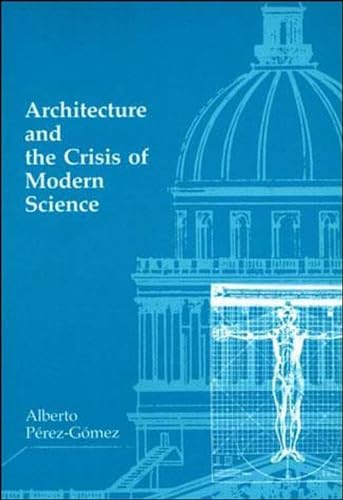
This important book, which won the 1984 Alice Davis Hitchcock Award, traces the process by which the mystical and numerological grounds for the use of number and geometry in building gave way to the more functional and technical ones that prevail in architectural theory and practice today.
Between the late Renaissance and the early nineteenth century, the ancient arts of architecture were being profoundly transformed by the scientific revolution. This important book, which won the 1984 Alice Davis Hitchcock Award, traces the process by which the mystical and numerological grounds for the use of number and geometry in building gave way to the more functional and technical ones that prevail in architectural theory and practice today. Throughout, it relates the major architectural treatises of successive generations to the larger culture and the writings of philosophers, mathematicians, scientists, and engineers.
The book leads the reader through the controversy that was generated by Claude Perrault in the seventeenth century. His writings began to cast doubt on the absolute aesthetic value of the classical orders and the "perfect" proportions that were architecture's legacy from Pythagorean times. Thus the once immutable "invisible" system lost its special status forever. The book focuses in particular on eighteenth-century developments in the science of mechanics and emerging techniques in structural analysis which slowly entered the architectural treatises and found their way into practice, often by way of civil and military engineers. And by the nineteenth century, the book notes, even architectural rendering and drawing were radically changed through the introduction of new descriptive and projective geometries.
Tracing these fundamental changes in architectural intentions, Pérez-Gómez challenges many popular misconceptions about the theory and history of modern architecture. At the same time, he suggests an intangible loss, that of a culture's power to express through a building its total mathematical, mystical, and magical world-view.
Les informations fournies dans la section « Synopsis » peuvent faire référence à une autre édition de ce titre.
À propos de l'auteur
Alberto Pérez Gómez directs the History and Theory of Architecture Program at McGill University, where he is Saidye Rosner Bronfman Professor of the History of Architecture. He is the author of Architecture and the Crisis of Modern Science, Built upon Love: Architectural Longing after Ethics and Aesthetics (both published by the MIT Press), and other books.
Les informations fournies dans la section « A propos du livre » peuvent faire référence à une autre édition de ce titre.
Résultats de recherche pour Architecture and the Crisis of Modern Science

Image d'archives
Architecture and the Crisis of Modern Science
Edité par
MIT Press Ltd, 1985
ISBN 10 : 0262660555
ISBN 13 : 9780262660556
Ancien ou d'occasion
Paperback
Vendeur : World of Books (was SecondSale), Montgomery, IL, Etats-Unis
Évaluation du vendeur 5 sur 5 étoiles

Paperback. Etat : Very Good. This important book, which won the 1984 Alice Davis Hitchcock Award, traces the process by which the mystical and numerological grounds for the use of number and geometry in building gave way to the more functional and technical ones that prevail in architectural theory and practice today. Between the late Renaissance and the early nineteenth century, the ancient arts of architecture were being profoundly transformed by the scientific revolution. This important book, which won the 1984 Alice Davis Hitchcock Award, traces the process by which the mystical and numerological grounds for the use of number and geometry in building gave way to the more functional and technical ones that prevail in architectural theory and practice today. Throughout, it relates the major architectural treatises of successive generations to the larger culture and the writings of philosophers, mathematicians, scientists, and engineers. The book leads the reader through the controversy that was generated by Claude Perrault in the seventeenth century. His writings began to cast doubt on the absolute aesthetic value of the classical orders and the "perfect" proportions that were architecture's legacy from Pythagorean times. Thus the once immutable "invisible" system lost its special status forever. The book focuses in particular on eighteenth-century developments in the science of mechanics and emerging techniques in structural analysis which slowly entered the architectural treatises and found their way into practice, often by way of civil and military engineers. And by the nineteenth century, the book notes, even architectural rendering and drawing were radically changed through the introduction of new descriptive and projective geometries. Tracing these fundamental changes in architectural intentions, Perez-G mez challenges many popular misconceptions about the theory and history of modern architecture. At the same time, he suggests an intangible loss, that of a culture's power to express through a building its total mathematical, mystical, and magical world-view. N° de réf. du vendeur CIN0262660555VG
Acheter D'occasion
EUR 6,62
Livraison gratuite
Expédition nationale : Etats-Unis
Expédition nationale : Etats-Unis
Quantité disponible : 1 disponible(s)
Image fournie par le vendeur
Architecture and the Crisis of Modern Science (Mit Press)
Edité par
The MIT Press, 1985
ISBN 10 : 0262660555
ISBN 13 : 9780262660556
Ancien ou d'occasion
Couverture souple
Vendeur : Zoom Books Company, Lynden, WA, Etats-Unis
Évaluation du vendeur 5 sur 5 étoiles
Etat : very_good. Book is in very good condition and may include minimal underlining highlighting. The book can also include "From the library of" labels. May not contain miscellaneous items toys, dvds, etc. . We offer 100% money back guarantee and 24 7 customer service. N° de réf. du vendeur ZBV.0262660555.VG
Acheter D'occasion
EUR 8,44
Livraison gratuite
Expédition nationale : Etats-Unis
Expédition nationale : Etats-Unis
Quantité disponible : 1 disponible(s)
Image d'archives
Architecture and the Crisis of Modern Science
Edité par
MIT Press Ltd, 1985
ISBN 10 : 0262660555
ISBN 13 : 9780262660556
Ancien ou d'occasion
Paperback
Vendeur : World of Books Inc, Montgomery, IL, Etats-Unis
Évaluation du vendeur 4 sur 5 étoiles

Paperback. Etat : Very Good. This important book, which won the 1984 Alice Davis Hitchcock Award, traces the process by which the mystical and numerological grounds for the use of number and geometry in building gave way to the more functional and technical ones that prevail in architectural theory and practice today. Between the late Renaissance and the early nineteenth century, the ancient arts of architecture were being profoundly transformed by the scientific revolution. This important book, which won the 1984 Alice Davis Hitchcock Award, traces the process by which the mystical and numerological grounds for the use of number and geometry in building gave way to the more functional and technical ones that prevail in architectural theory and practice today. Throughout, it relates the major architectural treatises of successive generations to the larger culture and the writings of philosophers, mathematicians, scientists, and engineers. The book leads the reader through the controversy that was generated by Claude Perrault in the seventeenth century. His writings began to cast doubt on the absolute aesthetic value of the classical orders and the "perfect" proportions that were architecture's legacy from Pythagorean times. Thus the once immutable "invisible" system lost its special status forever. The book focuses in particular on eighteenth-century developments in the science of mechanics and emerging techniques in structural analysis which slowly entered the architectural treatises and found their way into practice, often by way of civil and military engineers. And by the nineteenth century, the book notes, even architectural rendering and drawing were radically changed through the introduction of new descriptive and projective geometries. Tracing these fundamental changes in architectural intentions, Perez-G mez challenges many popular misconceptions about the theory and history of modern architecture. At the same time, he suggests an intangible loss, that of a culture's power to express through a building its total mathematical, mystical, and magical world-view. N° de réf. du vendeur CIN0262660555VG
Acheter D'occasion
EUR 8,47
Livraison gratuite
Expédition nationale : Etats-Unis
Expédition nationale : Etats-Unis
Quantité disponible : 1 disponible(s)
Image d'archives
Architecture and the Crisis of Modern Science
Edité par
MIT Press, 1985
ISBN 10 : 0262660555
ISBN 13 : 9780262660556
Ancien ou d'occasion
Paperback
Vendeur : ThriftBooks-Atlanta, AUSTELL, GA, Etats-Unis
Évaluation du vendeur 5 sur 5 étoiles
Paperback. Etat : Good. No Jacket. Pages can have notes/highlighting. Spine may show signs of wear. ~ ThriftBooks: Read More, Spend Less. N° de réf. du vendeur G0262660555I3N00
Acheter D'occasion
EUR 10,32
Livraison gratuite
Expédition nationale : Etats-Unis
Expédition nationale : Etats-Unis
Quantité disponible : 1 disponible(s)
Image d'archives
Architecture and the Crisis of Modern Science
Edité par
MIT Press, 1985
ISBN 10 : 0262660555
ISBN 13 : 9780262660556
Ancien ou d'occasion
Paperback
Vendeur : ThriftBooks-Atlanta, AUSTELL, GA, Etats-Unis
Évaluation du vendeur 5 sur 5 étoiles
Paperback. Etat : Very Good. No Jacket. May have limited writing in cover pages. Pages are unmarked. ~ ThriftBooks: Read More, Spend Less. N° de réf. du vendeur G0262660555I4N00
Acheter D'occasion
EUR 10,32
Livraison gratuite
Expédition nationale : Etats-Unis
Expédition nationale : Etats-Unis
Quantité disponible : 1 disponible(s)
Image d'archives
Architecture and the Crisis of Modern Science
Edité par
MIT Press, 1985
ISBN 10 : 0262660555
ISBN 13 : 9780262660556
Ancien ou d'occasion
Paperback
Vendeur : ThriftBooks-Dallas, Dallas, TX, Etats-Unis
Évaluation du vendeur 5 sur 5 étoiles
Paperback. Etat : Good. No Jacket. Pages can have notes/highlighting. Spine may show signs of wear. ~ ThriftBooks: Read More, Spend Less. N° de réf. du vendeur G0262660555I3N00
Acheter D'occasion
EUR 10,32
Livraison gratuite
Expédition nationale : Etats-Unis
Expédition nationale : Etats-Unis
Quantité disponible : 1 disponible(s)
Image d'archives
Architecture and the Crisis of Modern Science
Edité par
MIT Press, 1985
ISBN 10 : 0262660555
ISBN 13 : 9780262660556
Ancien ou d'occasion
Paperback
Vendeur : ThriftBooks-Atlanta, AUSTELL, GA, Etats-Unis
Évaluation du vendeur 5 sur 5 étoiles
Paperback. Etat : Fair. No Jacket. Readable copy. Pages may have considerable notes/highlighting. ~ ThriftBooks: Read More, Spend Less. N° de réf. du vendeur G0262660555I5N00
Acheter D'occasion
EUR 10,32
Livraison gratuite
Expédition nationale : Etats-Unis
Expédition nationale : Etats-Unis
Quantité disponible : 1 disponible(s)
Image d'archives
Architecture and the Crisis of Modern Science (Mit Press)
Edité par
The MIT Press, 1985
ISBN 10 : 0262660555
ISBN 13 : 9780262660556
Ancien ou d'occasion
paperback
Vendeur : HPB-Diamond, Dallas, TX, Etats-Unis
Évaluation du vendeur 5 sur 5 étoiles
paperback. Etat : Very Good. Connecting readers with great books since 1972! Used books may not include companion materials, and may have some shelf wear or limited writing. We ship orders daily and Customer Service is our top priority! N° de réf. du vendeur S_478368408
Acheter D'occasion
EUR 7,73
Expédition à EUR 3,36
Expédition nationale : Etats-Unis
Expédition nationale : Etats-Unis
Quantité disponible : 1 disponible(s)
Image d'archives
Architecture and the Crisis of Modern Science
Edité par
MIT Press, 1985
ISBN 10 : 0262660555
ISBN 13 : 9780262660556
Ancien ou d'occasion
Couverture souple
Vendeur : Better World Books, Mishawaka, IN, Etats-Unis
Évaluation du vendeur 5 sur 5 étoiles
Etat : Good. Reprint. Pages intact with minimal writing/highlighting. The binding may be loose and creased. Dust jackets/supplements are not included. Stock photo provided. Product includes identifying sticker. Better World Books: Buy Books. Do Good. N° de réf. du vendeur 7620995-6
Acheter D'occasion
EUR 12,79
Livraison gratuite
Expédition nationale : Etats-Unis
Expédition nationale : Etats-Unis
Quantité disponible : 1 disponible(s)
Image d'archives
Architecture and the Crisis of Modern Science (Mit Press)
Edité par
The MIT Press, 1985
ISBN 10 : 0262660555
ISBN 13 : 9780262660556
Ancien ou d'occasion
Couverture souple
Vendeur : Phatpocket Limited, Waltham Abbey, HERTS, Royaume-Uni
Évaluation du vendeur 5 sur 5 étoiles
Etat : Good. Your purchase helps support Sri Lankan Children's Charity 'The Rainbow Centre'. Ex-library, so some stamps and wear, but in good overall condition. Our donations to The Rainbow Centre have helped provide an education and a safe haven to hundreds of children who live in appalling conditions. N° de réf. du vendeur Z1-R-007-01482
Acheter D'occasion
EUR 4,02
Expédition à EUR 12,77
Expédition depuis Royaume-Uni vers Etats-Unis
Expédition depuis Royaume-Uni vers Etats-Unis
Quantité disponible : 2 disponible(s)