
Articles liés à Icons of Power: Ritual Practices in Late Antiquity
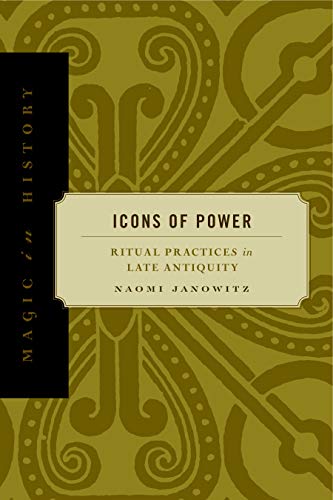
Synopsis
In the waning years of the Roman Empire, Jews, Christians, and pagans alike used rituals to bridge the gap between the human and the divine. Depending on one’s point of view, however, such rituals could be labeled negatively as "magic" or positively as "theurgy." This has led to numerous problems of interpretation, including marginalizing certain ritual practices as magic or occult while privileging others as genuine or orthodox. In Icons of Power, Naomi Janowitz sifts through the polemics to make sense of the daunting mosaic of religious belief and practice in Late Antiquity. From rabbis who ascended to heavenly places, to sorcerers seeking to harm enemies with spells, to alchemists working metals to purify the soul, Janowitz reveals how ritual practitioners held common assumptions about why their rituals worked and about how to perform those rituals. Indeed, such assumptions were so much a part of the inherited mentality of the age that they were, for the most part, never explained—and this is precisely what Janowitz accomplishes in Icons of Power. By shifting the discussion out of the rhetoric of "magic" or "mysticism" and describing the mechanisms of ritual with semiotic terms, she moves us beyond the value-laden terminology of ancient polemicists and modern scholars so that we can better see how these rituals worked and how they affected the social identities of their followers. Janowitz recovers a lost world of religious expression that has been clouded by misinterpretation for many centuries. In the process, Icons of Power makes an important contribution to our understanding of society in Late Antiquity.
Les informations fournies dans la section « Synopsis » peuvent faire référence à une autre édition de ce titre.
À propos de l'auteur
Naomi Janowitz is Associate Professor of Religious Studies at the University of California at Davis. She is the author of The Poetics of Ascent: Theories of Language in a Rabbinic Ascent Text (1989).
Les informations fournies dans la section « A propos du livre » peuvent faire référence à une autre édition de ce titre.
Résultats de recherche pour Icons of Power: Ritual Practices in Late Antiquity

Image fournie par le vendeur
Icons of Power : Ritual Practices in Late Antiquity
Edité par
Penn State University Press, 2012
ISBN 10 : 0271058374
ISBN 13 : 9780271058375
Ancien ou d'occasion
Couverture souple
Vendeur : GreatBookPrices, Columbia, MD, Etats-Unis
Évaluation du vendeur 5 sur 5 étoiles

Etat : As New. Unread book in perfect condition. N° de réf. du vendeur 16800660
Acheter D'occasion
EUR 31,88
Expédition à EUR 2,35
Expédition nationale : Etats-Unis
Expédition nationale : Etats-Unis
Quantité disponible : Plus de 20 disponibles
Image d'archives
Icons of Power: Ritual Practices in Late Antiquity (Magic in History)
Edité par
Penn State University Press, 2012
ISBN 10 : 0271058374
ISBN 13 : 9780271058375
Neuf
Soft cover
Edition originale
Vendeur : Lifeways Books and Gifts, Prescott, AZ, Etats-Unis
Évaluation du vendeur 4 sur 5 étoiles

Soft cover. Etat : New. 1st Edition. In the waning years of the Roman Empire, Jews, Christians, and pagans alike used rituals to bridge the gap between the human and the divine. Depending on one's point of view, however, such rituals could be labeled negatively as "magic" or positively as "theurgy." This has led to numerous problems of interpretation, including marginalizing certain ritual practices as magic or occult while privileging others as genuine or orthodox. In Icons of Power, Naomi Janowitz sifts through the polemics to make sense of the daunting mosaic of religious belief and practice in Late Antiquity. From rabbis who ascended to heavenly places, to sorcerers seeking to harm enemies with spells, to alchemists working metals to purify the soul, Janowitz reveals how ritual practitioners held common assumptions about why their rituals worked and about how to perform those rituals. Indeed, such assumptions were so much a part of the inherited mentality of the age that they were, for the most part, never explained?and this is precisely what Janowitz accomplishes in Icons of Power. By shifting the discussion out of the rhetoric of "magic" or "mysticism" and describing the mechanisms of ritual with semiotic terms, she moves us beyond the value-laden terminology of ancient polemicists and modern scholars so that we can better see how these rituals worked and how they affected the social identities of their followers. Janowitz recovers a lost world of religious expression that has been clouded by misinterpretation for many centuries. In the process, Icons of Power makes an important contribution to our understanding of society in Late Antiquity. N° de réf. du vendeur 9780271058375
Acheter neuf
EUR 32,04
Expédition à EUR 6,19
Expédition nationale : Etats-Unis
Expédition nationale : Etats-Unis
Quantité disponible : 1 disponible(s)
Image fournie par le vendeur
Icons of Power : Ritual Practices in Late Antiquity
Edité par
Penn State University Press, 2012
ISBN 10 : 0271058374
ISBN 13 : 9780271058375
Neuf
Couverture souple
Vendeur : GreatBookPrices, Columbia, MD, Etats-Unis
Évaluation du vendeur 5 sur 5 étoiles
Etat : New. N° de réf. du vendeur 16800660-n
Acheter neuf
EUR 35,99
Expédition à EUR 2,35
Expédition nationale : Etats-Unis
Expédition nationale : Etats-Unis
Quantité disponible : Plus de 20 disponibles
Image d'archives
Icons of Power: Ritual Practices in Late Antiquity
Edité par
Pennsylvania State University Press, 2012
ISBN 10 : 0271058374
ISBN 13 : 9780271058375
Ancien ou d'occasion
Paperback
Vendeur : World of Books (was SecondSale), Montgomery, IL, Etats-Unis
Évaluation du vendeur 5 sur 5 étoiles
Paperback. Etat : Good. Janowitz sifts through the polemics to make sense of the daunting mosaic of religious belief and practice in Late Antiquity. Janowitz reveals how ritual practitioners held common assumptions about why their rituals worked and how to perform them. Icons of Power makes an important contribution to our understanding of society in Late Antiquity. N° de réf. du vendeur 00089347523
Acheter D'occasion
EUR 44,02
Livraison gratuite
Expédition nationale : Etats-Unis
Expédition nationale : Etats-Unis
Quantité disponible : 1 disponible(s)
Image d'archives
Icons of Power: Ritual Practices in Late Antiquity
Edité par
Pennsylvania State University Press, 2012
ISBN 10 : 0271058374
ISBN 13 : 9780271058375
Ancien ou d'occasion
Paperback
Vendeur : World of Books Inc, Montgomery, IL, Etats-Unis
Évaluation du vendeur 4 sur 5 étoiles
Paperback. Etat : Good. Janowitz sifts through the polemics to make sense of the daunting mosaic of religious belief and practice in Late Antiquity. Janowitz reveals how ritual practitioners held common assumptions about why their rituals worked and how to perform them. Icons of Power makes an important contribution to our understanding of society in Late Antiquity. N° de réf. du vendeur CIN0271058374G
Acheter D'occasion
EUR 46,22
Livraison gratuite
Expédition nationale : Etats-Unis
Expédition nationale : Etats-Unis
Quantité disponible : 1 disponible(s)
Image fournie par le vendeur
Icons of Power
Edité par
Pennsylvania State University Press, US, 2002
ISBN 10 : 0271058374
ISBN 13 : 9780271058375
Neuf
Paperback
Vendeur : Rarewaves.com USA, London, LONDO, Royaume-Uni
Évaluation du vendeur 5 sur 5 étoiles
Paperback. Etat : New. In the waning years of the Roman Empire, Jews, Christians, and pagans alike used rituals to bridge the gap between the human and the divine. Depending on one's point of view, however, such rituals could be labeled negatively as "magic" or positively as "theurgy." This has led to numerous problems of interpretation, including marginalizing certain ritual practices as magic or occult while privileging others as genuine or orthodox. In Icons of Power, Naomi Janowitz sifts through the polemics to make sense of the daunting mosaic of religious belief and practice in Late Antiquity. From rabbis who ascended to heavenly places, to sorcerers seeking to harm enemies with spells, to alchemists working metals to purify the soul, Janowitz reveals how ritual practitioners held common assumptions about why their rituals worked and about how to perform those rituals. Indeed, such assumptions were so much a part of the inherited mentality of the age that they were, for the most part, never explained-and this is precisely what Janowitz accomplishes in Icons of Power. By shifting the discussion out of the rhetoric of "magic" or "mysticism" and describing the mechanisms of ritual with semiotic terms, she moves us beyond the value-laden terminology of ancient polemicists and modern scholars so that we can better see how these rituals worked and how they affected the social identities of their followers. Janowitz recovers a lost world of religious expression that has been clouded by misinterpretation for many centuries. In the process, Icons of Power makes an important contribution to our understanding of society in Late Antiquity. N° de réf. du vendeur LU-9780271058375
Acheter neuf
EUR 47,11
Livraison gratuite
Expédition depuis Royaume-Uni vers Etats-Unis
Expédition depuis Royaume-Uni vers Etats-Unis
Quantité disponible : Plus de 20 disponibles
Image d'archives
Icons of Power Ritual Practices in Late Antiquity
Edité par
Penn State University Press, 2002
ISBN 10 : 0271058374
ISBN 13 : 9780271058375
Neuf
Paperback
Vendeur : Revaluation Books, Exeter, Royaume-Uni
Évaluation du vendeur 5 sur 5 étoiles
Paperback. Etat : Brand New. 192 pages. 9.25x6.25x0.50 inches. In Stock. This item is printed on demand. N° de réf. du vendeur __0271058374
Acheter neuf
EUR 37,29
Expédition à EUR 12
Expédition depuis Royaume-Uni vers Etats-Unis
Expédition depuis Royaume-Uni vers Etats-Unis
Quantité disponible : 1 disponible(s)
Image d'archives
Icons of Power
Edité par
Pennsylvania State University Press, 2012
ISBN 10 : 0271058374
ISBN 13 : 9780271058375
Neuf
PAP
Vendeur : PBShop.store UK, Fairford, GLOS, Royaume-Uni
Évaluation du vendeur 5 sur 5 étoiles
PAP. Etat : New. New Book. Shipped from UK. Established seller since 2000. N° de réf. du vendeur FW-9780271058375
Acheter neuf
EUR 44,53
Expédition à EUR 4,99
Expédition depuis Royaume-Uni vers Etats-Unis
Expédition depuis Royaume-Uni vers Etats-Unis
Quantité disponible : 1 disponible(s)
Image d'archives
Icons of Power: Ritual Practices in Late Antiquity
Edité par
Pennsylvania State University Press, 2012
ISBN 10 : 0271058374
ISBN 13 : 9780271058375
Neuf
Couverture souple
Vendeur : Kennys Bookshop and Art Galleries Ltd., Galway, GY, Irlande
Évaluation du vendeur 5 sur 5 étoiles
Etat : New. 2002. Paperback. . . . . . N° de réf. du vendeur V9780271058375
Acheter neuf
EUR 40,60
Expédition à EUR 9,50
Expédition depuis Irlande vers Etats-Unis
Expédition depuis Irlande vers Etats-Unis
Quantité disponible : 1 disponible(s)
Image d'archives
Icons of Power: Ritual Practices in Late Antiquity
Edité par
Pennsylvania State University Press, 2012
ISBN 10 : 0271058374
ISBN 13 : 9780271058375
Neuf
Couverture souple
Vendeur : Kennys Bookstore, Olney, MD, Etats-Unis
Évaluation du vendeur 5 sur 5 étoiles
Etat : New. 2002. Paperback. . . . . . Books ship from the US and Ireland. N° de réf. du vendeur V9780271058375
Acheter neuf
EUR 42,23
Expédition à EUR 9,35
Expédition nationale : Etats-Unis
Expédition nationale : Etats-Unis
Quantité disponible : 1 disponible(s)