
Articles liés à The Fall and Rise of the Stately Home
Synopsis
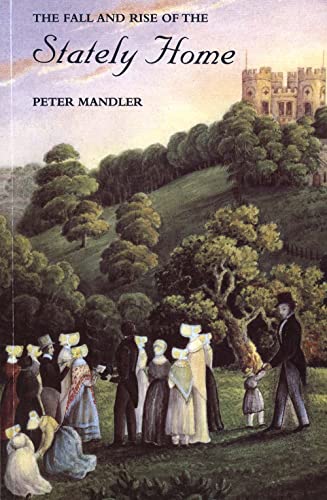
How much do the English really care about their stately homes? In this pathbreaking and wide-ranging account of the changing fortunes and status of the stately homes of England over the past two centuries, Peter Mandler melds social, cultural, artistic, and political perspectives and reveals much about the relationship of the nation to its past and its traditional ruling elite. Challenging the prevailing view of a modern English culture besotted with its history and its aristocracy, Mandler portrays instead a continuously changing and modernizing society in which both popular and intellectual attitudes toward the aristocracy--and its stately homes--have veered from selective appreciation to outright hostility and only recently to thoroughgoing admiration.
With great panache, Mandler adds the missing pieces to the story of the country house. Going beyond its architects and its owners, he brings to center stage a much wider cast of characters--aristocratic entrepreneurs, anti-aristocratic politicians, campaigning conservationists, ordinary sightseers and voters--and a scenario full of incident and local and national color. He traces attitudes toward the stately homes, beginning in the first half of the nineteenth century when public feeling about the aristocracy was mixed and divided. Criticism of the "foreign" and "exclusive" image of the typical aristocratic country house was widespread. At the same time, interest grew in those older houses that symbolized an olden time of imagined national harmony. The Victorian period also saw the first mass tourist industry, and a strong popular demand emerged for the right to visit all the stately homes. By the 1880s, however, hostility toward the aristocracy made appreciation of any country house politically treacherous, and interest in aristocratic heritage declined steadily for sixty years. Only after 1945, when the aristocracy was no longer seen as a threat, was a gentle revival of the stately homes possible, Mandler contends, and only since the 1970s has that revival become a triumphant appreciation. He enters today's debate with a discussion of how far people today--and tomorrow--are willing to see the aristocracy's heritage as their own.Les informations fournies dans la section « Synopsis » peuvent faire référence à une autre édition de ce titre.
Résultats de recherche pour The Fall and Rise of the Stately Home

Image d'archives
The Fall and Rise of the Stately Home
Edité par
Yale University Press, 1999
ISBN 10 : 0300078692
ISBN 13 : 9780300078695
Ancien ou d'occasion
Paperback
Vendeur : WorldofBooks, Goring-By-Sea, WS, Royaume-Uni
Évaluation du vendeur 5 sur 5 étoiles

Paperback. Etat : Very Good. The book has been read, but is in excellent condition. Pages are intact and not marred by notes or highlighting. The spine remains undamaged. N° de réf. du vendeur GOR002116107
Acheter D'occasion
EUR 4,75
Expédition à EUR 6,59
Expédition depuis Royaume-Uni vers Etats-Unis
Expédition depuis Royaume-Uni vers Etats-Unis
Quantité disponible : 6 disponible(s)
Image d'archives
The Fall and Rise of the Stately Home
Edité par
Yale University Press, 1999
ISBN 10 : 0300078692
ISBN 13 : 9780300078695
Ancien ou d'occasion
Paperback
Vendeur : WorldofBooks, Goring-By-Sea, WS, Royaume-Uni
Évaluation du vendeur 5 sur 5 étoiles
Paperback. Etat : Fine. N° de réf. du vendeur GOR012633849
Acheter D'occasion
EUR 4,75
Expédition à EUR 6,59
Expédition depuis Royaume-Uni vers Etats-Unis
Expédition depuis Royaume-Uni vers Etats-Unis
Quantité disponible : 1 disponible(s)
Image d'archives
The Fall and Rise of the Stately Home
Edité par
Yale University Press, 1999
ISBN 10 : 0300078692
ISBN 13 : 9780300078695
Ancien ou d'occasion
Couverture souple
Vendeur : Better World Books Ltd, Dunfermline, Royaume-Uni
Évaluation du vendeur 5 sur 5 étoiles
Etat : Good. Pages intact with minimal writing/highlighting. The binding may be loose and creased. Dust jackets/supplements are not included. Stock photo provided. Product includes identifying sticker. Better World Books: Buy Books. Do Good. N° de réf. du vendeur 57650698-20
Acheter D'occasion
EUR 7,93
Expédition à EUR 5,88
Expédition depuis Royaume-Uni vers Etats-Unis
Expédition depuis Royaume-Uni vers Etats-Unis
Quantité disponible : 1 disponible(s)
Image d'archives
The Fall and Rise of the Stately Home
Edité par
Yale University Press, 1999
ISBN 10 : 0300078692
ISBN 13 : 9780300078695
Ancien ou d'occasion
Paperback
Vendeur : ThriftBooks-Dallas, Dallas, TX, Etats-Unis
Évaluation du vendeur 5 sur 5 étoiles
Paperback. Etat : Very Good. No Jacket. May have limited writing in cover pages. Pages are unmarked. ~ ThriftBooks: Read More, Spend Less. N° de réf. du vendeur G0300078692I4N00
Acheter D'occasion
EUR 16,25
Livraison gratuite
Expédition nationale : Etats-Unis
Expédition nationale : Etats-Unis
Quantité disponible : 1 disponible(s)
Image fournie par le vendeur
The Fall And Rise Of The Stately Home
Edité par
Yale University Press, 1997
ISBN 10 : 0300078692
ISBN 13 : 9780300078695
Ancien ou d'occasion
Couverture souple
Vendeur : Eastleach Books, Newbury, BER, Royaume-Uni
Évaluation du vendeur 5 sur 5 étoiles
Etat : Very Good. 2nd impression. Paperback, VG+. viii+523pp, 99 text figs & illustrations, index, edges slightlt shelf worn, otherwise a fine as new copy. A vast cultural history of the Stately Mansion in Britain, which combines social, cultural, artistic & political perspectives to show how the perception of country homes has changed in the last 200 years. 725 grams. N° de réf. du vendeur 56556
Acheter D'occasion
EUR 20
Expédition à EUR 13,17
Expédition depuis Royaume-Uni vers Etats-Unis
Expédition depuis Royaume-Uni vers Etats-Unis
Quantité disponible : 1 disponible(s)
Image d'archives
The Fall and Rise of the Stately Home
Edité par
Yale University Press, 2009
ISBN 10 : 0300078692
ISBN 13 : 9780300078695
Ancien ou d'occasion
Couverture souple
Vendeur : Anybook.com, Lincoln, Royaume-Uni
Évaluation du vendeur 5 sur 5 étoiles
Etat : Good. This is an ex-library book and may have the usual library/used-book markings inside.This book has soft covers. In good all round condition. Please note the Image in this listing is a stock photo and may not match the covers of the actual item,900grams, ISBN:9780300078695. N° de réf. du vendeur 5578522
Acheter D'occasion
EUR 19,04
Expédition à EUR 15,34
Expédition depuis Royaume-Uni vers Etats-Unis
Expédition depuis Royaume-Uni vers Etats-Unis
Quantité disponible : 1 disponible(s)
Image d'archives
The Fall and Rise of the Stately Home
Edité par
Yale University Press, New Haven, 2009
ISBN 10 : 0300078692
ISBN 13 : 9780300078695
Ancien ou d'occasion
Paperback
Vendeur : Books From California, Simi Valley, CA, Etats-Unis
Évaluation du vendeur 4 sur 5 étoiles

Paperback. Etat : Very Good. N° de réf. du vendeur mon0003894232
Acheter D'occasion
EUR 41,01
Expédition à EUR 4,43
Expédition nationale : Etats-Unis
Expédition nationale : Etats-Unis
Quantité disponible : 1 disponible(s)
Image fournie par le vendeur
The Fall and Rise of the Stately Home
Edité par
Yale University Press, 1997
ISBN 10 : 0300078692
ISBN 13 : 9780300078695
Ancien ou d'occasion
Couverture souple
Vendeur : High Barn Books, Lancaster, Royaume-Uni
Évaluation du vendeur 5 sur 5 étoiles
Fine paperback (very light edgewear, clean and unmarked). 522 pp Paperback. The picture on the listing page is of the actual book for sale. N° de réf. du vendeur 61061
Acheter D'occasion
EUR 16,37
Expédition à EUR 29,42
Expédition depuis Royaume-Uni vers Etats-Unis
Expédition depuis Royaume-Uni vers Etats-Unis
Quantité disponible : 1 disponible(s)
Image fournie par le vendeur
Fall and Rise of the Stately Home
Edité par
Yale University Press, 1999
ISBN 10 : 0300078692
ISBN 13 : 9780300078695
Ancien ou d'occasion
Couverture souple
Vendeur : GreatBookPrices, Columbia, MD, Etats-Unis
Évaluation du vendeur 5 sur 5 étoiles
Etat : As New. Unread book in perfect condition. N° de réf. du vendeur 657506
Acheter D'occasion
EUR 50,45
Expédition à EUR 2,35
Expédition nationale : Etats-Unis
Expédition nationale : Etats-Unis
Quantité disponible : 2 disponible(s)
Image d'archives
Fall & Rise Of The Stately Home
Edité par
Yale University Press, 1999
ISBN 10 : 0300078692
ISBN 13 : 9780300078695
Neuf
Couverture souple
Vendeur : Kennys Bookshop and Art Galleries Ltd., Galway, GY, Irlande
Évaluation du vendeur 5 sur 5 étoiles
Etat : New. A study of the changing fortunes and status of the stately homes of England over the past two centuries. It seeks to merge social, cultural, artistic and political perspectives and reveal much about the relationship of the nation to its past and to its traditional ruling elite. Num Pages: 532 pages, black & white illustrations. BIC Classification: 1DBK; AMK; HBJD1; HBTB; JFSC. Category: (P) Professional & Vocational; (UP) Postgraduate, Research & Scholarly; (UU) Undergraduate. Dimension: 236 x 157 x 32. Weight in Grams: 808. . 1999. Illustrated. paperback. . . . . N° de réf. du vendeur V9780300078695
Acheter neuf
EUR 43,32
Expédition à EUR 9,50
Expédition depuis Irlande vers Etats-Unis
Expédition depuis Irlande vers Etats-Unis
Quantité disponible : 1 disponible(s)