
Articles liés à Elephants on the Edge: What Animals Teach Us About...
Synopsis
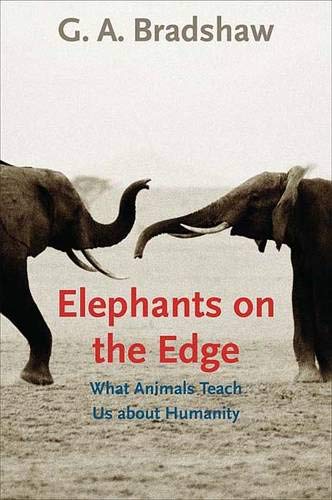
Drawing on accounts from India to Africa and California to Tennessee, and on research in neuroscience, psychology, and animal behaviour, G. A. Bradshaw explores the minds, emotions, and lives of elephants. Wars, starvation, mass culls, poaching, and habitat loss have reduced elephant numbers from more than ten million to a few hundred thousand, leaving orphans bereft of the elders who would normally mentor them. As a consequence, traumatized elephants have become aggressive against people, other animals, and even one another; their behaviour is comparable to that of humans who have experienced genocide, other types of violence, and social collapse. By exploring the elephant mind and experience in the wild and in captivity, Bradshaw bears witness to the breakdown of ancient elephant cultures. All is not lost. People are working to save elephants by rescuing orphaned infants and rehabilitating adult zoo and circus elephants, using the same principles psychologists apply in treating humans who have survived trauma. Bradshaw urges us to support these and other models of elephant recovery and to solve pressing social and environmental crises affecting all animals, human or not.
Les informations fournies dans la section « Synopsis » peuvent faire référence à une autre édition de ce titre.
À propos de l'auteur
G. A. Bradshaw is director of the Kerulos Center and president and co-founder of the International Association for Animal Trauma and Recovery. She frequently discusses the psychology of elephants, wildlife, and other animals in the national media, including 20/20 and National Geographic television and magazine. She was featured prominently in the October 2006 New York Times Magazine article 'An Elephant Crackup?'
Les informations fournies dans la section « A propos du livre » peuvent faire référence à une autre édition de ce titre.
Résultats de recherche pour Elephants on the Edge: What Animals Teach Us About...

Image d'archives
Elephants on the Edge: What Animals Teach Us about Humanity
Edité par
Yale University Press, 2009
ISBN 10 : 0300127316
ISBN 13 : 9780300127317
Ancien ou d'occasion
Couverture rigide
Vendeur : ThriftBooks-Atlanta, AUSTELL, GA, Etats-Unis
Évaluation du vendeur 5 sur 5 étoiles

Hardcover. Etat : Very Good. No Jacket. Former library book; May have limited writing in cover pages. Pages are unmarked. ~ ThriftBooks: Read More, Spend Less. N° de réf. du vendeur G0300127316I4N10
Acheter D'occasion
EUR 6,25
Livraison gratuite
Expédition nationale : Etats-Unis
Expédition nationale : Etats-Unis
Quantité disponible : 1 disponible(s)
Image d'archives
Elephants on the Edge: What Animals Teach Us about Humanity
Edité par
Yale University Press, 2009
ISBN 10 : 0300127316
ISBN 13 : 9780300127317
Ancien ou d'occasion
Couverture rigide
Vendeur : ThriftBooks-Dallas, Dallas, TX, Etats-Unis
Évaluation du vendeur 5 sur 5 étoiles
Hardcover. Etat : Very Good. No Jacket. May have limited writing in cover pages. Pages are unmarked. ~ ThriftBooks: Read More, Spend Less. N° de réf. du vendeur G0300127316I4N00
Acheter D'occasion
EUR 6,25
Livraison gratuite
Expédition nationale : Etats-Unis
Expédition nationale : Etats-Unis
Quantité disponible : 1 disponible(s)
Image d'archives
Elephants on the Edge: What Animals Teach Us about Humanity
Edité par
Yale University Press, 2009
ISBN 10 : 0300127316
ISBN 13 : 9780300127317
Ancien ou d'occasion
Couverture rigide
Vendeur : ThriftBooks-Dallas, Dallas, TX, Etats-Unis
Évaluation du vendeur 5 sur 5 étoiles
Hardcover. Etat : Good. No Jacket. Pages can have notes/highlighting. Spine may show signs of wear. ~ ThriftBooks: Read More, Spend Less. N° de réf. du vendeur G0300127316I3N00
Acheter D'occasion
EUR 6,25
Livraison gratuite
Expédition nationale : Etats-Unis
Expédition nationale : Etats-Unis
Quantité disponible : 1 disponible(s)
Image d'archives
Elephants on the Edge: What Animals Teach Us about Humanity
Edité par
Yale University Press, 2009
ISBN 10 : 0300127316
ISBN 13 : 9780300127317
Ancien ou d'occasion
Couverture rigide
Vendeur : ThriftBooks-Dallas, Dallas, TX, Etats-Unis
Évaluation du vendeur 5 sur 5 étoiles
Hardcover. Etat : Very Good. No Jacket. Missing dust jacket; May have limited writing in cover pages. Pages are unmarked. ~ ThriftBooks: Read More, Spend Less. N° de réf. du vendeur G0300127316I4N01
Acheter D'occasion
EUR 6,25
Livraison gratuite
Expédition nationale : Etats-Unis
Expédition nationale : Etats-Unis
Quantité disponible : 1 disponible(s)
Image d'archives
Elephants on the Edge: What Animals Teach Us about Humanity
Edité par
Yale University Press, 2009
ISBN 10 : 0300127316
ISBN 13 : 9780300127317
Ancien ou d'occasion
Couverture rigide
Vendeur : Open Books, Chicago, IL, Etats-Unis
Évaluation du vendeur 5 sur 5 étoiles
hardcover. Etat : Very Good. Open Books is a nonprofit social venture that provides literacy experiences for thousands of readers each year through inspiring programs and creative capitalization of books. N° de réf. du vendeur mon0000842916
Acheter D'occasion
EUR 2,70
Expédition à EUR 3,56
Expédition nationale : Etats-Unis
Expédition nationale : Etats-Unis
Quantité disponible : 1 disponible(s)
Image d'archives
Elephants on the Edge: What Animals Teach Us About Humanity
Edité par
Yale University Press, 2009
ISBN 10 : 0300127316
ISBN 13 : 9780300127317
Ancien ou d'occasion
Couverture rigide
Vendeur : World of Books (was SecondSale), Montgomery, IL, Etats-Unis
Évaluation du vendeur 5 sur 5 étoiles
Hardback. Etat : Good. Drawing on accounts from India to Africa and California to Tennessee, and on research in neuroscience, psychology, and animal behaviour, G. A. Bradshaw explores the minds, emotions, and lives of elephants. Wars, starvation, mass culls, poaching, and habitat loss have reduced elephant numbers from more than ten million to a few hundred thousand, leaving orphans bereft of the elders who would normally mentor them. As a consequence, traumatized elephants have become aggressive against people, other animals, and even one another; their behaviour is comparable to that of humans who have experienced genocide, other types of violence, and social collapse. By exploring the elephant mind and experience in the wild and in captivity, Bradshaw bears witness to the breakdown of ancient elephant cultures. All is not lost. People are working to save elephants by rescuing orphaned infants and rehabilitating adult zoo and circus elephants, using the same principles psychologists apply in treating humans who have survived trauma. Bradshaw urges us to support these and other models of elephant recovery and to solve pressing social and environmental crises affecting all animals, human or not. N° de réf. du vendeur 00108386191
Acheter D'occasion
EUR 6,36
Livraison gratuite
Expédition nationale : Etats-Unis
Expédition nationale : Etats-Unis
Quantité disponible : 1 disponible(s)
Image d'archives
Elephants on the Edge: What Animals Teach Us About Humanity
Edité par
Yale University Press, 2009
ISBN 10 : 0300127316
ISBN 13 : 9780300127317
Ancien ou d'occasion
Couverture rigide
Vendeur : World of Books (was SecondSale), Montgomery, IL, Etats-Unis
Évaluation du vendeur 5 sur 5 étoiles
Hardback. Etat : Fair. Drawing on accounts from India to Africa and California to Tennessee, and on research in neuroscience, psychology, and animal behaviour, G. A. Bradshaw explores the minds, emotions, and lives of elephants. Wars, starvation, mass culls, poaching, and habitat loss have reduced elephant numbers from more than ten million to a few hundred thousand, leaving orphans bereft of the elders who would normally mentor them. As a consequence, traumatized elephants have become aggressive against people, other animals, and even one another; their behaviour is comparable to that of humans who have experienced genocide, other types of violence, and social collapse. By exploring the elephant mind and experience in the wild and in captivity, Bradshaw bears witness to the breakdown of ancient elephant cultures. All is not lost. People are working to save elephants by rescuing orphaned infants and rehabilitating adult zoo and circus elephants, using the same principles psychologists apply in treating humans who have survived trauma. Bradshaw urges us to support these and other models of elephant recovery and to solve pressing social and environmental crises affecting all animals, human or not. N° de réf. du vendeur 00107458122
Acheter D'occasion
EUR 6,36
Livraison gratuite
Expédition nationale : Etats-Unis
Expédition nationale : Etats-Unis
Quantité disponible : 1 disponible(s)
Image d'archives
Elephants on the Edge: What Animals Teach Us About Humanity
Edité par
Yale University Press, 2009
ISBN 10 : 0300127316
ISBN 13 : 9780300127317
Ancien ou d'occasion
Couverture rigide
Vendeur : World of Books (was SecondSale), Montgomery, IL, Etats-Unis
Évaluation du vendeur 5 sur 5 étoiles
Hardback. Etat : Very Good. Drawing on accounts from India to Africa and California to Tennessee, and on research in neuroscience, psychology, and animal behaviour, G. A. Bradshaw explores the minds, emotions, and lives of elephants. Wars, starvation, mass culls, poaching, and habitat loss have reduced elephant numbers from more than ten million to a few hundred thousand, leaving orphans bereft of the elders who would normally mentor them. As a consequence, traumatized elephants have become aggressive against people, other animals, and even one another; their behaviour is comparable to that of humans who have experienced genocide, other types of violence, and social collapse. By exploring the elephant mind and experience in the wild and in captivity, Bradshaw bears witness to the breakdown of ancient elephant cultures. All is not lost. People are working to save elephants by rescuing orphaned infants and rehabilitating adult zoo and circus elephants, using the same principles psychologists apply in treating humans who have survived trauma. Bradshaw urges us to support these and other models of elephant recovery and to solve pressing social and environmental crises affecting all animals, human or not. N° de réf. du vendeur CIN0300127316VG
Acheter D'occasion
EUR 6,36
Livraison gratuite
Expédition nationale : Etats-Unis
Expédition nationale : Etats-Unis
Quantité disponible : 1 disponible(s)
Image d'archives
Elephants on the Edge : What Animals Teach Us about Humanity
Edité par
Yale University Press, 2009
ISBN 10 : 0300127316
ISBN 13 : 9780300127317
Ancien ou d'occasion
Couverture rigide
Vendeur : Better World Books: West, Reno, NV, Etats-Unis
Évaluation du vendeur 5 sur 5 étoiles
Etat : Very Good. Former library copy. Pages intact with possible writing/highlighting. Binding strong with minor wear. Dust jackets/supplements may not be included. Includes library markings. Stock photo provided. Product includes identifying sticker. Better World Books: Buy Books. Do Good. N° de réf. du vendeur 4196869-75
Acheter D'occasion
EUR 7,39
Livraison gratuite
Expédition nationale : Etats-Unis
Expédition nationale : Etats-Unis
Quantité disponible : 1 disponible(s)
Image d'archives
Elephants on the Edge : What Animals Teach Us about Humanity
Edité par
Yale University Press, 2009
ISBN 10 : 0300127316
ISBN 13 : 9780300127317
Ancien ou d'occasion
Couverture rigide
Vendeur : Better World Books, Mishawaka, IN, Etats-Unis
Évaluation du vendeur 5 sur 5 étoiles
Etat : Very Good. Pages intact with possible writing/highlighting. Binding strong with minor wear. Dust jackets/supplements may not be included. Stock photo provided. Product includes identifying sticker. Better World Books: Buy Books. Do Good. N° de réf. du vendeur 2254528-6
Acheter D'occasion
EUR 7,39
Livraison gratuite
Expédition nationale : Etats-Unis
Expédition nationale : Etats-Unis
Quantité disponible : 1 disponible(s)