
Articles liés à The Barbary Macaque: A Case Study in Conservation
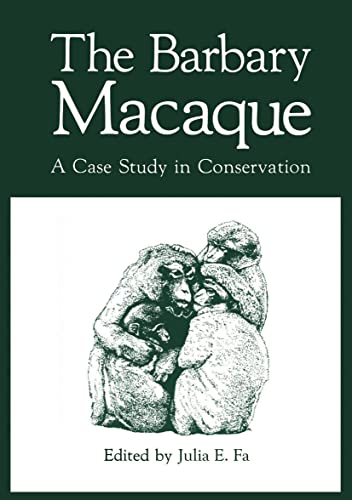
Synopsis
The Barbary macaque (all too often mistakenly called an ape) was first brought to the attention of the Conservation Working Party of the Primate Society of Great Britain late 1979 when John Fa reported that 'surplus' animals were being sent from Gibraltar to dubious locations, such as an Italian safari park. Since there had been no scientific input into the Army's management of the monkey colony on Gibraltar, and there was concern about inbreeding, nutrition and health - about the long-term viability of the colony, it was felt that the Society could help. The Gibraltar Scientific Authority and the Army were very receptive to our offer and ideas, and this topic occupied successive chairmen over the last few years - Robin Dunbar and Richard Wrangham, myself and now Miranda Stevenson - with constant prompting and help from John Fa. Considerations soon extended to the status of the species as a whole, so that there have been three main aspects: - (1) the improved health of a larger self-sustaining population on Gibraltar, (2) the status and behavioural biology of natural populations in North Africa (Morocco and Algeria), and (3) the breeding achievements in European parks and zoos, and their potential for reintroduction to suitable areas in North Africa, along with other possibilities. Robin Dunbar organized the compilation of recommendations for managing the Gibraltar colony with regard to numbers, age-sex struc- ture and behavioural relationships, with some observations on diet to avoid obesity and infertility.
Les informations fournies dans la section « Synopsis » peuvent faire référence à une autre édition de ce titre.
Résultats de recherche pour The Barbary Macaque: A Case Study in Conservation

Image fournie par le vendeur
The barbary macaque : a case study in conservation : [based on papers presented at the International Conference for the Conservation of the Barbary Macaque, held June 16 - 20, 1982, in Gibraltar]. ed. by John E. Fa
Edité par
New York, NY ; London : Plenum Press, 1984
ISBN 10 : 0306417332
ISBN 13 : 9780306417337
Ancien ou d'occasion
Couverture souple
Vendeur : Versandhandel Rosemarie Wassmann, Oyten, Allemagne
Évaluation du vendeur 5 sur 5 étoiles

Etat : Gut. XVII, 369 S. : Ill., graph. Darst., Kt. ; 26 cm Ohne Schutzumschlag !! Kleiner Besitzeintrag sonst textsauber und gut F108 Sprache: Englisch Gewicht in Gramm: 806 8° , Pp., Hardcover/Pappeinband. N° de réf. du vendeur 160017
Acheter D'occasion
EUR 37,60
Expédition à EUR 34,80
Expédition depuis Allemagne vers Etats-Unis
Expédition depuis Allemagne vers Etats-Unis
Quantité disponible : 1 disponible(s)
Image d'archives
The Barbary Macaque: A Case Study in Conservation
Edité par
Plenum Press, New York, 1984
ISBN 10 : 0306417332
ISBN 13 : 9780306417337
Ancien ou d'occasion
Couverture rigide
Edition originale
Vendeur : Row By Row Bookshop, Sugar Grove, NC, Etats-Unis
Évaluation du vendeur 5 sur 5 étoiles
Hardcover. Etat : Good. Etat de la jaquette : No Dust Jacket. First Edition. An ex-library copy in original brown hard cpvers lettered in gold. The usual ex-libris markings. The binding is sound, the text is clean/unmarked, and there is little cover wear. No dust jacket. Book. N° de réf. du vendeur 064793
Acheter D'occasion
EUR 69,14
Expédition à EUR 4,47
Expédition nationale : Etats-Unis
Expédition nationale : Etats-Unis
Quantité disponible : 1 disponible(s)
Image fournie par le vendeur
The Barbary Macaque
Edité par
Springer US Sep 1984, 1984
ISBN 10 : 0306417332
ISBN 13 : 9780306417337
Neuf
Couverture rigide
Vendeur : BuchWeltWeit Ludwig Meier e.K., Bergisch Gladbach, Allemagne
Évaluation du vendeur 5 sur 5 étoiles
Buch. Etat : Neu. This item is printed on demand - it takes 3-4 days longer - Neuware -The Barbary macaque (all too often mistakenly called an ape) was first brought to the attention of the Conservation Working Party of the Primate Society of Great Britain late 1979 when John Fa reported that 'surplus' animals were being sent from Gibraltar to dubious locations, such as an Italian safari park. Since there had been no scientific input into the Army's management of the monkey colony on Gibraltar, and there was concern about inbreeding, nutrition and health - about the long-term viability of the colony, it was felt that the Society could help. The Gibraltar Scientific Authority and the Army were very receptive to our offer and ideas, and this topic occupied successive chairmen over the last few years - Robin Dunbar and Richard Wrangham, myself and now Miranda Stevenson - with constant prompting and help from John Fa. Considerations soon extended to the status of the species as a whole, so that there have been three main aspects:- (1) the improved health of a larger self-sustaining population on Gibraltar, (2) the status and behavioural biology of natural populations in North Africa (Morocco and Algeria), and (3) the breeding achievements in European parks and zoos, and their potential for reintroduction to suitable areas in North Africa, along with other possibilities. Robin Dunbar organized the compilation of recommendations for managing the Gibraltar colony with regard to numbers, age-sex struc ture and behavioural relationships, with some observations on diet to avoid obesity and infertility. 392 pp. Englisch. N° de réf. du vendeur 9780306417337
Acheter neuf
EUR 106,99
Expédition à EUR 23
Expédition depuis Allemagne vers Etats-Unis
Expédition depuis Allemagne vers Etats-Unis
Quantité disponible : 2 disponible(s)
Image fournie par le vendeur
The Barbary Macaque: A Case Study in Conservation
impression à la demandeVendeur : moluna, Greven, Allemagne
Évaluation du vendeur 5 sur 5 étoiles
Etat : New. Dieser Artikel ist ein Print on Demand Artikel und wird nach Ihrer Bestellung fuer Sie gedruckt. The Barbary macaque (all too often mistakenly called an ape) was first brought to the attention of the Conservation Working Party of the Primate Society of Great Britain late 1979 when John Fa reported that surplus animals were being sent from Gibraltar t. N° de réf. du vendeur 458415479
Acheter neuf
EUR 92,27
Expédition à EUR 48,99
Expédition depuis Allemagne vers Etats-Unis
Expédition depuis Allemagne vers Etats-Unis
Quantité disponible : Plus de 20 disponibles
Image d'archives
The Barbary Macaque. A Case Study in Conservation.
Edité par
Kluwer Academic Publishers Group, 1984
ISBN 10 : 0306417332
ISBN 13 : 9780306417337
Neuf
Couverture rigide
Vendeur : Kennys Bookshop and Art Galleries Ltd., Galway, GY, Irlande
Évaluation du vendeur 5 sur 5 étoiles
Etat : New. Num Pages: 370 pages, biography. BIC Classification: JFC; RNK. Category: (P) Professional & Vocational. Weight in Grams: 811. . 1984. Hardback. . . . . N° de réf. du vendeur V9780306417337
Acheter neuf
EUR 132,56
Expédition à EUR 9,50
Expédition depuis Irlande vers Etats-Unis
Expédition depuis Irlande vers Etats-Unis
Quantité disponible : 15 disponible(s)
Image d'archives
The Barbary Macaque: A Case Study in Conservation
Vendeur : Ria Christie Collections, Uxbridge, Royaume-Uni
Évaluation du vendeur 5 sur 5 étoiles
Etat : New. In English. N° de réf. du vendeur ria9780306417337_new
Acheter neuf
EUR 131,20
Expédition à EUR 17,84
Expédition depuis Royaume-Uni vers Etats-Unis
Expédition depuis Royaume-Uni vers Etats-Unis
Quantité disponible : Plus de 20 disponibles
Image fournie par le vendeur
The Barbary Macaque : A Case Study in Conservation
Vendeur : AHA-BUCH GmbH, Einbeck, Allemagne
Évaluation du vendeur 5 sur 5 étoiles
Buch. Etat : Neu. Druck auf Anfrage Neuware - Printed after ordering - The Barbary macaque (all too often mistakenly called an ape) was first brought to the attention of the Conservation Working Party of the Primate Society of Great Britain late 1979 when John Fa reported that 'surplus' animals were being sent from Gibraltar to dubious locations, such as an Italian safari park. Since there had been no scientific input into the Army's management of the monkey colony on Gibraltar, and there was concern about inbreeding, nutrition and health - about the long-term viability of the colony, it was felt that the Society could help. The Gibraltar Scientific Authority and the Army were very receptive to our offer and ideas, and this topic occupied successive chairmen over the last few years - Robin Dunbar and Richard Wrangham, myself and now Miranda Stevenson - with constant prompting and help from John Fa. Considerations soon extended to the status of the species as a whole, so that there have been three main aspects:- (1) the improved health of a larger self-sustaining population on Gibraltar, (2) the status and behavioural biology of natural populations in North Africa (Morocco and Algeria), and (3) the breeding achievements in European parks and zoos, and their potential for reintroduction to suitable areas in North Africa, along with other possibilities. Robin Dunbar organized the compilation of recommendations for managing the Gibraltar colony with regard to numbers, age-sex struc ture and behavioural relationships, with some observations on diet to avoid obesity and infertility. N° de réf. du vendeur 9780306417337
Acheter neuf
EUR 124,85
Expédition à EUR 35
Expédition depuis Allemagne vers Etats-Unis
Expédition depuis Allemagne vers Etats-Unis
Quantité disponible : 1 disponible(s)
Image fournie par le vendeur
The Barbary Macaque | A Case Study in Conservation
impression à la demandeVendeur : preigu, Osnabrück, Allemagne
Évaluation du vendeur 5 sur 5 étoiles
Buch. Etat : Neu. The Barbary Macaque | A Case Study in Conservation | Julia E. Fa | Buch | Einband - fest (Hardcover) | Englisch | 1984 | Springer US | EAN 9780306417337 | Verantwortliche Person für die EU: Springer-Verlag GmbH, Europaplatz 3, 69115 Heidelberg, productsafety[at]springernature[dot]com | Anbieter: preigu Print on Demand. N° de réf. du vendeur 107102707
Acheter neuf
EUR 95,70
Expédition à EUR 70
Expédition depuis Allemagne vers Etats-Unis
Expédition depuis Allemagne vers Etats-Unis
Quantité disponible : 5 disponible(s)
Image fournie par le vendeur
The Barbary Macaque
Edité par
Springer US, Springer US Sep 1984, 1984
ISBN 10 : 0306417332
ISBN 13 : 9780306417337
Neuf
Couverture rigide
Vendeur : buchversandmimpf2000, Emtmannsberg, BAYE, Allemagne
Évaluation du vendeur 5 sur 5 étoiles
Buch. Etat : Neu. This item is printed on demand - Print on Demand Titel. Neuware -The Barbary macaque (all too often mistakenly called an ape) was first brought to the attention of the Conservation Working Party of the Primate Society of Great Britain late 1979 when John Fa reported that 'surplus' animals were being sent from Gibraltar to dubious locations, such as an Italian safari park. Since there had been no scientific input into the Army's management of the monkey colony on Gibraltar, and there was concern about inbreeding, nutrition and health - about the long-term viability of the colony, it was felt that the Society could help. The Gibraltar Scientific Authority and the Army were very receptive to our offer and ideas, and this topic occupied successive chairmen over the last few years - Robin Dunbar and Richard Wrangham, myself and now Miranda Stevenson - with constant prompting and help from John Fa. Considerations soon extended to the status of the species as a whole, so that there have been three main aspects:- (1) the improved health of a larger self-sustaining population on Gibraltar, (2) the status and behavioural biology of natural populations in North Africa (Morocco and Algeria), and (3) the breeding achievements in European parks and zoos, and their potential for reintroduction to suitable areas in North Africa, along with other possibilities. Robin Dunbar organized the compilation of recommendations for managing the Gibraltar colony with regard to numbers, age-sex struc ture and behavioural relationships, with some observations on diet to avoid obesity and infertility. 392 pp. Englisch. N° de réf. du vendeur 9780306417337
Acheter neuf
EUR 106,99
Expédition à EUR 60
Expédition depuis Allemagne vers Etats-Unis
Expédition depuis Allemagne vers Etats-Unis
Quantité disponible : 1 disponible(s)
Image d'archives
The Barbary Macaque: A Case Study in Conservation
Vendeur : Books Puddle, Woodside, NY, Etats-Unis
Évaluation du vendeur 4 sur 5 étoiles

Etat : New. 1984th edition. N° de réf. du vendeur 263844511
Acheter neuf
EUR 168,28
Expédition à EUR 3,57
Expédition nationale : Etats-Unis
Expédition nationale : Etats-Unis
Quantité disponible : 4 disponible(s)