
Articles liés à Mendel In The Kitchen: A Scientist's View Of Genetically...
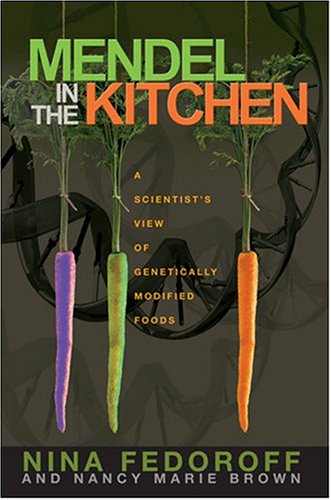
Synopsis
Book by Nina Fedoroff Nancy Marie Brown
Les informations fournies dans la section « Synopsis » peuvent faire référence à une autre édition de ce titre.
Résultats de recherche pour Mendel In The Kitchen: A Scientist's View Of Genetically...

Image d'archives
Mendel in the Kitchen: A Scientist's View of Genetically Modified Foods
Edité par
Joseph Henry Press, 2004
ISBN 10 : 0309092051
ISBN 13 : 9780309092050
Ancien ou d'occasion
Couverture rigide
Vendeur : ThriftBooks-Atlanta, AUSTELL, GA, Etats-Unis
Évaluation du vendeur 5 sur 5 étoiles

Hardcover. Etat : Very Good. No Jacket. May have limited writing in cover pages. Pages are unmarked. ~ ThriftBooks: Read More, Spend Less. N° de réf. du vendeur G0309092051I4N00
Acheter D'occasion
EUR 6,16
Livraison gratuite
Expédition nationale : Etats-Unis
Expédition nationale : Etats-Unis
Quantité disponible : 1 disponible(s)
Image d'archives
Mendel in the Kitchen: A Scientist's View of Genetically Modified Foods
Edité par
Joseph Henry Press, 2004
ISBN 10 : 0309092051
ISBN 13 : 9780309092050
Ancien ou d'occasion
Couverture rigide
Vendeur : ThriftBooks-Atlanta, AUSTELL, GA, Etats-Unis
Évaluation du vendeur 5 sur 5 étoiles
Hardcover. Etat : Very Good. No Jacket. Missing dust jacket; May have limited writing in cover pages. Pages are unmarked. ~ ThriftBooks: Read More, Spend Less. N° de réf. du vendeur G0309092051I4N01
Acheter D'occasion
EUR 6,16
Livraison gratuite
Expédition nationale : Etats-Unis
Expédition nationale : Etats-Unis
Quantité disponible : 1 disponible(s)
Image d'archives
Mendel in the Kitchen: A Scientist's View of Genetically Modified Foods
Edité par
Joseph Henry Press, 2004
ISBN 10 : 0309092051
ISBN 13 : 9780309092050
Ancien ou d'occasion
Couverture rigide
Vendeur : ThriftBooks-Dallas, Dallas, TX, Etats-Unis
Évaluation du vendeur 5 sur 5 étoiles
Hardcover. Etat : Very Good. No Jacket. Former library book; May have limited writing in cover pages. Pages are unmarked. ~ ThriftBooks: Read More, Spend Less. N° de réf. du vendeur G0309092051I4N10
Acheter D'occasion
EUR 6,16
Livraison gratuite
Expédition nationale : Etats-Unis
Expédition nationale : Etats-Unis
Quantité disponible : 1 disponible(s)
Image d'archives
Mendel in the Kitchen: A Scientist's View of Genetically Modified Foods
Edité par
National Academies Press, 2004
ISBN 10 : 0309092051
ISBN 13 : 9780309092050
Ancien ou d'occasion
Couverture rigide
Vendeur : World of Books (was SecondSale), Montgomery, IL, Etats-Unis
Évaluation du vendeur 5 sur 5 étoiles
Hardback. Etat : Very Good. While European restaurants race to footnote menus, reassuring concerned gourmands that no genetically modified ingredients were used in the preparation of their food, starving populations around the world eagerly await the next harvest of scientifically improved crops. Mendel in the Kitchen provides a clear and balanced picture of this tangled, tricky (and very timely) topic. Any farmer you talk to could tell you that we've been playing with the genetic makeup of our food for millennia, carefully coaxing nature to do our bidding. The practice officially dates back to Gregor Mendel -- who was not a renowned scientist, but a 19th century Augustinian monk. Mendel spent many hours toiling in his garden, testing and cultivating more than 28,000 pea plants, selectively determining very specific characteristics of the peas that were produced, ultimately giving birth to the idea of heredity -- and the now very common practice of artificially modifying our food. But as science takes the helm, steering common field practices into the laboratory, the world is now keenly aware of how adept we have become at tinkering with nature --which in turn has produced a variety of questions. Are genetically modified foods really safe? Will the foods ultimately make us sick, perhaps in ways we can't even imagine? Isn't it genuinely dangerous to change the nature of nature itself? Nina Fedoroff, a leading geneticist and recognized expert in biotechnology, answers these questions, and more. Addressing the fear and mistrust that is rapidly spreading, Federoff and her co-author, science writer Nancy Brown, weave a narrative rich in history, technology, and science to dispel myths and misunderstandings. In the end, Fedoroff arues, plant biotechnology can help us to become better stewards of the earth while permitting us to feed ourselves and generations of children to come. Indeed, this new approach to agriculture holds the promise of being the most environmentally conservative way to increase our food supply. N° de réf. du vendeur 00104590745
Acheter D'occasion
EUR 6,17
Livraison gratuite
Expédition nationale : Etats-Unis
Expédition nationale : Etats-Unis
Quantité disponible : 1 disponible(s)
Image d'archives
Mendel in the Kitchen: A Scientist's View of Genetically Modified Foods
Edité par
National Academies Press, 2004
ISBN 10 : 0309092051
ISBN 13 : 9780309092050
Ancien ou d'occasion
Couverture rigide
Vendeur : World of Books (was SecondSale), Montgomery, IL, Etats-Unis
Évaluation du vendeur 5 sur 5 étoiles
Hardback. Etat : Good. While European restaurants race to footnote menus, reassuring concerned gourmands that no genetically modified ingredients were used in the preparation of their food, starving populations around the world eagerly await the next harvest of scientifically improved crops. Mendel in the Kitchen provides a clear and balanced picture of this tangled, tricky (and very timely) topic. Any farmer you talk to could tell you that we've been playing with the genetic makeup of our food for millennia, carefully coaxing nature to do our bidding. The practice officially dates back to Gregor Mendel -- who was not a renowned scientist, but a 19th century Augustinian monk. Mendel spent many hours toiling in his garden, testing and cultivating more than 28,000 pea plants, selectively determining very specific characteristics of the peas that were produced, ultimately giving birth to the idea of heredity -- and the now very common practice of artificially modifying our food. But as science takes the helm, steering common field practices into the laboratory, the world is now keenly aware of how adept we have become at tinkering with nature --which in turn has produced a variety of questions. Are genetically modified foods really safe? Will the foods ultimately make us sick, perhaps in ways we can't even imagine? Isn't it genuinely dangerous to change the nature of nature itself? Nina Fedoroff, a leading geneticist and recognized expert in biotechnology, answers these questions, and more. Addressing the fear and mistrust that is rapidly spreading, Federoff and her co-author, science writer Nancy Brown, weave a narrative rich in history, technology, and science to dispel myths and misunderstandings. In the end, Fedoroff arues, plant biotechnology can help us to become better stewards of the earth while permitting us to feed ourselves and generations of children to come. Indeed, this new approach to agriculture holds the promise of being the most environmentally conservative way to increase our food supply. N° de réf. du vendeur 00101273718
Acheter D'occasion
EUR 6,17
Livraison gratuite
Expédition nationale : Etats-Unis
Expédition nationale : Etats-Unis
Quantité disponible : 1 disponible(s)
Image d'archives
Mendel in the Kitchen
Edité par
National Academies Press, 2004
ISBN 10 : 0309092051
ISBN 13 : 9780309092050
Ancien ou d'occasion
Couverture rigide
Vendeur : Better World Books: West, Reno, NV, Etats-Unis
Évaluation du vendeur 5 sur 5 étoiles
Etat : Good. Former library copy. Pages intact with minimal writing/highlighting. The binding may be loose and creased. Dust jackets/supplements are not included. Includes library markings. Stock photo provided. Product includes identifying sticker. Better World Books: Buy Books. Do Good. N° de réf. du vendeur GRP67811808
Acheter D'occasion
EUR 6,28
Livraison gratuite
Expédition nationale : Etats-Unis
Expédition nationale : Etats-Unis
Quantité disponible : 1 disponible(s)
Image d'archives
Mendel in the Kitchen
Edité par
National Academies Press, 2004
ISBN 10 : 0309092051
ISBN 13 : 9780309092050
Ancien ou d'occasion
Couverture rigide
Vendeur : Better World Books, Mishawaka, IN, Etats-Unis
Évaluation du vendeur 5 sur 5 étoiles
Etat : Good. Former library copy. Pages intact with minimal writing/highlighting. The binding may be loose and creased. Dust jackets/supplements are not included. Includes library markings. Stock photo provided. Product includes identifying sticker. Better World Books: Buy Books. Do Good. N° de réf. du vendeur GRP67811808
Acheter D'occasion
EUR 6,28
Livraison gratuite
Expédition nationale : Etats-Unis
Expédition nationale : Etats-Unis
Quantité disponible : 1 disponible(s)
Image d'archives
Mendel in the Kitchen: A Scientist's View of Genetically Modified Foods
Edité par
Joseph Henry Press, 2004
ISBN 10 : 0309092051
ISBN 13 : 9780309092050
Ancien ou d'occasion
Couverture rigide
Vendeur : The Maryland Book Bank, Baltimore, MD, Etats-Unis
Évaluation du vendeur 5 sur 5 étoiles
hardcover. Etat : Very Good. Used - Very Good. N° de réf. du vendeur 15-D-2-0112
Acheter D'occasion
EUR 2,53
Expédition à EUR 4,14
Expédition nationale : Etats-Unis
Expédition nationale : Etats-Unis
Quantité disponible : 1 disponible(s)
Image d'archives
Mendel in the Kitchen: A Scientist's View of Genetically Modified Foods
Edité par
Joseph Henry Press, 2004
ISBN 10 : 0309092051
ISBN 13 : 9780309092050
Ancien ou d'occasion
Couverture rigide
Vendeur : Half Price Books Inc., Dallas, TX, Etats-Unis
Évaluation du vendeur 5 sur 5 étoiles
hardcover. Etat : Very Good. Connecting readers with great books since 1972! Used books may not include companion materials, and may have some shelf wear or limited writing. We ship orders daily and Customer Service is our top priority! N° de réf. du vendeur S_481867470
Acheter D'occasion
EUR 3,62
Expédition à EUR 3,31
Expédition nationale : Etats-Unis
Expédition nationale : Etats-Unis
Quantité disponible : 1 disponible(s)
Image d'archives
Mendel in the Kitchen: A Scientist's View of Genetically Modified Foods
Edité par
National Academies Press, 2004
ISBN 10 : 0309092051
ISBN 13 : 9780309092050
Ancien ou d'occasion
Couverture rigide
Vendeur : World of Books Inc, Montgomery, IL, Etats-Unis
Évaluation du vendeur 4 sur 5 étoiles

Hardback. Etat : Good. While European restaurants race to footnote menus, reassuring concerned gourmands that no genetically modified ingredients were used in the preparation of their food, starving populations around the world eagerly await the next harvest of scientifically improved crops. Mendel in the Kitchen provides a clear and balanced picture of this tangled, tricky (and very timely) topic. Any farmer you talk to could tell you that we've been playing with the genetic makeup of our food for millennia, carefully coaxing nature to do our bidding. The practice officially dates back to Gregor Mendel -- who was not a renowned scientist, but a 19th century Augustinian monk. Mendel spent many hours toiling in his garden, testing and cultivating more than 28,000 pea plants, selectively determining very specific characteristics of the peas that were produced, ultimately giving birth to the idea of heredity -- and the now very common practice of artificially modifying our food. But as science takes the helm, steering common field practices into the laboratory, the world is now keenly aware of how adept we have become at tinkering with nature --which in turn has produced a variety of questions. Are genetically modified foods really safe? Will the foods ultimately make us sick, perhaps in ways we can't even imagine? Isn't it genuinely dangerous to change the nature of nature itself? Nina Fedoroff, a leading geneticist and recognized expert in biotechnology, answers these questions, and more. Addressing the fear and mistrust that is rapidly spreading, Federoff and her co-author, science writer Nancy Brown, weave a narrative rich in history, technology, and science to dispel myths and misunderstandings. In the end, Fedoroff arues, plant biotechnology can help us to become better stewards of the earth while permitting us to feed ourselves and generations of children to come. Indeed, this new approach to agriculture holds the promise of being the most environmentally conservative way to increase our food supply. N° de réf. du vendeur CIN0309092051G
Acheter D'occasion
EUR 7,99
Livraison gratuite
Expédition nationale : Etats-Unis
Expédition nationale : Etats-Unis
Quantité disponible : 1 disponible(s)