
Articles liés à The Carbon Bubble: What Happens to Us When It Bursts
Synopsis
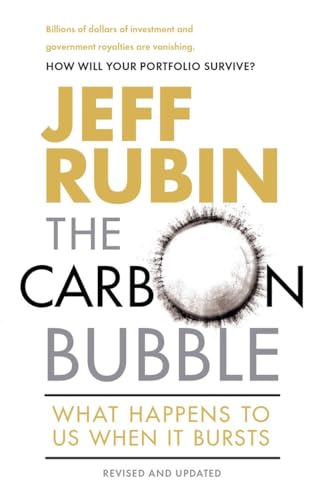
As the price of oil falls, bestselling author and economist Jeff Rubin takes us to the epicentre of the bursting global carbon bubble, and dares us to imagine a new engine for growth that does not run on oil.
For a decade, the vision of Canada's future as an energy superpower has driven the country's political agenda, as well as the fast-paced development of Alberta's oil sands and the push for more pipelines like Keystone XL across the continent to bring that bitumen to market. Anyone who objects to pipelines and tanker-train traffic, north or south of the US border, is labeled a dreamer, or worse—an environmentalist: someone who puts the health of the planet ahead of the economic survival of their neighbours.
In The Carbon Bubble, Jeff Rubin compellingly shows how an economic vision that rests on oil is dead wrong. Changes in energy markets in the US—where domestic production is booming while demand for oil is shrinking—are quickly turning the oil dream into an economic nightmare. Like U.S. coal stocks, the share values of oil-sands producers have been drastically reduced by falling fuel prices and are increasingly exposed to the world's efforts to reduce carbon emissions.
Rubin argues that there is a lifeline to a better future. The very climate change that will leave much of the country's carbon unburnable could at the same time make some of Canada's other resource assets more valuable: its water and its land. In tomorrow's economy, he argues, Canada won't be an energy superpower, but it has the makings of one of the world's great breadbaskets, as everything from the corn belt to viniculture heads to higher latitudes. And in the global climate that the world's carbon emissions are inexorably creating, growing food will soon be a lot more valuable than mining bitumen.
Les informations fournies dans la section « Synopsis » peuvent faire référence à une autre édition de ce titre.
À propos de l'auteur
JEFF RUBIN is a Canadian economist and bestselling author. A world-leading expert on trade and energy, and former chief economist and chief strategist at CIBC World Markets, he recently served as a senior fellow at the Centre for International Governance founded by Jim Balsillie. His first book, Why Your World Is About to Get a Whole Lot Smaller, was an international bestseller, and was favourably reviewed in both TIME and Newsweek. It was the number-one-selling non-fiction book in Canada and won the National Business Book Award, and was longlisted for the Financial Times and Goldman Sachs Business Book of the Year Award. Since then, he has written multiple bestsellers, including The End of Growth, The Carbon Bubble, and The Expendables.
Les informations fournies dans la section « A propos du livre » peuvent faire référence à une autre édition de ce titre.
Résultats de recherche pour The Carbon Bubble: What Happens to Us When It Bursts

Image d'archives
The Carbon Bubble: What Happens to Us When It Bursts
Edité par
Vintage Canada, 2016
ISBN 10 : 0345814703
ISBN 13 : 9780345814708
Ancien ou d'occasion
Couverture souple
Vendeur : World of Books (was SecondSale), Montgomery, IL, Etats-Unis
Évaluation du vendeur 5 sur 5 étoiles

Etat : Very Good. Item in very good condition! Textbooks may not include supplemental items i.e. CDs, access codes etc. N° de réf. du vendeur 00095354522
Acheter D'occasion
EUR 4,03
Livraison gratuite
Expédition nationale : Etats-Unis
Expédition nationale : Etats-Unis
Quantité disponible : 1 disponible(s)
Image d'archives
The Carbon Bubble: What Happens to Us When It Bursts
Edité par
Vintage Canada, 2016
ISBN 10 : 0345814703
ISBN 13 : 9780345814708
Ancien ou d'occasion
Couverture souple
Vendeur : World of Books (was SecondSale), Montgomery, IL, Etats-Unis
Évaluation du vendeur 5 sur 5 étoiles
Etat : Good. Item in good condition. Textbooks may not include supplemental items i.e. CDs, access codes etc. N° de réf. du vendeur 00093719237
Acheter D'occasion
EUR 4,03
Livraison gratuite
Expédition nationale : Etats-Unis
Expédition nationale : Etats-Unis
Quantité disponible : 1 disponible(s)
Image fournie par le vendeur
The Carbon Bubble: What Happens to Us When It Bursts
Edité par
Vintage Canada, 2016
ISBN 10 : 0345814703
ISBN 13 : 9780345814708
Ancien ou d'occasion
Couverture souple
Vendeur : Zoom Books East, Glendale Heights, IL, Etats-Unis
Évaluation du vendeur 5 sur 5 étoiles
Etat : very_good. Book is in very good condition and may include minimal underlining highlighting. The book can also include "From the library of" labels. May not contain miscellaneous items toys, dvds, etc. . We offer 100% money back guarantee and 24 7 customer service. N° de réf. du vendeur ZEV.0345814703.VG
Acheter D'occasion
EUR 4,04
Livraison gratuite
Expédition nationale : Etats-Unis
Expédition nationale : Etats-Unis
Quantité disponible : 2 disponible(s)
Image d'archives
The Carbon Bubble: What Happens to Us When It Bursts
Edité par
Vintage Canada, 2016
ISBN 10 : 0345814703
ISBN 13 : 9780345814708
Ancien ou d'occasion
Paperback
Vendeur : World of Books Inc, Montgomery, IL, Etats-Unis
Évaluation du vendeur 4 sur 5 étoiles

Paperback. Etat : Very Good. As the price of oil falls, bestselling author and economist Jeff Rubin takes us to the epicentre of the bursting global carbon bubble, and dares us to imagine a new engine for growth that does not run on oil. For a decade, the vision of Canada's future as an energy superpower has driven the country's political agenda, as well as the fast-paced development of Alberta's oil sands and the push for more pipelines like Keystone XL across the continent to bring that bitumen to market. Anyone who objects to pipelines and tanker-train traffic, north or south of the US border, is labeled a dreamer, or worse--an environmentalist: someone who puts the health of the planet ahead of the economic survival of their neighbours. In The Carbon Bubble, Jeff Rubin compellingly shows how an economic vision that rests on oil is dead wrong. Changes in energy markets in the US--where domestic production is booming while demand for oil is shrinking--are quickly turning the oil dream into an economic nightmare. Like U.S. coal stocks, the share values of oil-sands producers have been drastically reduced by falling fuel prices and are increasingly exposed to the world's efforts to reduce carbon emissions. Rubin argues that there is a lifeline to a better future. The very climate change that will leave much of the country's carbon unburnable could at the same time make some of Canada's other resource assets more valuable: its water and its land. In tomorrow's economy, he argues, Canada won't be an energy superpower, but it has the makings of one of the world's great breadbaskets, as everything from the corn belt to viniculture heads to higher latitudes. And in the global climate that the world's carbon emissions are inexorably creating, growing food will soon be a lot more valuable than mining bitumen. N° de réf. du vendeur CIN0345814703VG
Acheter D'occasion
EUR 5,87
Livraison gratuite
Expédition nationale : Etats-Unis
Expédition nationale : Etats-Unis
Quantité disponible : 1 disponible(s)
Image d'archives
The Carbon Bubble: What Happens to Us When It Bursts
Edité par
Vintage Canada, 2016
ISBN 10 : 0345814703
ISBN 13 : 9780345814708
Ancien ou d'occasion
Paperback
Vendeur : World of Books Inc, Montgomery, IL, Etats-Unis
Évaluation du vendeur 4 sur 5 étoiles
Paperback. Etat : Good. As the price of oil falls, bestselling author and economist Jeff Rubin takes us to the epicentre of the bursting global carbon bubble, and dares us to imagine a new engine for growth that does not run on oil. For a decade, the vision of Canada's future as an energy superpower has driven the country's political agenda, as well as the fast-paced development of Alberta's oil sands and the push for more pipelines like Keystone XL across the continent to bring that bitumen to market. Anyone who objects to pipelines and tanker-train traffic, north or south of the US border, is labeled a dreamer, or worse--an environmentalist: someone who puts the health of the planet ahead of the economic survival of their neighbours. In The Carbon Bubble, Jeff Rubin compellingly shows how an economic vision that rests on oil is dead wrong. Changes in energy markets in the US--where domestic production is booming while demand for oil is shrinking--are quickly turning the oil dream into an economic nightmare. Like U.S. coal stocks, the share values of oil-sands producers have been drastically reduced by falling fuel prices and are increasingly exposed to the world's efforts to reduce carbon emissions. Rubin argues that there is a lifeline to a better future. The very climate change that will leave much of the country's carbon unburnable could at the same time make some of Canada's other resource assets more valuable: its water and its land. In tomorrow's economy, he argues, Canada won't be an energy superpower, but it has the makings of one of the world's great breadbaskets, as everything from the corn belt to viniculture heads to higher latitudes. And in the global climate that the world's carbon emissions are inexorably creating, growing food will soon be a lot more valuable than mining bitumen. N° de réf. du vendeur CIN0345814703G
Acheter D'occasion
EUR 5,87
Livraison gratuite
Expédition nationale : Etats-Unis
Expédition nationale : Etats-Unis
Quantité disponible : 1 disponible(s)
Image d'archives
The Carbon Bubble : What Happens to Us When It Bursts
Edité par
Random House of Canada, 2016
ISBN 10 : 0345814703
ISBN 13 : 9780345814708
Ancien ou d'occasion
Couverture souple
Vendeur : Better World Books, Mishawaka, IN, Etats-Unis
Évaluation du vendeur 5 sur 5 étoiles
Etat : Very Good. Reprint. Former library copy. Pages intact with possible writing/highlighting. Binding strong with minor wear. Dust jackets/supplements may not be included. Includes library markings. Stock photo provided. Product includes identifying sticker. Better World Books: Buy Books. Do Good. N° de réf. du vendeur 14142787-6
Acheter D'occasion
EUR 6,54
Livraison gratuite
Expédition nationale : Etats-Unis
Expédition nationale : Etats-Unis
Quantité disponible : 1 disponible(s)
Image d'archives
The Carbon Bubble: What Happens to Us When It Bursts
Edité par
Random House of Canada, 2016
ISBN 10 : 0345814703
ISBN 13 : 9780345814708
Ancien ou d'occasion
Paperback
Vendeur : ThriftBooks-Dallas, Dallas, TX, Etats-Unis
Évaluation du vendeur 5 sur 5 étoiles
Paperback. Etat : Very Good. No Jacket. May have limited writing in cover pages. Pages are unmarked. ~ ThriftBooks: Read More, Spend Less. N° de réf. du vendeur G0345814703I4N00
Acheter D'occasion
EUR 10,57
Livraison gratuite
Expédition nationale : Etats-Unis
Expédition nationale : Etats-Unis
Quantité disponible : 1 disponible(s)
Image fournie par le vendeur
Carbon Bubble : What Happens to Us When It Bursts
Vendeur : GreatBookPrices, Columbia, MD, Etats-Unis
Évaluation du vendeur 5 sur 5 étoiles
Etat : New. N° de réf. du vendeur 25813035-n
Acheter neuf
EUR 12,50
Expédition à EUR 2,35
Expédition nationale : Etats-Unis
Expédition nationale : Etats-Unis
Quantité disponible : 15 disponible(s)
Image d'archives
The Carbon Bubble Format: Paperback
Edité par
Penguin Random House, 2016
ISBN 10 : 0345814703
ISBN 13 : 9780345814708
Neuf
Couverture souple
Vendeur : INDOO, Avenel, NJ, Etats-Unis
Évaluation du vendeur 5 sur 5 étoiles
Etat : New. N° de réf. du vendeur 9780345814708
Acheter neuf
EUR 14,92
Livraison gratuite
Expédition nationale : Etats-Unis
Expédition nationale : Etats-Unis
Quantité disponible : Plus de 20 disponibles
Image d'archives
The Carbon Bubble (Paperback)
Edité par
Vintage Canada, Missisauga, 2016
ISBN 10 : 0345814703
ISBN 13 : 9780345814708
Neuf
Paperback
Vendeur : Grand Eagle Retail, Bensenville, IL, Etats-Unis
Évaluation du vendeur 5 sur 5 étoiles
Paperback. Etat : new. Paperback. As the price of oil falls, bestselling author and economist Jeff Rubin takes us to the epicentre of the bursting global carbon bubble, and dares us to imagine a new engine for growth that does not run on oil.For a decade, the vision of Canada's future as an energy superpower has driven the country's political agenda, as well as the fast-paced development of Alberta's oil sands and the push for more pipelines like Keystone XL across the continent to bring that bitumen to market. Anyone who objects to pipelines and tanker-train traffic, north or south of the US border, is labeled a dreamer, or worsean environmentalist: someone who puts the health of the planet ahead of the economic survival of their neighbours. In The Carbon Bubble, Jeff Rubin compellingly shows how an economic vision that rests on oil is dead wrong. Changes in energy markets in the USwhere domestic production is booming while demand for oil is shrinkingare quickly turning the oil dream into an economic nightmare. Like U.S. coal stocks, the share values of oil-sands producers have been drastically reduced by falling fuel prices and are increasingly exposed to the world's efforts to reduce carbon emissions. Rubin argues that there is a lifeline to a better future. The very climate change that will leave much of the country's carbon unburnable could at the same time make some of Canada's other resource assets more valuable: its water and its land. In tomorrow's economy, he argues, Canada won't be an energy superpower, but it has the makings of one of the world's great breadbaskets, as everything from the corn belt to viniculture heads to higher latitudes. And in the global climate that the world's carbon emissions are inexorably creating, growing food will soon be a lot more valuable than mining bitumen. Shipping may be from multiple locations in the US or from the UK, depending on stock availability. N° de réf. du vendeur 9780345814708
Acheter neuf
EUR 14,95
Livraison gratuite
Expédition nationale : Etats-Unis
Expédition nationale : Etats-Unis
Quantité disponible : 1 disponible(s)