
Synopsis
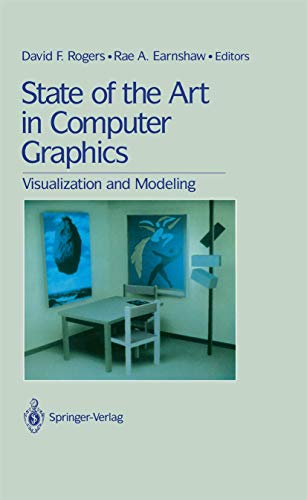
Today one of the hardest parts of computer aided design or analysis is first modeling the design, then recording and verifying it. For example, a typical vehicle such as a tank, automobile, ship or aircraft might be composed of tens of thousands of individual parts. Many of these parts are composed of cylinders, flats, and simple conic curves and surfaces such as are amenable to modeling using a constructive solid geometry (CSG) approach. However, especially with the increasing use of composite materials, many parts are designed using sculp- tured surfaces. A marriage of these two techniques in now critical to continued development of computer aided design and analysis. Further, the graphical user interfaces used in most modeling systems are at best barely adequate to the required task. Critical work on these interfaces is required to continue pushing back the frontiers. Similarly, once the design is modeled, how are the varied and diverse pieces stored, retrieved, and modified? How are physical interferences prevented or eliminated? Although considerable progress has been made, there are still more questions and frustrations than answers. One of the fundamental problems of the 1990s is and will continue to be modeling. The second problem is interpretation. With the ever increasing computational power available, our ability to generate data far exceeds our ability to interpret, understand, and utilize that data.
Les informations fournies dans la section « Synopsis » peuvent faire référence à une autre édition de ce titre.
Autres éditions populaires du même titre

Résultats de recherche pour State of the Art in Computer Graphics: Visualization...

Image d'archives
State of the Art in Computer Graphics : Visualization and Modeling
ISBN 10 : 0387975608
ISBN 13 : 9780387975603
Ancien ou d'occasion
Couverture rigide
Vendeur : Pride and Prejudice-Books, Ballston Lake, NY, Etats-Unis
Évaluation du vendeur 5 sur 5 étoiles

Hardcover. Etat : Near Fine. First Edition. Near Fine. No Dust Jacket. N° de réf. du vendeur 010763
Acheter D'occasion
EUR 53,88
Expédition à EUR 4,36
Expédition nationale : Etats-Unis
Expédition nationale : Etats-Unis
Quantité disponible : 1 disponible(s)
Image fournie par le vendeur
State of the Art in Computer Graphics: Visualization and Modeling.
Edité par
Springer, 1991
ISBN 10 : 0387975608
ISBN 13 : 9780387975603
Ancien ou d'occasion
Couverture rigide
Vendeur : Wissenschaftl. Antiquariat Th. Haker e.K, Klettgau, Allemagne
Évaluation du vendeur 5 sur 5 étoiles
Etat : Wie neu. 368 p. Like new. ISBN: 9780387975603 Sprache: Englisch Gewicht in Gramm: 630 16,3 x 2,8 x 23,9 cm, hardcover. N° de réf. du vendeur 58488
Acheter D'occasion
EUR 22,80
Expédition à EUR 36,30
Expédition depuis Allemagne vers Etats-Unis
Expédition depuis Allemagne vers Etats-Unis
Quantité disponible : 1 disponible(s)
Image fournie par le vendeur
State of the Art in Computer Graphics
Edité par
Springer New York Jun 1991, 1991
ISBN 10 : 0387975608
ISBN 13 : 9780387975603
Neuf
Couverture rigide
Vendeur : BuchWeltWeit Ludwig Meier e.K., Bergisch Gladbach, Allemagne
Évaluation du vendeur 5 sur 5 étoiles
Buch. Etat : Neu. This item is printed on demand - it takes 3-4 days longer - Neuware -Today one of the hardest parts of computer aided design or analysis is first modeling the design, then recording and verifying it. For example, a typical vehicle such as a tank, automobile, ship or aircraft might be composed of tens of thousands of individual parts. Many of these parts are composed of cylinders, flats, and simple conic curves and surfaces such as are amenable to modeling using a constructive solid geometry (CSG) approach. However, especially with the increasing use of composite materials, many parts are designed using sculp tured surfaces. A marriage of these two techniques in now critical to continued development of computer aided design and analysis. Further, the graphical user interfaces used in most modeling systems are at best barely adequate to the required task. Critical work on these interfaces is required to continue pushing back the frontiers. Similarly, once the design is modeled, how are the varied and diverse pieces stored, retrieved, and modified How are physical interferences prevented or eliminated Although considerable progress has been made, there are still more questions and frustrations than answers. One of the fundamental problems of the 1990s is and will continue to be modeling. The second problem is interpretation. With the ever increasing computational power available, our ability to generate data far exceeds our ability to interpret, understand, and utilize that data. 380 pp. Englisch. N° de réf. du vendeur 9780387975603
Acheter neuf
EUR 106,99
Expédition à EUR 23
Expédition depuis Allemagne vers Etats-Unis
Expédition depuis Allemagne vers Etats-Unis
Quantité disponible : 2 disponible(s)
Image d'archives
State of the Art in Computer Graphics: Visualization and Modeling
Vendeur : Ria Christie Collections, Uxbridge, Royaume-Uni
Évaluation du vendeur 5 sur 5 étoiles
Etat : New. In. N° de réf. du vendeur ria9780387975603_new
Acheter neuf
EUR 117,80
Expédition à EUR 14,14
Expédition depuis Royaume-Uni vers Etats-Unis
Expédition depuis Royaume-Uni vers Etats-Unis
Quantité disponible : Plus de 20 disponibles
Image fournie par le vendeur
State of the Art in Computer Graphics
Edité par
Springer New York, 1991
ISBN 10 : 0387975608
ISBN 13 : 9780387975603
Neuf
Couverture rigide
Vendeur : moluna, Greven, Allemagne
Évaluation du vendeur 5 sur 5 étoiles
Gebunden. Etat : New. Dieser Artikel ist ein Print on Demand Artikel und wird nach Ihrer Bestellung fuer Sie gedruckt. Today one of the hardest parts of computer aided design or analysis is first modeling the design, then recording and verifying it. For example, a typical vehicle such as a tank, automobile, ship or aircraft might be composed of tens of thousands of individu. N° de réf. du vendeur 5913045
Acheter neuf
EUR 89,99
Expédition à EUR 48,99
Expédition depuis Allemagne vers Etats-Unis
Expédition depuis Allemagne vers Etats-Unis
Quantité disponible : Plus de 20 disponibles
Image fournie par le vendeur
State of the Art in Computer Graphics | Visualization and Modeling
impression à la demandeVendeur : preigu, Osnabrück, Allemagne
Évaluation du vendeur 5 sur 5 étoiles
Buch. Etat : Neu. State of the Art in Computer Graphics | Visualization and Modeling | David F. Rogers (u. a.) | Buch | v | Englisch | 1991 | Springer | EAN 9780387975603 | Verantwortliche Person für die EU: Springer Verlag GmbH, Tiergartenstr. 17, 69121 Heidelberg, juergen[dot]hartmann[at]springer[dot]com | Anbieter: preigu Print on Demand. N° de réf. du vendeur 101266627
Acheter neuf
EUR 93,35
Expédition à EUR 70
Expédition depuis Allemagne vers Etats-Unis
Expédition depuis Allemagne vers Etats-Unis
Quantité disponible : 5 disponible(s)
Image fournie par le vendeur
State of the Art in Computer Graphics
Edité par
Springer, Humana Jun 1991, 1991
ISBN 10 : 0387975608
ISBN 13 : 9780387975603
Neuf
Couverture rigide
Vendeur : buchversandmimpf2000, Emtmannsberg, BAYE, Allemagne
Évaluation du vendeur 5 sur 5 étoiles
Buch. Etat : Neu. This item is printed on demand - Print on Demand Titel. Neuware -Today one of the hardest parts of computer aided design or analysis is first modeling the design, then recording and verifying it. For example, a typical vehicle such as a tank, automobile, ship or aircraft might be composed of tens of thousands of individual parts. Many of these parts are composed of cylinders, flats, and simple conic curves and surfaces such as are amenable to modeling using a constructive solid geometry (CSG) approach. However, especially with the increasing use of composite materials, many parts are designed using sculp tured surfaces. A marriage of these two techniques in now critical to continued development of computer aided design and analysis. Further, the graphical user interfaces used in most modeling systems are at best barely adequate to the required task. Critical work on these interfaces is required to continue pushing back the frontiers. Similarly, once the design is modeled, how are the varied and diverse pieces stored, retrieved, and modified How are physical interferences prevented or eliminated Although considerable progress has been made, there are still more questions and frustrations than answers. One of the fundamental problems of the 1990s is and will continue to be modeling. The second problem is interpretation. With the ever increasing computational power available, our ability to generate data far exceeds our ability to interpret, understand, and utilize that data.Springer-Verlag KG, Sachsenplatz 4-6, 1201 Wien 380 pp. Englisch. N° de réf. du vendeur 9780387975603
Acheter neuf
EUR 106,99
Expédition à EUR 60
Expédition depuis Allemagne vers Etats-Unis
Expédition depuis Allemagne vers Etats-Unis
Quantité disponible : 1 disponible(s)
Image d'archives
State of the Art in Computer Graphics: Visualization and Modeling
Vendeur : Revaluation Books, Exeter, Royaume-Uni
Évaluation du vendeur 5 sur 5 étoiles
Hardcover. Etat : Brand New. 1st edition. 368 pages. 9.50x6.50x1.00 inches. In Stock. N° de réf. du vendeur x-0387975608
Acheter neuf
EUR 160,52
Expédition à EUR 14,76
Expédition depuis Royaume-Uni vers Etats-Unis
Expédition depuis Royaume-Uni vers Etats-Unis
Quantité disponible : 2 disponible(s)
Image fournie par le vendeur
State of the Art in Computer Graphics : Visualization and Modeling
Edité par
Springer, Humana, 1991
ISBN 10 : 0387975608
ISBN 13 : 9780387975603
Neuf
Couverture rigide
Vendeur : AHA-BUCH GmbH, Einbeck, Allemagne
Évaluation du vendeur 5 sur 5 étoiles
Buch. Etat : Neu. Druck auf Anfrage Neuware - Printed after ordering - Today one of the hardest parts of computer aided design or analysis is first modeling the design, then recording and verifying it. For example, a typical vehicle such as a tank, automobile, ship or aircraft might be composed of tens of thousands of individual parts. Many of these parts are composed of cylinders, flats, and simple conic curves and surfaces such as are amenable to modeling using a constructive solid geometry (CSG) approach. However, especially with the increasing use of composite materials, many parts are designed using sculp tured surfaces. A marriage of these two techniques in now critical to continued development of computer aided design and analysis. Further, the graphical user interfaces used in most modeling systems are at best barely adequate to the required task. Critical work on these interfaces is required to continue pushing back the frontiers. Similarly, once the design is modeled, how are the varied and diverse pieces stored, retrieved, and modified How are physical interferences prevented or eliminated Although considerable progress has been made, there are still more questions and frustrations than answers. One of the fundamental problems of the 1990s is and will continue to be modeling. The second problem is interpretation. With the ever increasing computational power available, our ability to generate data far exceeds our ability to interpret, understand, and utilize that data. N° de réf. du vendeur 9780387975603
Acheter neuf
EUR 111,53
Expédition à EUR 64,02
Expédition depuis Allemagne vers Etats-Unis
Expédition depuis Allemagne vers Etats-Unis
Quantité disponible : 1 disponible(s)