
Articles liés à Prototyping for Architects
Synopsis
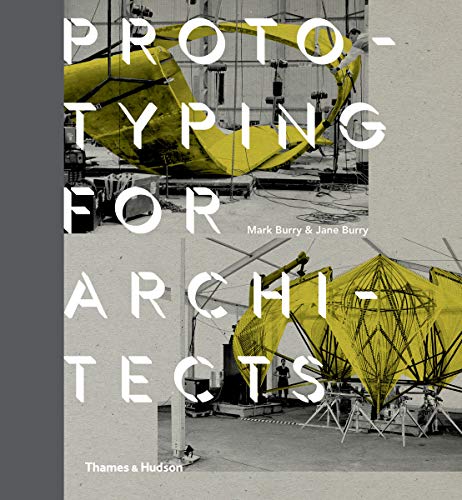
The first overview of the increasingly popular practice of uniting digital design and fabrication technologies with hands-on building techniques.
Prototyping is an essential part of the designer's repertoire. Designers prototype their projects to test them, structurally, aesthetically, technically. Whether the prototype works or not is not the point: prototyping is the revelatory process through which the designer gains insight. There are three reasons why contemporary prototyping techniques are transforming the way architects design and build: 1) at a miniature scale, prototyping aids the architect in the presentation to clients of complex spatial ideas, 2) prototyping empowers the architect-designer to test and prove a building's feasibility, leading to more open-minded construction solutions, 3) whether additive (3D printing) or subtractive (robotic milling), prototyping can lead to unexpected and exciting new possibilities within design as a whole, across design disciplines, thus blurring the boundaries between them in highly creative ways. The book has four sections: an introduction that charts the rise of prototyping in design history, more specifically in architecture, an overview of techniques, a survey section featuring 30 projects, each presented through texts drawn from first-hand interviews, on-site photographs and drawings, and a reference section, which includes a glossary of technical terms.
Les informations fournies dans la section « Synopsis » peuvent faire référence à une autre édition de ce titre.
À propos de l'auteur
Jane Burry is a research fellow at RMIT’s Spatial Information Information Architecture Laboratory in Melbourne, Australia.
À propos de la quatrième de couverture
The first overview of the increasingly popular practice of uniting digital design and fabrication technologies with hands-on building techniques.
Prototyping is an essential part of the designer's repertoire. Designers prototype their projects to test them, structurally, aesthetically, technically. Whether the prototype works or not is not the point: prototyping is the revelatory process through which the designer gains insight. There are three reasons why contemporary prototyping techniques are transforming the way architects design and build: 1) at a miniature scale, prototyping aids the architect in the presentation to clients of complex spatial ideas, 2) prototyping empowers the architect-designer to test and prove a building's feasibility, leading to more open-minded construction solutions, 3) whether additive (3D printing) or subtractive (robotic milling), prototyping can lead to unexpected and exciting new possibilities within design as a whole, across design disciplines, thus blurring the boundaries between them in highly creative ways. The book has four sections: an introduction that charts the rise of prototyping in design history, more specifically in architecture, an overview of techniques, a survey section featuring 30 projects, each presented through texts drawn from first-hand interviews, on-site photographs and drawings, and a reference section, which includes a glossary of technical terms.
Les informations fournies dans la section « A propos du livre » peuvent faire référence à une autre édition de ce titre.
Résultats de recherche pour Prototyping for Architects

Image d'archives
Prototyping for Architects: Real Building for the Next Generation of Digital Designers
Edité par
Thames & Hudson, 2016
ISBN 10 : 0500343055
ISBN 13 : 9780500343050
Ancien ou d'occasion
Paperback
Vendeur : WorldofBooks, Goring-By-Sea, WS, Royaume-Uni
Évaluation du vendeur 5 sur 5 étoiles

Paperback. Etat : Very Good. The book has been read, but is in excellent condition. Pages are intact and not marred by notes or highlighting. The spine remains undamaged. N° de réf. du vendeur GOR010787389
Acheter D'occasion
EUR 10,61
Expédition à EUR 6,69
Expédition depuis Royaume-Uni vers Etats-Unis
Expédition depuis Royaume-Uni vers Etats-Unis
Quantité disponible : 1 disponible(s)
Image fournie par le vendeur
Prototyping for Architects
Edité par
Thames and Hudson Ltd, 2016
ISBN 10 : 0500343055
ISBN 13 : 9780500343050
Ancien ou d'occasion
Couverture rigide
Vendeur : WeBuyBooks, Rossendale, LANCS, Royaume-Uni
Évaluation du vendeur 5 sur 5 étoiles
hardcover. Etat : Good. Most items will be dispatched the same or the next working day. A copy that has been read but remains in clean condition. All of the pages are intact and the cover is intact and the spine may show signs of wear. The book may have minor markings which are not specifically mentioned. N° de réf. du vendeur rev1476769275
Acheter D'occasion
EUR 10,70
Expédition à EUR 13,37
Expédition depuis Royaume-Uni vers Etats-Unis
Expédition depuis Royaume-Uni vers Etats-Unis
Quantité disponible : 1 disponible(s)
Image d'archives
Prototyping for Architects: Real Building for the Next Generation of Digital Designers
Vendeur : Revaluation Books, Exeter, Royaume-Uni
Évaluation du vendeur 5 sur 5 étoiles
Hardcover. Etat : Brand New. 1st edition. 272 pages. 9.50x9.00x1.00 inches. In Stock. N° de réf. du vendeur zk0500343055
Acheter neuf
EUR 34,11
Expédition à EUR 17,92
Expédition depuis Royaume-Uni vers Etats-Unis
Expédition depuis Royaume-Uni vers Etats-Unis
Quantité disponible : 1 disponible(s)
Image d'archives
Prototyping for Architects: Real Building for the Next Generation of Digital Designers
Vendeur : Basi6 International, Irving, TX, Etats-Unis
Évaluation du vendeur 5 sur 5 étoiles
Etat : Brand New. New. US edition. Expediting shipping for all USA and Europe orders excluding PO Box. Excellent Customer Service. N° de réf. du vendeur ABEOCT25-96261
Acheter neuf
EUR 55,02
Livraison gratuite
Expédition nationale : Etats-Unis
Expédition nationale : Etats-Unis
Quantité disponible : 1 disponible(s)
Image d'archives
PROTOTYPING FOR ARCHITECTS
Vendeur : Basi6 International, Irving, TX, Etats-Unis
Évaluation du vendeur 5 sur 5 étoiles
Etat : Brand New. New. US edition. Expediting shipping for all USA and Europe orders excluding PO Box. Excellent Customer Service. N° de réf. du vendeur ABEOCT25-96260
Acheter neuf
EUR 59,16
Livraison gratuite
Expédition nationale : Etats-Unis
Expédition nationale : Etats-Unis
Quantité disponible : 1 disponible(s)
Image d'archives
Prototyping for Architects
Vendeur : Majestic Books, Hounslow, Royaume-Uni
Évaluation du vendeur 4 sur 5 étoiles

Etat : New. pp. 272. N° de réf. du vendeur 374281541
Acheter neuf
EUR 61,09
Expédition à EUR 7,76
Expédition depuis Royaume-Uni vers Etats-Unis
Expédition depuis Royaume-Uni vers Etats-Unis
Quantité disponible : 1 disponible(s)
Image d'archives
Prototyping for Architects
Vendeur : Books Puddle, Woodside, NY, Etats-Unis
Évaluation du vendeur 4 sur 5 étoiles
Etat : New. pp. 272. N° de réf. du vendeur 26372812442
Acheter neuf
EUR 65,89
Expédition à EUR 3,56
Expédition nationale : Etats-Unis
Expédition nationale : Etats-Unis
Quantité disponible : 1 disponible(s)
Image d'archives
Prototyping for Architects
Vendeur : Biblios, Frankfurt am main, HESSE, Allemagne
Évaluation du vendeur 4 sur 5 étoiles
Etat : New. pp. 272. N° de réf. du vendeur 18372812432
Acheter neuf
EUR 63,01
Expédition à EUR 9,95
Expédition depuis Allemagne vers Etats-Unis
Expédition depuis Allemagne vers Etats-Unis
Quantité disponible : 1 disponible(s)
Image d'archives
Prototyping for Architects; Real Building for the Next Generation of Digital Designers
Vendeur : BWS BKS, Ferndale, NY, Etats-Unis
Évaluation du vendeur 2 sur 5 étoiles

Hardcover. Etat : New. N° de réf. du vendeur 120393
Acheter neuf
EUR 1 813,80
Expédition à EUR 2,67
Expédition nationale : Etats-Unis
Expédition nationale : Etats-Unis
Quantité disponible : 1 disponible(s)