
Articles liés à Hermann Von Helmholtz and the Foundations of Nineteenth-Cent...
Synopsis
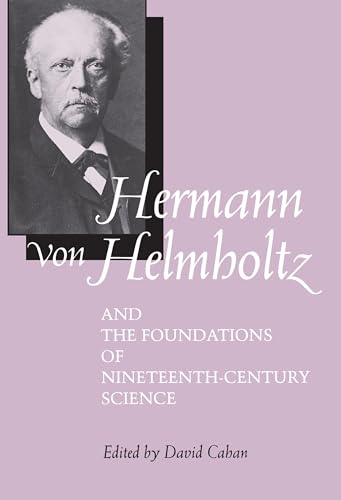
Hermann von Helmholtz (1821-1894) was a polymath of dazzling intellectual range and energy. Renowned for his co-discovery of the second law of thermodynamics and his invention of the ophthalmoscope, Helmholtz also made many other contributions to physiology, physical theory, philosophy of science and mathematics, and aesthetic thought. During the late nineteenth century, Helmholtz was revered as a scientist-sage—much like Albert Einstein in this century.
David Cahan has assembled an outstanding group of European and North American historians of science and philosophy for this intellectual biography of Helmholtz, the first ever to critically assess both his published and unpublished writings. It represents a significant contribution not only to Helmholtz scholarship but also to the history of nineteenth-century science and philosophy in general.
David Cahan has assembled an outstanding group of European and North American historians of science and philosophy for this intellectual biography of Helmholtz, the first ever to critically assess both his published and unpublished writings. It represents a significant contribution not only to Helmholtz scholarship but also to the history of nineteenth-century science and philosophy in general.
Les informations fournies dans la section « Synopsis » peuvent faire référence à une autre édition de ce titre.
À propos de l'auteur
David Cahan is Associate Professor of History at the University of Nebraska, Lincoln, and author of An Institute for an Empire: The Physikalisch-Technische Reich-sanstalt, 1871-1918 (1990).
Extrait. © Reproduit sur autorisation. Tous droits réservés.
Hermann von Helmholtz and the Foundations of Nineteenth-Century Science
By David Cahan, editorUniversity of California Press
Copyright 1994 David Cahan, editorAll right reserved.
ISBN: 0520083342
1
Helmholtz and the German Medical Community
Arleen Tuchman
1. Introduction
"Medicine," Helmholtz wrote in 1877, "was once my intellectual home, the one in which I grew up, and the wanderer best understands and is best understood in his native land."1 Yet only rarely does one think of Hermann von Helmholtz in a medical context. The traditional image of Helmholtz is rather of a scientist whose broad-ranging intellectual interests brought him into contact with physicists, physiologists, mathematicians, philosophers, and other learned individuals. Yet, as the above quotation indicates, Helmholtz began his intellectual wanderings within the nineteenth-century German medical community; he even practiced hospital medicine for five years before receiving his first academic appointment at the Berlin Akademie der Knste in 1848. From that point on Helmholtz never again practiced medicine, yet, as this essay seeks to demonstrate, his ties to the German medical community remained strong for most of his career. Not only did several of his discoveriesforemost among them his invention of the ophthalmoscope in 1850-51have a direct impact on medical practice; his methodological approach to the study of nature influenced the medical community as well. Medical reformers in particular praised
Acknowledgments: I would like to thank David Cahan for his advice and criticism. The research for this paper stemmed in part from two larger projects funded by the Fulbright Commission and the National Science Foundation.
"Das Denken in der Medizin," in VR 2:165-93, on 170.
the "new spirit of physiology," convinced that Helmholtz (and other experimental scientists) would help transform medicine into an exact science by teaching students new critical methods of analysis that would later be applicable to the study of disease.
The German medical community clearly benefited from Helmholtz's contributions, but, as this essay also aims to show, Helmholtz profited as well. Section 2 focuses on his early years in Berlin and Potsdam (1838-48), demonstrating that through his studies at the Knigliches medizinisch-chirurgische Friedrich-Wilhelms-Institut and at the University of Berlin, and through his tenure as a staff surgeon to the Royal Hussars in Potsdam, he received perhaps the best medical education and training then available in Germany. According to Helmholtz's own account, this medical training influenced his early work and career. Section 3 examines this claim, turning specifically to the events surrounding his invention of the ophthalmoscope and its reception by the medical community. The ophthalmoscope significantly altered medical diagnostics, having its greatest impact on a growing number of physicians with specialist interest in ophthalmology. Keenly aware of the ophthalmoscope's diagnostic importance, Helmholtz actively publicized his instrument. Indeed, he frequently announced to the medical community the potential practical applications of his scientific work. His reasons for doing so, as Section 3 further shows, derived from his appreciation of the ways in which physicians and physiologists could mutually benefit one another. New instruments and the experimental method would help establish medicine on a scientific basis, at the same time that physicians would help physiologists in their fight to establish an autonomous discipline of physiological science. Seeking institutional support in the university medical faculties, Helmholtz and other experimental physiologists realized that their success rested in part on their ability to convince university and state administrators that their work was of potential significance to the medical community.
The importance of this strategy becomes evident in Section 4, which focuses on the events surrounding the institutionalization of experimental physiology at the University of Heidelberg and Helmholtz's appointment to a newly created chair for this subject in 1858. This appointment, it is argued, occurred squarely within a medical context, with Helmholtz remaining the favored candidate during a protracted period of negotiation largely because of his perceived link to the medical community, a perception that Helmholtz deservedand cultivated.
This essay argues neither that Helmholtz is best understood within the nineteenth-century German medical community nor that his primary motivation in his early career was to improve medical practice.
Both claims are false. Throughout his years at Knigsberg, Bonn, and Heidelberg, Helmholtz's intellectual interests centered on discovering the chemical and physical laws underlying physiological processes, and on determining the physical and philosophical foundations of sensory perception. Nonetheless, Helmholtz seldom lost sight of the potential practical applications of the knowledge he produced. He may only occasionally have pursued such practical applications himself, yet he appreciated and publicized them when they occurred, both recognizing the support he could win from the medical community and appreciating, like most individuals involved in "pure" research, that nothing better demonstrated the legitimacy of a scientific theory than the ability to derive practical consequences from it. Thus Helmholtz's motives for maintaining strong ties to the German medical community were both professional and intellectual, and they were ties he actively encouraged during the twenty-two years he spent as a member of German university medical faculties.
2. Helmholtz's Medical Education in Berlin and Practice in Potsdam, 1838-48
During his early teenage years, Helmholtz developed an interest in the natural sciences, particularly in physics. In the 1830s, however, pursuit of a career in science was difficult. Although some hoped to forge a link between scientific research and industrial advance, the German economy gave but scant support to scientific careers, and only a few individuals received academic appointments in the natural sciences. Consequently, more than a few who wanted to study the natural sciences chose instead to pursue medicine. This, at least, was the path Helmholtz selected, and in 1838, at the age of seventeen, he moved from Potsdam to Berlin to begin his medical studies at the Knigliches medizinisch-chirurgische Friedrich-Wilhelms-Institut (formerly called the Pepinire), a medical school designed specifically for the training of military physicians.2
The Institut gave promising young men of insufficient financial means the opportunity to pursue a medical career. This arrangement greatly benefited Helmholtz, whose father, a Prussian Gymnasium teacher, reportedly did not earn enough to finance a university education for his son. Taking advantage of family connections to Christian
Biographical information on Helmholtz is taken from Koenigsberger 1 ; and R. Steven Turner, "Hermann von Helmholtz," DSB 6 :241-53. On the Institut, see Dr. Schickert, Die militrrztlichen Bildungsanstalten von ihrer Grndung his zur Gegenwart (Berlin: Ernst Siegfried Mittler und Sohn, 1895).
Ludwig Mursinna, General Surgeon of the Prussian Army between 1789 and 1809 and professor of surgery at the Charit (the Berlin city hospital) and the Pepinire until 1820, in 1837 Helmholtz's father sought admission for his son to the Institut. Although Helmholtz's first love was physics, he was not, by his own admission, "at all opposed to the study of living nature."3 There, as in the study of inorganic nature, he saw the possibility of pursuing the study of the causal relations among phenomena. In the fall of 1838, having received a stipend from the Institut, in exchange for which he promised to serve eight years in the Prussian military, Helmholtz left for Berlin, hoping that in the course of his medical education he might satisfy his scientific curiosity as well.
His hopes were not unfounded. German medical education during the 1830s was very much in transition. Whereas professors had previously focused their lectures on the recitation of a text (often their own), several now began to embellish their lectures with demonstrations and experiments. Among the younger lecturers and professors it was also not uncommon to provide instruction in microscopical, chemical, and even diagnostic skills. In the early 1830s, for example, Johann Lukas Schnlein, one of Germany's most prominent clinicians, encouraged his young assistants to provide instruction in the use of the stethoscope to medical students at the University of Wrzburg.4 (In 1840, Schnlein moved to the University of Berlin, where Helmholtz attended his classes.) Later in the decade, Jacob Henle, Privatdozent in general pathology and general anatomy at the University of Berlin, offered a class in microscopical techniques for which sixty students enrolled. Shortly thereafter, Privatdozenten at the universities of Bonn and Tbingen offered courses "in the use of the microscope" as well. By the early 1840s universities throughout Germany provided basic instruction in the chemical and microscopical investigations of normal and pathological specimens as well as in the new techniques of auscultation and percussion.5 Yet despite these
"Erinnerungen," in VR 1:1-21, on 9.
On Schnlein, see Johanna Bleker, Die Naturhistorische Schule 1825-1845. Ein Beitrag zur Geschichte der klinischen Medizin in Deutschland (Stuttgart: Gustav Fischer, 1981). On Helmholtz on Schnlein, see his letters of 12 May 1840 and 16 January 1843 to his parents in David Cahan, ed. Letters of Hermann von Helmholtz to His Parents: The Medical Education of a German Scientist, 1837-1846 (Stuttgart: Franz Steiner Verlag, 1993), 76-7, 98-9, resp.
Josef Kerschensteiner, Das Leben und Wirken des Dr. Carl von Pfeufer (Augsburg: Lampart & Co., 1871), 9; Friedrich Merkel, Jacob Henle. Ein deutsches Gelehrtenleben (Braunschweig: Vieweg, 1891), 154-55, and W. Waldeyer, "J. Henle. Nachruf," Archiv fr mikroscopische Anatomie 26 (1886):i-xxxii, esp. iii. The two Privatdozenten at Bonn and Tbingen were August Meyer and Wilhelm Grube, respectively. (See Konrad Kl, Die Einfhrung besonderer Kurse fr Mikroskopie und physikalische Diagnostik (Perkussion und Auskultation) in der medizinischen Unterricht an deutschen Universitten im 19. Jahrhundert [Med.diss., Gttingen, 1971].)
important first steps toward introducing "practically" oriented courses into the medical curriculum, most universities still lacked adequate facilities for students interested in going beyond basic instruction so as to perfect their skills or conduct their own research. Small laboratories, minimal equipment and instruments (Henle had only a few microscopes for instructing a class of sixty students), and small university clinics made it difficult for most students to work directly with patients. Consequently, many students intent on increasing their clinical experience spent some time abroad in one of the large clinics in Vienna or Paris.
Still, in comparison to other German cities Berlin had much to offer. First, because it was a larger city it had more sick individuals to fill its clinical teaching wards. More to the point, it had, in addition to its university, several medical institutions and hospitals in its midst, including the Theatrum anatomicum (anatomical theater), the Collegium medico-chirurgicum, the Botanischer Garten, the Charit hospital, and the Friedrich-Wilhelms-Institut.6 Designed primarily for the training of military physicians, all but the last of these institutions dated back to the reign of Frederick William I (1713-40), the so-called Soldier-King. Concerned about the heavy medical losses suffered annually by his beloved army, Frederick William instituted several measures to improve the quality of medical care available to his soldiers. He converted his father's Orangerie into the Botanischer Garten; founded the Theatrum anatomicum for public dissections (1713) and the Collegium medico-chirurgicum for theoretical instruction (1723); and established the Charit for clinical training (1726). To some extent these institutions served civilian students of medicine and surgery, yet their primary purpose was to train an advanced corp of surgeons who could supervise medical affairs in each of the army's regiments. To this end, each year eight young men received three-year fellowships to study at the Collegium. This educational system remained largely unchanged until the end of the century when, with the increasing militarism of the Prussian state, the need for more trained army surgeons grew. To meet these needs Frederick William II founded another medical school in 1795, the Pepinire, renamed the Knigliches medizinisch-chirurgische Friedrich-Wilhelms-Institut in 1818. This new state
For a discussion of these institutes see Paul Diepgen and Edith Heischkel, Die Medizin an der Berliner Charit bis zur Grndung der Universitt (Berlin: J. Springer, 1935), and Schickert, Die militrrztlichen Bildungsanstalten .
medical institute accommodated and financed the education of between eighty and ninety pupils per year; in return, its graduates obligated themselves to serve as military surgeons in the Prussian army for eight years.7
Although a student of the Institut, Helmholtz attended many classes at the University of Berlin. The two institutions had not always had close connections. In the years immediately following the founding of the university in 1810, the latter and the Institut had, due to their different goals, a tense relationship. The military medical institute had a practical goalthe training of medical surgeons for the Prussian army; by contrast, the university, founded on neo-humanist principles, sought to provide an environment that would awaken a spirit of inquiry in students.8 Devotion to Wissenschaft , not to utilitarian or professional goals, defined the educational process. This process was dynamic, and had little to do with absorbing factual information. The teacher sought to arouse student curiosity while providing them with the proper critical tools for pursuing their new-found interests. The goal was to cultivate the individual's character; specific concrete achievements mattered little.
Despite their different goals, efforts to keep the university and the Institut separate soon failed. A few years after the university opened its doors, several members of the medical faculty, including the professor of surgery, Carl Ferdinand von Graefe, and the professors of anatomy, Christoph Knape and Karl Asmund Rudolphi, accepted adjunct positions on the professorial staff of the Institutfor which they received handsome honoraria.9 The gradual breakdown of the barriers dividing the two institutions occurred not least because the new university was not simply modelled after the neo-humanists' vision. Its absolute dependence upon the state, cemented by the financial bond, as well as the state's urgent need for well-educated civil servants, physicians, and teachers, guaranteed that utilitarian concerns were not totally absent from university education.10 By 1825 students of the two
Schickert, Die militrrztlichen Bildungsanstalten , 5, 49.
On neo-humanism see Helmut Schelsky, Einsamkeit und Freiheit. Idee und Gestalt der deutschen Universitt und ihrer Reformer , 2nd ed. (Dsseldorf: Bertelsmann Universittsverlag, 1971). On tensions between the university and the Institut see Arleen Tuchman, "Spannungen und Zusammenarbeit zwischen der Charit und der Berliner Universitt in der ersten Hlfie des 19. Jahrhunderts," unpublished paper, read at the Deutsche Gesellschaft fr Geschichte der Medizin, Naturwissenschaft und Technik, Bayreuth, September 1987.
Memorandum from Johann Wilhelm Wiebel, Chef des Militrmedicinalwesens, to Karl Freiherr Stein zum Altenstein, head of the Ministerium des Innern, 10 April 1827, in Geheimes Staatsarchiv Preuischer Kulturbesitz, Merseburg, Ministerium des Innern, Rep. 76 VIIIB, Nr. 4419, Bl.78.
The best treatment of the various interests surrounding the founding of the University of Berlin is Charles E. McClelland, State, Society, and University in Germany, 1700-1914 (Cambridge and New York: Cambridge University Press, 1980), chap. 4.
institutions shared many of the same medical and scientific institutes, and attended many classes together, listening to the same lectures from members of the university faculty.
Not all differences between the two institutions had disappeared, however. Whereas Lernfreiheit and Lehrfreiheit characterized university education, the course of study at the Institut was highly regimented. During the first of four years of instruction, students attended lectures on osteology, splanchnology, physics, botany, chemistry, physiology, general anatomy, and natural history. In the second year they continued to study these subjects, to which were added pathology and pharmacy, along with courses in anatomical dissection aimed at complementing their theoretical lectures. In the third year they advanced to general and special therapeutics, semiotics, surgery, and obstetrics. And in their fourth and final year they attended the polyclinic and the surgical, medical, ophthalmological, and obstetrical clinics in the Charit. Following this rigid four-year course of medical instruction, they spent a further year in the Charit doing rotation in the various wards. Although prohibited from treating their own patients, their duties were extensive. Under the supervision of the graduates of the Institut, they prescribed and administered medicines according to their superiors' orders; wrote case histories; and supervised the nursing staff in all hygienic matters.11 Thus, at a time when university students had to go to Paris or Vienna to acquire extensive clinical experience, Institut students received extensive surgical and clinical training in the wards of a large city hospital.
Helmholtz valued the extensive medical training he receivedindeed, he later attributed part of his success in inventing the ophthalmoscope to this trainingbut his real interests remained in the natural sciences, particularly in scientific research, which he pursued whenever opportunity availed.12 Especially important here was his contact with Eilhard Mitscherlich, professor of chemistry at the university, and, above all, with Johannes Mller, professor of physiology. Berlin hired Mller in 1833 to help reform its medical faculty and to lend more support to a new direction in scientific research, one
Schickert, Die militrrztlichen Bildungsanstalten , 33-6, 48. See, also, Helmholtz's letter to his parents of 5 May 1839, in which he describes the forty-two hours of classes required of him during the second semester of his first year of study, in Cahan, ed., Letters , 56-60.
Helmholtz's appreciation of his medical education is evident in his letters of 7 and 16 October, 16 November, 8 and 19 December 1842, and 16 January 1843 to his parents, in Cahan, ed., Letters , 92-3, 93-4, 95, 95-6, 96-7, 98-9, resp.; and below, Section 3.
that moved beyond simple observation to the "creation of new phenomena through experiment."13 This new direction appealed to Helmholtz, too; in 1841 he decided to write a dissertation under Mller's supervision. For this purpose he scraped together his savings and bought his first instrumenta microscope.14 Displaying no sign of his later aversion toward microscopical research, Helmholtz investigated the structure of the nervous system in invertebrates, discovering that the nerve fibers originate in the ganglionic cells.15 These cells had first been discovered in 1833 by the German physiologist Christian G. von Ehrenberg, who managed only to speculate that they give rise to nerve fibers; Helmholtz demonstrated the connection and suggested thereby that ganglia are more important developmentally than nerve fibers. Helmholtz's first contribution to the scientific community was thus a significant one, and it was made in microscopic anatomy.
Although this initial finding impressed Mller, he asked Helmholtz to investigate several more animals before submitting his dissertation so as to demonstrate his thesis conclusively. To this end, Mller offered him access to workspace in his anatomical museum. Every year Mller made such offers to a few talented students whose independent research he wished to encourage. Yet he could not provide them with much assistance. Compared to the research laboratories built in Germany after mid-century, the museums and laboratories of the early nineteenth century were extremely modest, usually consisting of only a few small rooms equipped with the simplest of equipment and instruments. Mller's museum, with its cramped quarters, few instruments (beyond microscopes), and small budget was typical.16 Still, his museum provided a virtually unmatched intellectual atmosphere, allowing talented students to work and to discuss their ideas with one another. In the 1830s the list of medical students who frequented Mller's museum included Jacob Henle, Theodor Schwann, and Robert Remak, all important contributors to the cell theory; in the 1840s they were followed by Rudolph Virchow, Emil du Bois-Reymond, Ernst Brcke, and Hermann Helmholtz.
Although all these individuals made outstanding contributions to physiological research, their emphases differed. Several, particularly
Manfred Strzbecher, "Zur Berufung Johannes Mllers an die Berliner Universitt," Jahrbuch fr die Geschichte Mittel- und Ostdeutschlands 21 (1972): 184-226, quote on 193.
Koenigsberger 1 :52.
De Fabrica systematis Nervosi Evertebratorum (Med. Diss., Berlin, 1842), in WA 2 :663-79.
Axel Genz, Zur Emanzipation der naturwissenschaftlichen Physiologie in Berlin (Med. diss. Magdeburg, 1976).
Henle and Virchow, bece leaders of the medical reform movement that flourished in Germany in the 1840s.17 They sought to give medicine a scientific basis by demonstrating that disease was nothing more than a deviation from normal physiological processes brought about by abnormal conditions. Convinced that physiological processes followed deterministic laws of nature, they argued that scientific medicine should aim at ascertaining how bodies, subject to these laws, behave under altered (i.e., abnormal) conditions. In their vision of scientific medicine, experiments provided a means of artificially creating a diseased condition. Thus, the programmatic statements of Henle, Virchow, and others stressed the use of physiological experiments, pathological anatomy, microscopy, chemistry, and clinical observation as the tools for analyzing bodily functions and how they become diseased.
While sympathetic to the goals of Henle and Virchow, Helmholtz, du Bois-Reymond, and Brcke focused not on the reform of medicine but rather on the means for establishing an autonomous physiological science. In particular, they wanted to transform physiology into an "organic physics." In 1847 the three friends, along with Karl Ludwig, took an oath to reduce physiology to its chemical and physical foundations, creating an "organic physics" based exclusively upon mathematical, physical, and chemical laws.18 In developing this new approach "the 1847 group" (as Paul Crane field has labelled them) relied heavily upon sophisticated instruments and instrumental techniques. Du Bois-Reymond's astatic galvanometer and induction apparatus, Helmholtz's myograph, ophthalmoscope, and ophthalmometer, and Ludwig's kymograph and vacuum pump illustrate a few of the many instruments conceived of and in part constructed by this new generation of physiologists.19 These instruments simplified the conditions for experimenting on isolated organs, allowed better control of phenomena, aided in the establishment of causal connections, and permitted exact measurements and graphical representation of organic functions. They required, moreover, a level of mathematical
Claudia Huerkamp, Der Aufstieg der rzte im 19. Jahrhundert (Gttingen: Vandenhoeck und Ruprecht, 1985); E. Ackerknecht, "Beitrge zur Geschichte der Medizinalreform von 1848," Sudhoffs Archiv 25 (1932):61-109, 113-83; and Aileen Tuchman, Science, Medicine, and the State in Germany: The Case of Baden, 1815-1871 (Oxford and New York: Oxford University Press, 1993).
Paul Cranefield, "The Organic Physics of 1847 and the Biophysics of Today," JHMAS 12 (1957):407-23.
K.E. Rothschuh, "Emil Heinrich du Bois-Reymond," DSB 4 (1971):200-5; Heinz Schrer, Carl Ludwig. Begrnder der messenden Experimentalphysiologie (Stuttgart: Wissenschaftliche Verlagsgesellschaft, 1967), 104-14, 170-80; Stanley Joel Reiser, Medicine and the Reign of Technology (Cambridge and London: Cambridge University Press, 1978), 100-1; and below, Section 3.
skill and technical dexterity that clearly distinguished the methodological approach of the "organic physicists" from the microscopical, chemical, and vivisectional skills of individuals like Henle and Virchow.
Despite Helmholtz's commitment to the transformation of physiology into an exact science, he could not devote his energy solely to this pursuit. In late September 1842, having completed his course work at the Institut, he began his year-long medical "internship" in the Charit, an experience he found both difficult and challenging.20 His first assignment in the ward for internal diseases proved to be his most demanding. He began each day at seven o'clock, examining his own patients before making the rounds with his supervisor and other interns, at which time he reported on his findings and suggested appropriate therapeutic measures. The entire procedure lasted over four hours and occurred twice daily. During the remaining hours, he performed autopsies and recorded the daily events in the hospital journal. His day did not end until eight o'clock in the evening.21
Helmholtz's most difficult months were the first two, when his immediate supervisor proved to be a tyrant and most of his patients suffered from chronic illnesses for which he could do little more than prescribe opium. Although he welcomed the opportunity to study these illnesses firsthand, he was relieved when rotations toward the end of the year placed him in a ward with more varied cases and a supervisor who permitted the interns greater responsibility for their patients. He found this work more rewardingnot only did he come into contact with "a selection of the most interesting patients"; he also found time to further his medical knowledge by visiting Schnlein's clinic, "in which one receives multiple stimulations to a deeper understanding of the disease process."22 He clearly enjoyed his work in the Charit, his only disappointment being that he had so little time to conduct his own research. During the fall of 1842 he managed only to put the finishing touches on his dissertation, which he defended on 2 November 1842. Entitled De fabrica systematis nervosi evertebratorum ("The Structure of the Nervous System in Invertebrates"), the thesis went beyond Helmholtz's initial study by demonstrating the link between
Helmholtz's attitude toward his internship is revealed in several letters to his parents: 7 October, 8 December, and 19 December 1842, and 16 January and 8 February 1843, in Cahan, ed., Letters , 92-3, 95-6, 96-7, 98-9, 99-100, resp.
Helmholtz to his parents, 7 October 1842, in ibid., 92-3. Rudolf Virchow's experience as an intern in the Charit was similar to Helmholtz's. See Virchow's letter to his father of 14 May 1843, in Marie Rabl, ed., Rudolf Virchow. Briefe an seine Eltern 1839 bis 1864 (Leipzig: W. Engelmann, 1907), 64.
Helmholtz to his parents, 16 January 1843, in Cahan, ed., Letters , 98-9.
ganglionic cells and nerve fibers in a host of organisms, both invertebrate and vertebrate.23
Beginning in February 1843, Helmholtz was able to allot more time to his scientific studies. Having completed his tour of duty in internal medicine, he moved on to the children's ward, followed by obstetrics, where there was little to do.24 He took advantage of this situation by spending more time in Mller's laboratory, where he conducted experiments on putrefaction and fermentation, a topic he viewed as fertile ground for furthering the goal of the "organic physicists." At the time, scientists disagreed as to whether these processes were essentially chemical or dependent upon the presence of living organisms. Helmholtz's experimental results, probably to his dismay, were equivocal.25 Although they seemed to demonstrate that putrefaction involved a process of decay that occurred independently of any life forms, they also indicated that fermentation, although a form of putrefaction, resulted only when a living organism was introduced to the putrifying medium. Thus Helmholtz had not succeeded in reducing all organic processes to their chemical and physical components.
Helmholtz's clinical internship ended on 1 October 1843, at which time he was promoted to staff surgeon to the Royal Hussars at Potsdam and transferred to an army hospital there.26 He remained in his native city for the next five years, dividing his time between his medical responsibilities and scientific research. The former were not overly demanding. Helmholtz managed to establish a small laboratory in the army barracks so as to conduct experiments. During his Potsdam years (1843-48) he shifted his focus of research from putrefaction and fermentation to the source of heat production during muscle contraction, conducting experiments that led ultimately to his articulation of the principle of the conservation of force. He now recognized that the ability to explain animal heat as a function of the chemical transformations occurring within the muscles was better suited for his plans to create an "organic physics." Between 1843 and 1847 he showed experimentally that chemal changes occur in the muscle tissues during activity; that heat emission accompanies this process; and that this heat is not brought to the muscles by the nerves or blood but rather is produced in the tissues themselves. Having demonstrated these
De Fabrica .
Helmholtz to his parents, 8 February 1843, in Cahan, ed., Letters , 99-100.
"Ueber das Wesen der Fulniss und Ghrung," MA (1843):453-62, in WA 2 :726-34. For discussion of this work see the essay by Kathryn M. Olesko and Frederic L. Holmes, "Experiment, Quantification, and Discovery: Helmholtz's Early Physiological Researchs, 1843-50," in this volume.
Koenigsberger 1 :54.
chemical physiological facts, he then analyzed and quantified this physiological process, deriving a mechanical equivalent for the amount of heat produced. This work formed an important part of his monograph, Ueber die Erhaltung der Kraft , which he published in 1847.27 By establishing the principle of the conservation of force, Helmholtz had effectively demonstrated the superfluousness of evoking any special life forces as explanatory principles.
Although Helmholtz's work on the conservation of force received a mixed review, there could be no doubt that he was a man of much promise. Apart from Mller's support, he now won that of the influential Alexander von Humboldt, who always had a keen eye for talented young scientists. When Brcke, who had been teaching anatomy at the Akademie der Knste in Berlin, received a call to Knigsberg as extraordinary (auerordentlicher ) professor of physiology and pathology, von Humboldt arranged to have Helmholtz released from his military duties so that he could succeed Brcke.28 Thus, three years before the projected completion of his official military obligations, Helmholtz entered into a civilian, academic career.
Although Helmholtz never again practiced medicine after he left the army in 1848, his ties to the medical community remained unbroken. This connection manifested itself first and foremost institutionally: until he moved to Berlin in 1871 as professor of experimental physics, he taught in medical faculties, even lecturing on pathology during the six years he spent in Knigsberg (1849-55). This medical connection, however, extended well beyond an institutional affiliation. In his work, particularly in physiological optics, Helmholtz made several significant contributions to the medical world. The most important of these was his invention of the ophthalmoscope, an instrument which, more than any of his other discoveries, made his reputation in the medical community and beyond. It was, as he later said, "the most popular of my scientific achievements."29 Indeed, it was the invention that launched him on his stupendously successful career. Its invention and the medical community's response to it are the focus of Section 3.
Ueber die Erhaltung der Kraft (Berlin: G. Reimer, 1847). Helmholtz's experiments between 1843 and 1847 are published in "Ueber den Stoffverbrauch bei der Muskelaktion," MA (1845):72-83; and in "Ueber die Wrmeentwicklung bei der Muskelaction," ibid. (1848):144-64, both in WA 2 :735-44 and 745-63, respectively. On his principle of the conservation of force see Fabio Bevilacqua's essay, "Helmholtz's Ueber die Erhaltung der Kraft : The Emergence of a Theoretical Physicist," in this volume.
Koenigsberger 1 :93-110.
"Erinnerungen," in VR 1:12.
3. Helmholtz's Ophthalmoscope: Its Invention and the German Medical Community's Response
Helmholtz remained at the Akademie der Knste for only one year. In the summer of 1849 Brcke transferred to Vienna as professor of anatomy and physiology, and his position in Knigsberg went to Helmholtz. In his new capacity as extraordinary professor in the medical faculty, Helmholtz had responsibility for teaching not only physiology but pathology as well. He held this position for the next six years (1849-55).
During his Knigsberg years, Helmholtz continued his studies of nerve physiology (measuring the velocity of the nerve impulse), and also moved on to physiological optics and acousticstwo areas that occupied his attention for nearly twenty years.30 His interests continued to center on the physical foundations of sensory stimulation and the epistemological foundations of sense perception; yet while preparing a lecture on optics for his medical students, Helmholtz realized that certain rather simple laws of geometrical optics permitted him to construct an instrument of potentially great diagnostic importance to the medical communitythe ophthalmoscope.31
"Messungen ber den zeitlichen Verlauf der Zuckung animalischer Muskeln und die Fortpflanzungsgeschwindigkeit der Reizung in den Nerven," MA (1850):276-364; "Messungen ber Fortpflanzungsgeschwindigkeit der Reizung in den Nerven. Zweite Reihe," ibid. (1852):199-216, both in WA 2 :764-843 and 844-61, respectively; Handbuch ; and Die Lehre von den Tonempfindungen als physiologische Grundlage fr die Theorie der Musik (Braunschweig: F. Vieweg and Sohn, 1863). For analyses of Helmholtz's work in these areas see the respective essays in this volume by Olesko and Holmes, "Experiment, Quantification, and Discovery"; R. Steven Turner, "Consensus and Controversy: Helmholtz on the Visual Perception of Space"; Richard L. Kremer, "Innovation through Synthesis: Helmholtz and Color Research"; and Stephan Vogel, "Sensation of Tone, Perception of Sound, and Empiricism: Helmholtz's Physiological Acoustics."
Beschreibung eines Augen-Spiegels zur Untersuchung der Netzhaut im lebenden Auge (Berlin: A. Frstner, 1851). On Helmholtz's invention of the ophthalmoscope see, for example, Richard Greef, "Historisches zur Erfindung des Augenspiegels," Berliner klinische Wochenschrift 38:48 (1901): 1201-2; Koenigsberger 1 :133-43; Ernest Engelking, ed., Dokumente zur Erfindung des Augenspiegels durch Hermann yon Helmholtz im Jahre 1850 (Munich: J.F. Bergmann, 1950); Albert Esser, "Zur Geschichte der Erfindung des Augenspiegels," Klinische Monatsbltter fr Augenheilkunde 116 (1950):1-14; Wolfgang Jaeger, ed., Die Erfindung der Ophthalmoskopie dargestellt in den Originalbeschreibungen der Augenspiegel von Helmholtz, Ruete und Giraud-Teulon (Heidelberg: Brausdruck, n.d. [1977]); Reiser, Medicine and the Reign of Technology , 46-8; Klaus Klau, "Ein neuentdecktes frhes Dokument zur Geschichte der Erfindung des Augenspiegels durch Hermann v. Helmholtz," NTM 18:1 (1981):58-61; George Gorin, History of Ophthalmology (Wilmington, Del.: Publish or Perish, 1982), 129; and Frank W. Law, "The Origin of the Ophthalmoscope," Ophthalmology 93:1 (1986):140-41.
Helmholtz wanted to describe the phenomenon, observed by both William Cummings, an English physician, and Brcke, wherein the human eye glowed in a dark room when light was directed at the eye and an observer stood near the light source. Neither Cummings nor Brcke had managed to see the eye's inner structure; whenever they approached the eye closely enough to peer inside it, the glare from the light source diffused over the entire pupil. While preparing his lecture, Helmholtz asked himself how the light rays reflecd back from the illuminated eye produce an optical image; he was thus led to analyze the rays' paths. He discovered that the rays followed an identical path when entering and leaving the eye; this allowed him to explain Brcke's inability to see the internal structure: to do so Brcke would have had to stand directly in the path of the light rays, thus blocking the light source.
It took Helmholtz merely eight days to circumvent the problem and invent an instrument that permitted him to see the retina and vessels within the living eye. He used a plane-polished glass surface which both reflects and transmits light, and thus acts as a partial mirror. By looking through this glass, which he placed at an angle, and using one surface to reflect light into the observed eye, he was able to eliminate the glare while allowing enough light to return so as to permit a clear view of the retina. Figure 1.1 presents Helmholtz's own schematic arrangement of the ophthalmoscope and ray paths. Here C is the plane-polished glass. A candle A illuminates the glass plate, whereby most of the light is reflected into the eye D being observed. The dorsal area of the eye (i.e., the retina) in turn reflects this light back along the same path by which the rays had entered. Some light returns to A while some continues in a straight line (the reverse path of entry) through the glass plate and on to the eye of the observer G . Since the latter must stand very close to the person being observed in order to see through the pupil's small opening, the light rays entering the observer's eye converge, resulting in a blurred picture. To circumvent this problem, Helmholtz placed a concave lens F between the observer and the glass plate. His ophthalmoscope, at least in its initial, highly primitive form, was complete.
In December 1850 Helmholtz wrote his father expressing his surprise that no one before him had figured out how to construct such an instrument.32 He reported that he had needed only the most elementary knowledge of optics. Indeed, he had actually worked out some of the optical laws while still a student at the Potsdam Gymnasium.
Koenigsberger 1 : 133-34.
Figure 1.1.
Schematic drawing of the path taken by light as it travels through the
ophthalmoscope. Source: Beschreibung eines Augen-Spiegels zur
Untersuchung der Netzhaut im lebenden Auge (Berlin: A. Frstner, 1851),
47; reprinted in Klassiker der Medizin (Leipzig: J.A. Barth, 1910), 12.
Yet he underestimated the mathematical knowledge needed to comprehend the geometrical optics upon which the ophthalmoscope was based. Some of the physicians who voiced opposition toward the instrument (about which more presently) may have done so because of their inability to understand the physical and mathematical principles involved in the instrument's construction.
Yet Helmholtz's geometrical knowledge did not alone lead to the idea of the ophthalmoscope. As he himself later noted, his success resulted from his hybrid education: he knew more physics than physicians, and more physiology and medicine than physicists and mathematicians.33 His medical studies had familiarized him with the practical problems confronting ophthalmologists, leading him to recognize the diagnostic potential of an instrument that would permit physicians to investigate changes in the retina. He was aware, moreover, of recent developments in medical diagnostics which had begun to free physicians from their dependence upon gross physical symptoms and patients' own accounts of their ailments. Of particular importance here were new types of analyses and techniques, such as physical diagnosis, pathological anatomy, and microscopy, which seemed to provide physicians with more objective information about the internal organic changes accompanying the diseased state (although the interpretation of this information often remained disputed). No instrument better exemplified this transition than the stethoscope, which was invented in the early nineteenth century and which made audible what was invisible to the physician's gaze.34
Helmholtz realized immediately that an ophthalmoscope would similarly reveal what had previously remained hiddenthe anatomical and physiological changes of the eye's interior. He wrote to his father:
Until now a series of the most important eye diseases, included under the name "black cataract," have been terra incognita because one could learn nothing about the changes in the eye either in the living [state] or even after death. My invention will make possible the finest investigation of the internal structures of the eye. . . . Where possible, I shall examine patients with the chief ophthalmologist here and then publish the material.35
Helmholtz published the results of his work in 1851 in a small pamphlet entitled Beschreibung eines Augen-Spiegels zur Untersuchung der
"Erinnerungen," VR 1:13.
Reiser, Medicine and the Reign of Technology , chap. 2; and Michel Foucault, The Birth of the Clinic (New York: Vintage Books, 1973).
Koenigsberger 3 :142f.
Netzhaut im lebenden Auge . The medical community responded immediately. Among general practitioners, particularly older ones, some voiced opposition to the instrument. Helmholtz reported that one colleague condemned the ophthalmoscope as a dangerous instrument for letting too much light into the eye. Indeed, one of the loudest objections was that prolonged exposure of the retina to light could lead to blindness; some critics thus charged that the ophthalmoscope actually created diseases. Other complaints stemmed from difficulties in understanding and using the instrument. One of Helmholtz's colleagues reportedly went so far as to claim that only those with poor eyesight needed the assistance of such an instrument.36
These hostile responses aside, the ophthalmoscope received extensive positive publicity in scientific and medical journals soon after its invention. Although general practitioners probably did not use the ophthalmoscope in their routine patient examinations until the end of the century, it appealed immediately to a sizable group of physicians with specialist interests in optometry and ophthalmology. By early December 1851 Helmholtz had received eighteen orders for his instrument. Between 1851 and 1856 at least sixteen books and eighteen articles were written on the ophthalmoscope. Several of these books aimed specifically at teaching physicians how to use the instrument: for example, Der Augenspiegel und das Optometer fr praktische Aerzte (1852), by Christian Georg Theodor Ruete, extraordinary professor of ophthalmology at the University of Gttingen; and Ueber die Anwendung des Augenspiegels, nebst Angabe eines neuen Instruments (1853), by Ernst Adolf Coccuis, Privatdozent in ophthalmology at the University of Leipzig.37 These specialists felt deeply indebted to Helmholtz and his instrument for their own recent successes. In 1854, for example, in a review of Helmholtz's work in the Medicinische Centralzeitung , one author adopted an ecstatic tone, characterizing Helmholtz as the "emancipator and liberator" of the field of ophthalmology.38 And in the same year, Albrecht von Graefe, then a practicing ophthalmologist in Berlin and lecturer at the university, founded a specialist journal, Archiv fr Ophthalmologie , in which he attributed the field's great up-swing to Helmholtz's invention.39
"Das Denken in der Medizin," VR 2:179. For other discussions of opposition to the ophthalmoscope, see Reiser, Medicine and the Reign of Technology , 50; and Gorin, History of Ophthalmology , 129.
These and other works are listed in F. Heymann, "Die Augenspiegel, ihre Construktion und Verwendung," Schmidt's Jahrbcher der In- und Auslndischen gesammten Medicin 89 (1856):105-22.
Medicinische Centralzeitung 1 November 1854, noted in Mittheilungen des badischen rztlichen Vereins 9 (1855):last page (no pagination).
Albrecht von Graefe, "Vorwort," AO 1 (1854):v-x.
The ophthalmoscope revolutionized the study of eye disease. Von Graefe, hailed as one of the founders of modern ophthalmology, praised the instrument for "revealing to us a new world," and for allowing the investigation of what had previously remained opaquethe various anatomical, physiological, and pathological changes of the inner eye.40 The terra incognita , for example, to which Helmholtz had referredblack cataractlost much of its mystery. The condition represents an advanced cataract state in which sclerosis causes the lens to change color, eventually turning a very dark brown, if not black. It was a condition, one ophthalmologist claimed, in which "the patient sees nothing, but neither does the physician."41 Ophthalmoscopic investigations permitted early diagnosis of the disease and made it easier to distinguish between cataracts and other eye disorders, such as amblyopia, which are also marked by the gradual loss of sight. Most importantly, increased knowledge of cataracts led to therapeutic advances. In 1865 von Graefe improved upon the standard procedure for removing cataracts, which had involved a corneal flap incision, by substituting a linear incision in the sclera. This technique significantly reduced the morbidity associated with cataract surgery.42
Cataract victims were neither the first nor the only individuals to benefit from the ophthalmoscope. As early as 1856 von Graefe performed the first successful iridectomy for acute glaucoma.43 He removed a portion of the iris in order to reduce the ocular tension responsible for the discomfort and blindness associated with the disease. The ophthalmoscope helped yon Graefe develop this therapeutic technique by allowing him to ascertain definitively that glaucoma arose not, as some had claimed, from changes in the optic nerve, but rather from increased intraocular pressure. Experiments with alternative procedures for reducing this pressure eventually led him to consider and develop the technique of iridectomy.
In addition to aiding the development of surgical techniques, the ophthalmoscope also advanced the study of optic pathology. Within a decade of the instrument's invention, ophthalmologists identified and described thrombosis and embolies of the retinal arteries, pigmentary retinitis, retinal detachment, and degenerative diseases of
Quoted in Eduard Michaelis, Albrecht yon Graefe. Sein Leben und Wirken (Berlin: G. Reimer, 1877), 39.
Greeff, "Historisches zur Erfindung des Augenspiegels," 1201.
George E. Arrington, Jr., A History of Ophthalmology (New York: MD Publications, Inc., 1959), 93.
Albrecht von Graefe, "Ueber die Iredectomie bei Glaucom und ber den glaucomatmsen Process," AO 3:2 (1857):456-560.
the retina.44 Furthermore, they explored pathological conditions of the eye associated with general systemic diseases. Richard Greeff, professor of ophthalmology at Berlin around the turn of the century, viewed the inner eye as an ideal window to other bodily diseases because alterations in the fine structures of the retina often reflected pathological changes elsewhere in the body. To support this claim, he cited a host of discoveries made within a decade of the ophthalmoscope's invention, including retinal changes associated with diabetes mellitus, leukemia, syphilis, and diseases of the brain and kidneys.45
If the ophthalmoscope was Helmholtz's most important contribution to the medical community, it was certainly not the only one. He also did important work on accommodationthe process by which the eye adjusts its focus to maintain a clear picture of objects at different distances. Prior to his work in 1856 on accommodation, there existed several contradictory theories about the process of accommodation. Some claimed accommodation occurred through contraction of the pupil; others that it depended on changes in either the curvature of the cornea, the shape of the eyeball, the position of the lens, or the shape of the lens. To test these competing theories, Helmholtz invented an instrumentthe ophthalmometerthat permitted him to measure changes in the curvature of the cornea and in the anterior and posterior surfaces of the lens. Most importantly, the ophthalmometer permitted these measurements in the living eye. Helmholtz found that changes in the shape of the lens alone account for accommodation, and he described how the anterior surface of the lens became more convex, the apex moved forward, and the axial portion grew thicker when the eye focused on objects nearby. When objects were far away, the reverse occurred. He postulated, moreover, that tension and relaxation of the ciliary muscles were primarily responsible for the changes in the shape of the lens.46
Helmholtz published his results in 1856 in von Graefe's Archiv fr Ophthalmologie . Aware of the journal's medical readership, he closed
Wolfgang Mnchow, Geschichte der Augenheilkunde (Stuttgart: Ferdinand Enke Verlag, 1984), 584; and Gorin, History of Ophthalmology , 132-39. The individuals most responsible for this work included Coccius, Frans Cornelis Donders, Albrecht von Graefe, Julius Jacobson, Eduard Jaeger, Hermann Jakob Knapp, Richard Liebreich, and Ruete.
Greeff, "Historisches zur Erfindung des Augenspiegels," 1201; and Mnchow, Geschichte der Augenheilkunde , 584.
"Ueber die Accommodation des Auges," AO 2 (1856):1-74, in WA 2:283-345. See also Handbuch 1 :103-25; and "Die neueren Fortschritte in der Theorie des Sehens (1868)," in VR 1:233-331 (Helmholtz discusses the ophthalmometer on 243).
his article on accommodation with a discussion of the medical significance of his work. His theory, he noted, offered a reasonable explanation of the fact, well known to clinicians, that people with severe mydriasis (enlargement of the pupil) or iridectomies still retain some ability to accommodate. Helmholtz, who knew that greater knowledge of these diseased conditions would assist him in his work, appealed to ophthalmologists to carry out research "in the interests of the physiological theory of accommodation, and determine exactly the power of accommodation of these eyes."47 Moreover, he encouraged several of his advanced students to pursue clinical studies in ophthalmometry. One in particular, Hermann Jakob Knapp, applied the ophthalmometer to studies of the curvature of the human cornea, confirming Helmholtz's claim that accommodation occurred through changes in the lens and not the cornea.48 Other individuals, above all Franciscus Cornelis Donders, one of Europe's leading ophthalmologists and co-editor of Graefe's Archiv , soon used the ophthalmometer to study common eye disorders. Donders worked out exact determinations for nearsightedness, farsightedness, and for astigmatic conditions, in which irregularities in the curvature of the cornea create optical distortions.49
Helmholtz's work in physiological optics thus made an indisputable impact on medical practice. He appreciated this and cultivated his medical connections wherever possible. It was, for example, to the Knigsberg Gesellschaft fr wissenschaftliche Medizin, which had elected him president in 1850, that he first presented the ophthalmoscope. Shortly thereafter, while touring physiological institutes in Germany, he contacted members of the scientific and medical communities in order to demonstrate his instrument. The ophthalmologist Ruete, whom Helmholtz first met in Gttingen, was particularly pleased with what he saw. "For my trip," Helmholtz wrote his wife, "the ophthalmoscope has been splendid. I demonstrated it this morning and created a sensation here as well."50
Indeed, whenever Helmholtz's research led him to a discovery of potential medical significance, such as his work on accommodation,
"Ueber die Accommodation des Auges," in WA 2 :345.
Hermann Jakob Knapp, "ber die Lage und Krmmung der Oberflchen der menschlichen Kristallinse und den Einfluss ihrer Vernderungen bei der Akkommodation auf die Dioptrik des Auges," AO 6:2 (1860.):1-52; 7:2 (1860):136-38. On Knapp, see Biographisches Lexikon der hervorragenden rzte aller Zeiten und Vlker , 2nd ed., 5 vols. (Berlin and Vienna: Urban and Schwarzenberg, 1928-34), s.v. "Knapp, Hermann Jakob."
"Die neueren Fortschritte," VR 1:243-44.
Helmholtz to his wife Olga, 6 August 1851, in Richard L. Kremer, ed., Letters of Hermann von Helmholtz to His Wife 1847-1859 (Stuttgart: Franz Steiner Verlag, 1990), 51.
he advertised it to the medical community. In 1852, moreover, he simplified the ophthalmoscope's external fittings, and published his results in Karl Vierordt's Archiv fr physiologische Heilkunde , a journal that reached a wide medical audience.51 Yet nowhere was Helmholtz's interest in publicizing the medical significance of his work more obvious than in his Handbuch der physiologischen Optik , the first volume of which appeared in 1856. In 1854 he told his friend Adolph Fick, Privatdozent for physiology at the University of Zurich, that although he had decided against writing the Handbuch in a popular fashion for physicians, he did arrange it so that everything of medical significance was grouped together.52 Thus, physicians, uninterested and usually unqualified to understand the mathematical parts of Helmholtz's text, could easily focus on the sections which included an encyclopedic presentation of the anatomy of the eye, its dioptric, its various imperfections resulting in nearsightedness, farsightedness, and astigmatism, as well as a description of the ophthalmoscope and ophthalmometer. Helmholtz's success in reaching the medical community led several ophthalmologists to hail the Handbuch as their bible, the foundation text for the newly emerging science of ophthalmology.53
Helmholtz's interest in encouraging close ties to the medical community derived from his appreciation of how physicians and physiologists could mutually benefit each other.54 Concerning the contributions physiologists made to medicine, he could point to his own invention of the ophthalmoscope or to Ludwig's invention of the kymograph, which permitted the graphical representation of physiological processes, such as respiration and blood pressure changes.55 But more important to physicians, experimental physiology exemplified the proper methodological approach to the study of organic processeswhether healthy or diseased. As one physician wrote in the Mittheilungen des badenischen rztlichen Vereins in 1852, the student who learned the exact method in the physiological laboratory had "so cultivated his sense for the proper way of looking at things . . . that the only task left would be to give instruction on how to direct his experience through the great labyrinth of pathology and therapy."56
"Ueber eine neue einfachste Form des Augenspiegels," Vierordt's Archiv fr Physiologische Heilkunde 11 (1852):827-52, in WA 2 :261-79.
Koenigsberger 1 :265.
Noted in Greeff, "Historisches zur Erfindung des Augenspiegels," 1202.
Cf. Timothy Lenoir's essay, "The Eye as Mathematician: Clinical Practice, Instrumentation, and Helmholtz's Construction of an Empiricist Theory of Vision," in this volume.
On Ludwig's invention of the kymograph see Reiser, Medicine and the Reign of Technology , 100-1.
Anon., "Wie sollen die Aerzte gebildet werden?," Mittheilungen des badischen rztlichen Vereins 9 (12 May 1852):65-9, quote on 66.
Helmholtz shared this conviction. He believed that the method medical students learned in the laboratory provided them with the necessary mental outlook for making accurate prognoses. The physician, he explained.
must strive to know in advance what the result of his intervention will be if he proceeds in one way or the other. In order to determine in advance what has not yet happened or what has not yet been observed to happen, there is no other method than to learn through observation the laws governing phenomena; and these can be learned through inductionthrough the careful search, production, and observation of those cases which fall under the law.57
The proof of these claims for Helmholtz rested in the improvements medicine had already accrued through the adoption of the experimental method, including advances in microscopy, pathological anatomy, and physiology. But he believed no branch of medicine demonstrated his point more clearly than ophthalmology. In a popular lecture delivered in 1869 entitled, "Ueber das Ziel und die Fortschritte der Naturwissenschaften" ("On the Aim and Progress of Natural Science"), he reminded his audience that correct knowledge of the structure and composition of the eye, acquired through the inductive method, had permitted the construction of corrective lenses, as well as the early diagnosis and treatment of diseases which had previously resulted in blindness. For Helmholtz, ophthalmology had become for the other branches of medicineas brilliant an example of the capabilities of the true method as astronomy had long been for the other sciences."58
If the medical community benefited from physiology, the reverse was also true. For one, medical research occasionally provided valuable information on normal bodily functions, as in Charles Bell's experimental work of 1811 in which he demonstrated the functional specificity of the peripheral nerves of the brain. Bell had derived his idea from exact observations at the bedside, leading one clinician to predict that "it may easily happen that more light will come to the theory of the movement of the heart through pathological observations by means of the stethoscope than through all the physiological experiments done to date."59 Moreover, physiologists occasionally received confirmation
"Das Denken in der Medizin," VR 2:183.
"Ueber das Ziel und die Fortschritte der Naturwissenschaften," in VR 1:333-63, on 362.
Carl Pfeufer, "Ueber den gegenwrtigen Zustand der Medizin. Rede gehalten bei dem Antritt des klinischen Lehramts in Zrich den 7 November 1840," Annalen der stdtischen allgemeinen Krankenhuser in Mnchen 1 (1878):395-406, quote on 404-5.
of the validity of their theories from physicians engaged in clinical research, as in Knapp's validation of Helmholtz's theory of accommodation. Finally, physiologists turned to the medical community for assistance in their struggle for disciplinary autonomy. Several members of the 1847 group had appreciated the help physicians could offer them in their fight to win institutional support in the university medical faculties. Early in his career Ludwig, for example, initiated a steady correspondence with Henle, then professor of anatomy, physiology, and pathology at the University of Heidelberg. Henle, who directed his work toward the elimination of boundaries between physiology and pathology, had strong ties to the medical community. When Ludwig first contacted him in 1846, Henle was already co-editor, together with the clinician Karl Pfeufer, of the Zeitschrift fr rationelle Medizin , a journal dedicated to convincing physicians of the necessity of founding medicine upon a physiological basis. Ludwig believed Henle was ideally positioned to help him persuade physicians of the relevance of experimental research for medicine. "It has become obvious to me," he wrote in his first letter to Henle, "that we calculators and experimentalists would not be able to live at all without a person like you."60
Like Ludwig, Helmholtz was also aware of the advantages that support from the medical community could offer the experimental physiologists. He admonished his friend du Bois-Reymond, whose research concentrated almost exclusively on nerve physiology, to keep this concern in mind. Indeed, he believed du Bois-Reymond's difficulties in the 1850s in landing an appointment as professor of physiology issued from his apparent indifference toward the medical community. "You can well imagine," he wrote his friend,
that men of practice lash out here and there at your lecturing style in physiology. . . . I will leave it to you to judge whether it is worth your while to further reduce the time you spend on animal electricity in physiology in order to acquire a better opinion from the [medical] faculty.61
Helmholtz's advice to du Bois-Reymond stemmed from his own positive experience. Six years had passed since he had invented the ophthalmoscope and earned a reputation in medical circles. The ophthalmoscope, he knew, had in many ways made his career. "For
Ludwig to Henle, 19 July 1846 and 27 March 1849, in Astrid Dreher, Briefe von Carl Ludwig an Jacob Henle aus den Jahren 1846-1872 (Med. diss. Heidelberg, 1980), 43-5 and 67-72, respectively, quote on 44.
Helmholtz to du Bois-Reymond, 26 May 1857, in Kirsten, 171-73, on 172.
my place in the world," he later wrote, "the construction of the ophthalmoscope was very decisive. Among authorities and colleagues, I found, thereafter, such an appreciation of and benevolence toward my requests, that I was able to pursue the inner drive of my intellectual curiosity much more easily."62
Helmholtz's favorable reputation in medical circles permitted him to define his research projects as he wished, and even to move slowly away from teaching routine medical courses. This became evident in 1855 when he expressed interest in leaving Knigsberg for a position as professor of anatomy and physiology in Bonn. He wanted to move for personal and professional reasons: he was concerned about the adverse effects of the cold northern Prussian winters on his wife's health and believed that Bonn would provide milder weather; he expected to have more influence on the scientific community from Bonn than from Knigsberg; he wanted a slightly higher salary; and he wanted to redefine his teaching responsibilities so as to exclude pathology.63 As he wrote in 1854 to Johannes Schulze, the Prussian minister of cultural affairs, he no longer felt fully capable of or interested in representing this subject:
It has been my wish for a long time to be able to substitute general pathology, on which I lecture here, with anatomy, because the latter lies more within my interests than the former. I sense more and more by the questions and viewpoints that have recently arisen in pathology that the notions that I acquired during my earlier medical practice are no longer totally sufficient, and I must fear that this will grow worse every year.64
Helmholtz got his wish, and in 1855 he moved to Bonn. This move marked his first step away from the teaching of medical subjects proper. However, from the moment he arrived in Bonn he had problems with the research and teaching facilities. The anatomical institute, he wrote du Bois-Reymond, "is in a gruesome condition. Physiological instruments are few, and [Julius] Budge [the professor of physiology] has let these perish in dirt."65 The situation was so bad that he had to set up
"Erinnerungen," VR 1:12-3.
See Helmholtz to du Bois-Reymond, 5 November 1854, and to Johannes Schulze, 3 and 19 December 1854, and Alexander yon Humboldt to Johannes Schulze, 24 March 1855, and to Helmholtz, 24 March 1855, in Koenigsberger 1 :225-31, 248-51.
Helmholtz to Schulze, 19 December 1854, quoted in ibid., 1 :230-31.
Helmholtz to du Bois-Reymond, 14 October 1855, in Kirsten, 157. For a discussion of Helmholtz's problems at the University of Bonn see Tuchman, Science, Medicine, and the State , chap. 7.
a laboratory at home in order to conduct experiments. For three years he fought with the Bonn administration and the Prussian ministry to get funds to purchase instruments and to finance a new institute for anatomy and physiology. Several times he almost succeeded, yet each time something delayed funding appropriation. To make matters worse, he began to be blamed for the atrocious state of Bonn's institutional facilities.66 Frustrated and disgusted, he decided to leave Prussia in 1858 for the University of Heidelberg in Baden. Heidelberg offered him not only a newly created chair in experimental physiology and a salary of 3,600 gulden (which was the highest salary paid at the university), but promised him a brand new physiological institute equipped with workspace for himself and students, and a substantial yearly endowment to pay for supplies and instruments for both his teaching and his research.67 His appointment and the motives behind Heidelberg's generosity fell within the larger context of medical reform in Baden during the 1850s.
4. Medical Reform in Baden and the Search for an Experimental Physiologist
Baden's decision to invest heavily in experimental physiology was closely tied to broader interests in medical reform. In 1858, the very same year in which Helmholtz was hired, the government totally revamped its state medical examination and licensing requirements. The benefits which Helmholtz anticipated through involvement in the medical community continued to accrue. Yet experimental physiologists were not the only beneficiaries of this connection. Medical reformers perceived an advantage to themselves as well. In their attempt to turn medicine into a science, they stressed the importance of incorporating the exact method of the experimental sciences into medical education and research. They believed that by learning this method in the laboratory, students would acquire an analytical tool that they could later apply at the bedside. Thus the institutionalization of the experimental sciences at the University of Heidelberg (and at other
Helmholtz discusses the deplorable conditions in Bonn in a letter to Justus Olshausen, 16 April 1858, Darmstaedter Collection, File F 1 a 1847: Hermann von Helmholtz, Staatsbibliothek Preuischer Kulturbesitz, Berlin, Handschriftenabteilung.
The negotiations surrounding Helmholtz's appointment as professor of physiology in Heidelberg are discussed in Rep. 235/29872, Badisches Archiv. On his salary being the highest in the university see the report from the Ministerium des Innern to t Staatsministerium, 17 February 1858, ibid.
universities as well) reflected a broader-based conviction that training in the experimental method would ultimately translate into practical benefits.
Interest in medical reform in Baden dated back to the 1840s, when university-trained physicians throughout Germany united to fight for the standardization of stricter educational and licensing requirements. They sought to convince state governments to grant them a monopoly over health care; yet at the time they could hardly claim greater effectiveness than their competitors. By arguing for stricter educational requirements, physicians were promising to acquire those skills that would make them superior to their competitors; and they saw increased training in the natural sciences, particularly in the laboratory and clinic, as a means of acquiring that superiority.68
In 1848, during the height of the medical reform movement and one year after Helmholtz and his friends took their oath to transform physiology into an "organic physics," several members of the medical faculty at the University of Heidelberg attempted to convince the Baden government to create a new position for an experimental physiologist. The most ardent of these advocates was Henle, who, since his appointment in 1843, taught anatomy, physiology, general pathology, and pathological anatomy. He had agreed to teach these courses at a time when physiological research had involved little more than microscopical anatomy accompanied by occasional chemical tests and investigations.69 But Helmholtz, du Bois-Reymond, Brcke, and Ludwig had begun to change physiology, and Henle, a man of the microscope, accepted and supported the growing divergence between their different methodological approaches to the study of organic processes. Between 1848 and 1852 Henle tried repeatedly to bring a young experimental physiologist to Heidelberg; Ludwig, Helmholtz, and du Bois-Reymond headed his list.
Henle's efforts received strong backing from the state health commission. Consisting primarily of physicians, the commission controlled the state medical examination and granted medical licenses. Moreover, through its advisory capacity it influenced the kind of education and training offered to medical students. In the early 1850s, it began simultaneously to push for reform of educational and licensing
See, for example, "Wie sollen die Aerzte gebildet werden?" For a general discussion of the medical reform movement of the 1840s see the references in note 17.
Karl Rothschuh, "Von der Histomorphologie zur Histophysiologie unter besonderer Bercksichtigung von Purkinjes Arbeiten," in J.E. Purkyne 1787-1869. Centenary Symposium, Prague, 8-10 September 1969 , ed. Vladislav Kruta (Brno: Universita Jana Evangelisty Purkyne, 1971), 197-212.
requirements and to speak out strongly in support of the new experimental sciences. For example, in response to the government's request that it recommend whether the university should hire a zoologist or an experimental physiologist, the commission declard.
To stay in the spirit of the times it is necessary to focus on cultivating the exact method in true scientific research and to train students more in the method of examining and utilizing natural objects. This being so, he [a zoologist] would not teach the subject of physiology in an up-to-date fashion . . ., and another teacher, acquainted with the exact method and capable of heading a physiological institute with success, must be called in his place.70
Although the commission did not succeed in convincing the government in 1852 to hire a physiologist, the issue did resurface four years later. The director of the health commission again centered his argument on the different methodological approaches of anatomists and physiologists. "Physiology," he wrote
can be taught only by someone who is familiar with the exact sciences. The anatomist, even if he is very highly educated in his subject, is still engaged in a descriptive science, and this does not qualify him as a teacher ophysiology. In physiology things must be explained; description is not enough. And if the [anatomy] teacher would nevertheless insist upon [teaching physiology] he would do so in contradiction to the spirit of physiology, even hampering its development.71
As these quotations attest, physicians too believed that changes in physiology, in particular the emergence of an exact method of investigation, held great consequence for medicine. This conviction reflected diverse assumptions and hopes. Those interested in the nature of disease, such as Henle and Virchow, believed that disease represented little more than the body's normal response to abnormal stimuli; thus, knowledge gained about the chemical and physical laws underlying physiological processes brought with it a greater understanding of the disease process. For those practicing medicine, by contrast, an increase in theoretical knowledge meant less than the gains they hoped for and envisioned in diagnostics and therapeutics. Practitioners could already
Die Sanitts-Commission to the Ministerium des Innern, 23 June 1852, Rep. 235/3133, Badisches Archiv.
Die Sanitts-Commission to the Ministerium des Innern, 10 December 1856, Rep. 235/29872, Badisches Archiv.
point to such diagnostic instruments as the ophthalmoscope, kymograph, and spirometer as evidence of the advantages experimental physiology could bring to medicine.72 Although similar progress had yet to occur in therapeutics, physicians were convinced that experimental physiology had much to offer. Direct benefits perhaps belonged to the future, but experimental physiology still introduced students to "the spirit of the times" and "the spirit of physiology." By conducting physiological experiments the student learned a critical method that, medical reformers believed, would later help in the analysis of disease. The laboratory offered an opportunity to learn, under simplified and controlled conditions, an exact method of investigation; armed with these skills, the young student could enter the clinic prepared to confront the more complex phenomena of disease.
In 1856, when Heidelberg began searching for an experimental physiologist who could teach physiology in "the proper way," it seriously considered all four members of the 1847 group. Yet there were clear favorites. Several members of the medical faculty, for example, expressed serious reservations concerning du Bois-Reymond, whom they criticized for his "excessive" specialization in nerve physiology. They were especially concerned that his teaching would be as specialized as his researcha serious criticism given their desire to attract medical students and to teach them the new methods of investigation. By contrast, the entire medical faculty favored Helmholtz, whom they thought the most capable of establishing a link between experimental physiology and medicine. Helmholtz, rather surprised at hearing this, wrote du Bois-Reymond that for some reason the Heidelberg medical faculty "does me the very questionable honorI do not know whyof holding me to be less of a physicalist than the rest of our friends."73
Helmholtz's surprise is difficult to understand. Although his research had advanced the physicalist program as much as anyone else's, his invention of the ophthalmoscope and his work in physiological optics, as well as his five years of service as an army surgeon in Prussia, distinguished him from the other members of the 1847 group. No other member of the group would have been greeted as effusively as Helmholtz was when he finally accepted Heidelberg's offer. Shortly after he arrived in Heidelberg, a newly formed ophthalmological society honored him with a ceremony and a cup on which were inscribed (in
Although historians of medicine have argued convincingly that experimental physiology had little impact on therapeutics before the late nineteenth century, they have tended to overlook its impact on diagnostics.
Helmholtz to du Bois-Reymond, 5 March 1858, in Kirsten, 176-78, on 176.
German) the words: "To the Creator of Modern Science, the Benefactor of Mankind, in grateful remembrance of the Discovery of the Ophthalmoscope."74
That Helmholtz's appointment occurred squarely within a medical context is nowhere more evident than in the government's decision to institute new educational and licensing requirements in the very year that Helmholtz began teaching at Heidelberg. As already noted, local physicians' groups, backed by the state health commission, had been trying for almost a decade to convince the government to reform educational and licensing requirements so as to exert greater control over medical practice in Baden. The regulations in effect at mid-century had been issued in 1803 and had received only minor modifications since then. According to these regulations students had absolute freedom to study what they wanted (Lernfreiheit ), meaning that a set curriculum could not be established. Moreover, to qualify for the state medical examination the student had only to fulfill the ambiguous requirement of having acquired "a thorough knowledge of the natural sciences and medicine."75 Shortly after Helmholtz's appointment, the Baden government replaced the lax curricular structure and the vague state examination procedure with specific detail and an exact system of requirements. In many ways the new curriculum moved in the direction of the one Helmholtz had followed at the Institut. Where Lernfreiheit had formerly ruled, students were now required to attend the university for at least four years before qualifying for the state examination. Moreover, the curriculum received more structure. During the first two years students had to attend general courses in the natural sciences, take two courses in dissection, and spend one semester each in the physiology and chemistry laboratories. In the latter two years they advanced to "medical courses" proper, including one year of practical work in the medical, surgical, and obstetrical clinics.76
The institutionalization of experimental physiology and the hiring of Helmholtz at the University of Heidelberg were thus important elements in the reform of medical education in Baden, and cannot be understood divorced from that context. Helmholtz's position was in
Quoted in Koenigsberger 1 :314.
Groherzoglich Badisches Staats- und Regierungsblatt , 5 August 1828 (Karlsruhe: Macklot, 1828). The laws and statutes dictating medical educational and licensing requirements until 1859 are collected in C.A. Diez, Zusammenstellung der gegenwrtig geltenden Gesetze, Verordnungen, Instructionen und Entscheidungen ber das Medicinalwesen und die Stellung und die Verrichtungen der Medicinalbeamten und Sanittsdiener im Groherzogthum Baden (Karlsruhe: A. Bielefeld, 1859).
Mittheilungen des badischen rztlichen Vereins 3 (10 February 1848):17-20.
the medical faculty; his appointment coincided with a total restructuring of medical education; and one semester in the physiology laboratory became a requirement for medical students. In the "spirit" of scientific medicine, students were introduced during laboratory instruction to common microscopical and chemical techniques, such as the preparation of bone sections and injections, and the analysis of urine and creatine. Moreover, they conducted physiological experiments proper, inducing the contraction of frog legs, cutting superficial nerves, and simulating digestion, for example. Two to three hours of instruction were offered each week, and the laboratory, under the watchful eye of a supervisor, was open every morning from eight to twelve o'clock in order to provide students with the opportunity to perfect their techniques or to do their own experiments.77
The supervisor was not, however, Helmholtz, but one of his assistants (e.g., Wilhelm Wundt). Indeed, Helmholtz soon expressed skepticism about the wisdom of this laboratory requirement. Shortly after his arrival in Heidelberg he characterized (to du Bois-Reymond) the "legal regulation which turns the physiology course into a required course for Baden students" as an "exaggeration of enlightened principles." He feared especially that "it could become very burdensome" for him.78 He soon solved this problem, however: he made sure he had little to do with this laboratory instruction. Unlike Ludwig, who involved himself directly in his students' work, and whose interest and excellence in teaching techniques and methods attracted individuals from all over the world, Helmholtz remained aloof from the routine drills conducted in his laboratory. These became the sole responsibility of his assistants. Moreover, he further distanced himself from his "medical" duties by requiring his assistant to teach his courses in microscopical anatomy, justifying this by his lack of histological knowledge and his tendency to get headaches from looking through a microscope.79 In the years Helmholtz spent at Heidelberg, he lectured only on subjects he enjoyed, alternating between a general human physiology course one semester and a more specialized course on the physiology of the sense organs the following semester.80 Much
Wolfgang G. Bringmann, Gottfried Bringmann, David Cottrell, "Helmholtz und Wundt an der Heidelberger Universitt 1858-1871," Heidelberger Jahrbcher 20 (1976):79-88, on 81-5; and Wilhelm Wundt, Erlebtes und Erkanntes (Stuttgart: A. Krner, 1921), 154.
Helmholtz to du Bois-Reymond, 29 October 1858, in Kirsten, 193-94, on 193.
Bringmann, et al., "Helmholtz und Wundt," 79-88.
Anzeige der Vorlesungen auf der Groherzoglich Badischen Ruprecht Karolinischen Universitat zu Heidelberg (Heidelberg: n.p., 1858-71).
had changed since his days in Knigsberg, where he had been responsible for anatomy, pathological anatomy, and pathology, in addition to physiology. By the 1850s and 1860s, experimental physiology had gained disciplinary autonomy, permitting Helmholtz (and others) to focus their time and energy on their speciazed areas of interest. A paradoxical situation thus arose: the institutionalization of experimental physiology had occurred because of its perceived medical significance, yet this same institutional support granted Helmholtz more license than ever to pursue his own interests, be they medical or otherwise. Baden had hired him and built him a brand new laboratory as part of its reform of the medical curriculum, yet for the first time in his career Helmholtz did not have to teach routine medical courses.
Helmholtz did not, however, cut all ties with medical students. On the contrary, he welcomed advanced students into his laboratory who were interested in clinical work in ophthalmology and ophthalmometry. Emanuel Mandelstamm, M. Woinow, and Knapp, for example, all came to Heidelberg after studying with von Graefe in Berlin in order to learn the theoretical underpinnings of their specialty. Knapp even stayed on to write his Habilitation on the curvature of the human cornea and to teach ophthalmology at the university.81
Nevertheless, in the thirteen years Helmholtz spent at Heidelberg, his work gradually took him out of a medical context. Despite his pursuit of physiological optics and acoustics until 1863, his research increasingly turned to questions of epistemology, aesthetics, and ultimately to mathematics and physics. In 1871 he finally left Heidelberg to accept a position as professor of experimental physics in the philosophical faculty at the University of Berlin.
5. Epilogue
During the last twenty-three years of his life, Helmholtz focused his teaching and research on physics, the subject that had intrigued him since his childhood. Much of his time in Berlin was spent, moreover, in planning and then presiding over the Physikalisch-Technische Reischsanstalt, which opened its doors in 1887.82 These new activities may have weakened Helmholtz's links to the medical community, but
Biographisches Lexikon , s.v. "Mandelstamm, Emanuel"; "Woinow, M."; and "Knapp, Hermann Jakob."
David Cahan, An Institute for an Empire: The Physikalisch-Technische Reichsanstalt 1871-1918 (Cambridge: Cambridge University Press, 1989), chaps. 1-3.
his old ties were never entirely broken. He continued to receive honors for the work he had done in ophthalmology until well into the 1880s;83 and in 1877 he accepted the professorship in physics at the Institut. Asked to give the keynote address that year to the incoming class, he spoke about his own medical education, recent changes in medicine, and the direction he believed (and hoped) future medical education and research would take. Although the occasion and setting doubtless encouraged some rhetoric on Helmholtz's part, he nonetheless sincerely claimed that at a time when education had been based largely on book learning, his medical studies had "taught me more forcibly and more convincingly than any other training could have done the eternal principles of all scientific work."84 These principles included independent observations, the construction of theories based on such observations, and the testing of these theories in practice. Physicians, he concluded, must for this reason always
play a prominent role in the work of true enlightenment, for among those who must continually and actively verify their knowledge by testing it against nature, physicians begin with the best mental preparation.85
Helmholtz himself chose a career that did not require him constantly to test his theories "in practice," yet this may be one reason he appreciated the importance throughout his years as a physiologist of maintaining a link with the medical community. Medicine, Helmholtz once wrote, was little more than the practical side of physiology.86 Here he echoed the views of medical reformers who believed medicine would become a science when practitioners began applying at the bedside both the knowledge and the methods they had learned in physiological laboratories. For these reformers, Helmholtz had been one of the outstanding symbols of the new scientific medicine. As we have seen, this imageand it was one Helmholtz had helped popularizehad assisted Helmholtz in achieving his career goals, being largely responsible for his appointment to the chair of physiology at the University of Heidelberg. Yet the advantages he accrued from his connection to the medical community extended well beyond these professional gains. Through the application of his theories and instruments in a clinical setting, Helmholtz also received evidence not only of the
In 1885, e.g., he received the Graefe-Medaille from the Ophthalmologische Gesellschaft. See "Antwortrede gehalten beim Empfang der Graefe-Medaille zu Heidelberg 1886," VR 2:311-20; and Koenigsberger 2:337-41.
"Das Denken in der Medicin," VR 2:169.
Ibid., 190.
"Ueber das Ziel und die Fortschritte der Naturwissenschaften," VR 1:361.
validity but also of the usefulness of the knowledge he produced. That this pleased him is nowhere more evident than in the popular speech he gave in Heidelberg in 1862 on the occasion of his election to the office of university rector. As he told his audience:
Knowledge itself is not the object of people on earth. . . . Only action gives a person a dignified life; therefore his goal must be either the practical application of his knowledge or the increase in knowledge itself.87
Helmholtz may have dedicated his life to the latter, but his contributions to the former were significant as well. Indeed, without them it is impossible to understand his early career.
"Ueber das Verhltniss der Naturwissenschaften zur Gesammtheit der Wissenschaft," in VR 1: 117-45, quote on 140.
Continues...
Excerpted from Hermann von Helmholtz and the Foundations of Nineteenth-Century Science by David Cahan, editor Copyright 1994 by David Cahan, editor. Excerpted by permission.
All rights reserved. No part of this excerpt may be reproduced or reprinted without permission in writing from the publisher.
Excerpts are provided by Dial-A-Book Inc. solely for the personal use of visitors to this web site.
Les informations fournies dans la section « A propos du livre » peuvent faire référence à une autre édition de ce titre.
Vos droits au titre de la garantie légale : Chaque consommateur de l'UE bénéficie d'au moins deux ans de protection au titre de la garantie légale pour tout bien de consommation vendu dans l'UE. Voir plus
Résultats de recherche pour Hermann Von Helmholtz and the Foundations of Nineteenth-Cent...

Image fournie par le vendeur
Hermann von Helmholtz and the Foundations of Nineteenth-Century Science (California Studies in the History of Science) (Volume 10)
Edité par
University of California Press, 1994
ISBN 10 : 0520083342
ISBN 13 : 9780520083349
Ancien ou d'occasion
Couverture rigide
Vendeur : Goodwill of Silicon Valley, SAN JOSE, CA, Etats-Unis
Évaluation du vendeur 4 sur 5 étoiles

Etat : good. Supports Goodwill of Silicon Valley job training programs. The cover and pages are in Good condition! Any other included accessories are also in Good condition showing use. Use can include some highlighting and writing, page and cover creases as well as other types visible wear. N° de réf. du vendeur GWSVV.0520083342.G
Acheter D'occasion
EUR 31,35
Expédition à EUR 3,64
Expédition nationale : Etats-Unis
Expédition nationale : Etats-Unis
Quantité disponible : 1 disponible(s)
Image d'archives
Hermann von Helmholtz and the Foundations of Nineteenth-Century Science (Volume 10) (California Studies in the History of Science)
Edité par
University of California Press, 1994
ISBN 10 : 0520083342
ISBN 13 : 9780520083349
Ancien ou d'occasion
Couverture rigide
Vendeur : Jay W. Nelson, Bookseller, IOBA, Austin, MN, Etats-Unis
Évaluation du vendeur 4 sur 5 étoiles
Hardcover. Etat : Near Fine. Etat de la jaquette : Near Fine. Near fine book and jacket. Owner name in ink. N° de réf. du vendeur 129048
Acheter D'occasion
EUR 54,47
Expédition à EUR 2,51
Expédition nationale : Etats-Unis
Expédition nationale : Etats-Unis
Quantité disponible : 1 disponible(s)
Image d'archives
HERMANN VON HELMHOLTZ AND THE FOUNDATIONS OF NINETEENTH-CENTURY SCIENCE
Edité par
University of California Press, Berkeley, 1993
ISBN 10 : 0520083342
ISBN 13 : 9780520083349
Ancien ou d'occasion
Couverture rigide
Vendeur : Russ States, Oil City, PA, Etats-Unis
Évaluation du vendeur 5 sur 5 étoiles

Cloth. Etat : Very Good +. Etat de la jaquette : Very Good. (1993), 666pp, illus., 1st ed., 2nd printing, "California Studies in the History of Science", catalog number to spine of dj, but no other lib. markings (ex personal Lib.?), light rubbing to bottom pg corners, light edgewear to dj, contents clean & unmarked. N° de réf. du vendeur 26-0726
Acheter D'occasion
EUR 56,35
Expédition à EUR 4,74
Expédition nationale : Etats-Unis
Expédition nationale : Etats-Unis
Quantité disponible : 1 disponible(s)
Image d'archives
Hermann von Helmholtz and the Foundations of Nineteenth-Century Science.
Edité par
Berkeley, etc.: University of California Press, [1993]., 1993
ISBN 10 : 0520083342
ISBN 13 : 9780520083349
Ancien ou d'occasion
Couverture rigide
Edition originale
Vendeur : Ted Kottler, Bookseller, Redondo Beach, CA, Etats-Unis
Évaluation du vendeur 3 sur 5 étoiles

Hardcover. Etat : Near Fine. Etat de la jaquette : Near Fine. 1st Edition. First Edition, second printing. xxix, 666 pp; figs. Original cloth. Near Fine, in near fine dust jacket. Contributors include Buchwald, F. L. Holmes, Kragh, Lenoir, Olesko, et al. N° de réf. du vendeur 05867
Acheter D'occasion
EUR 70,43
Expédition à EUR 11,58
Expédition nationale : Etats-Unis
Expédition nationale : Etats-Unis
Quantité disponible : 1 disponible(s)
Image d'archives
Hermann von Helmholtz and the Foundations of Nineteenth-Century Science (California Studies in the History of Science)
Edité par
University of California Press, 1994
ISBN 10 : 0520083342
ISBN 13 : 9780520083349
Ancien ou d'occasion
Couverture rigide
Vendeur : Books From California, Simi Valley, CA, Etats-Unis
Évaluation du vendeur 4 sur 5 étoiles
Hardcover. Etat : Very Good. N° de réf. du vendeur mon0004054120
Acheter D'occasion
EUR 77,75
Expédition à EUR 4,55
Expédition nationale : Etats-Unis
Expédition nationale : Etats-Unis
Quantité disponible : 1 disponible(s)
Image fournie par le vendeur
Hermann Von Helmholtz and the Foundations of Nineteenth-Century Science
Edité par
University of California Press, 1994
ISBN 10 : 0520083342
ISBN 13 : 9780520083349
Neuf
Couverture rigide
Vendeur : GreatBookPrices, Columbia, MD, Etats-Unis
Évaluation du vendeur 5 sur 5 étoiles
Etat : New. N° de réf. du vendeur 692599-n
Acheter neuf
EUR 80,69
Expédition à EUR 2,41
Expédition nationale : Etats-Unis
Expédition nationale : Etats-Unis
Quantité disponible : 2 disponible(s)
Image d'archives
Hermann von Helmholtz and the Foundations of Nineteenth-Century Science
Edité par
University of California Press, 1994
ISBN 10 : 0520083342
ISBN 13 : 9780520083349
Neuf
Couverture rigide
Vendeur : PBShop.store US, Wood Dale, IL, Etats-Unis
Évaluation du vendeur 5 sur 5 étoiles
HRD. Etat : New. New Book. Shipped from UK. Established seller since 2000. N° de réf. du vendeur WF-9780520083349
Acheter neuf
EUR 83,18
Livraison gratuite
Expédition nationale : Etats-Unis
Expédition nationale : Etats-Unis
Quantité disponible : 1 disponible(s)
Image d'archives
Hermann von Helmholtz and the Foundations of Nineteenth-Century Science
Edité par
University of California Press, 1993
ISBN 10 : 0520083342
ISBN 13 : 9780520083349
Neuf
Couverture rigide
Vendeur : Kennys Bookshop and Art Galleries Ltd., Galway, GY, Irlande
Évaluation du vendeur 5 sur 5 étoiles
Etat : New. A biography of Hermann von Helmholtz, a 19th-century scientist renowned for the co-discovery of the second law of thermodynamics and his invention of the ophthalmoscope. It relates how von Helmholtz also made contributions to the fields of physiology, philosophy of science and mathematics. Editor(s): Cahan, David. Series: California Studies in the History of Science. Num Pages: 704 pages, 12 photographs, 19 figures. BIC Classification: 3JH; BG; PDX. Category: (P) Professional & Vocational; (UP) Postgraduate, Research & Scholarly; (UU) Undergraduate. Dimension: 235 x 159 x 50. Weight in Grams: 962. . 1994. Hardcover. . . . . N° de réf. du vendeur V9780520083349
Acheter neuf
EUR 79,88
Expédition à EUR 9,50
Expédition depuis Irlande vers Etats-Unis
Expédition depuis Irlande vers Etats-Unis
Quantité disponible : 1 disponible(s)
Image fournie par le vendeur
Hermann Von Helmholtz and the Foundations of Nineteenth-Century Science
Edité par
University of California Press, 1994
ISBN 10 : 0520083342
ISBN 13 : 9780520083349
Ancien ou d'occasion
Couverture rigide
Vendeur : GreatBookPrices, Columbia, MD, Etats-Unis
Évaluation du vendeur 5 sur 5 étoiles
Etat : As New. Unread book in perfect condition. N° de réf. du vendeur 692599
Acheter D'occasion
EUR 88,51
Expédition à EUR 2,41
Expédition nationale : Etats-Unis
Expédition nationale : Etats-Unis
Quantité disponible : 2 disponible(s)
Image d'archives
Hermann von Helmholtz and the Foundations of Nineteenth-Century Science
Edité par
University of California Press, 1994
ISBN 10 : 0520083342
ISBN 13 : 9780520083349
Neuf
Couverture rigide
Vendeur : PBShop.store UK, Fairford, GLOS, Royaume-Uni
Évaluation du vendeur 5 sur 5 étoiles
HRD. Etat : New. New Book. Shipped from UK. Established seller since 2000. N° de réf. du vendeur WF-9780520083349
Acheter neuf
EUR 91,41
Expédition à EUR 9,10
Expédition depuis Royaume-Uni vers Etats-Unis
Expédition depuis Royaume-Uni vers Etats-Unis
Quantité disponible : 1 disponible(s)