
Articles liés à Supplying War: Logistics from Wallenstein to Patton
Synopsis
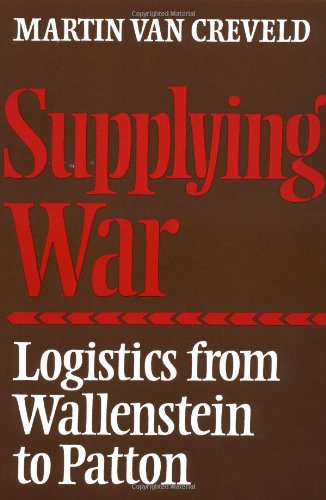
Why did Napoleon succeed in 1805 but fail in 1812? Were the railways vital to Prussia's victory over France in 1870? Was the famous Schlieffen Plan militarily sound? Could the European half of World War II have been ended in 1944? These are only a few of the questions that form the subject-matter of this meticulously researched, lively book. Drawing on a very wide range of unpublished and previously unexploited sources, Martin van Creveld examines the 'nuts and bolts' of war: namely, those formidable problems of movement and supply, transportation and administration, so often mentioned - but rarely explored - by the vast majority of books on military history. In doing so he casts his net far and wide, from Gustavus Adolphus to Rommel, from Marlborough to Patton, subjecting the operations of each to a thorough analysis from a fresh and unusual point of view. The result is a fascinating book that has something new to say about virtually every one of the most important campaigns waged in Europe during the last two centuries.
Les informations fournies dans la section « Synopsis » peuvent faire référence à une autre édition de ce titre.
Présentation de l'éditeur
Why did Napoleon succeed in 1805 but fail in 1812? Were the railways vital to Prussia's victory over France in 1870? Was the famous Schlieffen Plan militarily sound? Could the European half of World War II have been ended in 1944? These are only a few of the questions that form the subject-matter of this meticulously researched, lively book. Drawing on a very wide range of unpublished and previously unexploited sources, Martin van Creveld examines the 'nuts and bolts' of war: namely, those formidable problems of movement and supply, transportation and administration, so often mentioned - but rarely explored - by the vast majority of books on military history. In doing so he casts his net far and wide, from Gustavus Adolphus to Rommel, from Marlborough to Patton, subjecting the operations of each to a thorough analysis from a fresh and unusual point of view. The result is a fascinating book that has something new to say about virtually every one of the most important campaigns waged in Europe during the last two centuries.
Revue de presse
'Military buffs, even those who disagree with the author's conclusions, will find this original and stimulating.' Business Week
'I recommend this work for every professional army officer, but particularly those in the operations field who are used to moving units with the stroke of a grease pencil.' Major Michael D. Krause, Office of the Joint Chiefs of Staff
'Impeccable scholarship and major new interpretations characterize this work destined to become a classic in military history.' Technology and Culture
'This slim volume, unique of its kind, not only iterates the value of the study of logistics to the understanding of any war, any campaign, or any battle, but presents significant historical re-interpretations and revisions on practically every page.' The American Historical Review
Les informations fournies dans la section « A propos du livre » peuvent faire référence à une autre édition de ce titre.
Résultats de recherche pour Supplying War: Logistics from Wallenstein to Patton

Image d'archives
Supplying War: Logistics from Wallenstein to Patton
Edité par
Cambridge University Press, 1979
ISBN 10 : 0521297931
ISBN 13 : 9780521297936
Ancien ou d'occasion
Paperback
Vendeur : ThriftBooks-Dallas, Dallas, TX, Etats-Unis
Évaluation du vendeur 5 sur 5 étoiles

Paperback. Etat : Fair. No Jacket. Readable copy. Pages may have considerable notes/highlighting. ~ ThriftBooks: Read More, Spend Less. N° de réf. du vendeur G0521297931I5N00
Acheter D'occasion
EUR 6,78
Livraison gratuite
Expédition nationale : Etats-Unis
Expédition nationale : Etats-Unis
Quantité disponible : 1 disponible(s)
Image d'archives
Supplying War: Logistics from Wallenstein to Patton
Edité par
Cambridge University Press, 1979
ISBN 10 : 0521297931
ISBN 13 : 9780521297936
Ancien ou d'occasion
Paperback
Vendeur : ThriftBooks-Atlanta, AUSTELL, GA, Etats-Unis
Évaluation du vendeur 5 sur 5 étoiles
Paperback. Etat : Good. No Jacket. Former library book; Pages can have notes/highlighting. Spine may show signs of wear. ~ ThriftBooks: Read More, Spend Less. N° de réf. du vendeur G0521297931I3N10
Acheter D'occasion
EUR 6,78
Livraison gratuite
Expédition nationale : Etats-Unis
Expédition nationale : Etats-Unis
Quantité disponible : 1 disponible(s)
Image d'archives
Supplying War: Logistics from Wallenstein to Patton
Edité par
Cambridge University Press, 1979
ISBN 10 : 0521297931
ISBN 13 : 9780521297936
Ancien ou d'occasion
Paperback
Vendeur : World of Books (was SecondSale), Montgomery, IL, Etats-Unis
Évaluation du vendeur 5 sur 5 étoiles
Paperback. Etat : Fair. Why did Napoleon succeed in 1805 but fail in 1812? Were the railways vital to Prussia's victory over France in 1870? Was the famous Schlieffen Plan militarily sound? Could the European half of World War II have been ended in 1944? These are only a few of the questions that form the subject-matter of this meticulously researched, lively book. Drawing on a very wide range of unpublished and previously unexploited sources, Martin van Creveld examines the 'nuts and bolts' of war: namely, those formidable problems of movement and supply, transportation and administration, so often mentioned - but rarely explored - by the vast majority of books on military history. In doing so he casts his net far and wide, from Gustavus Adolphus to Rommel, from Marlborough to Patton, subjecting the operations of each to a thorough analysis from a fresh and unusual point of view. The result is a fascinating book that has something new to say about virtually every one of the most important campaigns waged in Europe during the last two centuries. N° de réf. du vendeur 00109771073
Acheter D'occasion
EUR 6,80
Livraison gratuite
Expédition nationale : Etats-Unis
Expédition nationale : Etats-Unis
Quantité disponible : 3 disponible(s)
Image d'archives
Supplying War: Logistics from Wallenstein to Patton
Edité par
Cambridge University Press, 1979
ISBN 10 : 0521297931
ISBN 13 : 9780521297936
Ancien ou d'occasion
Paperback
Vendeur : World of Books (was SecondSale), Montgomery, IL, Etats-Unis
Évaluation du vendeur 5 sur 5 étoiles
Paperback. Etat : Good. Why did Napoleon succeed in 1805 but fail in 1812? Were the railways vital to Prussia's victory over France in 1870? Was the famous Schlieffen Plan militarily sound? Could the European half of World War II have been ended in 1944? These are only a few of the questions that form the subject-matter of this meticulously researched, lively book. Drawing on a very wide range of unpublished and previously unexploited sources, Martin van Creveld examines the 'nuts and bolts' of war: namely, those formidable problems of movement and supply, transportation and administration, so often mentioned - but rarely explored - by the vast majority of books on military history. In doing so he casts his net far and wide, from Gustavus Adolphus to Rommel, from Marlborough to Patton, subjecting the operations of each to a thorough analysis from a fresh and unusual point of view. The result is a fascinating book that has something new to say about virtually every one of the most important campaigns waged in Europe during the last two centuries. N° de réf. du vendeur CIN0521297931G
Acheter D'occasion
EUR 6,80
Livraison gratuite
Expédition nationale : Etats-Unis
Expédition nationale : Etats-Unis
Quantité disponible : 1 disponible(s)
Image d'archives
Supplying War: Logistics from Wallenstein to Patton
Edité par
Cambridge University Press, 1979
ISBN 10 : 0521297931
ISBN 13 : 9780521297936
Ancien ou d'occasion
Paperback
Vendeur : World of Books Inc, Montgomery, IL, Etats-Unis
Évaluation du vendeur 4 sur 5 étoiles

Paperback. Etat : Fair. Why did Napoleon succeed in 1805 but fail in 1812? Were the railways vital to Prussia's victory over France in 1870? Was the famous Schlieffen Plan militarily sound? Could the European half of World War II have been ended in 1944? These are only a few of the questions that form the subject-matter of this meticulously researched, lively book. Drawing on a very wide range of unpublished and previously unexploited sources, Martin van Creveld examines the 'nuts and bolts' of war: namely, those formidable problems of movement and supply, transportation and administration, so often mentioned - but rarely explored - by the vast majority of books on military history. In doing so he casts his net far and wide, from Gustavus Adolphus to Rommel, from Marlborough to Patton, subjecting the operations of each to a thorough analysis from a fresh and unusual point of view. The result is a fascinating book that has something new to say about virtually every one of the most important campaigns waged in Europe during the last two centuries. N° de réf. du vendeur CIN0521297931A
Acheter D'occasion
EUR 8,63
Livraison gratuite
Expédition nationale : Etats-Unis
Expédition nationale : Etats-Unis
Quantité disponible : 3 disponible(s)
Image d'archives
Supplying War: Logistics from Wallenstein to Patton
Edité par
Cambridge University Press, 1979
ISBN 10 : 0521297931
ISBN 13 : 9780521297936
Ancien ou d'occasion
Paperback
Vendeur : World of Books Inc, Montgomery, IL, Etats-Unis
Évaluation du vendeur 4 sur 5 étoiles
Paperback. Etat : Good. Why did Napoleon succeed in 1805 but fail in 1812? Were the railways vital to Prussia's victory over France in 1870? Was the famous Schlieffen Plan militarily sound? Could the European half of World War II have been ended in 1944? These are only a few of the questions that form the subject-matter of this meticulously researched, lively book. Drawing on a very wide range of unpublished and previously unexploited sources, Martin van Creveld examines the 'nuts and bolts' of war: namely, those formidable problems of movement and supply, transportation and administration, so often mentioned - but rarely explored - by the vast majority of books on military history. In doing so he casts his net far and wide, from Gustavus Adolphus to Rommel, from Marlborough to Patton, subjecting the operations of each to a thorough analysis from a fresh and unusual point of view. The result is a fascinating book that has something new to say about virtually every one of the most important campaigns waged in Europe during the last two centuries. N° de réf. du vendeur CIN0521297931G
Acheter D'occasion
EUR 8,63
Livraison gratuite
Expédition nationale : Etats-Unis
Expédition nationale : Etats-Unis
Quantité disponible : 1 disponible(s)
Image d'archives
Supplying War: Logistics from Wallenstein to Patton
Edité par
Cambridge University Press (edition ), 1979
ISBN 10 : 0521297931
ISBN 13 : 9780521297936
Ancien ou d'occasion
Paperback
Vendeur : BooksRun, Philadelphia, PA, Etats-Unis
Évaluation du vendeur 5 sur 5 étoiles
Paperback. Etat : Very Good. It's a well-cared-for item that has seen limited use. The item may show minor signs of wear. All the text is legible, with all pages included. It may have slight markings and/or highlighting. N° de réf. du vendeur 0521297931-11-1
Acheter D'occasion
EUR 9,52
Livraison gratuite
Expédition nationale : Etats-Unis
Expédition nationale : Etats-Unis
Quantité disponible : 1 disponible(s)
Image fournie par le vendeur
Supplying War: Logistics from Wallenstein to Patton
Edité par
Cambridge University Press, 1979
ISBN 10 : 0521297931
ISBN 13 : 9780521297936
Ancien ou d'occasion
Couverture souple
Vendeur : -OnTimeBooks-, Phoenix, AZ, Etats-Unis
Évaluation du vendeur 5 sur 5 étoiles
Etat : very_good. Gently read. May have name of previous ownership, or ex-library edition. Binding tight; spine straight and smooth, with no creasing; covers clean and crisp. Minimal signs of handling or shelving. 100% GUARANTEE! Shipped with delivery confirmation, if you're not satisfied with purchase please return item! Ships USPS Media Mail. N° de réf. du vendeur OTV.0521297931.VG
Acheter D'occasion
EUR 10,04
Livraison gratuite
Expédition nationale : Etats-Unis
Expédition nationale : Etats-Unis
Quantité disponible : 1 disponible(s)
Image d'archives
Supplying War: Logistics from Wallenstein to Patton
Edité par
Cambridge University Press, 1979
ISBN 10 : 0521297931
ISBN 13 : 9780521297936
Ancien ou d'occasion
Paperback
Vendeur : HPB-Diamond, Dallas, TX, Etats-Unis
Évaluation du vendeur 5 sur 5 étoiles
Paperback. Etat : Very Good. Connecting readers with great books since 1972! Used books may not include companion materials, and may have some shelf wear or limited writing. We ship orders daily and Customer Service is our top priority! N° de réf. du vendeur S_486836343
Acheter D'occasion
EUR 7
Expédition à EUR 3,34
Expédition nationale : Etats-Unis
Expédition nationale : Etats-Unis
Quantité disponible : 1 disponible(s)
Image d'archives
Supplying War: Logistics from Wallenstein to Patton
Edité par
Cambridge University Press, 1979
ISBN 10 : 0521297931
ISBN 13 : 9780521297936
Ancien ou d'occasion
Paperback
Vendeur : HPB-Ruby, Dallas, TX, Etats-Unis
Évaluation du vendeur 5 sur 5 étoiles
Paperback. Etat : Very Good. Connecting readers with great books since 1972! Used books may not include companion materials, and may have some shelf wear or limited writing. We ship orders daily and Customer Service is our top priority! N° de réf. du vendeur S_487260955
Acheter D'occasion
EUR 7,33
Expédition à EUR 3,34
Expédition nationale : Etats-Unis
Expédition nationale : Etats-Unis
Quantité disponible : 1 disponible(s)