
Articles liés à Drawing the Line: The American Decision to Divide Germany,...
Synopsis
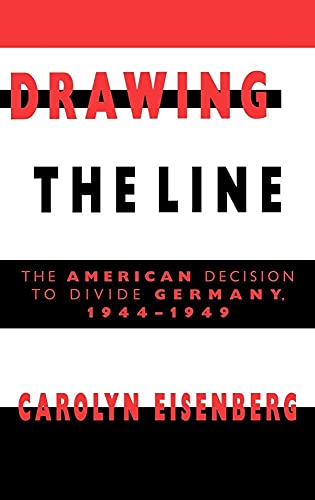
In this fresh and challenging study of the origins of the Cold War, Professor Eisenberg traces the American role in dividing post-war Germany. Drawing upon many original documentary sources, she examines the Allied meeting on the Elbe, follows the Great Powers through their confrontation in Berlin, and culminates with the creation of the West German state in the fall of 1949. In contrast to many works in the field, the book argues that the partition of Germany was fundamentally an American decision. US policy-makers chose partition, mobilized reluctant West Europeans behind that approach, and, by excluding the Soviets from West Germany, contributed to the isolation of East Germany and the emergence of the post-World War II US-Soviet rivalry. The volume casts new light on the Berlin blockade, demonstrating that the United States rejected United Nations mediation and relied on its nuclear monopoly as the means of protecting its German agenda.
Les informations fournies dans la section « Synopsis » peuvent faire référence à une autre édition de ce titre.
Présentation de l'éditeur
In this fresh and challenging study of the origins of the Cold War, Professor Eisenberg traces the American role in dividing post-war Germany. Drawing upon many original documentary sources, she examines the Allied meeting on the Elbe, follows the Great Powers through their confrontation in Berlin, and culminates with the creation of the West German state in the fall of 1949. In contrast to many works in the field, the book argues that the partition of Germany was fundamentally an American decision. US policy-makers chose partition, mobilized reluctant West Europeans behind that approach, and, by excluding the Soviets from West Germany, contributed to the isolation of East Germany and the emergence of the post-World War II US-Soviet rivalry. The volume casts new light on the Berlin blockade, demonstrating that the United States rejected United Nations mediation and relied on its nuclear monopoly as the means of protecting its German agenda.
Revue de presse
'The work by Carolyn Eisenberg is an important contribution to the 'revisionist history' that mant claim has been discredited by the demise of the USSR ... The analysis is very well documented, partly by means of archival material ... serves as a valuable corrective to the triumphalist 'post-revisionist' historiography.' NOD and Conversion
Les informations fournies dans la section « A propos du livre » peuvent faire référence à une autre édition de ce titre.
Résultats de recherche pour Drawing the Line: The American Decision to Divide Germany,...

Image d'archives
Drawing the Line: The American Decision to Divide Germany, 1944 1949
Edité par
Cambridge University Press, 1996
ISBN 10 : 0521392128
ISBN 13 : 9780521392129
Ancien ou d'occasion
Couverture rigide
Vendeur : World of Books (was SecondSale), Montgomery, IL, Etats-Unis
Évaluation du vendeur 5 sur 5 étoiles

Hardback. Etat : Good. In this fresh and challenging study of the origins of the Cold War, Professor Eisenberg traces the American role in dividing post-war Germany. Drawing upon many original documentary sources, she examines the Allied meeting on the Elbe, follows the Great Powers through their confrontation in Berlin, and culminates with the creation of the West German state in the fall of 1949. In contrast to many works in the field, the book argues that the partition of Germany was fundamentally an American decision. US policy-makers chose partition, mobilized reluctant West Europeans behind that approach, and, by excluding the Soviets from West Germany, contributed to the isolation of East Germany and the emergence of the post-World War II US-Soviet rivalry. The volume casts new light on the Berlin blockade, demonstrating that the United States rejected United Nations mediation and relied on its nuclear monopoly as the means of protecting its German agenda. N° de réf. du vendeur 00109099462
Acheter D'occasion
EUR 26,61
Livraison gratuite
Expédition nationale : Etats-Unis
Expédition nationale : Etats-Unis
Quantité disponible : 2 disponible(s)
Image d'archives
Drawing the Line: The American Decision to Divide Germany, 1944 1949
Edité par
Cambridge University Press, 1996
ISBN 10 : 0521392128
ISBN 13 : 9780521392129
Ancien ou d'occasion
Couverture rigide
Vendeur : World of Books Inc, Montgomery, IL, Etats-Unis
Évaluation du vendeur 4 sur 5 étoiles

Hardback. Etat : Good. In this fresh and challenging study of the origins of the Cold War, Professor Eisenberg traces the American role in dividing post-war Germany. Drawing upon many original documentary sources, she examines the Allied meeting on the Elbe, follows the Great Powers through their confrontation in Berlin, and culminates with the creation of the West German state in the fall of 1949. In contrast to many works in the field, the book argues that the partition of Germany was fundamentally an American decision. US policy-makers chose partition, mobilized reluctant West Europeans behind that approach, and, by excluding the Soviets from West Germany, contributed to the isolation of East Germany and the emergence of the post-World War II US-Soviet rivalry. The volume casts new light on the Berlin blockade, demonstrating that the United States rejected United Nations mediation and relied on its nuclear monopoly as the means of protecting its German agenda. N° de réf. du vendeur CIN0521392128G
Acheter D'occasion
EUR 28,44
Livraison gratuite
Expédition nationale : Etats-Unis
Expédition nationale : Etats-Unis
Quantité disponible : 2 disponible(s)
Image d'archives
Drawing the Line: The American Decision to Divide Germany, 19441949
Edité par
Cambridge University Press, 1996
ISBN 10 : 0521392128
ISBN 13 : 9780521392129
Ancien ou d'occasion
Couverture rigide
Vendeur : Anybook.com, Lincoln, Royaume-Uni
Évaluation du vendeur 5 sur 5 étoiles
Etat : Good. This is an ex-library book and may have the usual library/used-book markings inside.This book has hardback covers. In good all round condition. Dust jacket in good condition. Please note the Image in this listing is a stock photo and may not match the covers of the actual item,1000grams, ISBN:9780521392129. N° de réf. du vendeur 3956278
Acheter D'occasion
EUR 48,61
Expédition à EUR 15,49
Expédition depuis Royaume-Uni vers Etats-Unis
Expédition depuis Royaume-Uni vers Etats-Unis
Quantité disponible : 1 disponible(s)
Image d'archives
Drawing the Line: The American Decision to Divide Germany, 19441949
Edité par
Cambridge University Press, 1996
ISBN 10 : 0521392128
ISBN 13 : 9780521392129
Ancien ou d'occasion
Couverture rigide
Vendeur : Anybook.com, Lincoln, Royaume-Uni
Évaluation du vendeur 5 sur 5 étoiles
Etat : Poor. This is an ex-library book and may have the usual library/used-book markings inside.This book has hardback covers. Book contains pen & pencil markings. In poor condition, suitable as a reading copy. No dust jacket. Please note the Image in this listing is a stock photo and may not match the covers of the actual item,950grams, ISBN:0521392128. N° de réf. du vendeur 5828911
Acheter D'occasion
EUR 82,01
Expédition à EUR 15,49
Expédition depuis Royaume-Uni vers Etats-Unis
Expédition depuis Royaume-Uni vers Etats-Unis
Quantité disponible : 1 disponible(s)
Image d'archives
DRAWING THE LINE. THE AMERICAN DECISION TO DIVIDE GERMANY, 1944-1949
Edité par
CAMBRIDGE UNIVERSITY PRESS, CAMBRIDGE, 1996
ISBN 10 : 0521392128
ISBN 13 : 9780521392129
Neuf
Tapa blanda
Edition originale
Vendeur : Pórtico [Portico], ZARAGOZA, Z, Espagne
Évaluation du vendeur 4 sur 5 étoiles
Tapa blanda. Etat : New. 1ª edición. EISENBERG, C.: DRAWING THE LINE. THE AMERICAN DECISION TO DIVIDE GERMANY, 1944-1949. CAMBRIDGE, 1996, xiii 522 p. , 925 gr. Encuadernacion original. Nuevo. (KA-4-3) 925 gr. Libro. N° de réf. du vendeur 21184
Acheter neuf
EUR 108
Expédition à EUR 35
Expédition depuis Espagne vers Etats-Unis
Expédition depuis Espagne vers Etats-Unis
Quantité disponible : 1 disponible(s)
Image d'archives
Drawing the Line: The American Decision to Divide Germany, 1944?1949
Edité par
Cambridge University Press, 1996
ISBN 10 : 0521392128
ISBN 13 : 9780521392129
Neuf
Couverture rigide
Vendeur : BennettBooksLtd, Los Angeles, CA, Etats-Unis
Évaluation du vendeur 5 sur 5 étoiles
hardcover. Etat : New. In shrink wrap. Looks like an interesting title! N° de réf. du vendeur Q-0521392128
Acheter neuf
EUR 138,70
Expédition à EUR 6,19
Expédition nationale : Etats-Unis
Expédition nationale : Etats-Unis
Quantité disponible : 1 disponible(s)
Image d'archives
Drawing the Line: The American Decision to Divide Germany, 1944–1949
Edité par
Cambridge University Press, 1996
ISBN 10 : 0521392128
ISBN 13 : 9780521392129
Neuf
Couverture rigide
Vendeur : DeckleEdge LLC, Albuquerque, NM, Etats-Unis
Évaluation du vendeur 5 sur 5 étoiles
hardcover. Etat : new. N° de réf. du vendeur Shelfdream0521392128
Acheter neuf
EUR 145,06
Livraison gratuite
Expédition nationale : Etats-Unis
Expédition nationale : Etats-Unis
Quantité disponible : 1 disponible(s)
Image d'archives
Drawing the Line: The American Decision to Divide Germany, 1944-1949
Edité par
Cambridge University Press, 1996
ISBN 10 : 0521392128
ISBN 13 : 9780521392129
Neuf
Couverture rigide
Vendeur : California Books, Miami, FL, Etats-Unis
Évaluation du vendeur 5 sur 5 étoiles
Etat : New. N° de réf. du vendeur I-9780521392129
Acheter neuf
EUR 177,07
Livraison gratuite
Expédition nationale : Etats-Unis
Expédition nationale : Etats-Unis
Quantité disponible : Plus de 20 disponibles
Image d'archives
Drawing the Line: The American Decision to Divide Germany, 1944-1949
Edité par
Cambridge University Press, 1996
ISBN 10 : 0521392128
ISBN 13 : 9780521392129
Neuf
Couverture rigide
Vendeur : Kennys Bookshop and Art Galleries Ltd., Galway, GY, Irlande
Évaluation du vendeur 5 sur 5 étoiles
Etat : New. Eisenberg argues that the United States made the decision to divide Germany, and that this was the key development in the emergence of the Cold War. Num Pages: 540 pages, map. BIC Classification: 1DFG; 1KBB; 3JJH; 3JJP; HBJD; HBLW3; JPS. Category: (G) General (US: Trade). Dimension: 238 x 167 x 23. Weight in Grams: 914. . 1996. hardcover. . . . . N° de réf. du vendeur V9780521392129
Acheter neuf
EUR 180,31
Expédition à EUR 9,50
Expédition depuis Irlande vers Etats-Unis
Expédition depuis Irlande vers Etats-Unis
Quantité disponible : Plus de 20 disponibles
Image d'archives
Drawing the Line: The American Decision to Divide Germany, 1944-1949
Edité par
Cambridge University Press, 1996
ISBN 10 : 0521392128
ISBN 13 : 9780521392129
Neuf
Couverture rigide
Vendeur : Ria Christie Collections, Uxbridge, Royaume-Uni
Évaluation du vendeur 5 sur 5 étoiles
Etat : New. In English. N° de réf. du vendeur ria9780521392129_new
Acheter neuf
EUR 187,17
Expédition à EUR 17,75
Expédition depuis Royaume-Uni vers Etats-Unis
Expédition depuis Royaume-Uni vers Etats-Unis
Quantité disponible : Plus de 20 disponibles