
Articles liés à Latin America between the Second World War and the...
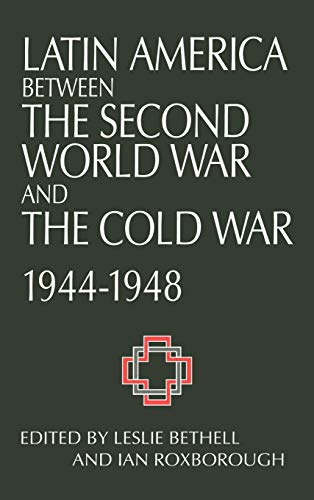
Latin America between the Second World War and the Cold War: Crisis and Containment, 1944–1948 - Couverture rigide
Synopsis
This volume aims to establish that the period between the end of the Second World War II and the beginning of the Cold War (1944–5 to 1947–8) hitherto neglected, represents an important conjuncture in the political and social history of twentieth-century Latin America. Despite differences in political regime, different levels of economic and social development, and different relations with the regional hegemony. There are striking similarities in the experiences of most of the Latin American republics at this time, which can be divided into two phases. The first, coinciding with the Allied victory, was characterized by democratization, a shift to the Left, and labor militancy. In the second phase, coinciding with the onset of the Cold War, labor was disciplined by the State and often excluded from politics, communist parties were severely repressed, reformist 'progressive' parties moved to the right, and the democratic advance was contained, when not reversed. The opportunity for social democracy was lost.
Les informations fournies dans la section « Synopsis » peuvent faire référence à une autre édition de ce titre.
Présentation de l'éditeur
This volume aims to establish that the period between the end of the Second World War II and the beginning of the Cold War (1944–5 to 1947–8) hitherto neglected, represents an important conjuncture in the political and social history of twentieth-century Latin America. Despite differences in political regime, different levels of economic and social development, and different relations with the regional hegemony. There are striking similarities in the experiences of most of the Latin American republics at this time, which can be divided into two phases. The first, coinciding with the Allied victory, was characterized by democratization, a shift to the Left, and labor militancy. In the second phase, coinciding with the onset of the Cold War, labor was disciplined by the State and often excluded from politics, communist parties were severely repressed, reformist 'progressive' parties moved to the right, and the democratic advance was contained, when not reversed. The opportunity for social democracy was lost.
Revue de presse
"...what seemed an auspicious moment for social democratic forces soon gave way in most countries to authoritarian repression, restrictions on the left, military coups and conservative consolidation. This illuminating volume analyzes why this occurred, concentrating on the interplay between domestic economic and social factors and the influence of U.S. policy." Foreign Affairs
"...the eleven essays in this volume are remarkably even in their high quality....a valuable addition to the relatively sparse historical literature on the early Cold War years in Latin America." Daniel Masterson, The Americas
Les informations fournies dans la section « A propos du livre » peuvent faire référence à une autre édition de ce titre.
Résultats de recherche pour Latin America between the Second World War and the...

Image d'archives
Latin America between the Second World War and the Cold War: Crisis and Containment, 1944-1948 (Cambridge Latin American Studies (Hardcover))
Edité par
Cambridge University Press, 1993
ISBN 10 : 0521430321
ISBN 13 : 9780521430326
Ancien ou d'occasion
Couverture rigide
Vendeur : Alexander Books (ABAC/ILAB), Ancaster, ON, Canada
Évaluation du vendeur 5 sur 5 étoiles

Hardcover. Etat : Fine. Etat de la jaquette : Fine. 368 Pages. N° de réf. du vendeur 042456
Acheter D'occasion
EUR 13,56
Expédition à EUR 7,02
Expédition depuis Canada vers Etats-Unis
Expédition depuis Canada vers Etats-Unis
Quantité disponible : 1 disponible(s)
Image fournie par le vendeur
LATIN AMERICA BETWEEN THE SECOND WORLD WAR AND THE COLD WAR 1944-1948
Edité par
Cambridge University Press, 1992. 9780521430326, 1993
ISBN 10 : 0521430321
ISBN 13 : 9780521430326
Ancien ou d'occasion
Couverture rigide
Edition originale
Vendeur : Rothwell & Dunworth (ABA, ILAB), Dulverton, Royaume-Uni
Évaluation du vendeur 5 sur 5 étoiles
1st edn. 8vo. Original gilt lettered black cloth (Fine), dustwrapper (Fine in protective cover). Pp. xi + 350 (previous owner's neat pencil annotations in text). N° de réf. du vendeur 158783
Acheter D'occasion
EUR 11,98
Expédition à EUR 15,70
Expédition depuis Royaume-Uni vers Etats-Unis
Expédition depuis Royaume-Uni vers Etats-Unis
Quantité disponible : 1 disponible(s)
Image d'archives
Latin America between the Second World War and the Cold War: Crisis and Containment, 1944?1948 (Cambridge Latin American Studies (Hardcover))
Edité par
Cambridge University Press, 1993
ISBN 10 : 0521430321
ISBN 13 : 9780521430326
Ancien ou d'occasion
Couverture rigide
Vendeur : Murphy-Brookfield Books, Iowa City SE, IA, Etats-Unis
Évaluation du vendeur 4 sur 5 étoiles

Hardcover. Etat : Near Fine. Etat de la jaquette : Very Good. clean, unmarked copy. N° de réf. du vendeur 366061
Acheter D'occasion
EUR 27,13
Expédition à EUR 4,83
Expédition nationale : Etats-Unis
Expédition nationale : Etats-Unis
Quantité disponible : 1 disponible(s)
Image d'archives
Latin America Between the Second World War and the Cold War 1944-1948
Edité par
Cambridge University Press. Cambridge., 1992
ISBN 10 : 0521430321
ISBN 13 : 9780521430326
Ancien ou d'occasion
Couverture rigide
Edition originale
Vendeur : Richard Peterson-Bookseller, Kingston, ON, Canada
Évaluation du vendeur 5 sur 5 étoiles
Hardcover. Etat : Fine. Etat de la jaquette : Fine. 1st Edition. Both the book & the dust jacket are clean, bright & unmarked. Like new. N° de réf. du vendeur 4575 (Box 210).
Acheter D'occasion
EUR 13,56
Expédition à EUR 21,56
Expédition depuis Canada vers Etats-Unis
Expédition depuis Canada vers Etats-Unis
Quantité disponible : 1 disponible(s)
Image fournie par le vendeur
Latin America Between the Second World War and the Cold War, 1944 - 1948
Edité par
Cambridge University Press, Cambridge, 1993
ISBN 10 : 0521430321
ISBN 13 : 9780521430326
Ancien ou d'occasion
Couverture rigide
Vendeur : PsychoBabel & Skoob Books, Didcot, Royaume-Uni
Évaluation du vendeur 5 sur 5 étoiles
Hardcover. Etat : Very Good. Hardcover with jacket in very good condition. HCW. Used. N° de réf. du vendeur 471915
Acheter D'occasion
EUR 44,37
Expédition à EUR 14,53
Expédition depuis Royaume-Uni vers Etats-Unis
Expédition depuis Royaume-Uni vers Etats-Unis
Quantité disponible : 1 disponible(s)
Image fournie par le vendeur
Latin America Between the Second World War and the Cold War, 1944 - 1948
Edité par
Cambridge University Press, Cambridge, 1993
ISBN 10 : 0521430321
ISBN 13 : 9780521430326
Ancien ou d'occasion
Couverture rigide
Vendeur : PsychoBabel & Skoob Books, Didcot, Royaume-Uni
Évaluation du vendeur 5 sur 5 étoiles
Hardcover. Etat : Very Good. Hardcover with jacket in very good condition. HCW. Used. N° de réf. du vendeur 471916
Acheter D'occasion
EUR 44,37
Expédition à EUR 14,53
Expédition depuis Royaume-Uni vers Etats-Unis
Expédition depuis Royaume-Uni vers Etats-Unis
Quantité disponible : 1 disponible(s)
Image d'archives
Latin America Between The Second World War And The Cold War: Crisis And Containment, 1944-1948 (Cambridge Latin American Studies)
Edité par
Cambridge University Press, 1993
ISBN 10 : 0521430321
ISBN 13 : 9780521430326
Neuf
Couverture rigide
Vendeur : SMASS Sellers, IRVING, TX, Etats-Unis
Évaluation du vendeur 4 sur 5 étoiles
Etat : New. Brand New Original US Edition. Customer service! Satisfaction Guaranteed. N° de réf. du vendeur SNTA-173281
Acheter neuf
EUR 76
Livraison gratuite
Expédition nationale : Etats-Unis
Expédition nationale : Etats-Unis
Quantité disponible : 1 disponible(s)
Image d'archives
Latin America Between The Second World War And The Cold War: Crisis And Containment, 1944-1948 (Cambridge Latin American Studies)
Edité par
Cambridge University Press, 1993
ISBN 10 : 0521430321
ISBN 13 : 9780521430326
Neuf
Couverture rigide
Vendeur : Romtrade Corp., STERLING HEIGHTS, MI, Etats-Unis
Évaluation du vendeur 5 sur 5 étoiles
Etat : New. This is a Brand-new US Edition. This Item may be shipped from US or any other country as we have multiple locations worldwide. N° de réf. du vendeur ABBB-173281
Acheter neuf
EUR 126,22
Livraison gratuite
Expédition nationale : Etats-Unis
Expédition nationale : Etats-Unis
Quantité disponible : 1 disponible(s)
Image d'archives
LATIN AMERICA BETWEEN THE SECOND WORLD WAR AND THE COLD WAR: CRISIS AND CONTAINMENT, 1944-1948 (CAMBRIDGE LATIN AMERICAN STUDIES)
Edité par
Cambridge University Press, 1993
ISBN 10 : 0521430321
ISBN 13 : 9780521430326
Neuf
Couverture rigide
Vendeur : Basi6 International, Irving, TX, Etats-Unis
Évaluation du vendeur 5 sur 5 étoiles
Etat : Brand New. New. US edition. Expediting shipping for all USA and Europe orders excluding PO Box. Excellent Customer Service. N° de réf. du vendeur ABEOCT25-98330
Acheter neuf
EUR 126,22
Livraison gratuite
Expédition nationale : Etats-Unis
Expédition nationale : Etats-Unis
Quantité disponible : 1 disponible(s)
Image d'archives
Latin America Between the Second World War and the Cold War
Edité par
Cambridge University Press, 1993
ISBN 10 : 0521430321
ISBN 13 : 9780521430326
Neuf
Couverture rigide
Vendeur : Majestic Books, Hounslow, Royaume-Uni
Évaluation du vendeur 4 sur 5 étoiles
Etat : New. pp. 368 9:B&W 6 x 9 in or 229 x 152 mm Case Laminate on Creme w/Gloss Lam. N° de réf. du vendeur 7410268
Acheter neuf
EUR 135,90
Expédition à EUR 7,56
Expédition depuis Royaume-Uni vers Etats-Unis
Expédition depuis Royaume-Uni vers Etats-Unis
Quantité disponible : 1 disponible(s)