
Articles liés à Evolutionary Biology and Conservation of Titis, Sakis...
Evolutionary Biology and Conservation of Titis, Sakis and Uacaris - Couverture rigide
Livre 28 sur 52: Cambridge Studies in Biological and Evolutionary Anthropology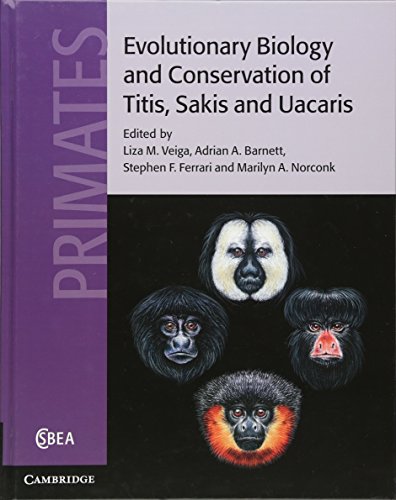
Synopsis
The neotropical primate family Pitheciidae consists of four genera Cacajao (uacaris), Callicebus (titis), Chiropotes (bearded sakis) and Pithecia (sakis), whose 40+ species display a range of sizes, social organisations, ecologies and habitats. Few are well known and the future survival of many is threatened, yet pitheciines have been little studied. This book is the first to review the biology of this fascinating and diverse group in full. It includes fossil history, reviews of the biology of each genus and, among others, specific treatments of vocalisations and foraging ecology. These studies are integrated into considerations of current status and future conservation requirements on a country-by-country basis for each species. A state-of-the-art summary of current knowledge, Evolutionary Biology and Conservation of Titis, Sakis and Uacaris is a collective effort from all the major researchers currently working on these remarkable animals.
Les informations fournies dans la section « Synopsis » peuvent faire référence à une autre édition de ce titre.
À propos des auteurs
Adrian Barnett is an Honorary Research Fellow at the Instituto National de Pesquisas da Amazonas in Manaus, Brazil, and at the Centre for Research in Evolutionary and Environmental Anthropology at Roehampton University. He is a tropical biologist whose research focuses on rare, little-known and hard-to-find species and has spent fifteen years studying tropical primates, particularly the conservation and ecology of uacaris.
Liza M. Veiga is a postdoctoral fellow at the Federal University of Pará and the Emílio Goeldi Museum, both in Belém, Brazil. Her research focuses on the conservation biology of the genus Chiropotes, Brazil.
Stephen F. Ferrari is a Professor of Zoology in the Biology department of the Federal University of Sergipe, São Cristovão, Brazil. While his research covers a wide variety of mammalian taxa, he has a particular focus on the primate genera Callicebus and Chiropotes, their ecology and conservation.
Marilyn A. Norconk is Professor of Anthropology at Kent State University, Kent, OH, USA. Her research focuses on behavioral ecology of South American monkeys, particularly feeding ecology and social behaviour of white-faced sakis and bearded sakis in Venezuela and Suriname.
Les informations fournies dans la section « A propos du livre » peuvent faire référence à une autre édition de ce titre.
Résultats de recherche pour Evolutionary Biology and Conservation of Titis, Sakis...

Image d'archives
Evolutionary Biology and Conservation of Titis, Sakis and Uacaris: 65 (Cambridge Studies in Biological and Evolutionary Anthropology, Series Number 65)
Edité par
-, 2013
ISBN 10 : 0521881587
ISBN 13 : 9780521881586
Ancien ou d'occasion
Couverture rigide
Vendeur : AwesomeBooks, Wallingford, Royaume-Uni
Évaluation du vendeur 5 sur 5 étoiles

Hardcover. Etat : Very Good. Evolutionary Biology and Conservation of Titis, Sakis and Uacaris: 65 (Cambridge Studies in Biological and Evolutionary Anthropology, Series Number 65) This book is in very good condition and will be shipped within 24 hours of ordering. The cover may have some limited signs of wear but the pages are clean, intact and the spine remains undamaged. This book has clearly been well maintained and looked after thus far. Money back guarantee if you are not satisfied. See all our books here, order more than 1 book and get discounted shipping. N° de réf. du vendeur 7719-9780521881586
Acheter D'occasion
EUR 44,85
Expédition à EUR 4,79
Expédition depuis Royaume-Uni vers Etats-Unis
Expédition depuis Royaume-Uni vers Etats-Unis
Quantité disponible : 2 disponible(s)
Image d'archives
Evolutionary Biology and Conservation of Titis, Sakis and Uacaris: 65 (Cambridge Studies in Biological and Evolutionary Anthropology, Series Number 65)
Edité par
- -, 2013
ISBN 10 : 0521881587
ISBN 13 : 9780521881586
Ancien ou d'occasion
Couverture rigide
Vendeur : Bahamut Media, Reading, Royaume-Uni
Évaluation du vendeur 4 sur 5 étoiles

Hardcover. Etat : Very Good. This book is in very good condition and will be shipped within 24 hours of ordering. The cover may have some limited signs of wear but the pages are clean, intact and the spine remains undamaged. This book has clearly been well maintained and looked after thus far. Money back guarantee if you are not satisfied. See all our books here, order more than 1 book and get discounted shipping. N° de réf. du vendeur 6545-9780521881586
Acheter D'occasion
EUR 44,13
Expédition à EUR 8,12
Expédition depuis Royaume-Uni vers Etats-Unis
Expédition depuis Royaume-Uni vers Etats-Unis
Quantité disponible : 2 disponible(s)
Image fournie par le vendeur
Evolutionary Biology and Conservation of Titis, Sakis and Uacaris (Cambridge Studies in Biological and Evolutionary Anthropology, Series Number 65)
Edité par
Cambridge University Press, 2013
ISBN 10 : 0521881587
ISBN 13 : 9780521881586
Ancien ou d'occasion
Couverture rigide
Vendeur : Solr Books, Lincolnwood, IL, Etats-Unis
Évaluation du vendeur 5 sur 5 étoiles
Etat : very_good. This book is in Very good condition. There may be a few flaws like shelf wear and some light wear. N° de réf. du vendeur BCV.0521881587.VG
Acheter D'occasion
EUR 75,35
Expédition à EUR 7,01
Expédition nationale : Etats-Unis
Expédition nationale : Etats-Unis
Quantité disponible : 1 disponible(s)
Image fournie par le vendeur
Evolutionary Biology and Conservation of Titis, Sakis and Uacaris
Edité par
Cambridge University Press, 2013
ISBN 10 : 0521881587
ISBN 13 : 9780521881586
Neuf
Couverture rigide
Vendeur : GreatBookPrices, Columbia, MD, Etats-Unis
Évaluation du vendeur 5 sur 5 étoiles
Etat : New. N° de réf. du vendeur 18520926-n
Acheter neuf
EUR 179,35
Expédition à EUR 2,32
Expédition nationale : Etats-Unis
Expédition nationale : Etats-Unis
Quantité disponible : Plus de 20 disponibles
Image d'archives
Evolutionary Biology and Conservation of Titis, Sakis and Uacaris (Cambridge Studies in Biological and Evolutionary Anthropology, Series Number 65)
Edité par
Cambridge University Press, 2013
ISBN 10 : 0521881587
ISBN 13 : 9780521881586
Neuf
Couverture rigide
Vendeur : California Books, Miami, FL, Etats-Unis
Évaluation du vendeur 4 sur 5 étoiles
Etat : New. N° de réf. du vendeur I-9780521881586
Acheter neuf
EUR 181,75
Livraison gratuite
Expédition nationale : Etats-Unis
Expédition nationale : Etats-Unis
Quantité disponible : Plus de 20 disponibles
Image fournie par le vendeur
Evolutionary Biology and Conservation of Titis, Sakis and Uacaris
Edité par
Cambridge University Press, 2013
ISBN 10 : 0521881587
ISBN 13 : 9780521881586
Ancien ou d'occasion
Couverture rigide
Vendeur : GreatBookPrices, Columbia, MD, Etats-Unis
Évaluation du vendeur 5 sur 5 étoiles
Etat : As New. Unread book in perfect condition. N° de réf. du vendeur 18520926
Acheter D'occasion
EUR 184,77
Expédition à EUR 2,32
Expédition nationale : Etats-Unis
Expédition nationale : Etats-Unis
Quantité disponible : Plus de 20 disponibles
Image fournie par le vendeur
Evolutionary Biology and Conservation of Titis, Sakis and Uacaris
Edité par
Cambridge University Press, 2013
ISBN 10 : 0521881587
ISBN 13 : 9780521881586
Ancien ou d'occasion
Couverture rigide
Vendeur : GreatBookPricesUK, Woodford Green, Royaume-Uni
Évaluation du vendeur 5 sur 5 étoiles
Etat : As New. Unread book in perfect condition. N° de réf. du vendeur 18520926
Acheter D'occasion
EUR 192,68
Expédition à EUR 17,44
Expédition depuis Royaume-Uni vers Etats-Unis
Expédition depuis Royaume-Uni vers Etats-Unis
Quantité disponible : Plus de 20 disponibles
Image d'archives
Evolutionary Biology and Conservation of Titis, Sakis and Uacaris
Edité par
Cambridge University Press, 2013
ISBN 10 : 0521881587
ISBN 13 : 9780521881586
Neuf
Couverture rigide
Vendeur : GreatBookPricesUK, Woodford Green, Royaume-Uni
Évaluation du vendeur 5 sur 5 étoiles
Etat : New. N° de réf. du vendeur 18520926-n
Acheter neuf
EUR 202,67
Expédition à EUR 17,44
Expédition depuis Royaume-Uni vers Etats-Unis
Expédition depuis Royaume-Uni vers Etats-Unis
Quantité disponible : Plus de 20 disponibles
Image fournie par le vendeur
Evolutionary Biology and Conservation of Titis, Sakis and Uacaris
impression à la demandeVendeur : moluna, Greven, Allemagne
Évaluation du vendeur 5 sur 5 étoiles
Etat : New. Dieser Artikel ist ein Print on Demand Artikel und wird nach Ihrer Bestellung fuer Sie gedruckt. Bringing together every major expert in the field, this book is the first detailed collation of the evolution, ecology and conservation of the pitheciines, some of the oddest and least-known monkeys in South America. It provides authoritative topic reviews . N° de réf. du vendeur 594767149
Acheter neuf
EUR 179,89
Expédition à EUR 48,99
Expédition depuis Allemagne vers Etats-Unis
Expédition depuis Allemagne vers Etats-Unis
Quantité disponible : Plus de 20 disponibles
Image d'archives
Evolutionary Biology and Conservation of Titis, Sakis and Uacaris (Hardcover)
Edité par
Cambridge University Press, Cambridge, 2013
ISBN 10 : 0521881587
ISBN 13 : 9780521881586
Neuf
Couverture rigide
Vendeur : CitiRetail, Stevenage, Royaume-Uni
Évaluation du vendeur 5 sur 5 étoiles
Hardcover. Etat : new. Hardcover. The neotropical primate family Pitheciidae consists of four genera Cacajao (uacaris), Callicebus (titis), Chiropotes (bearded sakis) and Pithecia (sakis), whose 40+ species display a range of sizes, social organisations, ecologies and habitats. Few are well known and the future survival of many is threatened, yet pitheciines have been little studied. This book is the first to review the biology of this fascinating and diverse group in full. It includes fossil history, reviews of the biology of each genus and, among others, specific treatments of vocalisations and foraging ecology. These studies are integrated into considerations of current status and future conservation requirements on a country-by-country basis for each species. A state-of-the-art summary of current knowledge, Evolutionary Biology and Conservation of Titis, Sakis and Uacaris is a collective effort from all the major researchers currently working on these remarkable animals. Bringing together every major expert in the field, this book is the first detailed collation of the evolution, ecology and conservation of the pitheciines, some of the oddest and least-known monkeys in South America. It provides authoritative topic reviews and insights into current research that encompass all four pitheciine genera. This item is printed on demand. Shipping may be from our UK warehouse or from our Australian or US warehouses, depending on stock availability. N° de réf. du vendeur 9780521881586
Acheter neuf
EUR 212,56
Expédition à EUR 43,02
Expédition depuis Royaume-Uni vers Etats-Unis
Expédition depuis Royaume-Uni vers Etats-Unis
Quantité disponible : 1 disponible(s)