
Articles liés à Good Faith
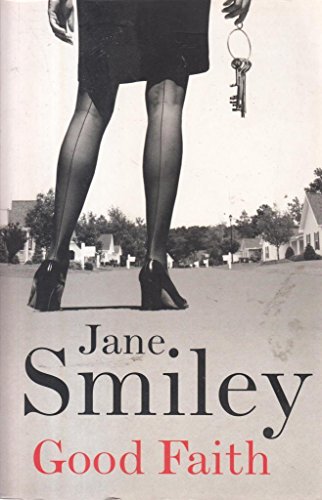
Extrait
Chapter 1
THIS WOULD BE '82. I was out at the Viceroy with Bobby Baldwin. Bobby Baldwin was my one employee, which made us not quite friends, but we went out to the Viceroy almost every night. My marriage was finished and his hadn't started, so we spent a lot of time together that most everyone else we knew was spending with their families. I didn't mind. My business card had the Viceroy's number in the corner, under "may also be reached at." Buyers called me there. It was a good sign if they wanted to see a house again in what you might call the middle of the night. That meant they couldn't wait till morning. And if they wanted to see it again in the middle of the night--well, I did my best to show it to them. That was the difference between Bobby and me. He always said, "Their motivation needs to be tested, that's what I think. Let 'em wait a little bit."
Bobby was not my brother, but he might as well have been. Sally, his sister, had been my girlfriend in high school for about a year and a half. She was the first person I ever knew who had a phone of her own. She used to call me up and tell me what to do. "Now, Joey," she would say, "tomorrow wear those tan pants you've got, and the blue socks with the clocks on them, and your white shirt, and that green sweater I gave you, and I am going to wear my blue circle skirt with the matching cashmere sweater, and I'll meet you on the steps. We'll look great. Have you done your algebra problems? When you get to number four, the variable is seven, and x equals half of y. If you remember that, then you won't have a problem with it. Did you wash your face yet? Don't forget to use that stuff I bought you. Rub it in clockwise, just a little tiny dab, about the size of the tip of your pencil eraser. Okay?"
I had been short, and now I was tall. I had been skinny and quiet and religious, and now I was good-looking and muscular. It was Sally Baldwin who brought me along, told me what to wear and do and think and say. She was never wrong; she never lost her patience. She created me, and when she was done we broke up in a formal sense, but she kept calling me. She was smart and went off to Smith College, and I was sure she would get everything organized there once and for all. I went to Penn State. In April of my freshman year, Sally was killed in a car accident outside of Boston. I had talked to her two days before. "Now, Joey," she had said, "it's okay to see a woman who is almost thirty, but you don't say that you are dating her, you say that you are seeing her. Seeing is much more sophisticated than dating, and it doesn't lead to marriage."
I went home for the funeral. It was as if the Baldwins had been eviscerated. All they had left were Felicity, Norton, Leslie, and Bobby. That didn't seem like much without Sally to move them along. Betty, their mom, couldn't act of her own free will. The funeral director, Pat Mahoney, had to seat her here and stand her there and remove her from this spot and place her in that spot. Gordon seemed better, almost vigilant in a way, though my mother said he would never recover and maybe he never did. Bobby was ten then, nine years younger than I was. Gordon came up to me afterward and asked me how I was doing. He was concerned, the way you always get at funerals, and I couldn't help telling him that I wasn't doing at all well--I hated college and was terribly homesick anyway, and now there was this stunning thing that was the end of Sally--and the next thing I knew he was offering me a job and I was taking it, and I went back to pick up my stuff at Penn State two days after the funeral, and I started working for Gordon the following Monday, which I certainly would not have been invited to do if Sally were alive and my girlfriend or fiancee because Gordon didn't like to be bankrolling everyone in the whole family, especially not sons-in-law.
My dad used to wonder what the Baldwins' real name was. They weren't like any Baldwins he had ever known. Gordon was loud and affectionate. Hey, honey, he always said, no matter who he was talking to. He ate out every night. He had three or four restaurants he took everyone to, owned by his poker buddies, I think. He played poker twice a week, high stakes. These games had been going for generations. For a living, he bought and sold things. For a while, it was antiques; for a while, jewelry; for a while, cars; for a while, expensive fixtures out of houses and restaurants and hotels that were being torn down. Once in a while he would hear about some hotel in the city that was going under, and he would come home with a truckload of dishes or silver that carried a hotel monogram. One year, his barn was full of pink silk chairs and settees from the lobby of a hotel in Montreal. Another year he got a thousand commodes. That was the year he persuaded everyone who bought a house from us that "you got to have one more bathroom than the number of bedrooms. It's the wave of the future." Always land and houses and dairy-cattle breeding stock. One thing leads to another; that is, houses lead to commodes, and then commodes lead to houses, which lead to land, which leads to dairy cattle, which lead to cheese, which leads to pizza pies, which lead to manicotti and veal Parmesan, which lead to wine, which leads to love, which leads to babies, houses, and commodes. That was Gordon Baldwin in a nutshell.
My father, who didn't like anything to lead to anything else, because of sin, couldn't decide whether the Baldwins had originally been "Obolenskis" or "Balduccis" or "Baldagyis." He took solace in the fact that we were Stratfords, always had been Stratfords; there was no misspelling of the Stratford name since the Middle Ages. The Baldwins had come to town after the war. That was all anyone knew; and for all that Gordon had gotten rich and locally famous, and he, Bobby, and everyone else in the family talked and talked, where the Baldwins had come from was something they never talked about.
Anyway, I could hardly keep my eyes open, though it was only midnight, early for a Baldwin, and Bobby was wide awake. He was drinking and playing craps for pennies with a builder we knew. The bar was about half full. It was a Wednesday. I said, "See you at ten."
Bobby said, "See that, a five and a three. That's eight."
"Bobby," I said. "Ten! I have to show a house at ten-fifteen and I want to be sure you're there before I go."
"Ten," said Bobby.
"Ten in the morning."
"In the morning."
"Morning is when the sun is in the sky and you don't have to turn on your headlights."
"Got you. Roll 'em." He looked at me and smiled. He looked just like Betty. I shook my head. As I passed next to the table right behind where we had been sitting, I saw a guy look up, look at me. I went out into the parking lot.
The parking lot of the Viceroy backed up on the river, the Nut. My condo was in a development in a smaller town upriver, Nut Hollow. Instead of getting right into my car, I walked down to the river and had a look at the moon, which was shining round and bright. The river was black and glassy around the circle of the moon for just a single long moment; then the wind came up and ruffled the image. I saw there was a woman squatting at the base of a tree, about ten yards from the river. When she turned at my footsteps, I realized it was Fern Minette, Bobby's fiancée. She stood up with a big smile, wiping her hands on her jeans. Fern was about twenty-seven or so. She and Bobby had been engaged for four and a half years. I said, "Well, it's Fern! What are you doing, Fernie?"
"Cat entrapment."
"You're trapping cats?"
"Well, my cat. He got out of the car when I took him to the grocery store Friday." She pointed to a cat carrier with its door open, just barely visible, in a cleft up the bank from the river. "I put things in there. Liver. His toys. Last night he went in, but when I moved away from the tree, he ran out again." She sighed.
I said, "Bobby's in the Viceroy. Maybe he would help you. He's not doing anything productive."
"You can't help with a cat. A cat can't be herded, a cat has to be attracted. I just can't figure out the thing that would do it, and as the nights go by it gets harder. You should go away, anyway."
"Do you stay out here all night?"
"Till two. Then I come back at six. Go away! He might be watching me and making up his mind!"
I got in my car and shut the door. When I turned on my headlights, Fern waved, then hunkered down beside the tree. The strangest thing about Bobby and Fern was that they had actually discussed marriage. Neither one was the sort of person you could image having any life plan that would lead to regular hours, a house, and then children who accepted them as parents.
Bobby was still on my mind when I got up to go to the office in the morning, probably because I was annoyed in advance that he would be late and I would have to rush to my appointment. It was a sharp but clear spring morning, not quite to the daffodil stage. The sky was a cold blue-gray, but the grass had greened up on the hillsides, and it seemed like you could see each blade shining with chlorophyll. It was the sort of day where houses look great, especially brick houses, and I had a brick house to show, one with a big front lawn and a newly blacktopped driveway.
The surprise was that Bobby was at the office, in a jacket and a tie, and he had the Multiple Listing book out of his desk, wide open to the listings in the high one-hundreds. In those days, that was the back of the book and there were some nice houses there, houses up in Rollins Hills with five and six bedrooms and Sub-Zero refrigerators. I remember I showed a house up there with its own little sauna/steam room. The buyers and I stood in our shoes in the bathroom, turning the seven dials and staring into the little wood-paneled cubbyhole like we'd never seen running water before. Anyway, Bobby was deep in the Rollins Hills listings. As soon as I walked in, he said, "Guess what! This guy in the bar last night, he's moving out from the city. I'm taking him out this morning, eleven-thirty. He wants to see seven houses today and seven tomorrow, and then he's going to pick. You should have hung around, but I'm glad you didn't. He was this--"
"Dark-haired guy in a gray jacket?"
"Yeah."
"That's funny. He looked up at me when I was leaving."
"People always look at you when you're leaving the Viceroy. They're looking at you in disbelief."
"They're looking at you in shame, Bob. Anyway, did you see Fern? She was out there trying to catch her cat."
"She's never going to catch that cat. That cat has been trying to escape for five years. You know, when she moved into her apartment, that cat had the vermin cleaned out in a month. Here he is."
A Cadillac pulled into our little lot and eased between my Lincoln and Bobby's new BMW. Baldwin Development bought a fleet of cars every two years, always whatever some crony of Gordon's was just getting into. After the New Year, Rollins Hills Motors had gotten the BMW franchise, and Stu Grade had sold Gordon six BMWs over a poker game. Bobby's was red. The local sheriff had been informed that Bobby's was the red one.
The guy who got out of the Caddy was very smooth looking--creased tan slacks, expensive-looking white shirt, Italian-cut jacket, tasseled loafers. He pocketed his keys and threw his sunglasses down on the seat of his car, then glanced around for our door. When he saw me looking at him through the plate glass, he broke into a smile. There was no one with him. House deals without women put you out into unknown territory sometimes. That was especially true in those days, when most buyers were families moving around the county, to nicer houses, or out to the country from the city. But Bobby needed something to do with his time, and I thought an iffy client was better than any one of his usual six activities--sleeping late, going to the Viceroy, going to the doctor, going to the dentist, doing repairs around his own place, or calling Gordon and asking for something to do. It was this last that had resulted in Bobby's employment at my office. Bobby was well-meaning, and even smart, but he was a danger to himself and others simply because he couldn't use any sort of tool or even do anything outside of his normal routine without hurting himself or getting sick. If it wasn't a broken toe from stumbling over a stack of weights at the gym, then it was poison ivy all over his face from taking Fern on a hike, or some sort of food poisoning. Gordon said to me, "That kid could put his eye out with a hammer or break his leg with a screwdriver. Real estate is the safest place for him." And it was. But I didn't think he would be any match for this Marcus Burns, to whom he was now introducing me.
My clients were, or would soon be, waiting. My clients were careful buyers, the Sloans. I made a living in real estate by keeping track of what a buyer wanted and doing research--going to every open house, calling other agents, visiting model homes, just in general mastering as many features of as many listings as I could--but you couldn't get ahead of the Sloans. What they wanted to know about every house they looked at, even the ones they didn't like, defied preparation. They had been looking for four months, not an inordinately long time, but they had seen every house on the market in their price range and now they just waited for new listings. Usually, at some point you gave up on people like that, because you knew they would never buy. The one thing that made me think the Sloans would eventually go for something was their conviction that something valuable or even precious was out there. The more I assured them we were on top of every available property, the more worried they got that we were missing one. I thought the tension would eventually become too much for them to bear. Needless to say, they were prequalified in every way. The mortgagor was dying to lend them money.
Biographie de l'auteur
Jane Smiley is the author of many novels, including A Thousand Acres, which won the Pulitzer Prize, and Horse Heaven. She lives in Northern California. In 2001, she was inducted in to the American Academy of Arts and Letters.
Les informations fournies dans la section « A propos du livre » peuvent faire référence à une autre édition de ce titre.
Résultats de recherche pour Good Faith

Image d'archives
Good Faith
Edité par
Faber & Faber, 2003
ISBN 10 : 057121844X
ISBN 13 : 9780571218448
Ancien ou d'occasion
Paperback
Vendeur : AwesomeBooks, Wallingford, Royaume-Uni
Évaluation du vendeur 5 sur 5 étoiles

Paperback. Etat : Very Good. Good Faith This book is in very good condition and will be shipped within 24 hours of ordering. The cover may have some limited signs of wear but the pages are clean, intact and the spine remains undamaged. This book has clearly been well maintained and looked after thus far. Money back guarantee if you are not satisfied. See all our books here, order more than 1 book and get discounted shipping. . N° de réf. du vendeur 7719-9780571218448
Acheter D'occasion
EUR 3,38
Expédition à EUR 4,80
Expédition depuis Royaume-Uni vers Etats-Unis
Expédition depuis Royaume-Uni vers Etats-Unis
Quantité disponible : 2 disponible(s)
Image d'archives
Good Faith
Vendeur : Reuseabook, Gloucester, GLOS, Royaume-Uni
Évaluation du vendeur 5 sur 5 étoiles
Paperback. Etat : Used; Good. Dispatched, from the UK, within 48 hours of ordering. This book is in good condition but will show signs of previous ownership. Please expect some creasing to the spine and/or minor damage to the cover. N° de réf. du vendeur CHL1259933
Acheter D'occasion
EUR 3,51
Expédition à EUR 8,16
Expédition depuis Royaume-Uni vers Etats-Unis
Expédition depuis Royaume-Uni vers Etats-Unis
Quantité disponible : 1 disponible(s)
Image d'archives
Good Faith
Edité par
Faber & Faber 01/01/2003, 2003
ISBN 10 : 057121844X
ISBN 13 : 9780571218448
Ancien ou d'occasion
Couverture souple
Vendeur : Bahamut Media, Reading, Royaume-Uni
Évaluation du vendeur 5 sur 5 étoiles
Etat : Very Good. Shipped within 24 hours from our UK warehouse. Clean, undamaged book with no damage to pages and minimal wear to the cover. Spine still tight, in very good condition. Remember if you are not happy, you are covered by our 100% money back guarantee. N° de réf. du vendeur 6545-9780571218448
Acheter D'occasion
EUR 5,56
Expédition à EUR 8,14
Expédition depuis Royaume-Uni vers Etats-Unis
Expédition depuis Royaume-Uni vers Etats-Unis
Quantité disponible : 2 disponible(s)
Image d'archives
Good Faith
Edité par
Faber & Faber, 2003
ISBN 10 : 057121844X
ISBN 13 : 9780571218448
Ancien ou d'occasion
Couverture souple
Vendeur : Kennys Bookstore, Olney, MD, Etats-Unis
Évaluation du vendeur 5 sur 5 étoiles
Etat : Good. 2003. First Edition. Paperback. Clean copy with some shelf wear and yellowing. . . . . Books ship from the US and Ireland. N° de réf. du vendeur KOC0016649
Acheter D'occasion
EUR 6,53
Expédition à EUR 9,17
Expédition nationale : Etats-Unis
Expédition nationale : Etats-Unis
Quantité disponible : 1 disponible(s)
Image d'archives
Good Faith
Edité par
Faber & Faber, 2003
ISBN 10 : 057121844X
ISBN 13 : 9780571218448
Ancien ou d'occasion
Couverture souple
Edition originale
Vendeur : Kennys Bookshop and Art Galleries Ltd., Galway, GY, Irlande
Évaluation du vendeur 5 sur 5 étoiles
Etat : Good. 2003. First Edition. Paperback. Clean copy with some shelf wear and yellowing. . . . . N° de réf. du vendeur KOC0016649
Acheter D'occasion
EUR 6,45
Expédition à EUR 9,50
Expédition depuis Irlande vers Etats-Unis
Expédition depuis Irlande vers Etats-Unis
Quantité disponible : 1 disponible(s)
Image d'archives
Good Faith
Edité par
Quality Paperbacks Direct, 2003
ISBN 10 : 057121844X
ISBN 13 : 9780571218448
Ancien ou d'occasion
Softcover
Vendeur : Ammareal, Morangis, France
Évaluation du vendeur 5 sur 5 étoiles
Softcover. Etat : Bon. Traces d'usure sur la couverture. Salissures sur la tranche. Ammareal reverse jusqu'à 15% du prix net de cet article à des organisations caritatives. ENGLISH DESCRIPTION Book Condition: Used, Good. Signs of wear on the cover. Stains on the edge. Ammareal gives back up to 15% of this item's net price to charity organizations. N° de réf. du vendeur D-835-491
Acheter D'occasion
EUR 3,38
Expédition à EUR 16,50
Expédition depuis France vers Etats-Unis
Expédition depuis France vers Etats-Unis
Quantité disponible : 1 disponible(s)
Image fournie par le vendeur
Good Faith
Edité par
Knopf,, 2003
ISBN 10 : 057121844X
ISBN 13 : 9780571218448
Ancien ou d'occasion
Couverture souple
Vendeur : Hamelyn, Madrid, M, Espagne
Évaluation du vendeur 5 sur 5 étoiles
Etat : Fair. : En Good Faith, Joe Stratford, un vendedor de casas divorciado, está listo para comenzar una nueva etapa en su vida en 1982. Tentaciones como el dinero, el sexo y los bienes raíces lo rodean. Su nuevo amigo, Marcus Burns, le propone arriesgadas ideas para hacerse rico, mientras que Joe se cuestiona si Felicity, la hija de su socio, es la mujer que ha estado esperando. Esta es una historia sobre personas comunes atrapadas en la versión exótica del sueño americano de los años 80, donde la codicia y los juegos financieros explotan en la calle principal. EAN: 9780571218448 Tipo: Libros Categoría: Literatura y Ficción Título: Good Faith Autor: Jane Smiley Idioma: en Páginas: 416 Formato: tapa blanda. N° de réf. du vendeur Happ-2026-07-31-f9535697
Acheter D'occasion
EUR 8,77
Expédition à EUR 12,99
Expédition depuis Espagne vers Etats-Unis
Expédition depuis Espagne vers Etats-Unis
Quantité disponible : 1 disponible(s)
Image fournie par le vendeur
Good Faith
Edité par
Knopf,, 2003
ISBN 10 : 057121844X
ISBN 13 : 9780571218448
Ancien ou d'occasion
Secondhand, Paperback
Vendeur : Book Grocer, Tullamarine, VIC, Australie
Évaluation du vendeur 5 sur 5 étoiles
Secondhand, Paperback. [Author], [Publisher]. NB: This is a secondhand book in very good condition. See our FAQs for more information. Please note that the jacket image is indicative only. A description of our secondhand books is not always available. Please contact us if you have a question about this title. Author: Jane Smiley Format: Paperback Number of Pages: 416 Joe Stratford, who sells nice houses in a beautiful place, and whose not very amicable divorce is over, is ready for his life to begin again. It is 1982, morning in America, and temptation is everywhere. And, as Marcus Burns (Joe's new friend from New York) says, the old rules are ready to be broken, Marcus should know: he's just quit his job with the tax man. But are his ideas about how to get rich - really rich - too big and risky for Joe? And what about the real estate development at Salt Key Farm: why is the local savings and loan so eager to lend Marcus and Joe the money for its asking price? And there's Felicity - the daughter of Joe's business partner - who has finally confessed how found she is of Joe. But, Joe wonders, is this winning, free-spirited (already married) woman really the one he's been waiting for? Good Faith is an extraordinary story about ordinary people caught up in the exotic 1980s version of the American Dream - as greed and financial game-playing of the highest and newest order explode on Main Street. By turns poignant, insightful, and outrageous, it is Jane Smiley at her funniest and most slyly astute. Secondhand, Paperback. N° de réf. du vendeur 9780571218448-SECONDHAND
Acheter D'occasion
EUR 6,40
Expédition à EUR 26,21
Expédition depuis Australie vers Etats-Unis
Expédition depuis Australie vers Etats-Unis
Quantité disponible : 2 disponible(s)
Image fournie par le vendeur
Good Faith
Vendeur : Book Express (NZ), Shannon, Nouvelle-Zélande
Évaluation du vendeur 3 sur 5 étoiles

Paperback. Etat : Good. 417 pages. Cover wornJoe Stratford, who sells nice houses in a beautiful place, and whose not very amicable divorce is over, is ready for his life to begin again. It is 1982, mor ning in America, and temptation is everywhere. And, as Marcus Burns (Joe's new f riend from New York) says, the old rules are ready to be broken. Marcus should k now: he's just quit his job with the tax man. But are his ideas about how to get rich - really rich via a local real estate development- too big and risky for J oe? And there's Felicity - the daughter of Joe's business partner. But, Joe wond ers, is this winning, free-spirited (already married) woman really the one he's been waiting for? N° de réf. du vendeur 1407aa
Acheter D'occasion
EUR 3,09
Expédition à EUR 39,31
Expédition depuis Nouvelle-Zélande vers Etats-Unis
Expédition depuis Nouvelle-Zélande vers Etats-Unis
Quantité disponible : 1 disponible(s)
Image d'archives
Good Faith
Edité par
Faber, 2003
ISBN 10 : 057121844X
ISBN 13 : 9780571218448
Ancien ou d'occasion
Couverture souple
Vendeur : Mooney's bookstore, Den Helder, Pays-Bas
Évaluation du vendeur 4 sur 5 étoiles

Etat : Very Good. N° de réf. du vendeur F8B57F44017C961
Acheter D'occasion
EUR 29,20
Expédition à EUR 14,95
Expédition depuis Pays-Bas vers Etats-Unis
Expédition depuis Pays-Bas vers Etats-Unis
Quantité disponible : 1 disponible(s)