
Articles liés à NO ONE IS TOO OLD TO LEARN: Neuroandragogy: A Theoretical...
NO ONE IS TOO OLD TO LEARN: Neuroandragogy: A Theoretical Perspective on Adult Brain Functions and Adult Learning - Couverture souple
Synopsis
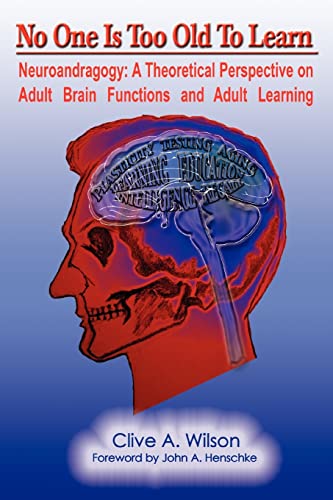
NEUROANDRAGOGY, tells of new advances in brain research. Much of this new research confirms what teachers of adults have been saying for years. A very good example of this is that children and adults do not learn in the same way. The brain of the child does not reach new brain function and true maturity until age 21 and older. This is clearly seen when youths use their emotions to decide and not their executive brain as adults do.NEUROANDRAGOGY includes research that confirms ways adults can improve their IQ and sharpen their minds even into old age. This is possible because "brain plasticity" still occurs late in life. Even more interesting is the fact that we may even be able to experience neurogenesis (new brain cellgrowth) through life if we continue to learn new things and live within a brain stimulating environment.NEUROANDRAGOGY also makes the case for a possible delay of Alzheimer's disease by the activity of new learning (music, a new language, a new town etc.) All this contributes to good brain health which improves on life itself.
Les informations fournies dans la section « Synopsis » peuvent faire référence à une autre édition de ce titre.
Présentation de l'éditeur
NEUROANDRAGOGY, tells of new advances in brain research. Much of this new research confirms what teachers of adults have been saying for years. A very good example of this is that children and adults do not learn in the same way. The brain of the child does not reach new brain function and true maturity until age 21 and older. This is clearly seen when youths use their emotions to decide and not their executive brain as adults do.NEUROANDRAGOGY includes research that confirms ways adults can improve their IQ and sharpen their minds even into old age. This is possible because "brain plasticity" still occurs late in life. Even more interesting is the fact that we may even be able to experience neurogenesis (new brain cellgrowth) through life if we continue to learn new things and live within a brain stimulating environment.NEUROANDRAGOGY also makes the case for a possible delay of Alzheimer's disease by the activity of new learning (music, a new language, a new town etc.) All this contributes to good brain health which improves on life itself.
Biographie de l'auteur
Clive has an earned Doctorate in adult studies from Oral Roberts University. He specializes in andragogy (the science of adult education and learning), and has over 30 years of experience working with adults. Clive is the founder of an adult training institute. He and his wife have made NY home.
Les informations fournies dans la section « A propos du livre » peuvent faire référence à une autre édition de ce titre.
Résultats de recherche pour NO ONE IS TOO OLD TO LEARN: Neuroandragogy: A Theoretical...

Image d'archives
NO ONE IS TOO OLD TO LEARN: Neuroandragogy: A Theoretical Perspective on Adult Brain Functions and Adult Learning
Edité par
iUniverse, 2006
ISBN 10 : 0595387667
ISBN 13 : 9780595387663
Ancien ou d'occasion
paperback
Vendeur : Orion Tech, Kingwood, TX, Etats-Unis
Évaluation du vendeur 5 sur 5 étoiles

paperback. Etat : Very Good. N° de réf. du vendeur 0595387667-2-28999852
Acheter D'occasion
EUR 8,68
Livraison gratuite
Expédition nationale : Etats-Unis
Expédition nationale : Etats-Unis
Quantité disponible : 1 disponible(s)
Image fournie par le vendeur
NO ONE IS TOO OLD TO LEARN: Neuroandragogy: A Theoretical Perspective on Adult Brain Functions and Adult Learning
Edité par
iUniverse, 2006
ISBN 10 : 0595387667
ISBN 13 : 9780595387663
Ancien ou d'occasion
Couverture souple
Vendeur : Zoom Books East, Glendale Heights, IL, Etats-Unis
Évaluation du vendeur 5 sur 5 étoiles
Etat : very_good. Book is in very good condition and may include minimal underlining highlighting. The book can also include "From the library of" labels. May not contain miscellaneous items toys, dvds, etc. . We offer 100% money back guarantee and 24 7 customer service. N° de réf. du vendeur ZEV.0595387667.VG
Acheter D'occasion
EUR 8,69
Livraison gratuite
Expédition nationale : Etats-Unis
Expédition nationale : Etats-Unis
Quantité disponible : 1 disponible(s)
Image d'archives
NO ONE IS TOO OLD TO LEARN: Neuroandragogy: A Theoretical Perspective on Adult Brain Functions and Adult Learning
Edité par
iUniverse, 2006
ISBN 10 : 0595387667
ISBN 13 : 9780595387663
Ancien ou d'occasion
paperback
Vendeur : HPB-Emerald, Dallas, TX, Etats-Unis
Évaluation du vendeur 5 sur 5 étoiles
paperback. Etat : Very Good. Connecting readers with great books since 1972! Used books may not include companion materials, and may have some shelf wear or limited writing. We ship orders daily and Customer Service is our top priority! N° de réf. du vendeur S_486789614
Acheter D'occasion
EUR 7,80
Expédition à EUR 3,35
Expédition nationale : Etats-Unis
Expédition nationale : Etats-Unis
Quantité disponible : 1 disponible(s)
Image fournie par le vendeur
NO ONE IS TOO OLD TO LEARN: Neuroandragogy: A Theoretical Perspective on Adult Brain Functions and Adult Learning
Edité par
iUniverse, 2006
ISBN 10 : 0595387667
ISBN 13 : 9780595387663
Ancien ou d'occasion
Couverture souple
Vendeur : Goodbookscafe, Macon, GA, Etats-Unis
Évaluation du vendeur 5 sur 5 étoiles
Etat : good. Used may have minimal highlights, annotations, creases, curled corners, writing on some pages, discoloration, dust from shelves, may need batteries. N° de réf. du vendeur MGV.0595387667.G
Acheter D'occasion
EUR 10,59
Expédition à EUR 3,56
Expédition nationale : Etats-Unis
Expédition nationale : Etats-Unis
Quantité disponible : 1 disponible(s)
Image fournie par le vendeur
No One Is Too Old to Learn : Neuroandragogy, a Theoretical Perspective on Adult Brain Functions and Adult Learning
Edité par
iUniverse, 2006
ISBN 10 : 0595387667
ISBN 13 : 9780595387663
Ancien ou d'occasion
Couverture souple
Vendeur : GreatBookPrices, Columbia, MD, Etats-Unis
Évaluation du vendeur 5 sur 5 étoiles
Etat : good. May show signs of wear, highlighting, writing, and previous use. This item may be a former library book with typical markings. No guarantee on products that contain supplements Your satisfaction is 100% guaranteed. Twenty-five year bookseller with shipments to over fifty million happy customers. N° de réf. du vendeur 4371526-5
Acheter D'occasion
EUR 11,82
Expédition à EUR 2,36
Expédition nationale : Etats-Unis
Expédition nationale : Etats-Unis
Quantité disponible : 1 disponible(s)
Image fournie par le vendeur
No One Is Too Old to Learn : Neuroandragogy, a Theoretical Perspective on Adult Brain Functions and Adult Learning
Vendeur : GreatBookPrices, Columbia, MD, Etats-Unis
Évaluation du vendeur 5 sur 5 étoiles
Etat : New. N° de réf. du vendeur 4371526-n
Acheter neuf
EUR 12,46
Expédition à EUR 2,36
Expédition nationale : Etats-Unis
Expédition nationale : Etats-Unis
Quantité disponible : Plus de 20 disponibles
Image fournie par le vendeur
No One Is Too Old to Learn: Neuroandragogy: A Theoretical Perspective on Adult Brain Functions and Adult Learning (Paperback or Softback)
Edité par
iUniverse 6/22/2006, 2006
ISBN 10 : 0595387667
ISBN 13 : 9780595387663
Neuf
Paperback or Softback
Vendeur : BargainBookStores, Grand Rapids, MI, Etats-Unis
Évaluation du vendeur 5 sur 5 étoiles
Paperback or Softback. Etat : New. No One Is Too Old to Learn: Neuroandragogy: A Theoretical Perspective on Adult Brain Functions and Adult Learning. Book. N° de réf. du vendeur BBS-9780595387663
Acheter neuf
EUR 14,90
Livraison gratuite
Expédition nationale : Etats-Unis
Expédition nationale : Etats-Unis
Quantité disponible : 5 disponible(s)
Image fournie par le vendeur
No One Is Too Old to Learn : Neuroandragogy, a Theoretical Perspective on Adult Brain Functions and Adult Learning
Edité par
iUniverse, 2006
ISBN 10 : 0595387667
ISBN 13 : 9780595387663
Ancien ou d'occasion
Couverture souple
Vendeur : GreatBookPrices, Columbia, MD, Etats-Unis
Évaluation du vendeur 5 sur 5 étoiles
Etat : As New. Unread book in perfect condition. N° de réf. du vendeur 4371526
Acheter D'occasion
EUR 13,18
Expédition à EUR 2,36
Expédition nationale : Etats-Unis
Expédition nationale : Etats-Unis
Quantité disponible : Plus de 20 disponibles
Image d'archives
No One Is Too Old To Learn: Neuroandragogy: A Theoretical Perspective on Adult Brain Functions and Adult Learning
Edité par
iUniverse, Inc., 2006
ISBN 10 : 0595387667
ISBN 13 : 9780595387663
Ancien ou d'occasion
Paperback
Vendeur : Textbooks_Source, Columbia, MO, Etats-Unis
Évaluation du vendeur 5 sur 5 étoiles
Paperback. Etat : Good. 0th Edition. Ships in a BOX from Central Missouri! May not include working access code. Will not include dust jacket. Has used sticker(s) and some writing or highlighting. UPS shipping for most packages, (Priority Mail for AK/HI/APO/PO Boxes). N° de réf. du vendeur 001145587U
Acheter D'occasion
EUR 12,82
Expédition à EUR 3,56
Expédition nationale : Etats-Unis
Expédition nationale : Etats-Unis
Quantité disponible : 1 disponible(s)
Image d'archives
No One Is Too Old To Learn:Neuroandragogy: A Theoretical Perspective on Adult Brain Functions and Adult Learning
impression à la demandeVendeur : Chiron Media, Wallingford, Royaume-Uni
Évaluation du vendeur 5 sur 5 étoiles
PF. Etat : New. This item is printed on demand. Brand new book, sourced directly from publisher. Dispatch time is 6-7 days from our warehouse. Book will be sent in robust, secure packaging to ensure it reaches you securely. N° de réf. du vendeur 6666-IUK-9780595387663
Acheter neuf
EUR 12,98
Expédition à EUR 5,96
Expédition depuis Royaume-Uni vers Etats-Unis
Expédition depuis Royaume-Uni vers Etats-Unis
Quantité disponible : 20 disponible(s)