
Articles liés à Outside the Fold: Conversion, Modernity, and Belief
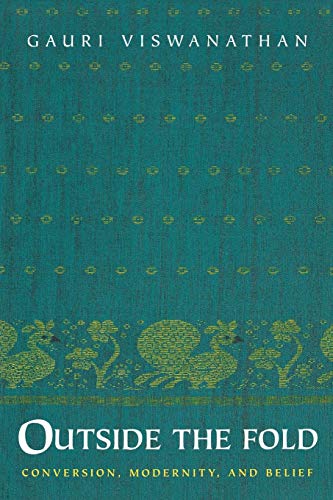
Synopsis
This text presents a re-examination of religious conversion. The author argues that conversion is an interpretive act that belongs in the realm of cultural criticism. To that end, this work examines key moments in colonial and postcolonial history to show how conversion questions the limitations of secular ideologies, particularly the discourse of rights central to both the British Empire and the British nation-state. Implicit in such questioning is an attempt to construct an alternative epistemological and ethical foundation of national community. Viswanathan grounds her study in an examination of two simultaneous and, she asserts, linked events: the legal emancipation of religious minorities in England and the acculturation of colonial subjects to British rule. The author views these two apparently disparate events as part of a common pattern of national consolidation that produced the English state. She seeks to explain why resistance, in both cases, frequently took the form of religious conversion, especially to "minority" or alternative religions. Confronting the general characterization of conversion as assimilative and annihilating of identity, Viswanathan demonstrates that
Les informations fournies dans la section « Synopsis » peuvent faire référence à une autre édition de ce titre.
À propos de l'auteur
Gauri Viswanathan is Professor of English and Comparative Literature at Columbia University. She is the author of Masks of Conquest: Literary Study and British Rule in India.
Les informations fournies dans la section « A propos du livre » peuvent faire référence à une autre édition de ce titre.
Résultats de recherche pour Outside the Fold: Conversion, Modernity, and Belief

Image d'archives
Outside the Fold: Conversion, Modernity, and Belief by Viswanathan, Gauri
Edité par
Princeton University Press, New Jersey (usa) And Chichester (uk), 1998
ISBN 10 : 0691058989
ISBN 13 : 9780691058986
Ancien ou d'occasion
Couverture rigide
Edition originale
Vendeur : Literary Cat Books, Machynlleth, Powys, WALES, Royaume-Uni
Évaluation du vendeur 3 sur 5 étoiles

Hardcover. Etat : Very Good. Etat de la jaquette : No Dust Jacket. First Edition. 332 pages. With frontispiece (of Annie Besant at desk). Underlining in pencil in preface. Lacks dustjacket. Slight wear to spine, covers and corners. Includes one small loose sheet of writing by a previous owner.; Octavo; 332 pages. N° de réf. du vendeur 41345
Acheter D'occasion
EUR 54,52
Expédition à EUR 17,72
Expédition depuis Royaume-Uni vers Etats-Unis
Expédition depuis Royaume-Uni vers Etats-Unis
Quantité disponible : 1 disponible(s)
Image d'archives
Outside the Fold
Edité par
Princeton University Press (edition ), 1998
ISBN 10 : 0691058989
ISBN 13 : 9780691058986
Ancien ou d'occasion
Couverture rigide
Vendeur : BooksRun, Philadelphia, PA, Etats-Unis
Évaluation du vendeur 5 sur 5 étoiles

Hardcover. Etat : Very Good. It's a well-cared-for item that has seen limited use. The item may show minor signs of wear. All the text is legible, with all pages included. It may have slight markings and/or highlighting. N° de réf. du vendeur 0691058989-11-1
Acheter D'occasion
EUR 109,02
Livraison gratuite
Expédition nationale : Etats-Unis
Expédition nationale : Etats-Unis
Quantité disponible : 1 disponible(s)