
Articles liés à Committed to Memory: The Art of the Slave Ship Icon
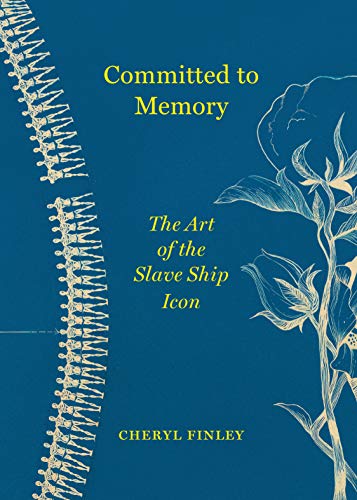
Synopsis
How an eighteenth-century engraving of a slave ship became a cultural icon of Black resistance, identity, and remembrance
One of the most iconic images of slavery is a schematic wood engraving depicting the human cargo hold of a slave ship. First published by British abolitionists in 1788, it exposed this widespread commercial practice for what it really was―shocking, immoral, barbaric, unimaginable. Printed as handbills and broadsides, the image Cheryl Finley has termed the "slave ship icon" was easily reproduced, and by the end of the eighteenth century it was circulating by the tens of thousands around the Atlantic rim. Committed to Memory provides the first in-depth look at how this artifact of the fight against slavery became an enduring symbol of Black resistance, identity, and remembrance.
Finley traces how the slave ship icon became a powerful tool in the hands of British and American abolitionists, and how its radical potential was rediscovered in the twentieth century by Black artists, activists, writers, filmmakers, and curators. Finley offers provocative new insights into the works of Amiri Baraka, Romare Bearden, Betye Saar, and many others. She demonstrates how the icon was transformed into poetry, literature, visual art, sculpture, performance, and film―and became a medium through which diasporic Africans have reasserted their common identity and memorialized their ancestors.
Beautifully illustrated, Committed to Memory features works from around the world, taking readers from the United States and England to West Africa and the Caribbean. It shows how contemporary Black artists and their allies have used this iconic eighteenth-century engraving to reflect on the trauma of slavery and come to terms with its legacy.
Les informations fournies dans la section « Synopsis » peuvent faire référence à une autre édition de ce titre.
À propos de l'auteur
Cheryl Finley is associate professor of art history at Cornell University. She is the coauthor of Harlem: A Century in Images and the coeditor of Diaspora, Memory, Place: David Hammons, Maria Magdalena Campos-Pons, Pamela Z.
Les informations fournies dans la section « A propos du livre » peuvent faire référence à une autre édition de ce titre.
Résultats de recherche pour Committed to Memory: The Art of the Slave Ship Icon

Image d'archives
Committed to Memory: The Art of the Slave Ship Icon
Edité par
Princeton University Press, Princeton, 2018
ISBN 10 : 069113684X
ISBN 13 : 9780691136844
Ancien ou d'occasion
Couverture rigide
Edition originale
Vendeur : Winged Monkey Books, Washington, DC, Etats-Unis
Évaluation du vendeur 4 sur 5 étoiles

First Edition. Large hardcover, very good with light wear. Illustrated. Inscribed by the author in the year of publication. N° de réf. du vendeur 031861
Acheter D'occasion
EUR 35,99
Expédition à EUR 4,37
Expédition nationale : Etats-Unis
Expédition nationale : Etats-Unis
Quantité disponible : 1 disponible(s)
Image fournie par le vendeur
COMMITTED TO MEMORY The Art of the Slave Ship Icon
Edité par
Princeton University Press, Princeton, NJ, 2018
ISBN 10 : 069113684X
ISBN 13 : 9780691136844
Ancien ou d'occasion
Couverture rigide
Edition originale
Vendeur : Riverow Bookshop, Owego, NY, Etats-Unis
Évaluation du vendeur 5 sur 5 étoiles

Hardcover w/DJ. Etat : Very Good/Very Good. Black & White/Color Illus. & Photos (illustrateur). First Edition. Princeton, NJ: Princeton University Press. Very Good/Very Good. 2018. First Edition. Hardcover w/DJ. inscribed by author on title page (see photo) . Sm 4to., 306pp., dust jacket very minor shelf wear to edges and corners, otherwise very good; cover light shelf wear to edges and corners, otherwise very good; inscribed by author on title page (see photo), otherwise pages clean and unmarked. . N° de réf. du vendeur BOOKS341369
Acheter D'occasion
EUR 35,99
Expédition à EUR 5,68
Expédition nationale : Etats-Unis
Expédition nationale : Etats-Unis
Quantité disponible : 1 disponible(s)
Image d'archives
Committed to Memory The Art o
Edité par
Princeton University Press, 2018
ISBN 10 : 069113684X
ISBN 13 : 9780691136844
Ancien ou d'occasion
Couverture rigide
Vendeur : World of Books (was SecondSale), Montgomery, IL, Etats-Unis
Évaluation du vendeur 5 sur 5 étoiles
Etat : Good. Item in good condition. Textbooks may not include supplemental items i.e. CDs, access codes etc. N° de réf. du vendeur 00108975434
Acheter D'occasion
EUR 46,73
Livraison gratuite
Expédition nationale : Etats-Unis
Expédition nationale : Etats-Unis
Quantité disponible : 1 disponible(s)
Image d'archives
Committed to Memory The Art o
Edité par
Princeton University Press, 2018
ISBN 10 : 069113684X
ISBN 13 : 9780691136844
Ancien ou d'occasion
Couverture rigide
Vendeur : World of Books (was SecondSale), Montgomery, IL, Etats-Unis
Évaluation du vendeur 5 sur 5 étoiles
Etat : Very Good. Item in very good condition! Textbooks may not include supplemental items i.e. CDs, access codes etc. N° de réf. du vendeur 00109441639
Acheter D'occasion
EUR 46,73
Livraison gratuite
Expédition nationale : Etats-Unis
Expédition nationale : Etats-Unis
Quantité disponible : 2 disponible(s)
Image d'archives
Committed to memory : the art of the slave ship icon
Edité par
Princeton University Press, Princeton, NJ, 2018
ISBN 10 : 069113684X
ISBN 13 : 9780691136844
Ancien ou d'occasion
Couverture rigide
Vendeur : Mullen Books, ABAA, Marietta, PA, Etats-Unis
Évaluation du vendeur 4 sur 5 étoiles
Hardcover. Blue dj with yellow text, white illustrations, blue boards with gilt text on spine. 306 pp. Bw and color illustrations. Warmly inscribed by author on title page. "One of the most iconic images of slavery is a schematic wood engraving depicting the human cargo hold of a slave ship. First published by British abolitionists in 1788, it exposed this widespread commercial practice for what it really was - shocking, immoral, barbaric, unimaginable. Printed as handbills and broadsides, the image Cheryl Finley has termed the "slave ship icon" was easily reproduced, and by the end of the eighteenth century it was circulating by the tens of thousands around the Atlantic rim. Committed to Memory provides the first in-depth look at how this artifact of the fight against slavery became an enduring symbol of black resistance, identity, and remembrance. Finley traces how the slave ship icon became a powerful tool in the hands of British and American abolitionists, and how its radical potential was rediscovered in the twentieth century by black artists, activists, writers, filmmakers, and curators. Finley offers provocative new insights into the works of Amiri Baraka, Romare Bearden, Betye Saar, and many others. She demonstrates how the icon was transformed into poetry, literature, visual art, sculpture, performance, and film-and became a medium through which diasporic Africans have reasserted their common identity and memorialized their ancestors. Beautifully illustrated, Committed to Memory features works from around the world, taking readers from the United States and England to West Africa and the Caribbean. It shows how contemporary black artists and their allies have used this iconic eighteenth-century engraving to reflect on the trauma of slavery and come to terms with its legacy" VG, some minor shelf wear to dj, all else excellent. N° de réf. du vendeur 210715
Acheter D'occasion
EUR 35,99
Expédition à EUR 11,35
Expédition nationale : Etats-Unis
Expédition nationale : Etats-Unis
Quantité disponible : 1 disponible(s)
Image d'archives
Committed to Memory: The Art of the Slave Ship Icon
Edité par
Princeton University Press, 2018
ISBN 10 : 069113684X
ISBN 13 : 9780691136844
Ancien ou d'occasion
Couverture rigide
Vendeur : Books From California, Simi Valley, CA, Etats-Unis
Évaluation du vendeur 4 sur 5 étoiles
hardcover. Etat : Very Good. N° de réf. du vendeur mon0004175380
Acheter D'occasion
EUR 45,34
Expédition à EUR 4,36
Expédition nationale : Etats-Unis
Expédition nationale : Etats-Unis
Quantité disponible : 1 disponible(s)
Image d'archives
Committed to Memory: The Art of the Slave Ship Icon
Edité par
Princeton University Press, 2018
ISBN 10 : 069113684X
ISBN 13 : 9780691136844
Ancien ou d'occasion
Couverture rigide
Vendeur : YESIBOOKSTORE, MIAMI, FL, Etats-Unis
Évaluation du vendeur 4 sur 5 étoiles
hardcover. Etat : As New. N° de réf. du vendeur 069113684X-VB
Acheter D'occasion
EUR 123,14
Livraison gratuite
Expédition nationale : Etats-Unis
Expédition nationale : Etats-Unis
Quantité disponible : 1 disponible(s)
Image d'archives
Committed to Memory: The Art of the Slave Ship Icon
Edité par
Princeton University Press, 2018
ISBN 10 : 069113684X
ISBN 13 : 9780691136844
Neuf
Couverture rigide
Vendeur : GoldBooks, Denver, CO, Etats-Unis
Évaluation du vendeur 5 sur 5 étoiles
Hardcover. Etat : new. New Copy. Customer Service Guaranteed. N° de réf. du vendeur 81N25_55_069113684X
Acheter neuf
EUR 1 006,40
Expédition à EUR 4,80
Expédition nationale : Etats-Unis
Expédition nationale : Etats-Unis
Quantité disponible : 1 disponible(s)